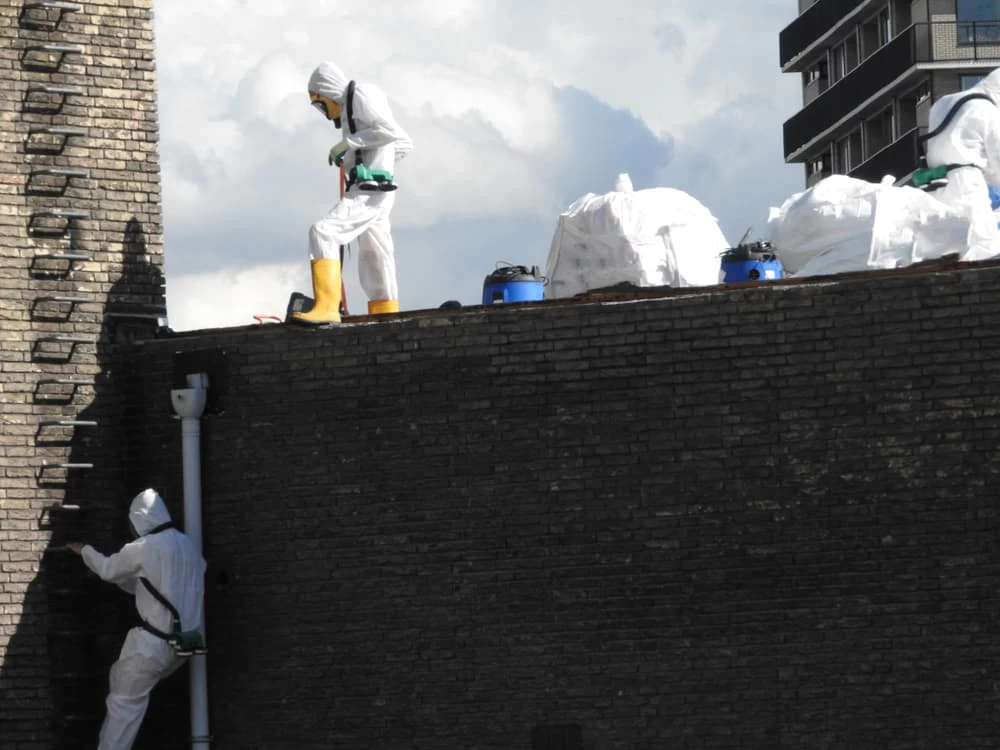
If you found something suspicious during a renovation or a pre-sale inspection, you need a licensed contractor not a general handyman with a respirator. We hold the NYS DOL Asbestos Handling License required by law to perform asbestos abatement in Milton, NY.
I needed a professional consultation explanation of procedure for safe removal of Asbestos in my apartment complex. Without having an account yet, I was very impressed with the caring, knowledgeable and generous advice offered by Jessica, and will look forward to doing business in the future. Thank you so much! I feel much more informed about a sometimes scary endeavor. Peace. Nancy Silva Mineola, NY.
Mia Munoz
Used this company to clean up some water flood in my house. They were fast and easy to work with.very professional, Would recommend to anyone!
Nini Valle
Great company, had a flood and they responded quickly and efficiently. Billed my insurance company directly. I highly recommend this company!
joe colapietro, jr
I had pipe freeze in my basement right before a snow storm and they made to within an hour to help start the clean up process. They we by our side throughout the entire process and even helped with the insurance company. They did such a great job with the cleanup, repair, remidiation, I contracted them to perform the repairs and finishes in the basement. They came with enough manpower and material to get the job done. Leo and Jessica were nothing but a pleasure to deal with!!
Cristian Arredondo c
I had some water damage in my home and Green Island was able to take care of my issue quickly and effectively. I am very pleased with the work they did. They responded quickly and were very professional.
Michael M
Outstanding service! From the office to the field crew everyone was friendly, helpful and responsive. I highly recommend Green Island Group.
A lot of homes along the Route 9W corridor in Milton were built in an era when asbestos was standard in floor tiles, pipe insulation, roofing, plaster, and ceiling texture. You might be mid-renovation and just pulled up a floor tile with black adhesive underneath. Or your buyer’s inspector flagged something and now your closing timeline is in jeopardy. Either way, the problem doesn’t get smaller by waiting.
When abatement is done correctly contained, documented, and cleared you get written air monitoring results confirming the space is safe to reoccupy. That’s not just peace of mind. For anyone selling a home in the current Hudson Valley market, where median sale prices have climbed significantly and buyers are scrutinizing every inspection report, that clearance certificate can be the difference between a deal closing and falling apart.
Milton’s housing stock skews older. Farmhouses from the 1800s, mid-century colonials, and properties with stone-foundation basements are common here. The freeze-thaw cycles this area sees every winter are hard on older building materials pipe insulation cracks, floor adhesives loosen, and what was once safely intact can become a real exposure risk over time. Getting ahead of that isn’t overcautious. It’s practical.
We hold the NYS Department of Labor Asbestos Handling License the specific credential required under New York State Industrial Code Rule 56 before any contractor can legally touch asbestos in this state. Not a general contractor license. Not a self-declared certification. The actual government-issued license, which you can verify through the NYS DOL’s public database.
Ulster County is an active service territory for us not an occasional out-of-area call. From the Milton Turnpike corridor to properties throughout the Town of Marlborough, the older building stock in this region is familiar ground. We also hold MBE, WBE, and MWBE certifications from both NYS and NYC, IICRC certification for restoration work, and NYC BIC Trade Waste licensing for regulated disposal credentials that matter when insurance carriers, lenders, or institutional clients need documentation they can stand behind.
If asbestos isn’t the only issue mold, water damage, fire damage, or demolition we handle that under the same roof. One call, one licensed team.
No Surprises Here's What the Process Actually Looks Like
It starts with an assessment. Before anything is touched, the materials in question are evaluated to confirm what you’re dealing with. In older Milton homes particularly those with stone foundations, original hardwood subfloors, or unfinished basements with aging pipe insulation there are often multiple material types involved, and each one is handled differently under NYS Industrial Code Rule 56.
Once the scope is confirmed, we set up the project with proper containment so the rest of your home stays accessible during the work. Permit coordination with the Town of Milton Building Department is handled as part of the process you don’t have to figure that out separately. Under state law, any asbestos disturbance of 10 square feet or more requires a licensed abatement contractor and formal documentation, so the paperwork isn’t optional. It’s built into every job.
After the physical removal is complete, post-abatement air monitoring is conducted and the results are provided to you in writing. That documentation clearance certificate, air monitoring results, waste disposal manifests is what your real estate agent, lender, or insurance carrier will need if this is tied to a transaction or a claim. The job isn’t done until you have it in hand.
Asbestos abatement in Milton covers the full range of materials found in the area’s older residential and agricultural building stock floor tile and black mastic adhesive removal, popcorn and textured ceiling removal, pipe and boiler insulation, transite siding on outbuildings, roofing materials, and joint compound. If you’re not sure what you have, that gets assessed before any work begins.
Every project includes containment setup, licensed removal, regulated waste transport and disposal, and written post-abatement air clearance documentation. If your project is tied to an insurance claim water damage, storm damage, or an emergency situation we bill insurance directly. You’re not paying out of pocket and waiting for reimbursement. For property managers and commercial building owners in the Marlborough area, our MBE, WBE, and MWBE certifications mean the documentation package meets procurement and institutional requirements that many local operators simply can’t provide.
This isn’t limited to residential work. Older barns, agricultural outbuildings, and commercial structures throughout the Town of Marlborough often contain industrial-grade asbestos materials that require a different approach than a standard tile removal. That scope is within what we handle and the licensing covers it.
Does my Milton, NY home actually need licensed asbestos abatement before renovating?
Under New York State Industrial Code Rule 56, any asbestos disturbance of 10 square feet or more or 25 linear feet or more of pipe or duct insulation requires a licensed abatement contractor. This applies regardless of whether your project is a full gut renovation or a single bathroom update. If you’re pulling up floor tiles, taking down a textured ceiling, or opening walls in a pre-1980 home in Milton, you’re likely crossing that threshold.
The practical implication is that your renovation contractor cannot legally proceed with work that disturbs those materials until abatement is completed and clearance documentation is issued. The Town of Milton Building Department operates under the 2025 Uniform Building Code, and permit applications for renovation work in older structures will require asbestos compliance to be addressed. Getting abatement done before the renovation starts not after a stop-work situation keeps your project timeline intact.
How do I know if my older Milton home has asbestos-containing materials?
You can’t tell by looking. Asbestos-containing materials were used in hundreds of building products through the late 1970s, and many of them look completely ordinary. In homes throughout Milton and the Town of Marlborough particularly those built between the 1940s and 1980 the most common locations are 9×9 inch vinyl floor tiles and the black adhesive underneath them, popcorn or textured ceilings, pipe and boiler insulation in basements and mechanical rooms, and exterior transite siding on older outbuildings and barns.
The only way to confirm whether a material contains asbestos is through laboratory testing of a collected sample. We can collect samples safely without creating an exposure risk. If you’ve purchased an older home on the Route 9W corridor and are planning any renovation work, getting an assessment done before demo begins is the straightforward move it removes the uncertainty and gives you a clear picture of what you’re working with before anyone starts tearing anything out.
What does asbestos abatement typically cost for a home in the Milton, NY area?
For a typical residential project one room, one material type, like a floor tile removal or a single ceiling costs in the Ulster County area generally run in the $1,500 to $5,000 range. Larger-scope projects, whole-house abatement, or commercial and agricultural structures can run significantly higher depending on the materials involved, the square footage, and the complexity of the containment required.
What’s worth factoring in is the cost of not doing it. In the current Hudson Valley real estate market, where homes in the Milton and Marlborough area are selling at elevated prices, a buyer’s inspector who flags asbestos gives the buyer leverage and the price reduction they’ll ask for almost always exceeds what the abatement would have cost. For homeowners mid-renovation, a stop-work situation caused by undisclosed asbestos can cost more in contractor delays and rescheduling than the abatement itself. The estimate is free. It’s worth knowing what you’re dealing with before the situation forces the decision.
How long does the asbestos abatement process take in Milton, NY?
A straightforward residential project one room, one material type typically takes one to three days from setup through air clearance. Larger or more complex projects, particularly in older homes with multiple material types or in commercial structures, will take longer depending on scope. The timeline also includes permit notification to the NYS Department of Labor Asbestos Control Bureau, which is required before work begins on qualifying projects under Industrial Code Rule 56.
The factor that most often extends timelines isn’t the physical removal it’s the air clearance testing that follows. Post-abatement air monitoring has to confirm that fiber levels meet the required clearance standards before the containment can come down and the space can be reoccupied. That process is non-negotiable and is built into every job. If you’re working against a real estate closing date or a renovation contractor’s schedule, the earlier abatement is started, the more buffer you have. Waiting until the last minute is the most common reason projects run into timeline pressure.
Can asbestos in a Milton home become dangerous on its own, without renovation?
Yes and this is something that gets overlooked in homes that haven’t been renovated recently. Asbestos-containing materials that are intact and undisturbed are generally considered lower risk. But materials that are deteriorating, crumbling, or damaged are a different situation. The term for this is “friable” when asbestos-containing material can be crumbled by hand pressure, it releases fibers into the air.
In Milton and throughout the Hudson Valley, the freeze-thaw cycles that hit this area every winter accelerate that deterioration process. Pipe insulation in unheated basements and crawl spaces takes a beating from repeated temperature swings. Roofing materials with asbestos content crack under ice and snow load. Older floor adhesives loosen from moisture intrusion during spring snowmelt. If you have a pre-1980 home and haven’t had the older materials assessed in years or ever it’s worth having someone look at the current condition, not just whether the materials were once considered stable.
Does Green Island Group handle asbestos abatement in older barns and outbuildings near Milton?
Yes. The agricultural character of the Town of Marlborough means that a lot of properties in and around Milton include older barns, sheds, and outbuildings that were built in the same era as the residential structures and with similar materials. Transite siding, which is an asbestos cement product, was widely used on agricultural outbuildings through the mid-twentieth century. Roofing materials, pipe insulation in older utility buildings, and floor tiles in converted spaces are also common.
These structures require the same licensed abatement process as residential work the NYS DOL license requirement doesn’t change based on building type. What does change is the scope of the assessment and the containment approach, since agricultural structures often have different ventilation conditions and material configurations than a standard residential interior. If you’re planning to renovate, demolish, or sell a property that includes older outbuildings, getting those structures assessed as part of the overall scope not as an afterthought keeps the project compliant and avoids delays once demo work begins.