If your Modena Gardens home was built in the 1970s and you’re about to renovate, you need to know what’s behind those walls before anything gets torn out. We provide licensed asbestos abatement in Modena Gardens from the first inspection to the final air clearance report.
I needed a professional consultation explanation of procedure for safe removal of Asbestos in my apartment complex. Without having an account yet, I was very impressed with the caring, knowledgeable and generous advice offered by Jessica, and will look forward to doing business in the future. Thank you so much! I feel much more informed about a sometimes scary endeavor. Peace. Nancy Silva Mineola, NY.
Mia Munoz
Used this company to clean up some water flood in my house. They were fast and easy to work with.very professional, Would recommend to anyone!
Nini Valle
Great company, had a flood and they responded quickly and efficiently. Billed my insurance company directly. I highly recommend this company!
joe colapietro, jr
I had pipe freeze in my basement right before a snow storm and they made to within an hour to help start the clean up process. They we by our side throughout the entire process and even helped with the insurance company. They did such a great job with the cleanup, repair, remidiation, I contracted them to perform the repairs and finishes in the basement. They came with enough manpower and material to get the job done. Leo and Jessica were nothing but a pleasure to deal with!!
Cristian Arredondo c
I had some water damage in my home and Green Island was able to take care of my issue quickly and effectively. I am very pleased with the work they did. They responded quickly and were very professional.
Michael M
Outstanding service! From the office to the field crew everyone was friendly, helpful and responsive. I highly recommend Green Island Group.
Most homes in Modena Gardens were built between 1970 and 1999. That’s not a coincidence it’s a risk profile. Floor tiles, pipe insulation, popcorn ceilings, boiler wrap, joint compound these were standard materials in residential construction during that era, and a significant portion of them contained asbestos. You don’t have to be an expert to know that’s a problem. You just have to know who to call before your contractor starts swinging a hammer.
When asbestos abatement is done right, your renovation moves forward on schedule. Your home sale doesn’t fall apart at inspection. Your family isn’t breathing something that should have been removed years ago. That’s the actual outcome not a certificate on a wall, but a clear path forward with documentation that proves the job was finished properly.
The Hudson Valley’s freeze-thaw winters are hard on older pipe insulation and boiler wrap. Materials that were stable for decades can become friable after a rough winter or a basement flood both of which are common in this part of Ulster County. If your Modena Gardens home has taken on water or gone through a mechanical failure, that’s exactly the moment to have someone assess what may have been disturbed before any repair work begins.
We hold the NYS Department of Labor Asbestos Handling License the specific credential required under New York State Industrial Code Rule 56 before any licensed asbestos abatement can legally take place. This isn’t a general contractor license with asbestos listed as a side service. It’s the real thing, publicly verifiable on the NYS DOL contractor listing, and it’s what separates legal abatement from work that creates liability for the property owner.
Ulster County falls under the NYS DOL Albany District Office for asbestos enforcement. We know that regulatory environment and handle all permit notifications and project documentation on your behalf so you’re not trying to figure out what to send to the Town of Plattekill or how to format a project notice for the ACB. Modena Gardens residents benefit from our direct relationships with local permitting offices, which means faster approvals and fewer delays when your renovation timeline matters.
Beyond asbestos, we are IICRC certified, USEPA Lead and RRP certified, and carry MBE, WBE, and MWBE designations verified by New York State. When a Modena Gardens homeowner calls, they’re getting a company that has been vetted at every level not a crew that picked up a side job.
No Surprises Here's Exactly What the Process Looks Like
It starts with an inspection by a certified NYS Asbestos Inspector. If you’re planning a renovation on a Modena Gardens home built before 1980, this step isn’t optional under New York State law it’s required before any permit for renovation or demolition can be issued by the Town of Plattekill. The inspector identifies which materials contain asbestos, whether they’re friable or non-friable, and what level of abatement is needed. You get a written report. No guesswork.
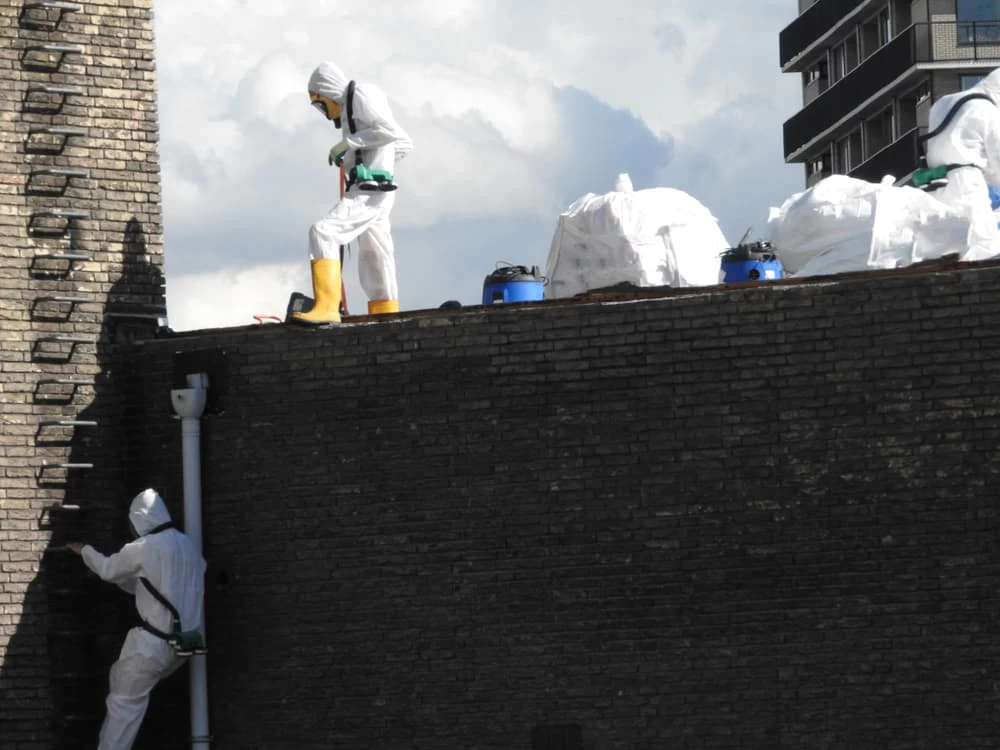
From there, we handle the permit notification to the NYS DOL Albany District Office, which oversees Ulster County projects under Industrial Code Rule 56. Once the paperwork is in order, our abatement crew sets up containment negative air pressure, sealed work zones, proper PPE and removes the material according to state protocol. Whether it’s floor tile mastic in a 1974 ranch or pipe insulation around a boiler that’s been in place since the Carter administration, the process is the same: methodical, documented, and done to code.
After removal, air clearance testing is conducted by qualified personnel. You get the results in writing. That documentation confirming zero residual asbestos is what lets your renovation contractor back on site, what satisfies a buyer’s attorney in a real estate transaction, and what gives your family the actual peace of mind that the job is finished. All waste is transported and disposed of under NYS DEC regulations, with proper manifesting at every step.
The most common asbestos-containing materials in Modena Gardens homes are the ones that were standard in residential construction between 1965 and 1985: 9-by-9 vinyl floor tiles and the black mastic adhesive underneath them, popcorn acoustic ceiling texture, pipe and boiler insulation, drywall joint compound, and asbestos cement siding. If your home was built in that window and hasn’t been fully renovated, there’s a reasonable chance at least one of these materials is present. Asbestos tile removal and asbestos popcorn ceiling removal are two of the most frequent jobs in this housing stock and both require licensed abatement, not a DIY approach.
We handle the full scope: asbestos survey coordination, licensed removal, containment, air monitoring, waste disposal, and final clearance documentation. If the abatement reveals mold behind a wall or water damage under a floor which happens regularly in older Modena Gardens homes, especially after a wet spring or a pipe failure we handle that remediation too. You don’t have to manage multiple contractors or explain the situation twice.
For homeowners dealing with an insurance-covered event, we coordinate directly with your carrier. If you’re in the middle of a pre-sale inspection, the clearance documentation produced after abatement is exactly what a buyer’s attorney or lender will ask for. Either way, the process ends with written proof not a verbal assurance that the work was done correctly and the space is safe.
Do I need an asbestos survey before renovating my Modena Gardens home?
Yes and in New York State, it’s not just a recommendation. Under Industrial Code Rule 56, any renovation, remodeling, repair, or demolition work on a building constructed before 1974 requires an asbestos survey conducted by a certified NYS Asbestos Inspector before work begins. For homes built between 1974 and 1980, the same requirement effectively applies in practice because asbestos-containing materials were still widely used during that window.
In Modena Gardens, where the majority of the housing stock was built in the 1970s, this affects a large portion of homeowners planning any kind of renovation. The Town of Plattekill requires a copy of the completed asbestos survey as part of the permit process for renovation and demolition work. If you skip the survey and your contractor disturbs asbestos-containing material without proper containment and disposal, the liability falls on you as the property owner not the contractor. Getting the survey done first is the only way to start a renovation on solid legal and safety ground.
How much does asbestos removal cost for a home in Modena Gardens?
The honest answer is that it depends on the scope specifically, how much material is present, what type it is, and whether it’s friable or non-friable. For a straightforward job like asbestos tile removal in a single room or popcorn ceiling removal in a few hundred square feet, costs in the New York market typically start around $1,500 and can run to $5,000 or more depending on the area and containment requirements. Larger jobs involving pipe insulation, boiler wrap, or whole-house remediation can reach $15,000 to $30,000 or beyond.
What drives cost up in Ulster County specifically is the combination of state-mandated air monitoring requirements and the permit notification process under the NYS DOL Albany District Office. These aren’t optional add-ons they’re required by law. A contractor who quotes you significantly less than the market rate is almost certainly skipping steps that the law requires, which creates re-remediation risk and potential legal exposure for you. We provide a free estimate so you know exactly what you’re dealing with before committing to anything.
What happens if asbestos is found during a renovation already in progress?
Stop the work. That’s not an overreaction it’s the correct response. If a contractor opens a wall, pulls up flooring, or disturbs a ceiling and suspects asbestos-containing material, work in that area needs to pause until a certified inspector can assess the material. In New York State, continuing to disturb suspected asbestos-containing material without proper containment and licensed abatement is a violation of Industrial Code Rule 56 and can result in significant fines.
This scenario comes up more often than people expect in Modena Gardens, where homes were built during the peak asbestos-use era and many haven’t been substantially renovated since. A kitchen remodel that pulls up 1970s vinyl flooring, or a bathroom gut that opens walls with old joint compound, can surface asbestos that was never identified in a pre-renovation survey or in cases where no survey was done at all. We handle mid-project asbestos discoveries with 24/7 availability, so a Friday afternoon find doesn’t have to shut down a job site for a week.
Does asbestos need to be removed, or can it be left in place in my Modena Gardens home?
Not all asbestos has to be removed immediately. If the material is non-friable meaning it’s intact, not crumbling, and not going to be disturbed encapsulation or management-in-place is sometimes an acceptable approach under NYS regulations. Asbestos cement siding that’s in good condition, for example, may not require immediate removal. The key word is “disturbed.” The moment you’re planning renovation work that will cut, sand, break, or demolish the material, removal is required.
In the context of Modena Gardens homes, the calculus changes depending on what you’re planning to do with the property. If you’re renovating to sell, buyers’ lenders and attorneys increasingly require documented clearance. If you’re renovating to stay, the decision depends on the condition of the material and whether any planned work will affect it. A certified inspector can walk you through what needs to come out now and what can be managed and that assessment is always the right starting point before making any decisions.
How do I know the asbestos abatement job is actually finished and safe?
The answer is air clearance testing and it should always come with written documentation. After abatement is complete, qualified personnel conduct post-abatement air monitoring to confirm that airborne asbestos fiber levels are within acceptable limits before the space is re-occupied or handed back to other contractors. This isn’t a visual check or a verbal sign-off. It’s a measured result, documented in a report that you keep.
We provide written air clearance results after every job. For Modena Gardens homeowners going through a real estate transaction, that documentation is often the specific item a buyer’s attorney will request before closing. For families with children or elderly residents and this area has a notably older population it’s the only form of confirmation that actually means something. Under NYS regulations, project records including air monitoring results must be retained for 30 years. We maintain those records so you’re covered long after the job is done.
Can we handle asbestos abatement if your insurance is covering the damage?
Yes, and this comes up regularly in the Hudson Valley. A burst pipe in a cold Modena Gardens winter, a roof damaged by a nor’easter, a basement flood from spring snowmelt these are real, common scenarios in this area, and they frequently disturb asbestos-containing materials in older homes. When that happens, the abatement is often part of a larger insurance claim that also includes water damage restoration or structural repair.
We coordinate directly with insurance carriers, which removes a significant layer of stress from an already difficult situation. We also handle mold remediation and water damage restoration in addition to asbestos abatement so if a pipe failure has disturbed asbestos-containing insulation and left water damage behind, one company manages the entire scope. That matters when you’re dealing with an adjuster, a restoration timeline, and a household that needs to get back to normal. The documentation produced throughout the abatement process permits, air monitoring results, waste disposal manifests is also exactly what insurance carriers need to process and close a claim properly.