Your 1980s Modena Home May Not Be as Safe as You Think
Homes built in the early 1980s the dominant era in ZIP 12548 still contain asbestos in places most homeowners never expect. We provide licensed asbestos abatement in Modena, NY, so you know exactly what you’re dealing with before anything gets worse.
I needed a professional consultation explanation of procedure for safe removal of Asbestos in my apartment complex. Without having an account yet, I was very impressed with the caring, knowledgeable and generous advice offered by Jessica, and will look forward to doing business in the future. Thank you so much! I feel much more informed about a sometimes scary endeavor. Peace. Nancy Silva Mineola, NY.
Mia Munoz
Used this company to clean up some water flood in my house. They were fast and easy to work with.very professional, Would recommend to anyone!
Nini Valle
Great company, had a flood and they responded quickly and efficiently. Billed my insurance company directly. I highly recommend this company!
joe colapietro, jr
I had pipe freeze in my basement right before a snow storm and they made to within an hour to help start the clean up process. They we by our side throughout the entire process and even helped with the insurance company. They did such a great job with the cleanup, repair, remidiation, I contracted them to perform the repairs and finishes in the basement. They came with enough manpower and material to get the job done. Leo and Jessica were nothing but a pleasure to deal with!!
Cristian Arredondo c
I had some water damage in my home and Green Island was able to take care of my issue quickly and effectively. I am very pleased with the work they did. They responded quickly and were very professional.
Michael M
Outstanding service! From the office to the field crew everyone was friendly, helpful and responsive. I highly recommend Green Island Group.
You stop guessing. That’s the first thing. Once a licensed inspection confirms what’s there and a proper removal is completed, you’re no longer mid-renovation wondering if the dust in the air is a problem. You have documentation, you have clearance results, and you can move forward whether that’s finishing a kitchen remodel off Route 32 or getting a deal across the finish line before closing.
For Modena homeowners specifically, the 1980s housing stock is the issue most people don’t see coming. Materials installed in that era vinyl floor tiles, textured acoustic ceilings, drywall joint compound regularly tested positive for asbestos, even in homes built well after most people assume the risk ended. The freeze-thaw cycles that hit this part of the Hudson Valley every winter accelerate the breakdown of older building materials, which means something that was stable last year may not be this spring.
The other outcome worth naming: peace of mind that’s actually backed by paperwork. Post-abatement air monitoring is standard on every job we do. You get written results. That’s what satisfies a buyer’s contingency, what your contractor needs before re-entering the space, and what an insurance adjuster wants to see if the abatement was tied to a covered event.
The License That Legally Separates Us From Everyone Else
We hold the NYS DOL Asbestos Handling License the specific state credential required by law to perform asbestos abatement in New York. Not a general contractor license. Not a remodeling certification. The actual license that the New York State Department of Labor issues to asbestos abatement contractors. Before you hire anyone for this work, ask for that license number and verify it. We’ll give you ours without hesitation.
We serve the Town of Plattekill and the surrounding Ulster County corridor, which means we know the building stock along Route 44/55, the older farmhouses off Allhusen Road, and the regulatory process administered by the NYS DOL’s Albany District Office the office with jurisdiction over your project. This isn’t new territory for us.
Beyond asbestos, we handle mold remediation, water damage restoration, lead abatement, and demolition under one roof. If your Modena renovation uncovers more than one problem which happens more often than people expect in older homes you’re not starting over with a new contractor.
No Guesswork Here's Exactly What Happens on Your Property
It starts with an assessment. A licensed inspector comes to your Modena property, identifies any suspected asbestos-containing materials, and collects samples for lab analysis. You get a clear answer not a vague “it might be fine.” If asbestos is confirmed, we walk you through what needs to be removed, what can stay, and what the project timeline looks like before anything else happens.
From there, we handle the NYS DOL notification and any permit requirements through the Town of Plattekill’s building department. Under NYS Industrial Code Rule 56, any renovation or demolition of a pre-1974 structure requires a mandatory asbestos survey before work begins and if your home or outbuilding predates that threshold, that requirement applies to you. We take care of the filing so you’re not navigating state regulatory paperwork on your own.
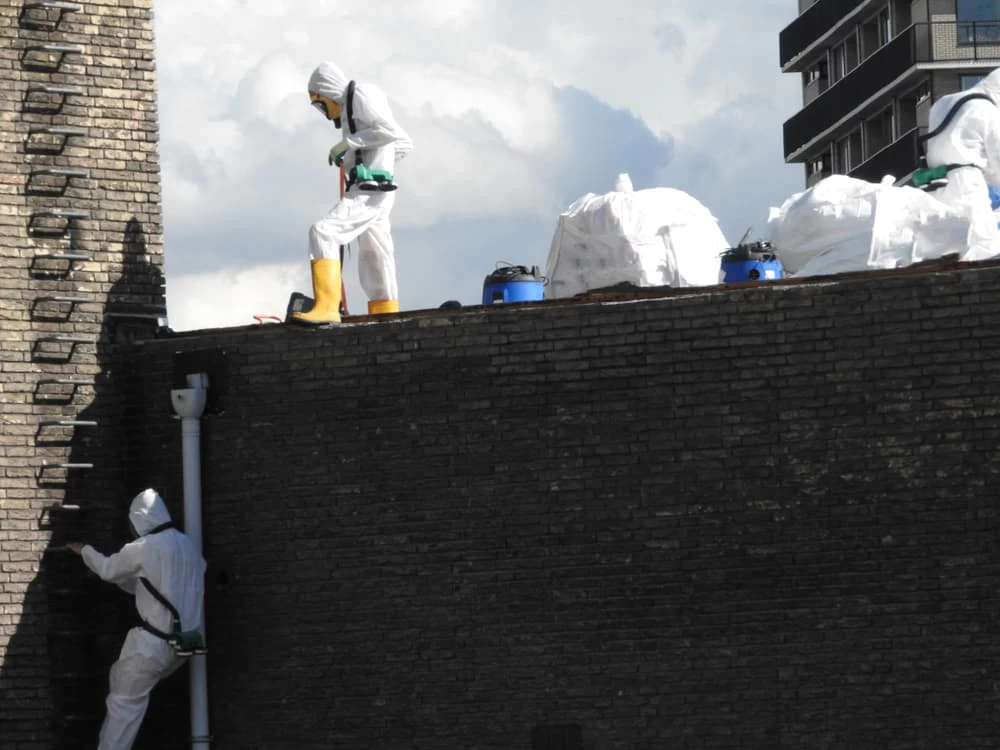
The removal itself happens under full containment. Affected areas are sealed off, negative air pressure is maintained, and materials are disposed of according to state hazardous waste requirements. When the work is done, post-abatement air monitoring confirms the space is clear. You receive written clearance documentation the kind that satisfies buyers, contractors, and insurance adjusters and we don’t consider the job finished until that step is complete.
What's Included and Why It Matters in Modena Specifically
Asbestos shows up differently depending on when a home was built and how it’s been maintained. In Modena’s 1980s housing stock, the most common materials we encounter are vinyl floor tiles and the black mastic adhesive underneath them, textured popcorn ceilings, and drywall joint compound all of which were manufactured with asbestos well into that decade. In the older farmhouses and agricultural structures surrounding the hamlet, you’re more likely to find pipe insulation, boiler wrap, and asbestos-cement roofing panels that were standard in agricultural construction for generations.
Every abatement project we perform includes the initial inspection and lab sampling, NYS DOL project notification, full containment setup, licensed removal by certified workers, compliant hazardous waste disposal, and post-abatement air monitoring with written clearance results. We also handle asbestos tile removal and asbestos popcorn ceiling removal as standalone services when the scope is limited to a single material type not every project requires a full-property abatement.
If your abatement need is connected to storm damage, a burst pipe, or another insured event all realistic scenarios given the Hudson Valley’s freeze-thaw winters we coordinate directly with your insurance carrier and bill them on your behalf. We also assist commercial property owners along Modena’s growing Route 32 corridor who need abatement completed before renovation permits can be issued. One call covers the scope, the paperwork, and the timeline.
Do Modena homes built in the 1980s actually need an asbestos inspection before renovating?
Yes and this is one of the most common misconceptions we run into. Many homeowners assume the 1980s were safely past the asbestos era, but that’s not accurate. Asbestos-containing materials were still being manufactured and installed throughout the 1980s, including vinyl floor tiles, the adhesive mastic used to bond them, textured acoustic ceilings, and drywall joint compound. The EPA didn’t move to restrict most asbestos uses until 1989, and even that rule was partially overturned in 1991.
In ZIP 12548, where the dominant housing era is the early-to-mid 1980s, the risk is real and specific. If you’re planning a bathroom gut, a kitchen remodel, or any demo work that touches flooring, ceilings, or walls in a Modena home from that period, an inspection before you start is the right move not just for safety, but because disturbing asbestos-containing material without proper abatement creates legal liability and can complicate a future sale.
What does asbestos abatement actually cost for a home in the Modena, NY area?
The honest range for asbestos removal in New York State is $1,500 to $30,000 or more, and that spread reflects how much the scope can vary. A single room with asbestos floor tiles runs very differently than a whole-house popcorn ceiling removal or a project involving pipe insulation throughout a basement. The square footage involved, the type of material, whether it’s friable or non-friable, and the complexity of containment all factor into the final number.
For Modena homeowners, the cost also needs to be weighed against what happens if you don’t address it. A failed home inspection, a buyer who walks, or a stop-work order on a permitted renovation all carry real financial consequences often larger than the abatement itself. We provide free estimates so you have an actual number before making any decisions, and if your project is tied to an insured event, we bill your carrier directly.
Is an asbestos survey legally required before I renovate an older property in Plattekill?
Under NYS Industrial Code Rule 56, any demolition, renovation, remodeling, or repair of a building where construction began before 1974 requires a mandatory asbestos survey by a licensed contractor before work starts. That requirement applies throughout the Town of Plattekill, and the NYS DOL’s Albany District Office which has jurisdiction over Ulster County enforces it.
In practical terms, this means the Town of Plattekill’s building permit process is conditioned on ICR 56 compliance. If you apply for a renovation permit on a pre-1974 structure without a completed asbestos survey on file, you may not receive the permit or you may receive a stop-work order once the project is underway. Modena has a meaningful inventory of pre-1974 structures, including farmhouses, outbuildings, and historic properties like those in the Thaddeus Hait Farm district on Allhusen Road. If your property falls into that category, the survey isn’t optional.
What's the difference between asbestos that's safe to leave alone and asbestos that needs to be removed?
The key distinction is whether the material is friable or non-friable. Friable asbestos is material that can be crumbled, pulverized, or reduced to powder by hand pressure and when that happens, fibers become airborne and inhalable. Non-friable asbestos is bound within a solid matrix, like intact floor tiles or undamaged asbestos-cement siding, and generally doesn’t release fibers if left undisturbed.
The complication is that “undisturbed” is a moving target. In Modena’s climate, where freeze-thaw cycles put real stress on building materials every winter, something that was non-friable and stable three years ago may have deteriorated. And the moment you start renovation work pulling up tiles, opening walls, demoing a ceiling the non-friable category no longer applies. That’s why the decision to leave material in place versus remove it should always be made by a licensed inspector after a physical assessment, not by a general contractor or a homeowner eyeballing it.
How long does an asbestos removal project take, and will my family need to leave the house?
Timeline depends on scope. A limited asbestos tile removal or popcorn ceiling removal in a single room can often be completed in one to two days. A larger project involving multiple material types across several rooms will take longer typically several days to a week, sometimes more for complex properties. We give you a realistic timeline before work begins, not an optimistic number that shifts once we’re on site.
Whether your family needs to vacate depends on the size of the containment zone and where it falls in the home. For localized projects, it’s often possible to maintain normal occupancy in unaffected areas. For larger or whole-house abatements, temporary displacement is usually necessary. We schedule around your situation and communicate clearly about re-occupancy timing including the post-abatement air monitoring results that confirm when it’s safe to return. That step happens before we call the job done.
How do I know if the asbestos contractor I'm hiring in Ulster County is actually licensed?
This is worth asking directly and verifying independently. New York State requires a specific NYS DOL Asbestos Handling License for any asbestos abatement work this is separate from a general contractor license, a home improvement license, or any other credential a contractor might hold. The NYS Department of Labor maintains a public listing of licensed asbestos contractors that you can search by company name or license number.
In Ulster County, there have been cases of unlicensed operators performing asbestos work leaving homeowners with incomplete remediation, no valid clearance documentation, and potential legal exposure if the work is later discovered to have been done without proper licensing. Before you sign anything, ask the contractor for their NYS DOL Asbestos license number and look it up. Our license is verifiable through the state’s public database, and we’ll provide the number on request. That’s the standard every Modena homeowner should hold any contractor to before work begins.