If you’re renovating a pre-1980 home in Mombaccus, there’s a real chance you’ll run into asbestos before the project is done and when that happens, you need a NYS DOL-licensed contractor, not a guess.
I needed a professional consultation explanation of procedure for safe removal of Asbestos in my apartment complex. Without having an account yet, I was very impressed with the caring, knowledgeable and generous advice offered by Jessica, and will look forward to doing business in the future. Thank you so much! I feel much more informed about a sometimes scary endeavor. Peace. Nancy Silva Mineola, NY.
Mia Munoz
Used this company to clean up some water flood in my house. They were fast and easy to work with.very professional, Would recommend to anyone!
Nini Valle
Great company, had a flood and they responded quickly and efficiently. Billed my insurance company directly. I highly recommend this company!
joe colapietro, jr
I had pipe freeze in my basement right before a snow storm and they made to within an hour to help start the clean up process. They we by our side throughout the entire process and even helped with the insurance company. They did such a great job with the cleanup, repair, remidiation, I contracted them to perform the repairs and finishes in the basement. They came with enough manpower and material to get the job done. Leo and Jessica were nothing but a pleasure to deal with!!
Cristian Arredondo c
I had some water damage in my home and Green Island was able to take care of my issue quickly and effectively. I am very pleased with the work they did. They responded quickly and were very professional.
Michael M
Outstanding service! From the office to the field crew everyone was friendly, helpful and responsive. I highly recommend Green Island Group.
You get your renovation back. The project that stalled the moment you pulled up those old floor tiles or cut into the pipe insulation it moves forward again. More importantly, you’re not carrying the weight of wondering whether something hazardous is still in the air your family is breathing.
For homeowners in Mombaccus and the surrounding Rondout Valley, this matters more than it might in a newer neighborhood. The Town of Rochester holds the largest concentration of continuously inhabited old-stone houses in New York State some dating back to the 1600s. Even the more modest mid-century farmhouses along the Route 209 corridor were built during the decades when asbestos was standard in flooring, insulation, ceiling treatments, and joint compound. You’re not dealing with an unlikely scenario. You’re dealing with the statistical norm for this area.
What you walk away with after a properly completed abatement isn’t just a cleared room it’s written air clearance documentation, a completed NYS DOL permit record, and the ability to hand a future buyer or insurance adjuster a clean paper trail. That documentation follows the property for 30 years under New York State law. Getting it right the first time isn’t just about today’s renovation. It protects the value of what you own.
We hold the NYS DOL Asbestos Handling License the specific credential required by New York State law to legally perform asbestos abatement. Not a general contractor’s license. Not an OSHA card. The actual license that Industrial Code Rule 56 demands before anyone touches regulated material in a pre-1980 home.
Beyond that, our team carries IICRC certification, USEPA Lead and RRP credentials, and MBE/WBE/MWBE designations a portfolio that reflects a company built around environmental remediation, not one that added asbestos as an afterthought to a renovation business. That distinction matters when you’re dealing with a 1940s farmhouse near Mombaccus Mountain and you need someone who handles asbestos, mold, and water damage under one roof rather than coordinating three separate contractors.
We actively serve the Kerhonkson and Accord corridor throughout Ulster County and have an established presence across the Rondout Valley. This isn’t a company learning your area we already work here.
It starts with an assessment. Before anything is removed, the material in question gets identified and evaluated whether that’s floor tile adhesive in a kitchen, pipe insulation in the basement, or a popcorn ceiling in a bedroom that hasn’t been touched since 1972. You’ll know what you’re dealing with before any work begins.
From there, we handle the NYS DOL project notification on your behalf. This is the step most homeowners in Mombaccus don’t know exists and the one that can shut a project down if it’s skipped. The state requires formal notification before licensed abatement begins, and managing that process is part of what you’re hiring us for. If your project is tied to a water damage or storm damage insurance claim which is common in this area given the freeze-thaw winters and the aging pipe systems in older Rondout Valley homes we coordinate directly with your carrier.
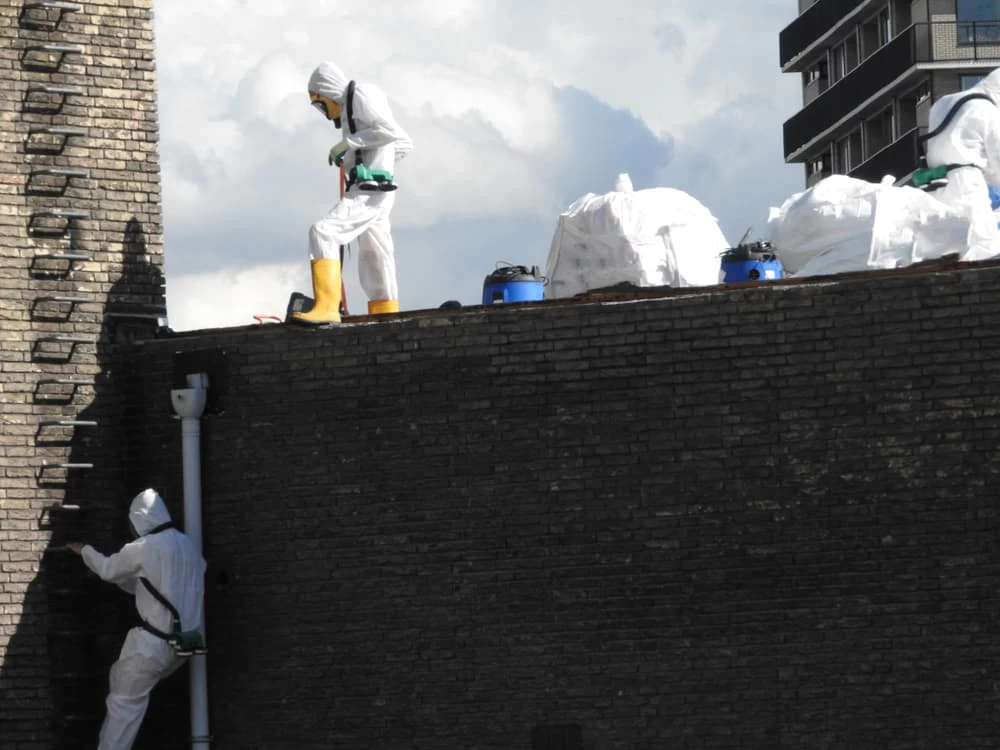
The abatement itself is contained work. The affected area is sealed, negative air pressure is established, and the material is removed and disposed of according to NYS regulations. When the physical work is done, post-abatement air clearance monitoring is conducted not skipped, not optional. You receive the written results. That documentation is what lets your contractor, your real estate agent, or your insurance adjuster confirm the space is clean.
Asbestos Tile and Popcorn Ceiling Removal, Mombaccus
What's Covered and Why It's Built for Homes Like Yours
The most common asbestos abatement jobs in Mombaccus fall into a few predictable categories. Vinyl floor tile removal particularly the 9×9 inch tiles common in mid-century construction is one of the most frequent triggers. The tiles themselves may or may not contain asbestos, but the black mastic adhesive underneath almost always does in homes built before 1980. Popcorn ceiling removal is another. That textured finish was applied widely in the 1960s and 1970s, and it’s exactly the kind of material that gets disturbed the moment someone decides to modernize a living room or bedroom.
Pipe insulation is the third category that comes up constantly in the older farmhouses and converted structures throughout the Rondout Valley. Decades of freeze-thaw cycling the kind of winters Mombaccus sees every year degrade that insulation over time. When it starts to crumble, it becomes friable, which under NYS Industrial Code Rule 56 means it requires licensed abatement regardless of the square footage involved.
We handle all of these scenarios, along with full-structure surveys, demolition support, mold remediation, and lead abatement when those issues surface alongside asbestos which in a pre-1950 home, they often do. The threshold that triggers mandatory licensed abatement in New York is 10 square feet or 25 linear feet of disturbed material. That’s a low bar. Most renovation projects cross it in a single room.
Does my old Mombaccus farmhouse actually need asbestos testing before renovation?
If your home was built before 1980, the honest answer is: probably yes, and skipping that step creates real legal and financial exposure. New York State Industrial Code Rule 56 requires that any renovation disturbing 10 or more square feet or 25 or more linear feet of suspect material in a pre-1980 building be handled by a licensed abatement contractor. That threshold gets crossed fast. One bathroom floor, one section of pipe insulation, one ceiling you’re there.
In Mombaccus specifically, the housing stock is old even by Ulster County standards. The Town of Rochester has some of the oldest continuously inhabited structures in New York State. That means the materials inside these homes flooring adhesives, insulation, ceiling textures, joint compounds reflect decades of construction practices that relied heavily on asbestos. Testing before you renovate isn’t just a regulatory checkbox. It’s how you avoid stopping a project mid-demo because you’ve already disturbed regulated material without a permit in place.
How much does asbestos removal typically cost for a home in Ulster County?
For most residential projects in the Mombaccus and broader Ulster County area, asbestos removal runs somewhere between $1,500 and $5,000 depending on the scope a single room of floor tile, a section of pipe insulation, or a popcorn ceiling in one space. Larger projects involving multiple materials or whole-house surveys can reach $10,000 to $30,000 or more, but that’s not the typical starting point for a homeowner dealing with one specific issue.
What’s worth knowing is that costs in New York have increased in recent years, in part because post-abatement air clearance monitoring is now a mandatory part of the process and that monitoring adds both time and cost that some older estimates didn’t include. The better framing isn’t “how cheap can I get this done” it’s “what does it cost me if this gets done wrong.” A failed renovation inspection, a re-remediation job, or a real estate deal that falls apart over undisclosed asbestos will cost you far more than the abatement itself.
What happens if I accidentally disturb asbestos during a renovation in Mombaccus?
Stop the work. That’s the first and most important step. If you’ve cut into, broken, or otherwise disturbed material you suspect contains asbestos floor tile, ceiling texture, pipe wrap, drywall compound the right move is to seal off the area as best you can, limit foot traffic through the space, and call a licensed abatement contractor before anything else happens in that room.
Under NYS Industrial Code Rule 56, once regulated material has been disturbed, the cleanup and disposal must still be handled by a licensed contractor. The fact that it was accidental doesn’t change the legal requirement. What it does change is the urgency because friable asbestos (material that’s been broken or crumbled) releases fibers into the air more readily than intact material. In an older Rondout Valley home where the HVAC system may circulate air through multiple rooms, that’s a real concern. We offer 24/7 emergency response for exactly this kind of situation because discovering it on a Saturday night doesn’t mean you should wait until Monday.
Does Green Island Group handle the NYS permits for asbestos abatement in Mombaccus?
Yes and this is one of the more practical reasons to work with a licensed contractor rather than trying to navigate the process independently. Before any licensed asbestos abatement begins in New York, the contractor is required to submit a project notification to the NYS Department of Labor. That notification has to be filed within a specific timeframe before work starts, and it requires documentation that most homeowners aren’t set up to produce on their own.
We handle that entire process on your behalf the notification, the coordination with state authorities, and the permit documentation that becomes part of your property’s permanent abatement record. For homeowners in Mombaccus who are managing a renovation from outside the area, or who are simply dealing with enough moving parts already, this is not a small thing. It removes one of the most unfamiliar and time-consuming obligations from your plate and ensures the project doesn’t stall because of a paperwork gap.
Can water damage in an older Rondout Valley home trigger an asbestos abatement requirement?
It can, and in the Mombaccus area it happens more often than people expect. When a pipe bursts in a home built before 1980 which is most of the housing stock in the Town of Rochester the water damage frequently affects flooring, ceilings, or wall materials that contain asbestos. Once those materials are saturated and begin to deteriorate, they can become friable, which means they release fibers and fall under the mandatory abatement requirements of NYS Industrial Code Rule 56.
The freeze-thaw winters in this part of Ulster County make pipe bursts a seasonal reality, not a freak occurrence. And because many of the older farmhouses and stone homes in the Rondout Valley have aging cast-iron pipe systems with original insulation, the overlap between water damage and asbestos disturbance is a genuine pattern here. We handle both water damage remediation and asbestos abatement and bill insurance carriers directly, which removes a significant administrative burden when you’re already dealing with an unexpected emergency.
How do I know the asbestos is actually gone after the job is finished?
You get written documentation. After every abatement project, we conduct post-abatement air clearance monitoring an independent measurement of airborne fiber levels in the treated space. The results are provided to you in writing, and they confirm whether the area has been cleared to the standards required by NYS Industrial Code Rule 56. This isn’t a verbal assurance. It’s a documented record.
That documentation matters beyond just peace of mind. If you’re selling a property in Mombaccus, a buyer’s inspector or attorney will want to see it. If the project was part of an insurance claim, your adjuster will want it. And under New York State law, asbestos abatement project records must be maintained for 30 years so what we produce on the day the job is done becomes part of your home’s permanent history. Knowing the work was done right, and being able to prove it, are two different things. The air clearance report gives you both.