If your Montauk property was built before 1980, there’s a real chance asbestos is somewhere in it and a renovation, storm, or real estate deal can bring that to the surface fast. We handle asbestos abatement from inspection through final clearance, so you’re covered on every front.
I needed a professional consultation explanation of procedure for safe removal of Asbestos in my apartment complex. Without having an account yet, I was very impressed with the caring, knowledgeable and generous advice offered by Jessica, and will look forward to doing business in the future. Thank you so much! I feel much more informed about a sometimes scary endeavor. Peace. Nancy Silva Mineola, NY.
Mia Munoz
Used this company to clean up some water flood in my house. They were fast and easy to work with.very professional, Would recommend to anyone!
Nini Valle
Great company, had a flood and they responded quickly and efficiently. Billed my insurance company directly. I highly recommend this company!
joe colapietro, jr
I had pipe freeze in my basement right before a snow storm and they made to within an hour to help start the clean up process. They we by our side throughout the entire process and even helped with the insurance company. They did such a great job with the cleanup, repair, remidiation, I contracted them to perform the repairs and finishes in the basement. They came with enough manpower and material to get the job done. Leo and Jessica were nothing but a pleasure to deal with!!
Cristian Arredondo c
I had some water damage in my home and Green Island was able to take care of my issue quickly and effectively. I am very pleased with the work they did. They responded quickly and were very professional.
Michael M
Outstanding service! From the office to the field crew everyone was friendly, helpful and responsive. I highly recommend Green Island Group.
Montauk’s building stock tells a specific story. The beach cottages near Ditch Plains, the older motel strips along Old Montauk Highway, the harbor-side buildings around Lake Montauk a huge portion of this hamlet was built between the 1940s and 1970s, right in the middle of peak asbestos use in construction. Floor tiles, pipe insulation, popcorn ceilings, joint compound, cement board siding these materials were standard then, and they’re still sitting in walls, ceilings, and floors across Montauk today.
What makes Montauk different from most Long Island communities isn’t just the age of the buildings it’s the coastal exposure. Salt air, humidity, and the kind of storm damage that hits a peninsula at the end of Long Island accelerate the breakdown of asbestos-containing materials. Something that might stay intact for decades in an inland home can become friable and hazardous much faster here. When that happens during a renovation or after water intrusion, you’re not just dealing with a construction issue you’re dealing with a health risk that needs to be handled properly and documented.
When we complete asbestos abatement correctly, you walk away with more than a clean space. You have the air clearance test results, disposal documentation, and regulatory paperwork that the East Hampton Town Building Department needs before your renovation can move forward. If you’re managing a rental property or planning to sell, that documentation protects your investment and removes a major liability from the table.
We’re a licensed asbestos abatement contractor serving Suffolk County, including the full length of the South Fork out to Montauk. We hold all required New York State Department of Labor licenses, every technician on our crews is individually certified under NYS Industrial Code Rule 56, and we handle the complete scope inspection, abatement, and post-clearance testing so you’re not coordinating between multiple vendors.
Montauk isn’t a market we occasionally dip into. The East End has its own rhythm, its own building stock, and its own regulatory environment through the Town of East Hampton. We understand what that means in practice the specific materials common in mid-century construction out here, the compressed renovation window that runs from fall through spring before the summer rental season opens, and the documentation standards the building department expects before issuing permits.
If you’re managing your property remotely from the city, we communicate clearly at every stage and deliver a complete written record when the job is done. No chasing us down for paperwork.
It starts with a certified inspection. A NYS-licensed asbestos inspector surveys your property, identifies any suspected asbestos-containing materials, and collects samples for lab analysis. This step is required by New York State before any renovation or demolition work can begin on a pre-1980 structure and in Montauk, where the building stock skews heavily toward that era, it applies to a lot of properties. The East Hampton Town Building Department will not issue a permit for covered work without it.
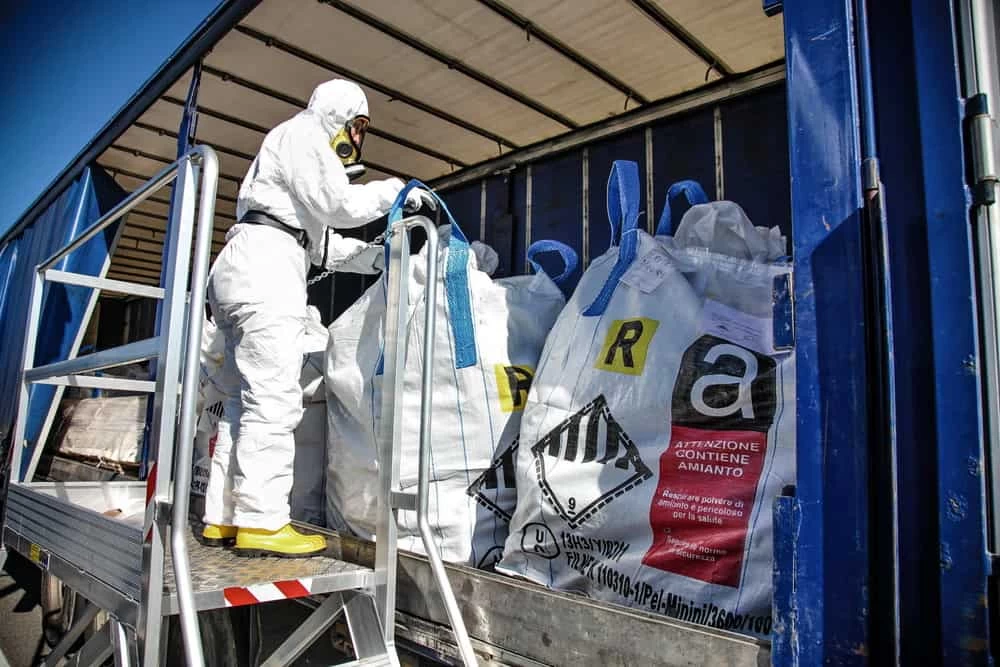
If asbestos is confirmed, we design and execute a full abatement plan. That means proper containment of the work area, negative air pressure to prevent fiber migration, removal by our certified crews, and disposal through licensed waste channels. For larger projects, we handle the advance notification required by the NYS Department of Labor. Nothing gets skipped because it’s inconvenient.
Once removal is complete, an independent air clearance test is conducted to confirm the space is safe. You receive the full documentation package clearance results, disposal manifests, and project records everything your building department, insurance carrier, or future buyer would need to see. For Montauk property owners working against a Memorial Day deadline to open for the summer rental season, we build the timeline around your schedule from the start.
Asbestos Tile and Popcorn Ceiling Removal, Montauk
The Full Scope of Asbestos Removal We Handle in Montauk
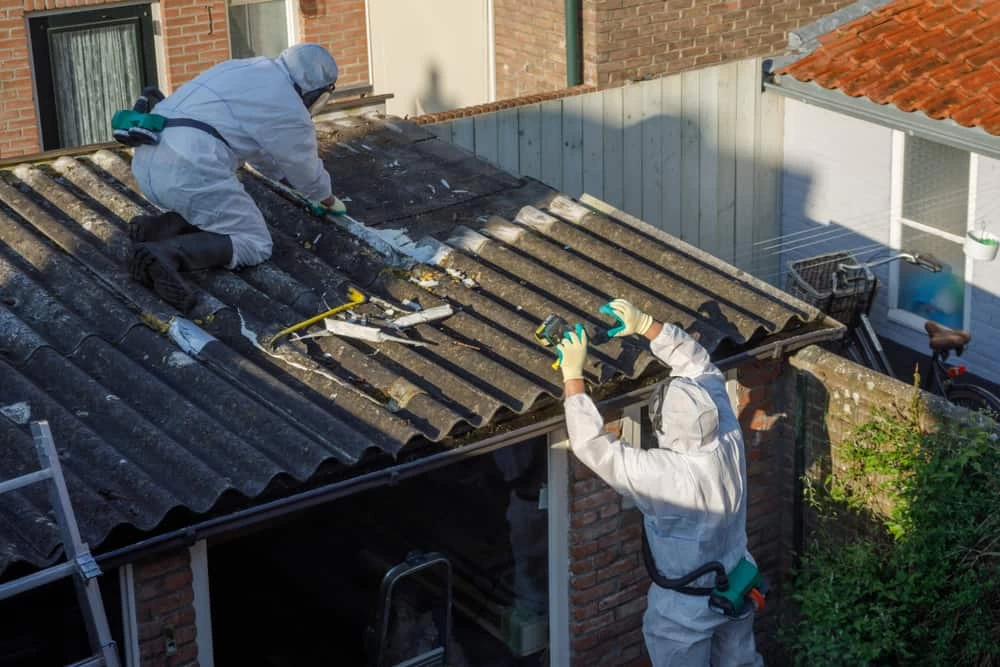
Asbestos shows up in more places than most people expect in Montauk’s older properties. The 9-inch vinyl floor tiles that were standard in mid-century cottages and commercial buildings almost always contain asbestos. Popcorn ceilings applied through the late 1970s frequently do too. Pipe insulation on older cast-iron radiator systems, asbestos cement board siding on exterior walls, and the joint compound used in drywall finishing from that era all of it falls under the same regulatory requirements and needs to be handled by a licensed abatement contractor.
We cover the full range of asbestos removal services: asbestos tile removal, popcorn ceiling removal, pipe insulation abatement, siding removal, and full interior remediation for properties undergoing gut renovations. We also work alongside general contractors on larger commercial projects the kind of mid-century motel or restaurant renovation that’s become increasingly common in Montauk as older hospitality properties get repositioned for the high-end market.
Every project we complete in the 11954 ZIP code follows NYS ICR 56 requirements in full. That means licensed crews, certified inspectors, proper containment, regulated disposal, and a complete documentation package at close. If you’re a seasonal property owner, a developer, or a GC managing a project on the East End, you get the same standard of work and the same paper trail regardless of project size.
Does my Montauk home actually need an asbestos inspection before I renovate?
If your Montauk property was built before 1980, yes and it’s not optional. New York State Industrial Code Rule 56 requires a certified asbestos inspection before any renovation or demolition work that could disturb potential asbestos-containing materials. The East Hampton Town Building Department enforces this requirement as part of the permitting process, so if you’re pulling a permit for a kitchen gut, bathroom remodel, or any structural work, the inspection needs to happen first.
This matters more in Montauk than people sometimes realize. A large share of the hamlet’s housing stock the beach cottages near Ditch Plains, the older homes around Fort Pond, the commercial buildings along the main strip was built during the decades when asbestos was used in floor tiles, ceiling coatings, pipe insulation, and wall systems. Skipping the inspection doesn’t make the asbestos disappear. It just means you’re disturbing it without protection, without documentation, and without legal cover.
What types of asbestos-containing materials are most common in Montauk properties?
The most common materials we find in Montauk’s older properties are 9-inch vinyl floor tiles and the black mastic adhesive beneath them, popcorn or textured ceiling coatings, pipe insulation on cast-iron radiator systems, asbestos cement board used on exterior siding, and joint compound in drywall. These were all standard construction materials from the 1940s through the late 1970s which maps almost exactly to Montauk’s primary development era.
Commercial and hospitality properties in Montauk add another layer. The older motel buildings, dockside structures near Montauk Harbor, and restaurant spaces built during that same period often contain asbestos in floor systems, ceiling tiles, and mechanical room insulation. If you’re renovating or redeveloping a mid-century commercial property on the East End, a thorough asbestos survey is not just a legal requirement it’s how you avoid a costly stop-work order mid-project.
How does Montauk's coastal climate affect asbestos risk in older buildings?
It accelerates the problem. Asbestos-containing materials that might stay intact for decades in a dry, inland environment tend to break down faster in Montauk’s coastal conditions. Salt air and persistent humidity cause pipe insulation to crumble, floor tile adhesives to degrade, and ceiling coatings to lose their bond. When those materials become friable meaning they can crumble or release fibers when disturbed the health risk increases significantly.
Storm damage is the other factor. Montauk sits at the end of a peninsula exposed to the Atlantic on the south and Block Island Sound on the north. Nor’easters, coastal flooding, and storm surge events hit properties here harder than most of Long Island. When water intrusion occurs in a pre-1980 building particularly in lower-lying areas near the harbor or Napeague it often disturbs ACMs that were previously stable. That’s when what looked like a water damage situation becomes an asbestos situation that needs a licensed contractor, not just a remediation crew.
How long does the asbestos abatement process take from inspection to clearance?
For a typical residential project say, floor tile removal in a mid-century cottage or popcorn ceiling abatement in a few rooms the process from initial inspection to final air clearance usually runs one to two weeks, depending on lab turnaround for the sample analysis and project scheduling. Larger projects, or commercial properties with multiple affected areas, take longer and require advance notification to the NYS Department of Labor, which adds lead time.
For Montauk property owners, timing matters a lot. If you’re working toward a Memorial Day opening for a summer rental or trying to get a renovation completed before the season starts, you need to build the abatement phase into your project timeline early not treat it as an afterthought. We work with your renovation schedule from the first call and give you a realistic timeline upfront, so your general contractor isn’t sitting idle waiting on clearance.
Can I stay in my home during asbestos removal in Montauk?
It depends on the scope and location of the work. For contained, single-room projects like removing asbestos floor tile in a basement or a bathroom it’s sometimes possible to remain in other parts of the home with proper containment in place. For larger projects involving multiple areas, mechanical systems, or materials that require more extensive disturbance, temporary relocation is the safer and more practical choice.
In Montauk, this question comes up differently than it does in a suburban setting. Many property owners here are managing the home remotely or using it as a vacation rental, which means the occupancy question is often less of an issue the property may already be vacant during the fall and winter renovation window. If you’re a year-round resident, we’ll be straightforward with you about what the specific scope of your project requires so you can plan accordingly. We don’t push people out of their homes unnecessarily, but we also won’t minimize a situation that genuinely calls for it.
Do I need asbestos abatement before listing my Montauk property for sale?
Not always required by law, but it’s worth understanding what you’re dealing with before a buyer’s inspector finds it first. In New York, sellers have disclosure obligations, and a known asbestos condition in a pre-1980 home can complicate a transaction especially in a market like Montauk where buyers are often represented by experienced real estate attorneys and are paying well over a million dollars for a property.
If asbestos-containing materials are present but undisturbed and in good condition, full abatement before listing isn’t always necessary. But if materials are deteriorating, if there’s been any storm or water damage, or if the buyer is planning significant renovations, the issue will surface during due diligence regardless. Having a certified inspection on file and abatement documentation if work was done gives buyers confidence and removes a negotiating point that could cost you more than the abatement itself. In Montauk’s real estate market, that kind of clean documentation carries real weight.