If your Moores Mill home was built before 1980, asbestos abatement isn’t a maybe it’s a conversation worth having before your next renovation uncovers something mid-project.
I needed a professional consultation explanation of procedure for safe removal of Asbestos in my apartment complex. Without having an account yet, I was very impressed with the caring, knowledgeable and generous advice offered by Jessica, and will look forward to doing business in the future. Thank you so much! I feel much more informed about a sometimes scary endeavor. Peace. Nancy Silva Mineola, NY.
Mia Munoz
Used this company to clean up some water flood in my house. They were fast and easy to work with.very professional, Would recommend to anyone!
Nini Valle
Great company, had a flood and they responded quickly and efficiently. Billed my insurance company directly. I highly recommend this company!
joe colapietro, jr
I had pipe freeze in my basement right before a snow storm and they made to within an hour to help start the clean up process. They we by our side throughout the entire process and even helped with the insurance company. They did such a great job with the cleanup, repair, remidiation, I contracted them to perform the repairs and finishes in the basement. They came with enough manpower and material to get the job done. Leo and Jessica were nothing but a pleasure to deal with!!
Cristian Arredondo c
I had some water damage in my home and Green Island was able to take care of my issue quickly and effectively. I am very pleased with the work they did. They responded quickly and were very professional.
Michael M
Outstanding service! From the office to the field crew everyone was friendly, helpful and responsive. I highly recommend Green Island Group.
You stop guessing. That’s the first thing. When you’re living in a Moores Mill home with original construction the kind of post-and-beam farmhouse or mid-century ranch that defines this area’s residential character there’s always a low-level uncertainty about what’s inside the walls, under the floor, or wrapped around the pipes in the basement. Proper asbestos removal doesn’t just eliminate a health risk. It eliminates that uncertainty.
The freeze-thaw winters Dutchess County is known for don’t do older building materials any favors. Pipe insulation cracks. Floor tile mastic loosens. Materials that were stable when your Moores Mill home was built can shift into something genuinely hazardous after decades of temperature cycling. Getting ahead of that especially before a renovation means you’re not stopping a project mid-demo because someone found something suspicious.
For homeowners in Moores Mill who are thinking about selling, documented abatement by a licensed contractor is a real asset. Buyers and their attorneys know what to look for in older Dutchess County properties. A clean abatement record protects your asking price and keeps a deal from falling apart at inspection.
5,000 Projects. Zero Shortcuts. Still Picking Up the Phone.
We’ve been doing this work across New York State for over 12 years more than 5,000 completed remediation and restoration projects, from Long Island to the Hudson Valley. Moores Mill and the surrounding La Grange area aren’t a market we stumbled into. They’re a territory we’ve built real experience in, including the older residential fabric that runs along Route 82 through the region. We understand the specific challenges that come with homes built in the 1950s and 1960s, the freeze-thaw cycles that stress aging materials, and the renovation patterns that tend to uncover problems in Dutchess County properties.
We’re MWBE-certified and a state-approved contractor credentials that require documentation, review, and ongoing compliance. That’s not a badge we put on a website for decoration. It means we’ve been vetted at the state level, which matters when you’re trusting someone to work inside your home.
We also handle mold remediation, water damage restoration, and fire damage restoration. For homeowners in older properties where problems rarely show up alone, that full-service capability means one contractor, one call, and no coordination headaches.
From First Call to Clearance Here's What to Expect
It starts with a conversation, not a sales pitch. When you reach out to us, someone knowledgeable picks up not a call center. You describe what you’re dealing with, we ask the right questions, and we can usually give you a clear sense of what the next step looks like before anyone sets foot in your home. If you’re mid-renovation and things have stopped, we understand that urgency. Our documented response time runs to within hours of the initial call.
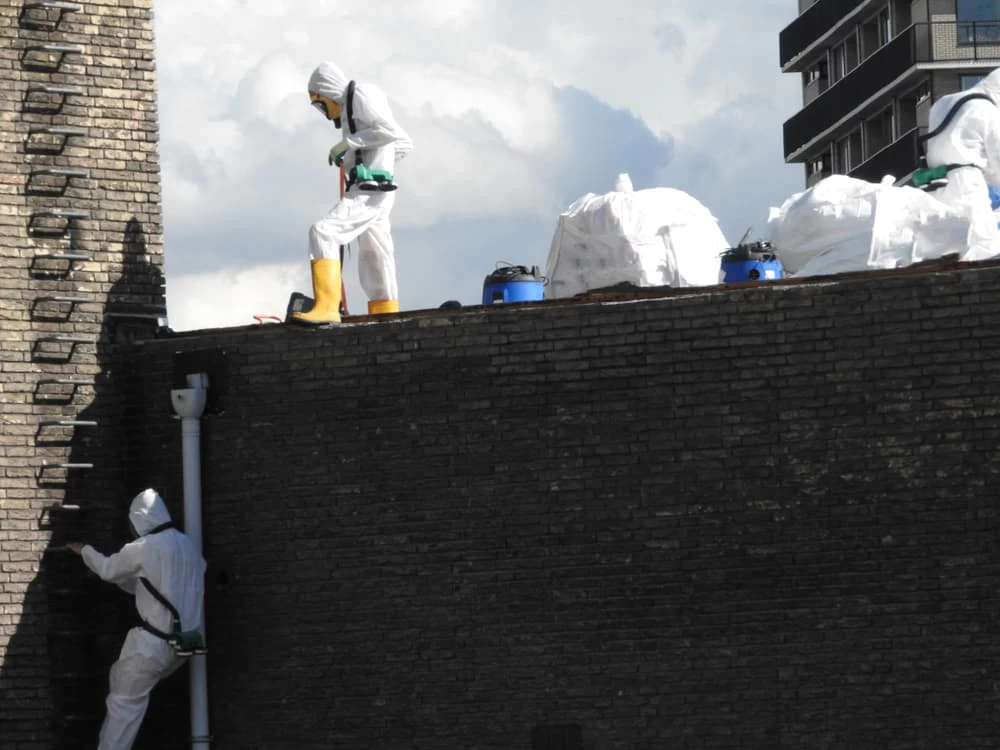
Once we’re on-site, we assess the suspected materials and determine whether abatement is required. In New York State, all asbestos work is governed by Industrial Code Rule 56 which means the contractor performing the removal must hold a current NYS DOL license, and air monitoring must be conducted by an independent third party. We operate in full compliance with ICR 56, including independent air sampling and post-abatement clearance testing before any space is reoccupied. For your Moores Mill property, that means your home isn’t just cleaned it’s documented as safe.
After clearance testing is complete, you get the paperwork. Not just our word that the job is done, but a verifiable record you can hand to a future buyer, an insurance adjuster, or a building inspector without hesitation.
Every Material Type, Every Room, One Licensed Crew
Asbestos in older Moores Mill homes doesn’t show up in just one place. In the properties along and around Route 82 homes with original mechanical systems, older kitchens, and basements that have seen decades of use asbestos-containing materials tend to appear in layers. Floor tiles and the mastic beneath them. Pipe insulation wrapped around old boilers and plumbing. Popcorn ceiling texture in rooms that haven’t been touched since the 1970s. Plaster, roofing shingles, exterior siding. We handle all of it.
Asbestos tile removal and asbestos popcorn ceiling removal are two of the most common requests we get from homeowners in this area often discovered when someone starts a kitchen update or decides to finally deal with that basement. Both require proper containment, licensed removal, and compliant disposal under NYS DEC regulations. We handle the full process, including packaging and transport to approved disposal facilities.
If your discovery is connected to a covered peril a burst pipe, water intrusion, storm damage we bill insurance directly. That’s one less thing to manage when you’re already dealing with a disrupted home. And if you’re not sure whether what you’re looking at is actually asbestos, we can walk you through the assessment process before any commitment is made.
Does my Moores Mill home likely have asbestos if it was built before 1980?
The honest answer is: probably yes, in at least one location. Homes built before 1980 and especially those built between the 1940s and mid-1970s were constructed during the period when asbestos-containing materials were standard across the industry. In Moores Mill specifically, where the housing stock includes genuinely historic properties alongside mid-century construction, the likelihood is higher than in newer suburban communities.
Common locations include floor tiles (especially the 9×9 inch vinyl tiles common in mid-century kitchens and basements), pipe insulation around boilers and plumbing, attic insulation, plaster walls, popcorn ceiling texture, and roofing materials. The presence of asbestos doesn’t automatically mean there’s a health risk materials that are intact and undisturbed are generally stable. The risk increases when materials are damaged, deteriorating, or about to be disturbed by renovation work. If you’re planning any work on an older Moores Mill home, testing before you start is the right move.
What does asbestos abatement actually cost for a home in Dutchess County?
Cost depends on what materials are involved, how much of it there is, and where it’s located. For a single room or a specific material type like asbestos tile removal in a basement or popcorn ceiling removal in one room you’re typically looking at a range of $1,500 to $3,000 for a standard residential project. Larger or more complex jobs involving multiple material types, mechanical rooms, or whole-home remediation will run higher.
In New York State, the cost of licensed abatement reflects the regulatory requirements that protect you: licensed contractor crews, independent air monitoring, compliant disposal, and post-abatement clearance testing. These aren’t optional add-ons they’re legal requirements under ICR 56. Hiring an unlicensed operator to cut corners might look cheaper upfront, but if the work isn’t done to code, the liability falls on you as the property owner. For Moores Mill homeowners, the peace of mind that comes with documented, compliant abatement is worth understanding as part of the actual cost equation.
What happens if asbestos is found during a renovation in my Moores Mill home?
Stop work on that area immediately. This is the right call, and most experienced renovation contractors in the Dutchess County area know to do this. Disturbing asbestos-containing materials without proper containment cutting into them, sanding them, breaking them apart can release fibers into the air. Once that happens, you have a much bigger problem than a paused renovation.
Call a licensed asbestos abatement contractor before anyone goes back into that space. Under New York State Industrial Code Rule 56, the abatement work must be performed by a licensed contractor, not the renovation crew. We can respond quickly in many cases within hours which matters when you have a project on hold and costs mounting. Once we complete the abatement and clearance air testing confirms the space is safe, your renovation crew can return. The process is disruptive, but it’s manageable when you have a contractor who moves fast and handles the regulatory side without putting that burden on you.
Is asbestos abatement in Moores Mill regulated differently than in New York City?
Yes, and it’s an important distinction. New York City has its own DEP permit system that layers on top of state requirements it’s one of the most heavily regulated environments for asbestos work in the country. Moores Mill, as an unincorporated hamlet within the Town of La Grange, falls under NYS jurisdiction only. There’s no city-level permit overlay here.
That means the governing framework is New York State Industrial Code Rule 56, administered by the NYS Department of Labor’s Asbestos Control Bureau out of the Albany district office. ICR 56 requires that the abatement contractor hold a current NYS DOL license, that air monitoring be conducted by an independent third party (not the same company doing the removal), and that post-abatement clearance testing be completed before the space is reoccupied. These are state-level requirements that apply to every licensed abatement job in Dutchess County. We operate in full compliance with all of them and the documentation we provide at the end of the job reflects that.
Can Dutchess County's winters actually make asbestos more dangerous over time?
They can, and this is something that doesn’t get talked about enough for homeowners in the Moores Mill area. The freeze-thaw cycle that Dutchess County experiences every winter temperatures dropping below freezing and then rising again, repeatedly puts real stress on older building materials. Pipe insulation, floor tile mastic, plaster, and other materials that contain asbestos can crack, loosen, or crumble over time as a result of that thermal movement.
When asbestos-containing materials go from non-friable (solid, intact) to friable (crumbling, able to release fibers), the risk profile changes significantly. A boiler room with pipe insulation that was perfectly stable ten years ago may look different today after a decade of Moores Mill winters. This is one of the reasons we recommend that homeowners in older properties have their suspected materials assessed periodically not just when a renovation is planned, but as part of general home maintenance awareness, especially after a particularly harsh winter season.
How do I know if a contractor is actually licensed for asbestos removal in New York State?
The NYS Department of Labor maintains a publicly searchable database of licensed asbestos contractors. You can look up any contractor by name and verify their current license status before signing anything. This is worth doing, because unlicensed asbestos work is a real problem in the renovation market and the consequences of hiring an unlicensed operator fall on you as the property owner, not just the contractor.
A licensed contractor in New York will hold a current NYS DOL asbestos contractor license under Industrial Code Rule 56. They should be able to provide that license number without hesitation. They should also be clear about the independent air monitoring requirement if a contractor tells you they’ll handle both the removal and the air monitoring themselves, that’s a red flag. ICR 56 requires those to be separate entities. We are fully licensed under ICR 56 and work with independent air monitoring firms on every job. If you want to verify our credentials before making any decision, we’ll point you directly to the state database no pressure, just transparency.