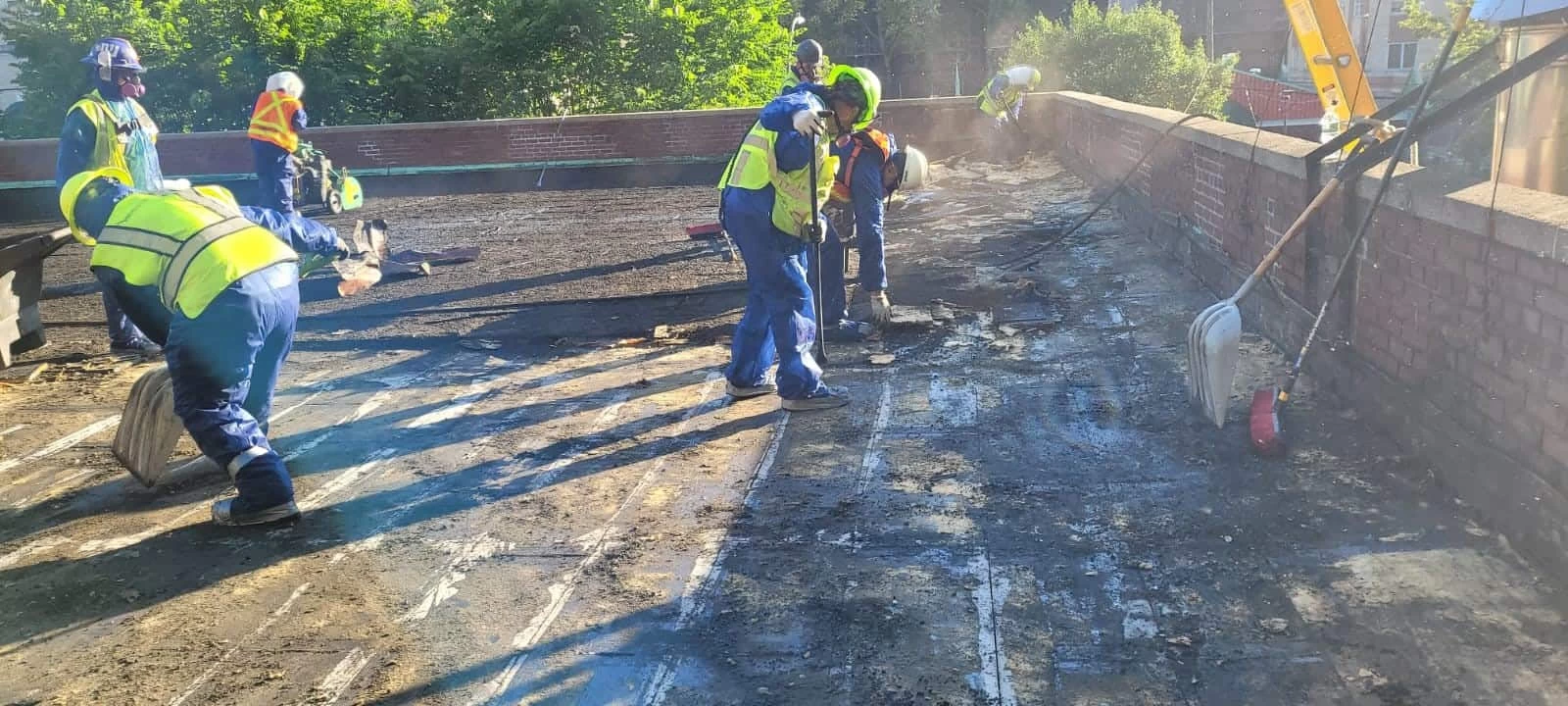
Morningside Heights was built between 1900 and 1910 and the asbestos in those walls, pipes, and floors has been there just as long. We handle licensed asbestos abatement in Morningside, NY with full NYC DEP compliance from start to finish.
I needed a professional consultation explanation of procedure for safe removal of Asbestos in my apartment complex. Without having an account yet, I was very impressed with the caring, knowledgeable and generous advice offered by Jessica, and will look forward to doing business in the future. Thank you so much! I feel much more informed about a sometimes scary endeavor. Peace. Nancy Silva Mineola, NY.
Mia Munoz
Used this company to clean up some water flood in my house. They were fast and easy to work with.very professional, Would recommend to anyone!
Nini Valle
Great company, had a flood and they responded quickly and efficiently. Billed my insurance company directly. I highly recommend this company!
joe colapietro, jr
I had pipe freeze in my basement right before a snow storm and they made to within an hour to help start the clean up process. They we by our side throughout the entire process and even helped with the insurance company. They did such a great job with the cleanup, repair, remidiation, I contracted them to perform the repairs and finishes in the basement. They came with enough manpower and material to get the job done. Leo and Jessica were nothing but a pleasure to deal with!!
Cristian Arredondo c
I had some water damage in my home and Green Island was able to take care of my issue quickly and effectively. I am very pleased with the work they did. They responded quickly and were very professional.
Michael M
Outstanding service! From the office to the field crew everyone was friendly, helpful and responsive. I highly recommend Green Island Group.
Your renovation moves forward. Your co-op board gets the documentation they asked for. Your contractor stops waiting. That’s what licensed asbestos removal actually delivers not just peace of mind, but a clear path to getting the work done without a stop-work order or a DEP violation hanging over the project.
In Morningside Heights, the buildings along Riverside Drive, Amsterdam Avenue, and Broadway weren’t built with modern renovations in mind. The steam heating systems in these pre-war apartment buildings run through pipe insulation that, in structures this old, almost certainly contains asbestos. When that insulation gets disturbed during a renovation, a pipe repair, or even a routine inspection you’re not just dealing with a mess. You’re dealing with a regulated hazardous material that requires licensed removal before any other work can legally continue.
The same applies to floor tiles, plaster, joint compound, and ceiling materials that were updated during mid-century renovations. Buildings in this neighborhood were layered over decades, which means the asbestos risk isn’t always obvious. A proper survey finds what’s actually there. Abatement removes it correctly. And post-removal air clearance testing confirms the space is safe so your co-op board, your building manager, and your contractor all have what they need to move forward.
The Credentials NYC Requires, the Response Morningside Heights Needs
Green Island Group is a full-service environmental remediation company serving all five boroughs, including Morningside Heights. Every asbestos project is handled in full compliance with NYC DEP rules, NYS Department of Labor licensing requirements, EPA NESHAP standards, and OSHA worker protection regulations the complete stack that New York City demands, not a shortcut version of it.
What makes a difference in a neighborhood like Morningside is range. When a steam pipe fails in a pre-war building near Morningside Park and takes asbestos-wrapped insulation with it, you don’t just have an asbestos problem you have water damage, potential mold exposure, and a demolition scope all at once. We handle all of it under one license and one point of contact, so nothing falls through the gap between separate contractors.
We’re available 24 hours a day, 7 days a week, 365 days a year. Verified customers describe arrival times of 30 minutes to an hour after calling. When a mid-renovation asbestos discovery stops your project, that response time is the difference between a one-day delay and a two-week standstill.
It starts with a site assessment. A certified inspector surveys the space, identifies any asbestos-containing materials, and documents what’s present. In Morningside Heights, where buildings were constructed before 1910 and renovated multiple times since, that survey often turns up materials in more than one location steam pipe insulation, floor tiles, ceiling coatings, or joint compound from a mid-century update. The survey isn’t a formality. It’s what determines the actual scope of the work.
From there, the regulatory process begins. In New York City, any building built before April 1, 1987 which covers virtually every structure in Morningside requires a DEP-certified asbestos investigation before renovation or demolition permits can be issued. If friable asbestos is present, an ACP-7 notification must be filed with NYC DEP at least 10 business days before abatement work can start. We file that notification and manage the paperwork, so the regulatory clock starts running immediately rather than sitting on your to-do list.
Once the notification window clears, our abatement crew sets up proper containment, removes the materials using negative air pressure and full protective protocol, and disposes of everything according to NYC and EPA requirements. The final step is post-abatement air clearance testing, performed by a certified independent inspector. When the air test passes, you receive the clearance documentation your co-op board or building manager needs and the project can move forward.
Asbestos abatement in a Morningside Heights pre-war building isn’t a single-material job. The scope typically involves steam pipe and riser insulation the most common and highest-risk ACM in this neighborhood’s housing stock along with 9×9 inch vinyl floor tiles from mid-century renovations, textured or popcorn ceiling coatings, drywall joint compound, plaster, and boiler room insulation in basement mechanical spaces. We survey and address all of it, not just the material that triggered the call.
Asbestos tile removal and asbestos popcorn ceiling removal are handled with the same full containment and disposal protocol as pipe insulation work. In occupied apartment buildings, that means proper negative air pressure containment to protect neighboring units and common areas a non-negotiable in a dense residential building where you share walls, floors, and ventilation with your neighbors.
If the abatement is connected to a water damage event a burst steam pipe, a roof leak, flooding from an upstairs unit we also handle the water damage restoration and mold remediation, and work directly with your insurance carrier on billing. You don’t manage three separate contractors and three separate claims. Pricing for residential asbestos removal in Manhattan typically ranges from $1,500 for a small single-room project to $30,000 or more for larger scope, and costs in the NYC market have increased 8–12% in 2025–2026 due to updated NYS DOL licensing requirements and higher disposal fees. A free estimate gives you a clear number before anything starts.
Do I need an asbestos test before renovating my Morningside Heights co-op?
Yes and in New York City, it’s not optional. Any building constructed before April 1, 1987 requires a DEP-certified asbestos investigation before renovation or demolition permits can be issued by the NYC Department of Buildings. Since virtually every residential building in Morningside Heights predates 1940, that requirement applies across the board.
Beyond the legal requirement, your co-op board will almost certainly require it as well. Most co-op boards in pre-war Manhattan buildings require proof of a licensed, insured contractor, documentation of any asbestos survey findings, and post-abatement air clearance certification before approving renovation work. Skipping the survey doesn’t just risk a DEP violation it risks your co-op board rejecting the project entirely and requiring you to undo work that’s already been done. Starting with a proper survey protects your timeline, your budget, and your standing with the building.
How long does asbestos abatement take in a New York City apartment?
The physical removal work itself for a typical single-room or single-material scope usually takes one to three days. But the full timeline in New York City is longer than that, because of the regulatory process built into the law.
Once friable asbestos is confirmed, an ACP-7 notification must be filed with NYC DEP at least 10 business days before abatement work can legally begin. That mandatory window is built into every project timeline, regardless of how quickly the contractor can mobilize. For a straightforward apartment renovation in Morningside Heights, you’re typically looking at two to three weeks from initial survey to final air clearance sometimes faster if the scope is limited and the paperwork moves efficiently. We file the ACP-7 notification immediately after the survey is complete, so the 10-day clock starts running as soon as possible rather than waiting on administrative delays.
Will I need to leave my apartment during asbestos removal in NYC?
It depends on where the work is happening and how extensive the scope is. For contained work within a single room a bathroom tile removal or a section of pipe insulation in a utility closet it’s often possible to remain in the rest of the apartment while the abatement crew works behind a sealed containment barrier with negative air pressure. For larger scope work, or work that affects common areas or HVAC systems in a shared building, temporary relocation may be necessary.
In a dense pre-war apartment building in Morningside Heights, the containment setup is especially important because you share walls, floors, and ventilation with neighboring units. Proper negative air pressure containment prevents asbestos fibers from migrating beyond the work area. We’ll walk you through exactly what the containment plan looks like for your specific situation before work begins including whether you need to make temporary arrangements so there are no surprises on day one.
What does asbestos in Morningside Heights buildings typically look like and where is it found?
In pre-war Manhattan apartment buildings which describes most of the residential stock in Morningside Heights asbestos shows up most commonly in steam pipe and riser insulation. The neighborhood’s buildings were built with steam heating systems, and the pipe insulation used in those systems before the 1970s has a very high likelihood of containing asbestos. If that insulation looks crumbly, wrapped in old cloth or paper, or has been disturbed at any point, it needs to be tested before anyone touches it.
Beyond pipe insulation, the other common locations are 9×9 inch vinyl floor tiles from mid-century renovations, textured ceiling coatings, drywall joint compound used in updates from the 1940s through the 1970s, and boiler room insulation in basement mechanical spaces. Buildings in Morningside were renovated in layers over more than a century, so multiple types of asbestos-containing materials can coexist in the same unit. A thorough survey by a certified inspector is the only way to know what’s actually present visual identification alone is not reliable.
What is the difference between asbestos encapsulation and full asbestos removal?
Encapsulation means sealing the asbestos-containing material in place with a bonding agent so that fibers cannot become airborne. Full removal means physically extracting the material and disposing of it off-site. Both are legitimate approaches under NYC DEP rules, but they apply in different situations.
Encapsulation is generally appropriate when the asbestos-containing material is in good condition not crumbling, not damaged, and not going to be disturbed by the renovation work you’re planning. If the pipe insulation in your building’s utility chase is intact and you’re not opening that wall, encapsulation may be a viable option. But if you’re renovating a kitchen or bathroom, removing flooring, or doing any work that will physically disturb the material, full removal is required. In Morningside Heights, where co-op renovations often involve opening walls and replacing flooring in buildings with multiple layers of mid-century updates, full removal is the more common outcome. A certified inspector can assess which approach applies to your specific scope and document the decision for your co-op board.
Who is responsible for asbestos removal in a Morningside Heights rental apartment?
In New York City, building owners are responsible for maintaining a safe living environment, which includes addressing hazardous materials like asbestos when they pose a risk to occupants. If asbestos-containing materials in your rental apartment are damaged, deteriorating, or have been disturbed by a repair, a renovation, or a building system failure like a burst steam pipe your landlord is generally responsible for having the condition assessed and remediated by a licensed contractor.
As a tenant, your first step is to document what you’ve found photographs, written communication to your landlord or building management, and a request for a DEP-certified asbestos inspection. If the landlord does not respond, NYC DEP and the NYC Department of Housing Preservation and Development (HPD) both have enforcement mechanisms for asbestos-related complaints in rental buildings. In a neighborhood like Morningside Heights, where a large share of residents are renters in large pre-war buildings managed by Columbia University or private landlords, knowing your rights and documenting everything in writing is the most important first step. We can also conduct an independent assessment if you need documentation to support a complaint or insurance claim.