If you’re renovating a pre-1900 home in Mount Ross, asbestos isn’t a maybe it’s almost certainly there. We remove it safely, legally, and without turning your project into a months-long ordeal.
I needed a professional consultation explanation of procedure for safe removal of Asbestos in my apartment complex. Without having an account yet, I was very impressed with the caring, knowledgeable and generous advice offered by Jessica, and will look forward to doing business in the future. Thank you so much! I feel much more informed about a sometimes scary endeavor. Peace. Nancy Silva Mineola, NY.
Mia Munoz
Used this company to clean up some water flood in my house. They were fast and easy to work with.very professional, Would recommend to anyone!
Nini Valle
Great company, had a flood and they responded quickly and efficiently. Billed my insurance company directly. I highly recommend this company!
joe colapietro, jr
I had pipe freeze in my basement right before a snow storm and they made to within an hour to help start the clean up process. They we by our side throughout the entire process and even helped with the insurance company. They did such a great job with the cleanup, repair, remidiation, I contracted them to perform the repairs and finishes in the basement. They came with enough manpower and material to get the job done. Leo and Jessica were nothing but a pleasure to deal with!!
Cristian Arredondo c
I had some water damage in my home and Green Island was able to take care of my issue quickly and effectively. I am very pleased with the work they did. They responded quickly and were very professional.
Michael M
Outstanding service! From the office to the field crew everyone was friendly, helpful and responsive. I highly recommend Green Island Group.
Most people calling about asbestos aren’t panicking. They’re mid-renovation, they’ve just pulled up a floor or opened a wall, and now they need answers fast. What you actually want is someone who can tell you exactly what you’re dealing with, handle it the right way, and get you back on track without dragging the process out or leaving you guessing.
Mount Ross sits in the northwest corner of Dutchess County, and the homes out here are genuinely old. We’re talking 1800s farmhouses, hand-wrapped pipe insulation, original plaster walls, slate roofs, and boiler systems that predate modern safety codes by decades. Freeze-thaw cycles through a hard Hudson Valley winter don’t do those materials any favors brittle pipe insulation and crumbling ceiling plaster are exactly the conditions that turn a contained asbestos risk into an active one. When that happens, you need someone who’s actually worked in this type of construction before, not someone who’s going to figure it out on your property.
After abatement is complete, you’ll have documented air clearance results that confirm the space is safe not just a contractor’s word for it. That documentation protects your health, your renovation timeline, and your ability to sell the property down the road without an environmental contingency derailing the deal.
5,000 Projects. We've Seen What's Inside These Walls.
We’ve been doing this work across New York State for over 12 years, with more than 5,000 completed projects including the kinds of older farmhouses, converted barns, and agricultural outbuildings that make up the building stock in and around Mount Ross. We hold NYS DOL licensing, EPA AHERA accreditation, and MWBE certification as a state-approved contractor. That last credential matters more than it might sound: it means we’ve been vetted at the government level for the same work we do for private homeowners.
We serve all of Dutchess County, including the rural northwest corner near the Columbia County line where Mount Ross sits. A lot of contractors who say “Dutchess County” mean Poughkeepsie. We mean the whole county including the parts that require an actual drive on County Route 50 to reach. We’re available 24/7, we bill insurance directly when a covered event is involved, and we don’t disappear after the job is done.
No Surprises Here's What the Process Actually Looks Like
It starts with a free assessment. Before any contract is signed, we come out, look at what you’re dealing with, and give you a clear picture of what materials are present, what the regulatory requirements are, and what a proper abatement would involve. There’s no cost to that conversation and no pressure attached to it.
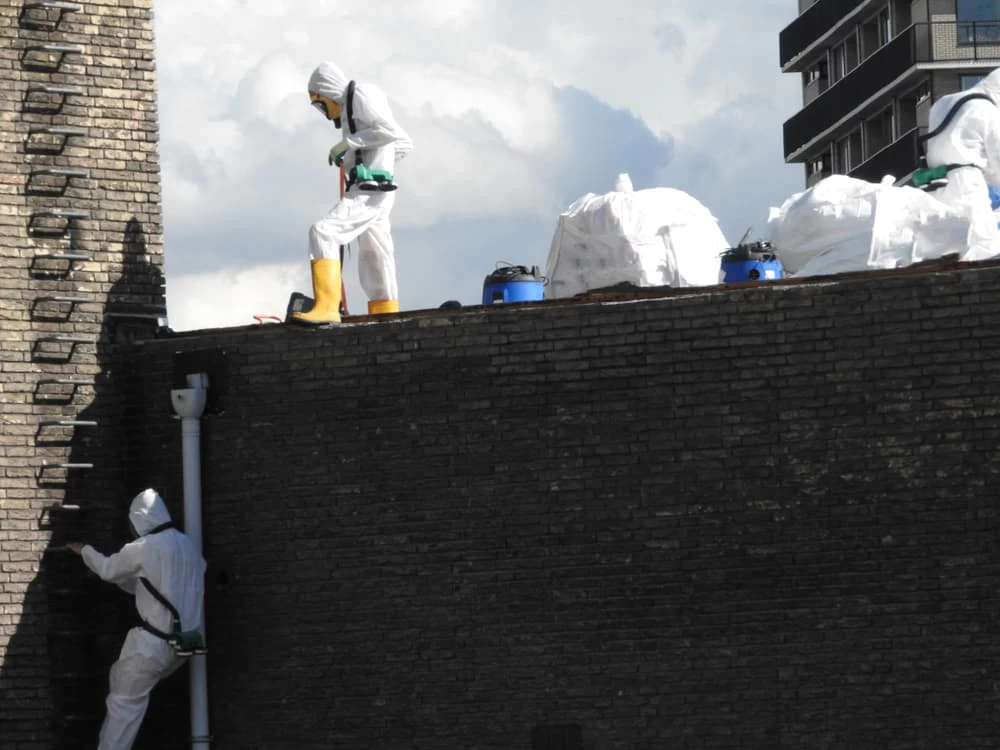
Once you decide to move forward, a certified NYS asbestos inspector conducts a survey of the property this is a legal requirement under New York State Industrial Code Rule 56 before any renovation or demolition of a pre-1974 structure. In Mount Ross, that applies to virtually every building in the hamlet. The inspector and the abatement contractor are separate parties by design, which keeps the process honest. After the survey confirms what’s present and where, we contain the work area, remove the asbestos-containing materials using proper handling and disposal protocols, and transport everything to a licensed disposal facility.
The final step is post-abatement air clearance testing an independent confirmation that fiber levels in the treated space are within safe limits. You get that documentation in writing. For a property in northern Dutchess County that may be mid-renovation or heading toward a sale, that paperwork is worth holding onto.
Every Material Type, Handled the Way New York Requires
Asbestos shows up in more places than most people expect in a home like the ones found near Mount Ross. Pipe insulation is the most common find in older farmhouses especially around boiler systems and basement plumbing that hasn’t been touched in decades. But we also regularly handle asbestos tile removal from mid-century additions built onto older structures, asbestos popcorn ceiling removal in rooms that were updated in the 1970s, and asbestos siding and roofing on outbuildings and converted agricultural structures throughout the Pine Plains area.
Plaster in pre-1900 homes sometimes contains asbestos as a binding agent, and that’s not something every contractor is prepared to deal with carefully. Attic insulation, particularly the vermiculite variety, is another material that warrants testing before any attic work begins. We assess all of it not just the obvious materials because in a structure this old, the risk is rarely limited to one location.
Every abatement project we complete in Dutchess County is fully compliant with NYS Industrial Code Rule 56 and EPA NESHAP standards. All waste is transported to a permitted disposal facility. You receive complete documentation at the end of the project survey results, abatement records, and air clearance testing everything you’d need for a permit file, a real estate disclosure, or your own records.
Does New York State require an asbestos survey before renovating in Mount Ross?
Yes and this is one of the most important things to understand before you start any renovation work on an older property in Mount Ross. Under New York State Industrial Code Rule 56, a certified asbestos survey is legally required before any demolition, renovation, remodeling, or repair of a building where construction began before 1974. Given that the housing stock in and around Mount Ross includes properties dating back to the colonial era and through the early 1900s, that requirement applies to nearly every structure in the hamlet.
The survey must be conducted by a certified NYS asbestos inspector not the contractor doing the removal. Skipping it doesn’t just create a health risk; it creates regulatory liability for both you as the property owner and any contractor who proceeds without the documentation. Dutchess County asbestos projects fall under the Albany District Office of the NYS Asbestos Control Bureau. If you’re not sure whether your property requires a survey, the safest assumption for any pre-1974 structure is that it does.
How much does asbestos removal typically cost for a Dutchess County home?
In New York, the average cost of asbestos removal runs around $2,170, with most residential projects falling between $1,296 and $3,050 depending on scope. That range has moved up in recent years roughly 8 to 12 percent due to updated NYS DOL licensing requirements, higher disposal fees at permitted facilities, and the post-abatement air clearance testing that is now standard practice on residential projects.
What affects your specific number is the type of material involved, how much of it there is, and where it’s located. A single area of pipe insulation in a basement is a different project than a whole-house assessment of an 1880s farmhouse with original plaster, asbestos floor tiles in a mid-century addition, and deteriorating roofing on an outbuilding. The free assessment we offer is the most direct way to get a realistic number for your specific situation without committing to anything.
What types of asbestos-containing materials are most common in older Pine Plains area homes?
In the Pine Plains and Mount Ross area, the most frequently encountered asbestos-containing materials in older homes are pipe and boiler insulation, floor tiles (particularly the 9×9 vinyl tiles common in mid-century additions), original plaster in pre-1900 construction, popcorn ceilings applied in the 1960s and 70s, and roofing or siding materials on outbuildings and agricultural structures. Vermiculite attic insulation is also worth testing if the home was built or updated between the 1950s and 1980s.
What makes properties in this part of northern Dutchess County particularly complex is that many of them are layered an 1800s farmhouse core with additions from multiple decades, each of which may contain different asbestos-containing materials installed at different points in time. It’s not unusual to find three or four distinct material types in a single property. That’s exactly why a thorough survey matters before any work begins, and why experience with this specific building stock makes a real difference in how the assessment is conducted.
Is asbestos in my Mount Ross farmhouse dangerous if I'm not renovating right now?
It depends on the condition of the material. Asbestos that is intact, undisturbed, and in good condition is generally considered non-friable meaning it’s not actively releasing fibers into the air. In that state, it’s typically not an immediate health emergency. The risk increases significantly when materials become damaged, deteriorate with age, or get disturbed by renovation work, water infiltration, or physical impact.
In Mount Ross specifically, the freeze-thaw cycling that comes with a hard Hudson Valley winter is worth taking seriously. Repeated freezing and thawing can cause older pipe insulation and ceiling plaster to degrade over time, moving materials from a stable condition to a friable one. If you’ve noticed crumbling insulation around basement pipes, deteriorating ceiling texture, or any material that looks like it’s breaking down after a rough winter, that’s worth having assessed not necessarily because it’s an emergency, but because catching it before a renovation or a sale is far easier than dealing with it mid-project.
How long does asbestos abatement take, and will I need to leave my home?
Timeline depends on the scope of the project. A focused abatement one material type in a contained area can often be completed in a day or two. A more involved project covering multiple material types across a larger structure, which is common in the older farmhouses throughout the Mount Ross and Pine Plains area, may take several days to a week. We give you a realistic timeline during the assessment so you’re not caught off guard.
Whether you need to vacate depends on what’s being abated and where. For work in a contained area of a large farmhouse, it’s sometimes possible to remain in unaffected parts of the property. For more extensive projects, temporary displacement is the safer and more practical approach. We know that in a rural area like Mount Ross where there aren’t many nearby accommodation options displacement is a real inconvenience, not just a scheduling note. We factor that into how we plan the project and communicate the timeline clearly before work begins.
Can Green Island Group handle asbestos in a barn or agricultural outbuilding near Mount Ross?
Yes, and it’s a more common request in this part of Dutchess County than most people realize. Agricultural outbuildings throughout the Pine Plains area barns, storage structures, converted farm buildings were frequently built or updated with asbestos-containing roofing, siding, and insulation materials during the early-to-mid 20th century. When those structures are being converted to residential or mixed-use space, asbestos abatement is a required step before interior renovation work can begin.
The same NYS Industrial Code Rule 56 requirements that govern residential abatement apply to these structures. A certified survey is required before demolition or renovation, the abatement must be performed by a licensed contractor, and post-abatement air clearance testing is the standard for confirming the space is safe to reoccupy. If you’re planning a barn conversion or renovating an outbuilding on your property near Mount Ross, reach out before the project starts it’s significantly easier to plan abatement into a renovation timeline from the beginning than to stop work mid-project after an unexpected discovery.