Most Mount Vernon Homes Built Before 1960 Need an Inspection
The median construction year in Mount Vernon is 1952. That means asbestos isn’t a maybe it’s a real possibility in your floors, your pipes, your ceilings. We give you a clear answer and a licensed path forward.
I needed a professional consultation explanation of procedure for safe removal of Asbestos in my apartment complex. Without having an account yet, I was very impressed with the caring, knowledgeable and generous advice offered by Jessica, and will look forward to doing business in the future. Thank you so much! I feel much more informed about a sometimes scary endeavor. Peace. Nancy Silva Mineola, NY.
Mia Munoz
Used this company to clean up some water flood in my house. They were fast and easy to work with.very professional, Would recommend to anyone!
Nini Valle
Great company, had a flood and they responded quickly and efficiently. Billed my insurance company directly. I highly recommend this company!
joe colapietro, jr
I had pipe freeze in my basement right before a snow storm and they made to within an hour to help start the clean up process. They we by our side throughout the entire process and even helped with the insurance company. They did such a great job with the cleanup, repair, remidiation, I contracted them to perform the repairs and finishes in the basement. They came with enough manpower and material to get the job done. Leo and Jessica were nothing but a pleasure to deal with!!
Cristian Arredondo c
I had some water damage in my home and Green Island was able to take care of my issue quickly and effectively. I am very pleased with the work they did. They responded quickly and were very professional.
Michael M
Outstanding service! From the office to the field crew everyone was friendly, helpful and responsive. I highly recommend Green Island Group.
Know What's in Your Mount Vernon Building Before Work Begins
Mount Vernon has one of the oldest housing stocks in all of Westchester County. With a median construction year of 1952 and nearly 35% of homes built before the 1940s, the odds that your renovation, gut rehab, or even a simple boiler replacement will turn up asbestos-containing materials are substantial. This is the reality of what’s inside buildings this age.
When asbestos is handled correctly, your project moves forward without legal exposure, without health risk, and without the kind of documentation gaps that kill real estate deals or trigger insurance disputes. You get a clearance report that satisfies your contractor, your lender, your insurer, and the Mount Vernon Department of Buildings all from one licensed team.
For landlords managing multi-family buildings in Fleetwood or the South Side, the stakes are even higher. Tenants share walls, floors, and ventilation systems. Containment isn’t optional it’s the whole job. Getting this right the first time means no re-abatement, no tenant complaints, and no liability sitting in your building for the next owner to deal with.
Every License Verified. Every Mount Vernon Project Documented.
We hold the full license stack required to legally perform asbestos abatement in New York State NYS Department of Labor Asbestos Handling License, NYC DEP Asbestos Contractor License, EPA certification, and NYS DEC compliance for certified waste disposal. These aren’t claims. They’re public records you can look up by name on the state’s own database.
Beyond the credentials, our experience across Mount Vernon speaks for itself. With over 5,000 completed projects across the metro area including multi-family buildings, co-ops, commercial properties, and single-family homes we’ve seen the full range of what older Westchester buildings contain. The Art Deco co-ops along Gramatan Avenue in Fleetwood. The pre-war downtown stock near Mount Vernon East station. The industrial parcels in Parkside. These aren’t hypothetical building types they’re the actual properties on our schedule.
We’re also M/WBE certified through the NYS Office of General Services and an approved contractor for New York State agencies. That level of vetting matters when you’re making a decision this important.
From Free Inspection to Clearance Certificate Here's the Sequence
It starts with a free on-site inspection. Someone from our team comes to your property, walks the space, and assesses every material that may require abatement not just the obvious one. In a pre-1940s home in Chester Heights or a 1950s co-op in Fleetwood, that often means multiple material types layered across decades of renovation. You get a complete picture before anything is priced or scheduled.
Once the scope is confirmed, we permit the work through the City of Mount Vernon’s Department of Buildings. Any pre-1980 structure in the city requires asbestos documentation before a renovation permit is issued, and we handle that process as part of the project not as an afterthought you’re left to figure out on your own.
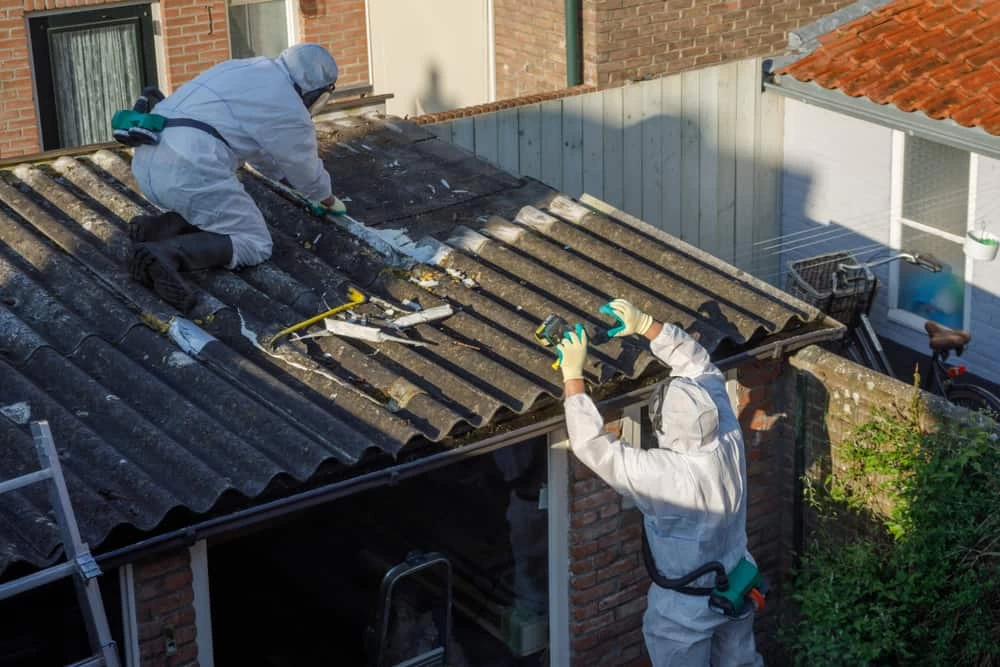
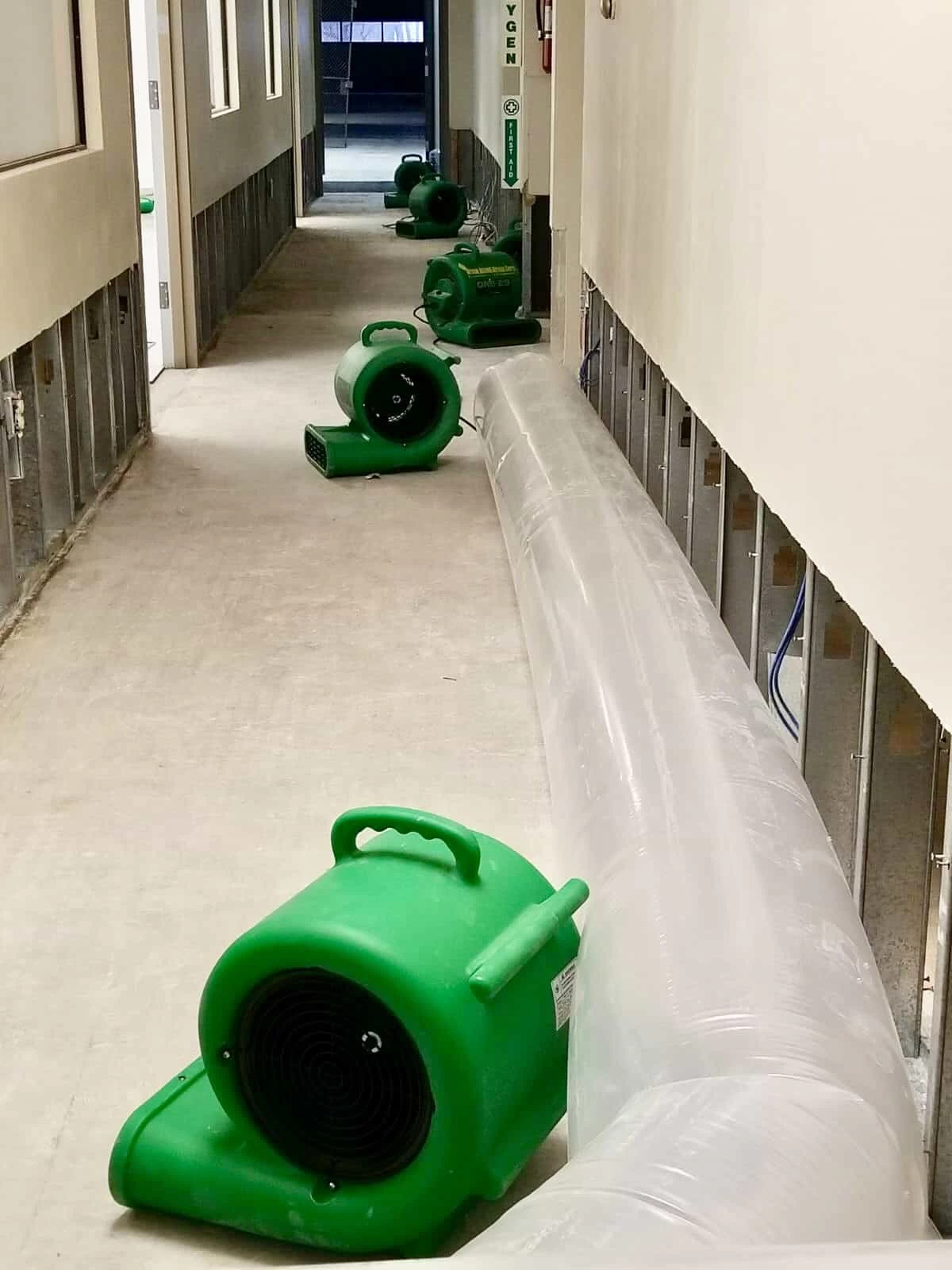
On the job, our team sets up negative air pressure containment and HEPA filtration to keep the work zone fully isolated from the rest of the building. This matters especially in multi-family properties where neighbors share common systems. After abatement is complete, post-clearance air testing is conducted, and you receive formal documentation confirming the space is safe for re-occupancy. That clearance report is what your contractor, your insurer, and your buyer’s attorney will ask for and it comes standard with every project.
Asbestos Tile and Popcorn Ceiling Removal, Mount Vernon
Every Material Type Found in Mount Vernon's Building Stock
The oldest buildings in Mount Vernon don’t have one asbestos problem they have several. Original steam pipe and boiler insulation from the 1920s and 1930s. Nine-by-nine vinyl floor tiles from the postwar renovation boom. Textured plaster and joint compound from mid-century interior work. Popcorn acoustic ceiling texture applied through the 1970s. We handle asbestos tile removal, asbestos popcorn ceiling removal, pipe wrap, duct insulation, roofing felt, and exterior siding materials.
We handle all of it under one project, one permit, and one set of clearance documentation. You don’t need to hire a separate contractor for the floor tiles and another for the pipe insulation. The full material inventory gets assessed, abated, and documented in a single coordinated process which matters when your renovation contractor is waiting on a start date.
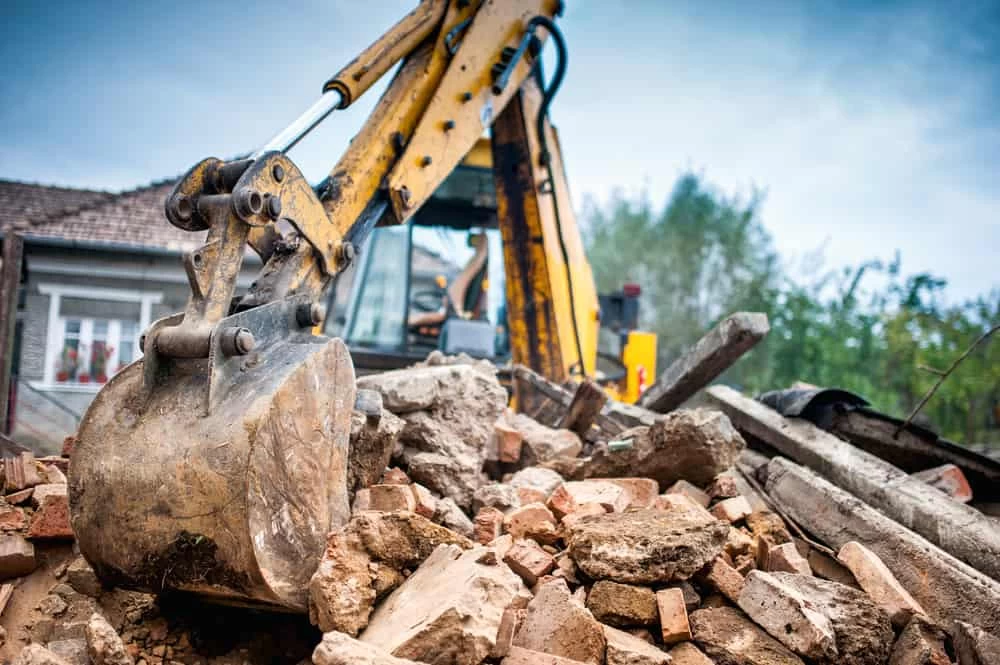
For properties near the active brownfield sites along MacQuesten Parkway or the city’s ongoing demolition work on South Sandusky Street, we’re specifically equipped to handle the complexity of pre-demolition abatement. Commercial, residential, and mixed-use properties across all three Mount Vernon zip codes 10550, 10552, and 10553 are within our regular service area, and we offer direct insurance billing for abatement triggered by water damage or storm events.
Does my Mount Vernon home actually need an asbestos inspection before renovating?
If your home was built before 1980, yes and in Mount Vernon, that covers the overwhelming majority of the housing stock. The city’s median construction year is 1952, and the Department of Buildings requires asbestos documentation before issuing renovation permits for pre-1980 structures. Skipping the inspection doesn’t make the requirement go away; it just means your contractor may have to stop work mid-project if asbestos-containing materials are discovered after demolition has already started.
Beyond the permit requirement, there’s a practical reason to inspect first. Older Mount Vernon homes particularly those in Chester Heights, Fleetwood, or the Downtown corridor often contain asbestos in multiple locations that aren’t visible until walls or floors are opened. Knowing the full scope before your renovation starts lets you budget accurately, schedule the abatement without disrupting your contractor’s timeline, and avoid the kind of mid-project discovery that turns a three-week kitchen remodel into a two-month ordeal.
How long does asbestos abatement typically take in a Mount Vernon apartment building?
The timeline depends on the scope specifically, how many materials are involved, how many units or areas are affected, and whether the building is occupied during the work. For a single-unit abatement in a Fleetwood co-op, a straightforward job involving floor tiles or pipe insulation can often be completed in one to three days. A larger multi-floor project in a South Side apartment building with multiple material types will take longer, typically one to two weeks depending on access and scheduling constraints.
What adds time in occupied Mount Vernon multi-family buildings is the containment setup and post-clearance air testing, both of which are non-negotiable under NYS Industrial Code Rule 56. The air testing happens after abatement is complete and must confirm fiber counts are below the clearance threshold before the space is re-occupied. We build this into every project timeline upfront, so there are no surprises about when tenants can return or when your contractor can begin the next phase of work.
What types of asbestos-containing materials are most common in Mount Vernon buildings?
Given the age of the housing stock in Mount Vernon, the most frequently encountered materials fall into a few consistent categories. Nine-by-nine floor tiles the small, off-white or gray vinyl tiles found in kitchens, bathrooms, and basements of postwar homes are extremely common in homes built between the 1940s and 1960s. Pipe and boiler insulation is nearly universal in pre-war buildings that were originally heated by steam, which describes most of the older Downtown and North Side stock. Popcorn acoustic ceiling texture was applied widely through the late 1970s and is present in a significant share of homes and apartment units from that era.
Less obvious but equally important: joint compound used in drywall finishing, exterior transite siding, roofing felt, and duct insulation around older HVAC systems. In a Mount Vernon building that has been renovated multiple times over 80 years which is the norm, not the exception these materials can be layered on top of each other. That’s why a thorough on-site inspection covering the full material inventory matters more here than in a newer suburb where the building history is simpler.
Will asbestos abatement in my Mount Vernon building disrupt my tenants?
It depends on where the work is being done and how the containment is set up. For work confined to a single unit, a mechanical room, or a basement, other tenants in the building are typically not affected provided the containment is done correctly. We use negative air pressure systems and full polyethylene sheeting to isolate the work area, which means air flows into the containment zone rather than out into common areas or adjacent units. In a multi-family building where residents share a ventilation system, this isn’t just a best practice it’s the standard that keeps the project from becoming a building-wide problem.
If the abatement involves common areas, hallways, or building systems that serve multiple units, some temporary access restrictions may be necessary. We communicate this clearly before work begins, so you’re not fielding angry calls from tenants who weren’t told what to expect. For landlords and property managers in Fleetwood or the South Side who manage occupied buildings, the scheduling and communication process is something we’ve refined across thousands of multi-family projects it’s not a new situation for our crew.
Is asbestos removal covered by homeowners insurance in New York State?
It depends on what triggered the abatement. If asbestos-containing materials were disturbed or damaged as a direct result of a covered event a burst pipe, a flood, storm damage to the structure most standard homeowners and landlord policies will cover the abatement as part of the broader remediation claim. This is a fairly common scenario in Mount Vernon, where older multi-family buildings near the Bronx River and Hutchinson River corridors are periodically affected by flooding, and where aging plumbing in pre-war buildings fails more often than in newer construction.
If the abatement is being done proactively as part of a planned renovation not in response to a covered loss insurance typically does not apply, and the cost is out of pocket. We work directly with insurance carriers and handle billing on behalf of clients when abatement is insurance-triggered, so you’re not acting as the go-between during an already stressful situation. If you’re not sure whether your situation qualifies, the free inspection is a good starting point our team can help you understand the scope and whether an insurance pathway is likely before you commit to anything.
How do I verify that an asbestos contractor is actually licensed to work in Mount Vernon, NY?
New York State requires every asbestos abatement contractor to hold a valid license issued by the NYS Department of Labor, and that license is a matter of public record. You can verify any contractor’s license directly on the NYS DOL website by searching the company name or license number. For work in Mount Vernon specifically, the contractor also needs to comply with Westchester County Department of Health requirements and NYS DEC regulations for certified asbestos waste disposal both of which are separate from the DOL license itself.
This matters more than it might seem. In a market where some contractors advertising to Mount Vernon residents are operating out of other regions entirely, and where the consequences of hiring an unlicensed operator include legal liability, invalid clearance documentation, and potential re-abatement costs, taking two minutes to verify a license number is worth doing. Our NYS DOL license, NYC DEP contractor license, and M/WBE certification through the NYS Office of General Services are all verifiable through public databases. We’ll provide license numbers directly no runaround, no vague assurances.