When Old Walls Hide What Mountain House Homes Were Built With
Asbestos abatement in Mountain House means dealing with decades-old materials the right way licensed, documented, and cleared before anyone goes back inside.
I needed a professional consultation explanation of procedure for safe removal of Asbestos in my apartment complex. Without having an account yet, I was very impressed with the caring, knowledgeable and generous advice offered by Jessica, and will look forward to doing business in the future. Thank you so much! I feel much more informed about a sometimes scary endeavor. Peace. Nancy Silva Mineola, NY.
Mia Munoz
Used this company to clean up some water flood in my house. They were fast and easy to work with.very professional, Would recommend to anyone!
Nini Valle
Great company, had a flood and they responded quickly and efficiently. Billed my insurance company directly. I highly recommend this company!
joe colapietro, jr
I had pipe freeze in my basement right before a snow storm and they made to within an hour to help start the clean up process. They we by our side throughout the entire process and even helped with the insurance company. They did such a great job with the cleanup, repair, remidiation, I contracted them to perform the repairs and finishes in the basement. They came with enough manpower and material to get the job done. Leo and Jessica were nothing but a pleasure to deal with!!
Cristian Arredondo c
I had some water damage in my home and Green Island was able to take care of my issue quickly and effectively. I am very pleased with the work they did. They responded quickly and were very professional.
Michael M
Outstanding service! From the office to the field crew everyone was friendly, helpful and responsive. I highly recommend Green Island Group.
Most homeowners in Mountain House don’t go looking for asbestos. They find it mid-renovation, during a home inspection, or after a contractor pulls up old flooring and stops cold. The 9″x9″ vinyl tiles in the basement, the pipe insulation wrapped around the boiler, the popcorn ceiling in the back bedroom these materials were standard in homes built along the Route 9W corridor through the 1960s and 70s. And they’re still there, in a lot of houses in Mountain House and the surrounding Town of Newburgh.
Once the material is properly removed and cleared, the project that was stalled can move forward. The real estate deal that was on hold gets its documentation. The renovation budget that got blindsided has a realistic path through it. That’s what licensed asbestos abatement actually delivers not just the removal itself, but the clearance certificate from an independent industrial hygienist that proves the air is clean and the space is safe to reoccupy.
Orange County winters are hard on older homes. The freeze-thaw cycle that hits Mountain House every year works on pipe insulation, roofing materials, and building envelopes in ways that don’t happen on Long Island or in the city. When those materials are damaged, they can become friable meaning the fibers can become airborne. Getting ahead of that, especially in late winter when the damage shows up, is exactly the kind of problem we’re built to handle.
We’ve been doing environmental remediation work in New York for over 12 years. Not as a franchise. Not as a subsidiary of a national brand. As an independently owned company with a full licensing stack that covers every jurisdiction in the state including Orange County and Mountain House.
The NYS Department of Labor Asbestos Contractor License is the specific credential required by New York State law for any company performing asbestos abatement here. We hold it. We also hold EPA Lead/RRP Certification, NYC Business Integrity Commission Trade Waste License, and contractor licenses in Nassau and Suffolk Counties. Government agencies including NYS OGS, DASNY, and county-level clients have vetted, hired, and retained us for environmental work on public buildings. That kind of track record doesn’t come from a marketing budget.
For homeowners in Mountain House and the surrounding hamlets of the Town of Newburgh, what that means practically is this: the company showing up at your door is licensed to be there, insured for the work, and accountable to the same regulatory body that governs every asbestos project in New York State.
No Guesswork Here's Exactly What the Process Looks Like
It starts with an assessment. Before any work is quoted or scheduled, the suspected materials need to be identified and sampled by a certified inspector. If you’ve already had an inspection done by a home inspector, a contractor, or a certified industrial hygienist that report can be used as the starting point. If not, that step comes first. Either way, nothing moves forward based on a visual guess.
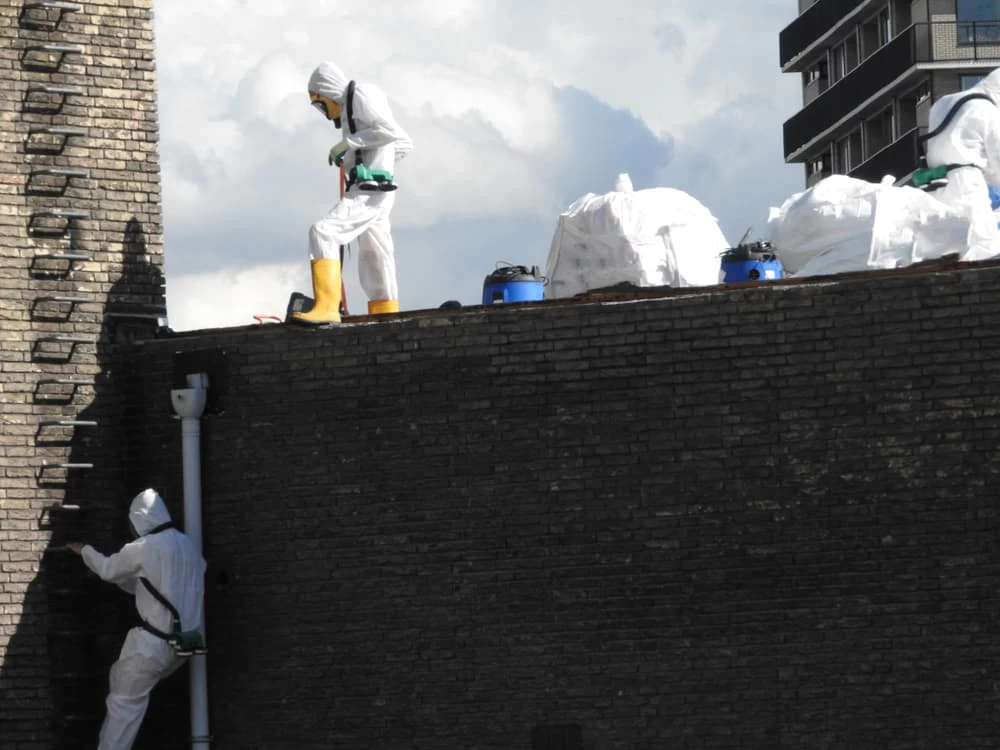
Once the scope is confirmed, we provide a written estimate before any work begins. You’ll know what’s being removed, how it’s being handled, and what it costs in writing, before a single worker enters your home. For projects in Mountain House and the Town of Newburgh, the work itself follows NYS DOL regulations under 12 NYCRR Part 56, which governs how asbestos materials are contained, removed, packaged, and disposed of. There are no shortcuts built into that process, and there shouldn’t be.
After removal, post-abatement air monitoring is conducted by an independent industrial hygienist not our own crew, but a separate third party whose job is to confirm the air quality meets regulatory standards. When it does, they issue a written clearance certificate. That document is what your real estate attorney needs, what your lender may require, and what gives you actual confidence that the space is safe. It’s the part of the process most contractors don’t explain upfront, and it’s the part that matters most when the job is done.
What's Covered From Tile Floors to Popcorn Ceilings
The older housing stock in Mountain House and the surrounding Town of Newburgh hamlets tends to carry the same handful of asbestos-containing materials and we handle all of them. Asbestos tile removal is one of the most common calls, particularly from homeowners who’ve pulled back carpet or started a kitchen renovation and found the original 9″x9″ floor tiles underneath. Asbestos popcorn ceiling removal is another frequent project, especially in mid-century ranches and split-levels that were finished during the peak years of that application method.
Beyond flooring and ceilings, pipe insulation on older boiler systems is a significant source of asbestos exposure risk in homes that haven’t been updated since the 1960s or 70s. Roofing felt, transite siding, and joint compound in walls are also materials that show up regularly in pre-1980 construction throughout Orange County. If a renovation project uncovers something unexpected, the scope can be assessed and adjusted the written estimate process accounts for that.
For homeowners dealing with damage from water intrusion or winter freeze events both common in Mountain House we also handle mold remediation, lead paint abatement, and water damage restoration. That multi-discipline capability matters when an older home has more than one problem at once, which in this area, it often does. We offer financing up to $200,000 at 0% APR for qualifying projects, and for damage-related scenarios covered by homeowners insurance, we bill directly and work through the claims process on your behalf.
How do I know if my Mountain House home actually contains asbestos?
The honest answer is that you can’t know for certain just by looking. Asbestos-containing materials don’t look different from their non-asbestos counterparts the only way to confirm is through laboratory testing of a collected sample. What you can do is use age as your first filter: if your home in Mountain House was built before 1980, there’s a meaningful probability that some of the original materials contain asbestos. The 9″x9″ floor tile format is one of the strongest visual indicators in postwar construction, but pipe insulation, popcorn ceilings, roofing felt, and textured wall finishes from that era all warrant testing before any renovation work disturbs them.
If you’re buying or selling a home and an inspector has flagged a potential concern, that report is a starting point not a confirmed finding. A certified asbestos inspector can collect samples and have them analyzed by an accredited laboratory, typically within a few business days. That result is what drives everything else: the scope of abatement, the written estimate, and ultimately the clearance documentation your lender or attorney may require.
What does asbestos abatement actually cost for a typical Mountain House home?
Cost depends almost entirely on what materials are present, how much of them there are, and where they’re located in your home. For a straightforward asbestos tile removal in a single room say, a kitchen or bathroom in a mid-century ranch in Mountain House a project in the $2,000 to $5,000 range is realistic. Larger scopes, like popcorn ceiling removal throughout a full home, are typically priced by square footage and can range from $3 to $8 per square foot depending on accessibility and condition. Pipe insulation removal on a boiler system adds another layer of complexity and cost.
What drives cost up isn’t the removal itself it’s the regulatory compliance that surrounds it. Licensed contractors, certified workers, proper containment, legal disposal, and independent post-abatement air monitoring are all required under New York State law, and they’re all built into a legitimate estimate. If you get a quote that’s dramatically lower than others, the question to ask is what’s been left out. For homeowners in Mountain House who weren’t expecting this expense, we offer 0% APR financing up to $200,000 for qualifying projects because an asbestos discovery mid-renovation shouldn’t force you to choose between safety and budget.
Do I need a permit for asbestos removal in Mountain House?
Asbestos abatement in Mountain House and the Town of Newburgh is governed by New York State Department of Labor regulations under 12 NYCRR Part 56 there’s no separate municipal asbestos code at the town level. What that means practically is that the regulatory requirements come from the state, not the Town of Newburgh Building Department. However, if your asbestos removal is connected to a larger renovation or demolition project, that work may require a building permit from the town, and asbestos assessment is typically a prerequisite before demolition permits are issued for older structures.
The NYS DOL Asbestos Control Bureau oversees compliance statewide and conducts active inspections and enforcement in Orange County. Hiring an unlicensed contractor regardless of how low their quote is exposes you to significant legal and financial liability, and it leaves you without the clearance documentation that lenders, buyers, and real estate attorneys require. A licensed contractor handles the regulatory side of this as part of the job, so you don’t have to navigate it yourself.
What happens after the asbestos is removed how do I know the job is actually done right?
This is the part of the process most contractors skip explaining, and it’s the most important part. After asbestos removal is complete, the space isn’t cleared for reoccupancy based on the contractor’s word. Post-abatement air monitoring is conducted by an independent industrial hygienist a separate professional whose job is to verify that airborne fiber levels meet the regulatory standard before anyone goes back in. That monitoring involves air sampling during and after the abatement work, analyzed by an accredited laboratory.
When the results confirm the space is clean, the industrial hygienist issues a written clearance certificate. That document is the proof not just that the work was done, but that it was done correctly and the environment is safe. For homeowners in Mountain House who are in the middle of a real estate transaction, that certificate is exactly what a buyer’s lender or attorney will require before closing. For those who are renovating, it’s what allows the rest of the project to move forward with confidence. We build this step into every project it’s not an add-on.
Can asbestos abatement be covered by homeowners insurance in New York?
It depends on how the asbestos was disturbed and what your policy covers. If asbestos-containing materials were damaged by a covered peril a burst pipe in winter, storm damage, a fire there’s a reasonable chance your homeowners insurance will cover some or all of the abatement costs. Orange County’s freeze-thaw winters create exactly these kinds of scenarios: ice damming leads to water intrusion, water intrusion damages pipe insulation or ceiling materials, and what started as a plumbing claim becomes an asbestos abatement project.
What most homeowners don’t realize is that navigating the insurance side of this understanding what’s covered, filing the claim correctly, and providing the documentation the insurer requires is a significant burden on top of an already stressful situation. We bill insurance companies directly for covered work and handle the claims process on your behalf. You deal with the disruption; we handle the paperwork. For damage-related projects that aren’t fully covered, the 0% APR financing option is available to bridge the gap.
Why does it matter whether my asbestos contractor is licensed in New York State?
In New York, asbestos abatement isn’t something a general contractor can legally perform without a separate, specific license from the NYS Department of Labor. The Asbestos Contractor License requires proof of insurance, certified workers, and demonstrated compliance with 12 NYCRR Part 56 the state’s comprehensive asbestos handling regulations. It’s maintained in a publicly searchable database on the NYS DOL website, which means any homeowner in Mountain House can look up a contractor’s license status before signing anything.
The consequences of hiring an unlicensed operator go beyond the legal risk. Without a licensed contractor, you won’t receive the post-abatement clearance documentation that real estate attorneys, lenders, and buyers require. You won’t have verified disposal records. And if something goes wrong if materials were improperly handled and fibers were released you have no legal recourse against a contractor who wasn’t licensed to do the work in the first place. We hold the NYS DOL Asbestos Contractor License and have held it continuously for over 12 years. That’s not a marketing point it’s a verifiable fact you can check yourself on the state’s website.