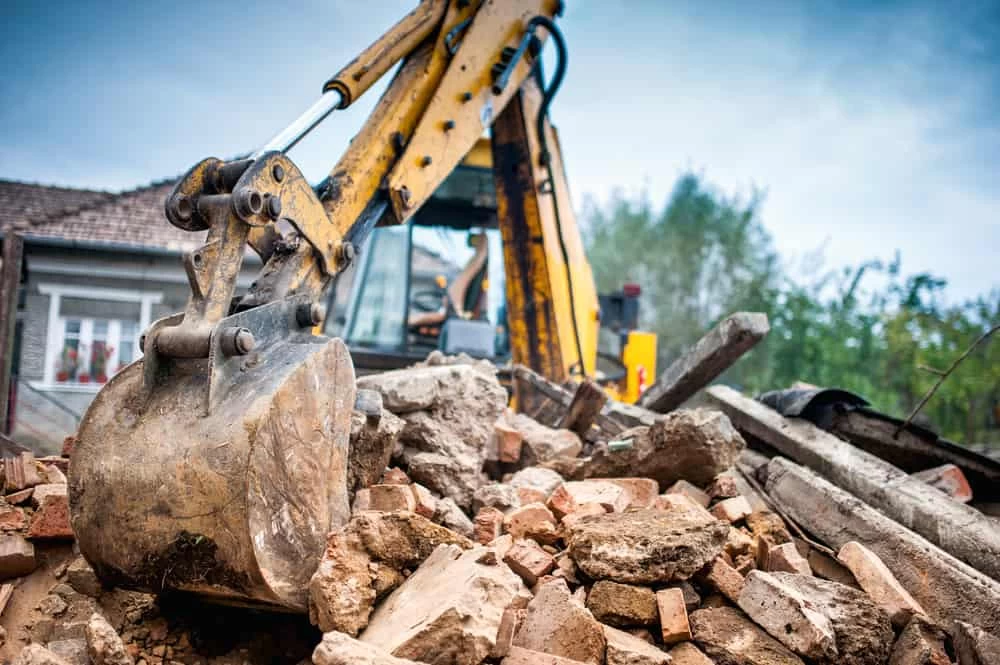
Mountainville’s older homes and flood-prone creeks create real asbestos risk we remove it safely, legally, and completely. The hamlet sits at the confluence of Moodna and Woodbury Creeks, in one of Orange County’s most flood-prone watersheds. When water gets into a 1960s or 1970s home here and in this valley, it does it doesn’t just damage drywall. It soaks pipe insulation. It lifts floor tiles. It disturbs the exact materials that were most commonly manufactured with asbestos during the era when most homes here were built. The median construction year in Mountainville is 1972. That’s not a coincidence it’s a risk profile.
I needed a professional consultation explanation of procedure for safe removal of Asbestos in my apartment complex. Without having an account yet, I was very impressed with the caring, knowledgeable and generous advice offered by Jessica, and will look forward to doing business in the future. Thank you so much! I feel much more informed about a sometimes scary endeavor. Peace. Nancy Silva Mineola, NY.
Mia Munoz
Used this company to clean up some water flood in my house. They were fast and easy to work with.very professional, Would recommend to anyone!
Nini Valle
Great company, had a flood and they responded quickly and efficiently. Billed my insurance company directly. I highly recommend this company!
joe colapietro, jr
I had pipe freeze in my basement right before a snow storm and they made to within an hour to help start the clean up process. They we by our side throughout the entire process and even helped with the insurance company. They did such a great job with the cleanup, repair, remidiation, I contracted them to perform the repairs and finishes in the basement. They came with enough manpower and material to get the job done. Leo and Jessica were nothing but a pleasure to deal with!!
Cristian Arredondo c
I had some water damage in my home and Green Island was able to take care of my issue quickly and effectively. I am very pleased with the work they did. They responded quickly and were very professional.
Michael M
Outstanding service! From the office to the field crew everyone was friendly, helpful and responsive. I highly recommend Green Island Group.
When asbestos abatement is done right, you stop holding your breath every time someone mentions the basement. Renovations move forward. Real estate transactions close. Your family is back in the space without a question mark hanging over it. That’s the actual outcome not paperwork, not a contractor’s word, but documented clearance from an independent industrial hygienist that says the air is clean.
In Mountainville, that outcome matters more than most people realize before they need it. The humidity that comes with a wooded creek valley setting means building materials deteriorate faster than they would in drier, more open environments. That accelerates the timeline on everything. What might have stayed undisturbed for another decade in a drier climate is already showing wear here. Getting ahead of it before a renovation, before a sale, before a flood makes the decision for you is what actually protects your home, your health, and your investment.
Government-Vetted Credentials, Not Just a Contractor's Word
We’ve been doing environmental remediation work across New York for over 12 years. We hold a New York State Department of Labor Asbestos Contractor License the specific credential required by law to perform asbestos abatement in Orange County and Mountainville along with EPA Lead/RRP Certification and a full multi-jurisdictional licensing stack that covers New York City and Long Island as well. These aren’t self-reported badges. They’re verifiable on state government websites, and any homeowner can look them up before signing anything.
We also hold dual Minority/Women-Owned Business Enterprise certification from both New York State and New York City a designation that requires ongoing government auditing and compliance, not a one-time application. Institutions like the NYS Office of General Services and the Dormitory Authority of the State of New York have awarded contracts to us through competitive procurement processes that verify insurance, safety records, and operational capability. For Mountainville residents near Storm King Art Center, in a community that values accountability and authenticity, that track record speaks louder than any ad.
We handle asbestos, mold, lead, water damage, and fire damage under one roof because in a hamlet with Mountainville’s housing stock and creek-valley conditions, those problems rarely show up alone.
No Surprises Just a Clear Path From Discovery to Clearance
It usually starts with a call. Something came up during a renovation, a home inspector flagged a material, or the basement flooded and now there’s a concern about the pipe insulation. Whatever triggered it, the first step is the same: a professional assessment to determine what you’re actually dealing with. Suspected materials get sampled and sent to an accredited laboratory. You get real answers, not guesses.
If asbestos-containing materials are confirmed, we file the required notifications including NESHAP notification to the NYS DEC for qualifying projects and coordinate with the Town of Cornwall’s building department as needed before any work begins. In Mountainville, abatement falls under New York State’s 12 NYCRR Part 56 framework, which governs how materials are contained, removed, bagged, labeled, and transported to a licensed disposal facility. Every step has a regulatory requirement attached to it, and every step gets documented.
The abatement itself involves full containment of the work area, negative air pressure to prevent fiber migration, and proper removal by NYS DOL-certified workers. Once the material is out, an independent industrial hygienist not us conducts post-abatement air monitoring. If the air clears, you get a written clearance certificate. That’s the document your lender wants, your buyer’s attorney wants, and frankly, the one you want. The job isn’t done until that certificate is in your hands.
What's Included When Mountainville's Housing Stock Demands It
The asbestos-containing materials most commonly found in Mountainville’s pre-1980 homes are the ones that tend to surprise people mid-project. The 9×9 and 12×12 vinyl floor tiles in kitchens and basements. The acoustic spray on ceilings that nobody’s touched in 40 years. Pipe insulation wrapped in asbestos-containing paper down in the utility room. Roofing felt. Joint compound behind the drywall. These aren’t rare edge cases they’re standard features of homes built in the 1960s and 1970s, which is the majority of Mountainville’s housing stock. We handle all of it: asbestos tile removal, popcorn ceiling removal, pipe insulation abatement, roofing material removal, and full-structure surveys before demolition or major renovation.
For Mountainville homeowners dealing with water damage alongside an asbestos concern which is a realistic scenario given the Moodna Creek watershed’s documented flood history we can manage both the asbestos abatement and the water damage restoration without you coordinating two separate contractors. The same applies to mold and lead, which frequently appear alongside asbestos in homes of this era.
Every project includes a written scope of work, proper containment and disposal documentation, and coordination of post-abatement air monitoring by an independent industrial hygienist. If your project is insurance-related, we bill directly. If cost is a concern mid-renovation, we offer 0% APR financing up to $200,000 for qualifying projects because asbestos is almost never a planned line item, and it shouldn’t have to stop your project cold.
Does my 1970s Mountainville home actually contain asbestos?
In most cases, yes at least in some form. Homes built between roughly 1940 and 1980 were constructed during the period when asbestos was most heavily used in American residential building materials. In Mountainville specifically, the median construction year is 1972, which puts the majority of the hamlet’s housing stock squarely in that window. That doesn’t mean every square foot of your home is a hazard, but it does mean asbestos-containing materials are likely present somewhere whether in the floor tiles, the ceiling texture, the basement pipe insulation, or the roofing materials.
The only way to know for certain is professional sampling and laboratory testing. Visual identification alone isn’t reliable asbestos fibers aren’t visible to the naked eye, and many ACMs look identical to their non-asbestos counterparts. If you’re planning a renovation, starting with a professional asbestos survey before work begins is the move that protects your contractor, your family, and your timeline. Discovering asbestos after demolition has already started is a much more complicated and expensive situation than catching it beforehand.
What triggers an asbestos problem in an older Mountainville home and when does it become urgent?
Asbestos-containing materials that are intact and undisturbed generally don’t pose an immediate health risk. The problem starts when those materials become damaged, deteriorated, or disturbed which releases fibers into the air. In Mountainville’s creek-valley environment, the triggers are more common than in drier or more urban settings. Flooding from the Moodna or Woodbury Creek systems can soak and damage basement pipe insulation and floor tiles. High humidity over time causes materials to degrade. And renovation work pulling up floors, scraping ceilings, opening walls is the most common trigger of all.
Urgency depends on the condition of the material and the level of exposure risk. Friable asbestos material that crumbles easily and releases fibers is an active hazard that needs to be addressed immediately. Damaged pipe insulation after a flood event falls into this category. Non-friable materials in good condition can sometimes be managed in place with encapsulation rather than full removal, depending on the situation. A licensed contractor can assess which scenario you’re in and give you a straight answer about what needs to happen and how quickly.
How long does asbestos abatement take, and will it disrupt my renovation timeline?
The timeline depends on the scope what materials are involved, how much square footage is affected, and whether the project requires NESHAP notification, which adds a mandatory waiting period before work can begin on larger demolition or renovation projects. For a typical residential job in Mountainville say, floor tile removal in a basement or popcorn ceiling abatement in a few rooms the actual abatement work often takes one to three days. The post-abatement air monitoring and clearance process adds additional time, since an independent industrial hygienist needs to conduct testing before the space can be reoccupied.
The most disruptive scenario is discovering asbestos after a renovation is already underway. At that point, work has to stop, the area needs to be secured, and the abatement process has to run its full course before anything else can happen. If you’re planning a renovation in an older Mountainville home, getting a survey done before your contractor starts is the single best way to protect your timeline. It’s a relatively small upfront cost compared to the expense and delay of stopping a project mid-stream.
What documentation do I get after asbestos abatement is complete in Mountainville, NY?
You should receive a complete documentation package and if a contractor can’t tell you exactly what that includes, that’s a red flag. At minimum, you need a written scope of work describing what was removed and how, disposal manifests showing that materials were transported and disposed of at a licensed Class II landfill, and a post-abatement air monitoring report from an independent industrial hygienist. That monitoring report is what leads to the clearance certificate, which is the document that officially states the air in the remediated space meets regulatory standards for safe reoccupancy.
That clearance certificate is not optional in New York State it’s a legal requirement before the space can be used again. It’s also the document that real estate buyers, mortgage lenders, and real estate attorneys in Orange County will ask for if asbestos abatement is part of a transaction. If you’re selling a home in Mountainville and abatement was performed, having a complete documentation package on hand can prevent the kind of last-minute delays that derail closings. We coordinate the entire process and deliver the full package as a standard part of every project.
Can Moodna Creek flooding actually cause an asbestos emergency in my Mountainville home?
It can, and it’s not a hypothetical. The Moodna Creek watershed which runs directly through Mountainville at the confluence with Woodbury Creek has been identified by the NYS Department of Environmental Conservation as one of Orange County’s most flood-prone watersheds, subject to repetitive and severe flooding events. When water intrudes into a basement or crawlspace of a 1960s or 1970s home, it can soak and physically damage materials that contain asbestos, particularly pipe insulation and vinyl floor tiles. Once those materials are wet and deteriorating, they can release fibers which is when the situation shifts from a background concern to an active hazard.
If you’ve had water in your basement after a storm and your home was built before 1980, it’s worth having the affected materials assessed before you start cleanup or repairs. Disturbing damaged asbestos-containing materials during water damage remediation without proper containment and protective equipment is exactly the kind of exposure that licensed abatement exists to prevent. We handle both asbestos abatement and water damage restoration, so if you’re dealing with both at once, you don’t have to manage two separate contractors while your home is still at risk.
How does financing work for asbestos abatement, and do you offer it?
Yes we offer 0% APR financing up to $200,000 for qualifying projects. Asbestos abatement is almost never a planned expense. It shows up mid-renovation when a contractor pulls up a tile, or after a flood when the damage reveals what’s underneath, or during a home sale when an inspector flags something that has to be addressed before closing. In any of those scenarios, you’re already dealing with disruption and unplanned cost. Financing means the abatement doesn’t have to compete with the rest of your budget or bring a renovation to a permanent halt.
For Mountainville homeowners many of whom are mid-project on older homes that need significant work this matters in a practical way. A residential asbestos abatement job can range from a few thousand dollars for a contained tile removal to significantly more for a multi-material, whole-home project. Having access to interest-free financing changes what’s possible. For projects tied to insurance claims storm damage, flood damage, fire we also bill insurance directly, which removes another layer of friction when you’re already dealing with enough.