If your home was built in the 1960s or 70s in Rockingham Farms, Quiet Acres, or anywhere along Myers Corners Road there’s a real chance asbestos is somewhere inside it. We handle asbestos abatement in Myers Corner, NY with licensed crews, honest assessments, and zero runaround.
I needed a professional consultation explanation of procedure for safe removal of Asbestos in my apartment complex. Without having an account yet, I was very impressed with the caring, knowledgeable and generous advice offered by Jessica, and will look forward to doing business in the future. Thank you so much! I feel much more informed about a sometimes scary endeavor. Peace. Nancy Silva Mineola, NY.
Mia Munoz
Used this company to clean up some water flood in my house. They were fast and easy to work with.very professional, Would recommend to anyone!
Nini Valle
Great company, had a flood and they responded quickly and efficiently. Billed my insurance company directly. I highly recommend this company!
joe colapietro, jr
I had pipe freeze in my basement right before a snow storm and they made to within an hour to help start the clean up process. They we by our side throughout the entire process and even helped with the insurance company. They did such a great job with the cleanup, repair, remidiation, I contracted them to perform the repairs and finishes in the basement. They came with enough manpower and material to get the job done. Leo and Jessica were nothing but a pleasure to deal with!!
Cristian Arredondo c
I had some water damage in my home and Green Island was able to take care of my issue quickly and effectively. I am very pleased with the work they did. They responded quickly and were very professional.
Michael M
Outstanding service! From the office to the field crew everyone was friendly, helpful and responsive. I highly recommend Green Island Group.
You stop guessing. That’s the first thing. When a contractor pulls up a floor tile in your Wildwood or Shamrock Hills home and says “you might want to get this tested,” the uncertainty that follows is genuinely uncomfortable. You don’t know if you’ve been breathing something harmful, you don’t know how bad it is, and you don’t know who to call. Once the abatement is done properly, with documentation that uncertainty ends.
For Myers Corner homeowners, this matters beyond peace of mind. With median property values pushing $380,000 and some neighborhoods well above $500,000, what you do (or don’t do) about asbestos directly affects your home’s marketability. Buyers’ attorneys ask for abatement records. Inspectors flag suspect materials. Deals fall apart over unresolved asbestos disclosures. Getting it handled before you list or before a renovation goes sideways protects the equity you’ve spent decades building.
The homes in this area were built during the peak years of asbestos use. Floor tiles, pipe insulation, popcorn ceilings, boiler wrap these aren’t rare finds in 1960s and 70s construction. They’re standard. Knowing that a licensed crew has removed the material, cleared the air, and handed you the paperwork means you can renovate, sell, or simply live in your Myers Corner home without that hanging over you.
12 Years In. 5,000 Projects. Still Local to Myers Corner.
We’re based in Wappingers Falls which means Myers Corner isn’t a service area on a map, it’s the neighborhood next door. Our crew knows this part of Dutchess County, knows the housing stock along All Angels Hill Road and Myers Corners Road, and has worked in homes just like yours throughout the Town of Wappinger for over a decade.
With more than 5,000 completed projects across New York State and 12-plus years of operation, we’re not figuring things out on your property. Every technician holds NYS Department of Labor licensing handler and supervisor certified and we’re both MWBE certified and approved for New York State agency work. That combination of credentials isn’t common among asbestos contractors in this area.
When the Wappingers Central School District needed hazardous materials abatement at Myers Corners Elementary School in 2023, the standard required was the same one we apply to every residential job. Your Myers Corner home deserves that same level of accountability.
It starts with an assessment. Before anything is touched, the material gets identified whether that’s floor tile adhesive mastic in a 1970s kitchen, pipe insulation around an aging boiler, or textured ceiling spray in a bedroom that hasn’t been updated since the house was built. You’ll know what you’re dealing with before any work begins, and you’ll get a clear scope of what removal actually involves.
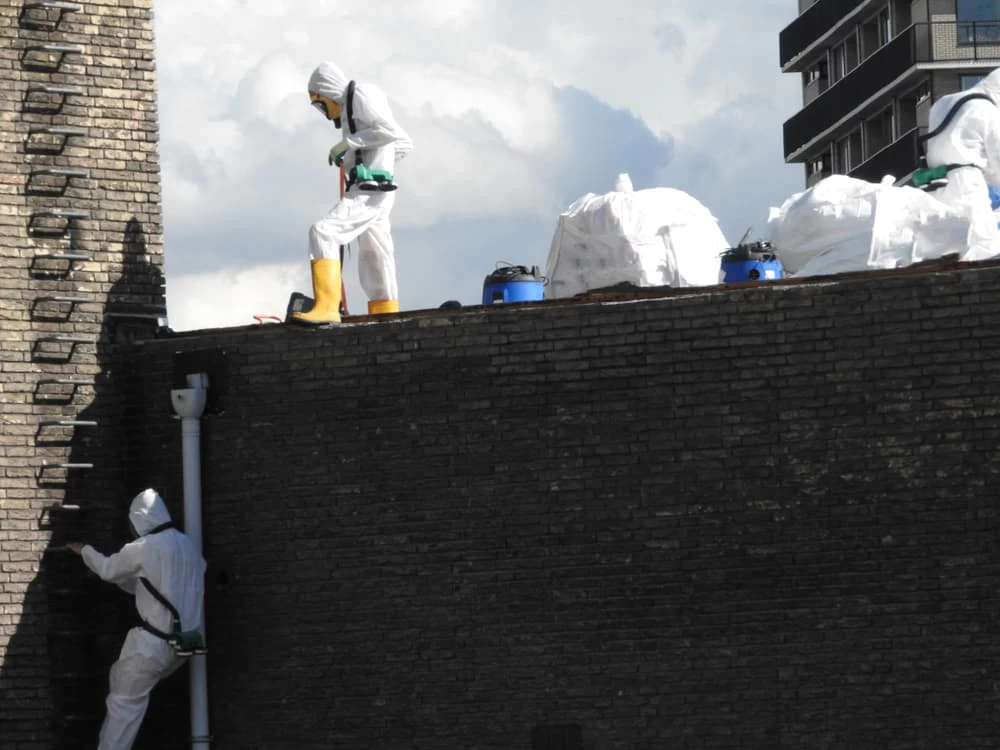
From there, our abatement crew establishes containment. This means sealing off the work area, running negative air pressure with HEPA filtration, and making sure nothing migrates to the rest of your home during removal. New York State’s Industrial Code Rule 56 governs every step of this process it’s the strictest asbestos regulation in the country, and compliance isn’t optional. Every disposal run goes to a NYS DEC-approved facility with proper documentation.
Once removal is complete, air clearance testing confirms the space is clean before containment comes down and the area is handed back to you. That final clearance report is your documentation the paper trail that matters when you’re selling, renovating, or simply closing the book on this. If your insurance covers any part of the project, we handle the billing directly so you’re not stuck in the middle managing paperwork during an already stressful situation.
What's Included When We Handle Your Myers Corner Project
The most common asbestos finds in Myers Corner homes are vinyl floor tiles especially the 9×9 tiles that were standard in 1960s and 70s construction along with the adhesive mastic underneath them, which often contains asbestos even when the tiles themselves don’t. Popcorn ceiling texture is another frequent find in this area’s housing stock. Pipe insulation on older heating systems and wrap around boilers tend to surface during HVAC replacements or when homeowners finally update a mechanical room that hasn’t been touched in 30 years.
Every project we complete includes initial assessment, full containment setup, licensed removal, NYS DEC-compliant disposal, and post-abatement air clearance testing. That’s not a premium add-on it’s the baseline for every job, because anything less doesn’t meet New York State’s requirements and doesn’t actually protect you. We also handle mold remediation, water damage, and fire restoration, which matters in older Dutchess County homes where asbestos, moisture, and mold often coexist in the same crawl spaces and mechanical areas.
If you’re a homeowner in one of the Myers Corner Pavilion condominiums or a commercial property owner along the Dutchess Corporate Center corridor on Myers Corners Road, the process is the same licensed, documented, and fully compliant with ICR56 from start to finish.
Does my Myers Corner home built in the 1970s likely contain asbestos?
Statistically, yes and it’s worth taking seriously rather than assuming otherwise. The subdivisions that make up most of Myers Corner’s residential base Rockingham Farms, Quiet Acres, Wildwood, Shamrock Hills were built primarily during the 1960s and 1970s, which is the peak era for asbestos use in American residential construction. Asbestos was added to floor tiles, ceiling texture, pipe insulation, boiler wrap, roofing shingles, and joint compound during this period because it was cheap, durable, and fire-resistant.
That doesn’t mean every material in your home is a hazard. Asbestos that’s intact and undisturbed generally doesn’t pose an immediate risk. The problem is when it gets disturbed during a renovation, a flooring replacement, an HVAC upgrade, or even a wall repair. That’s when fibers can become airborne. If you’re planning any work on a pre-1985 home in Myers Corner, having suspect materials tested before the project starts is the safest and most practical approach.
How much does asbestos removal typically cost for a Dutchess County home?
For most residential projects in New York, asbestos removal runs between $1,300 and $3,050, with an average around $2,170. That range shifts depending on what material is involved, how much of it there is, and where it’s located in the home. Floor tile removal including the mastic adhesive underneath typically runs $5 to $15 per square foot. Popcorn ceiling removal in a standard room will cost less than a full basement pipe insulation job.
Costs in the Hudson Valley and Dutchess County area have risen 8 to 12 percent in recent years, largely due to updated NYS licensing requirements and higher disposal fees at approved facilities. That’s not a reason to delay it’s a reason to get an accurate assessment now rather than face higher costs later, especially if you’re planning a renovation or listing your Myers Corner home. We provide free assessments so you understand exactly what you’re dealing with before committing to anything.
Can I stay in my home during asbestos abatement in Myers Corner?
It depends on the scope of the project and where the work is happening. For smaller, contained jobs like removing floor tile in a single room or addressing pipe insulation in a utility space it’s often possible to remain in the home while work is underway, provided the containment is properly established and the rest of the living space is sealed off. For larger projects involving multiple rooms or materials in high-traffic areas, temporary relocation during active removal is the safer choice.
New York State’s Industrial Code Rule 56 sets strict containment requirements negative air pressure, HEPA filtration, full plastic barrier sealing specifically to prevent fiber migration into occupied spaces. These aren’t optional precautions; they’re legally required. During your initial assessment, we’ll give you a straight answer on whether staying home is reasonable for your specific project or whether you should plan to be elsewhere during the active removal phase. Either way, no area is released back to you until post-abatement air clearance testing confirms it’s clean.
Do I need a permit for asbestos removal in the Town of Wappinger?
Asbestos abatement in New York State is regulated primarily at the state level through the NYS Department of Labor’s Asbestos Control Bureau under Industrial Code Rule 56, rather than through individual town building permits. That said, the contractor performing the work must hold a valid NYS DOL Asbestos Contractor license, and all workers on the job must be individually licensed as NYS DOL Asbestos Handlers. Supervisors require an additional certification on top of that.
For projects that involve demolition or significant renovation not just asbestos removal the Town of Wappinger may require a separate building permit depending on the scope of work. EPA NESHAP regulations also apply to renovation and demolition projects above certain thresholds. The practical takeaway is that the permitting and compliance side of an asbestos project in Myers Corner has real teeth, and working with an unlicensed contractor doesn’t just create a health risk it creates legal exposure for the homeowner. We handle all required notifications and compliance documentation as part of every project.
What's the difference between asbestos encapsulation and full removal?
Encapsulation means sealing the asbestos-containing material in place with a binding compound so fibers can’t become airborne. Full removal means the material comes out entirely and gets disposed of at a licensed facility. Both are legitimate approaches under New York State regulations, but they’re not interchangeable the right choice depends on the condition of the material, what you’re planning to do with the space, and how long you need the solution to last.
Encapsulation can make sense for asbestos-containing materials that are in good condition and won’t be disturbed for example, pipe insulation in a basement that’s staying as-is. But if you’re renovating, selling, or dealing with damaged or friable material, encapsulation typically isn’t the answer. Buyers and their attorneys in the Dutchess County real estate market will ask for documentation, and “encapsulated in place” is a harder sell than “removed and cleared.” For most Myers Corner homeowners who are renovating or preparing to list, full removal with a post-abatement clearance report gives you the cleanest outcome and the cleanest paperwork.
Will my homeowner's insurance cover asbestos abatement in Myers Corner, NY?
Standard homeowner’s insurance policies typically don’t cover asbestos removal as a standalone maintenance issue insurers generally treat it as a pre-existing condition rather than a sudden loss. However, if asbestos-containing materials are disturbed or exposed as a direct result of a covered event storm damage, flooding, a fire there’s a reasonable basis to file a claim for the abatement costs associated with that event. Myers Corner’s proximity to Sprout Creek along its eastern border with East Fishkill means some properties carry real flood risk, and storm-related damage that exposes asbestos is exactly the scenario where your policy language matters.
The honest answer is that coverage depends on your specific policy, the cause of the damage, and how the claim is documented. We bill insurance companies directly, which means if there’s a covered component to your project, you’re not fronting the cost and waiting for reimbursement we handle the insurer communication on your behalf. Getting an assessment first gives you the documentation you need to have that conversation with your carrier from a position of clarity rather than guesswork.