Older Dutchess County Homes Deserve More Than a Guess
If your Netherwood home was built before 1980, there’s a real chance asbestos is somewhere inside it. We handle the testing, removal, and clearance so you know exactly what you’re dealing with and exactly what’s been done about it.
I needed a professional consultation explanation of procedure for safe removal of Asbestos in my apartment complex. Without having an account yet, I was very impressed with the caring, knowledgeable and generous advice offered by Jessica, and will look forward to doing business in the future. Thank you so much! I feel much more informed about a sometimes scary endeavor. Peace. Nancy Silva Mineola, NY.
Mia Munoz
Used this company to clean up some water flood in my house. They were fast and easy to work with.very professional, Would recommend to anyone!
Nini Valle
Great company, had a flood and they responded quickly and efficiently. Billed my insurance company directly. I highly recommend this company!
joe colapietro, jr
I had pipe freeze in my basement right before a snow storm and they made to within an hour to help start the clean up process. They we by our side throughout the entire process and even helped with the insurance company. They did such a great job with the cleanup, repair, remidiation, I contracted them to perform the repairs and finishes in the basement. They came with enough manpower and material to get the job done. Leo and Jessica were nothing but a pleasure to deal with!!
Cristian Arredondo c
I had some water damage in my home and Green Island was able to take care of my issue quickly and effectively. I am very pleased with the work they did. They responded quickly and were very professional.
Michael M
Outstanding service! From the office to the field crew everyone was friendly, helpful and responsive. I highly recommend Green Island Group.
The mid-century farmhouses and Colonial Revivals that line the roads around Netherwood were built during the decades when asbestos was standard in floor tiles, pipe insulation, roofing, siding, and ceiling texture. Most of it has been sitting undisturbed for 50 or 60 years. The problem starts when you renovate, repair, or disturb it without knowing it’s there.
Once it’s been properly identified and removed, you can move forward with your project without legal exposure, without health risk, and without the anxiety of not knowing. When you’ve got a contractor scheduled, a family in the house, or a sale on the line in Netherwood, a properly documented abatement protects you completely. It also protects your property value and in a market where Pleasant Valley homes are sitting at a median of nearly $300,000, that documentation matters more than most homeowners realize.
The Hudson Valley’s winters add another layer to this. Freeze-thaw cycles crack older roofing and pipe insulation over time, turning materials that were once stable into something that can release fibers. If your basement has original pipe wrap or your attic has old insulation that’s been through decades of Dutchess County winters, a professional assessment isn’t overcautious it’s just smart.
12 Years In, 5,000 Projects Deep Including Netherwood's Toughest Properties
We’ve been doing this work across New York State for over 12 years more than 5,000 completed asbestos abatement and environmental remediation projects. That’s not a number pulled from a brochure. It means we’ve seen nearly every scenario a Dutchess County homeowner runs into, from vinyl tile removal in a 1950s kitchen to full insulation abatement in a rural farmhouse basement off Netherwood Road.
We hold NYS Department of Labor licensing under Industrial Code Rule 56, which is the law that governs asbestos work in New York including every property in Pleasant Valley under the Albany district office’s jurisdiction. We’re also a certified MWBE contractor approved for New York State agency work, which is a level of institutional vetting that most private contractors never go through.
Our customers have described the experience as getting honest guidance through “a sometimes scary endeavor.” That’s our goal every time not to overwhelm you with technical language, but to tell you exactly what’s there, what needs to happen, and what it will cost.
No Surprises Here's What the Process Actually Looks Like
It starts with an assessment. Before anything is touched, we identify what materials are present, where they are, and whether they’re in a stable or disturbed state. If you’re planning a renovation on a pre-1974 home in Netherwood which covers a meaningful portion of the area’s housing stock New York State’s Industrial Code Rule 56 requires a licensed survey before work begins. That’s not optional, and it applies whether you’re pulling up old floors, opening walls, or replacing a boiler. We handle that survey as part of the process.
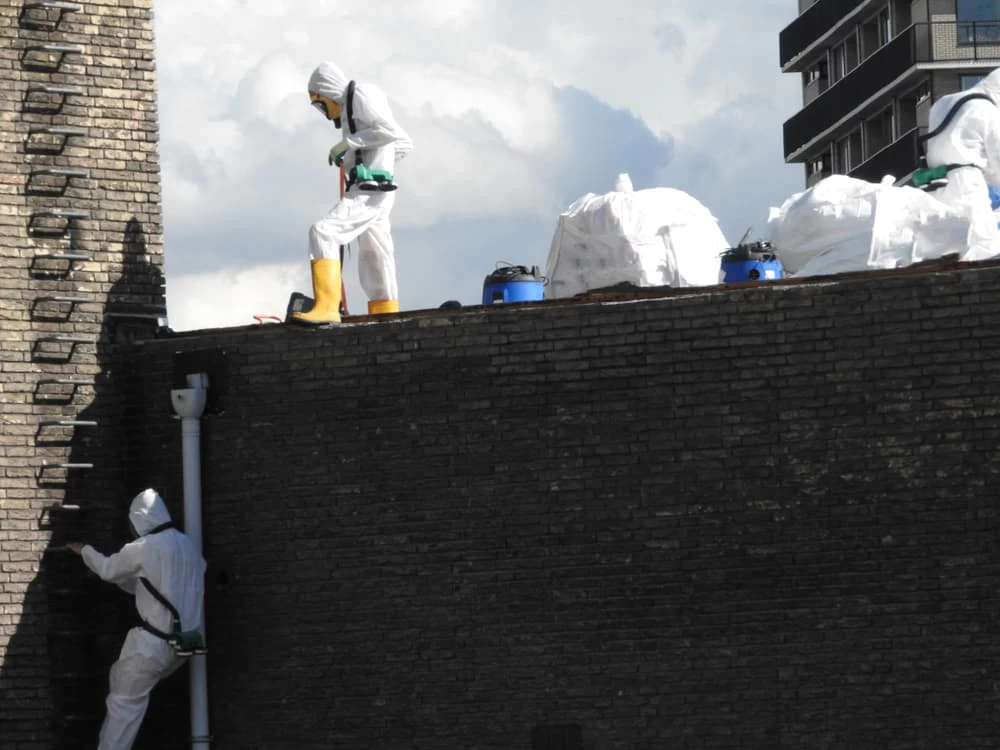
From there, if asbestos-containing materials are confirmed, the abatement work is scoped and scheduled. We set up proper containment, use wet removal methods where required, and follow NYS DEC disposal protocols for packaging and transport to an approved facility. The type of material matters here friable insulation requires full air containment and monitoring, while non-friable floor tiles are handled differently. Our approach is matched to what’s actually there, not a one-size-fits-all setup.
When the work is done, post-abatement air clearance testing confirms the space is safe and you get documentation proving it. That paperwork is important if you’re selling the property, returning family members to the space, or simply want a record that the job was done right. We file any required notifications with the NYS DOL Asbestos Control Bureau so that side of the compliance picture is handled too.
Every Material Type Found in Netherwood Homes, Covered
The asbestos materials most commonly found in Netherwood’s older residential properties are predictable once you know the era. Nine-by-nine vinyl floor tiles often hidden under layers of newer flooring were standard in mid-century construction throughout Pleasant Valley. Pipe and boiler insulation in basements is another frequent find, especially in homes with older heating systems that haven’t been updated. Asbestos siding was widely used on the type of rural farmhouses common to this part of Dutchess County, and spray-applied popcorn ceiling texture was a go-to finish in finished basements and bedrooms built through the late 1970s.
We handle all of it asbestos tile removal, pipe and boiler insulation abatement, siding removal, popcorn ceiling removal, and full structural abatement for larger projects. Our service includes the initial inspection and testing, the abatement work itself, proper disposal under NYS DEC requirements, and post-clearance air testing with written documentation. If a project also involves mold, water damage, or demolition which happens regularly in the older farmhouses and rural properties around Netherwood we handle those under the same roof, so you’re not coordinating three separate contractors around each other’s schedules.
Insurance billing is handled directly by us for covered losses, which matters when a storm or water event is what triggered the discovery in the first place.
Does New York State require an asbestos inspection before renovating a home in Netherwood?
Yes and it’s not a gray area. Under New York State’s Industrial Code Rule 56, a licensed asbestos survey and inspection is required before any demolition, renovation, remodeling, or significant repair of any building whose construction commenced before 1974. This rule is enforced by the NYS Department of Labor’s Asbestos Control Bureau, and Dutchess County falls under the Albany district office’s jurisdiction. That means if you’re renovating a pre-1974 home in Netherwood pulling up old flooring, opening walls, replacing insulation, or tearing out a drop ceiling you’re legally required to have a licensed survey done before the work starts.
The survey isn’t just a formality. It determines whether asbestos-containing materials are present, where they are, and what condition they’re in. If the survey comes back clean, you have documentation and you can proceed. If it identifies materials that need to be addressed, you know exactly what you’re dealing with before your contractor is already mid-project and the situation becomes more complicated and more expensive.
What are the most common places asbestos shows up in older Netherwood homes?
The materials depend heavily on when the home was built, but for the mid-century housing stock common around Netherwood and the broader Town of Pleasant Valley, there are a few places that come up consistently. Nine-by-nine vinyl floor tiles are probably the most frequently encountered they were standard in kitchens, bathrooms, and basements from roughly the 1940s through the 1970s, and they’re often hidden under multiple layers of newer flooring that were installed right on top of them. Pipe and boiler insulation in basements is another common find, especially in homes with older heating systems.
Asbestos siding a fiber-cement product that was widely used on farmhouses and rural residential properties throughout this part of Dutchess County shows up regularly in Netherwood. Popcorn ceiling texture, which was sprayed onto ceilings in finished basements and bedrooms through the late 1970s, is another one. Older roofing shingles can also contain asbestos, which becomes a concern after storm damage or during a roof replacement. If your home was built before 1980 and hasn’t been fully renovated since, there’s a reasonable chance at least one of these materials is present somewhere.
How much does asbestos removal typically cost for a home in Dutchess County?
Cost varies depending on what materials are present, how much of it there is, and what condition it’s in. For a typical residential asbestos removal project in New York State, most homeowners are looking at somewhere between $1,300 and $3,050, with a statewide average around $2,170. That range covers a straightforward single-material removal floor tiles in one room, or pipe insulation in a basement. Larger projects, or situations where multiple materials need to be addressed across different areas of a home, will run higher.
A few things drive cost up in the Dutchess County market specifically. Friable materials insulation that has deteriorated or been disturbed require full air containment, negative pressure systems, and air monitoring during removal, which adds to the scope. Post-abatement air clearance testing is a separate step that adds cost but is required for the job to be considered complete and documented. The good news is that for losses tied to a covered event storm damage, water intrusion we bill insurance directly, which can offset a significant portion of the project cost depending on your policy.
Is it safe to stay in my home during asbestos abatement work in Netherwood?
It depends on the scope of the work and what materials are being removed. For smaller, contained projects like removing floor tiles in a single room the work area can often be isolated well enough that the rest of the home remains occupiable. For larger projects involving friable materials like deteriorated pipe insulation or heavily damaged ceiling texture, temporary relocation during the active abatement phase is typically the safer call, particularly if there are children, elderly family members, or anyone with respiratory sensitivities in the household.
The containment setup matters a lot here. Proper abatement involves sealing off the work area with plastic sheeting, running negative air pressure to prevent fibers from migrating to other parts of the home, and using wet removal methods that keep disturbed material from becoming airborne. When those protocols are followed correctly, the risk to the rest of your Netherwood home is minimal. After the work is complete, post-abatement air clearance testing confirms that fiber levels are within safe limits before the space is reoccupied that documentation is what gives you an objective answer rather than just taking the contractor’s word for it.
Can I remove asbestos floor tiles or ceiling texture myself in a New York home?
Legally and practically, this is not a route worth taking in New York State. Industrial Code Rule 56 requires that all asbestos abatement work be performed by a NYS DOL-licensed contractor. Handlers must complete a 32-hour DOL-approved training course, and supervisors require additional certification on top of that. DIY removal even of materials that appear stable is not permitted under state law and creates real liability if it comes up during a sale, an inspection, or an insurance claim.
Beyond the legal side, the practical risks are significant. Nine-by-nine vinyl floor tiles, for example, are often considered non-friable when intact but cutting, scraping, or breaking them during removal releases fibers. Popcorn ceiling texture is even more fragile. Without proper wet removal techniques, containment, and disposal in sealed, labeled bags transported by a licensed hauler to an approved NYS DEC facility, you’re creating an exposure risk and a disposal violation simultaneously. The cost of hiring a licensed contractor is almost always less than the cost of remediating an improper DIY removal after the fact.
What happens if asbestos is discovered during a home inspection before a sale in Netherwood?
It’s one of the more stressful scenarios in a real estate transaction, but it’s also one of the most manageable when handled correctly. If a home inspection flags suspected asbestos-containing materials in a Netherwood property, the next step is a licensed inspection and testing to confirm what’s actually there and what condition it’s in. Not everything that looks like asbestos is, and not everything that is asbestos needs to be removed encapsulation is sometimes an appropriate option for stable, non-friable materials that aren’t being disturbed.
If removal is the right call, getting it done before closing with full documentation of the abatement and post-clearance air testing is typically the cleanest path forward. It removes the negotiating uncertainty, protects the seller from future liability, and gives the buyer confidence that the issue has been properly resolved. In a market where Pleasant Valley homes are carrying median values close to $300,000, having that documentation in hand is worth considerably more than trying to negotiate around an unresolved asbestos finding. We can move quickly on inspections and abatement to keep a transaction timeline on track.