New Cassel's Older Homes Deserve More Than a Guess
If your home was built between the 1940s and 1970s — which most in New Cassel were — there’s a real chance asbestos is somewhere in it. We provide licensed asbestos abatement so your renovation, sale, or peace of mind doesn’t get derailed.
I needed a professional consultation explanation of procedure for safe removal of Asbestos in my apartment complex. Without having an account yet, I was very impressed with the caring, knowledgeable and generous advice offered by Jessica, and will look forward to doing business in the future. Thank you so much! I feel much more informed about a sometimes scary endeavor. Peace. Nancy Silva Mineola, NY.
Mia Munoz
Used this company to clean up some water flood in my house. They were fast and easy to work with.very professional, Would recommend to anyone!
Nini Valle
Great company, had a flood and they responded quickly and efficiently. Billed my insurance company directly. I highly recommend this company!
joe colapietro, jr
I had pipe freeze in my basement right before a snow storm and they made to within an hour to help start the clean up process. They we by our side throughout the entire process and even helped with the insurance company. They did such a great job with the cleanup, repair, remidiation, I contracted them to perform the repairs and finishes in the basement. They came with enough manpower and material to get the job done. Leo and Jessica were nothing but a pleasure to deal with!!
Cristian Arredondo c
I had some water damage in my home and Green Island was able to take care of my issue quickly and effectively. I am very pleased with the work they did. They responded quickly and were very professional.
Michael M
Outstanding service! From the office to the field crew everyone was friendly, helpful and responsive. I highly recommend Green Island Group.
Most homeowners in New Cassel don’t go looking for asbestos — it finds them. A contractor pulls up old floor tiles during a kitchen remodel. A home inspector flags pipe insulation in the basement. Suddenly, a renovation that was supposed to take two weeks is on hold, and you’re trying to figure out who to call and whether the person you’re talking to actually knows what they’re doing.
When asbestos abatement is done right, the project moves forward. The Town of North Hempstead’s Building Department gets the documentation it requires. The renovation continues. The sale closes. And your family isn’t living in a space where disturbed asbestos fibers are quietly circulating through the air.
New Cassel’s housing stock is overwhelmingly mid-century — the era when asbestos was standard in floor tiles, popcorn ceilings, boiler wrap, joint compound, and roofing materials. That’s just the reality of owning a home here. The good news is that asbestos that’s properly contained or professionally removed stops being a risk. That’s the outcome worth focusing on — not fear, but resolution.
We're Based in Nassau County — We Know New Cassel's Housing Stock
We’re a Nassau County-based environmental services company, fully licensed by the New York State Department of Labor under Industrial Code Rule 56 — the state regulation that governs every asbestos abatement project in New York. Every technician on every job holds a valid NYS asbestos handling certificate. That’s not optional in this state, and it’s not something to take lightly when you’re hiring someone to work inside your home.
We serve homeowners, property managers, and developers throughout Nassau County, including the Town of North Hempstead communities like New Cassel. That means familiarity with the local permitting process, the housing types found throughout the hamlet, and the ongoing redevelopment activity along Prospect Avenue and the Brush Hollow Road corridor — where environmental clearance requirements are part of the construction process, not an afterthought.
You get a licensed team that knows this area, handles the paperwork, and gives you the clearance documentation you actually need when the job is done.
No Surprises — Here's Exactly What Happens at Every Stage
It starts with an inspection. Before any removal happens, a certified NYS Asbestos Inspector surveys the property and identifies any asbestos-containing materials. This step is required under New York State’s Industrial Code Rule 56 before renovation or demolition permits can move forward through the Town of North Hempstead’s Building Department — so skipping it isn’t an option, and any contractor who suggests otherwise is a red flag.
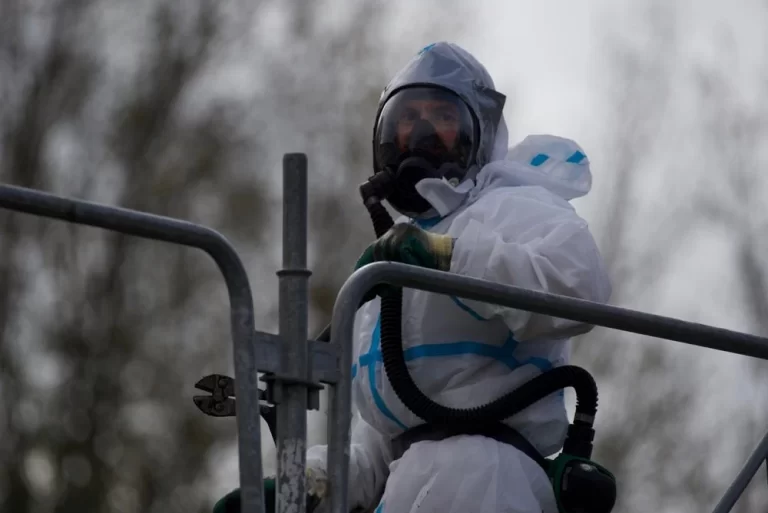
Once the inspection confirms what’s present and where, we put together the abatement plan. The work area is sealed off using negative air pressure containment, which keeps fibers from migrating into the rest of the home or neighboring spaces. In a compact, densely settled hamlet like New Cassel — where homes sit close together and families are nearby — proper containment isn’t just regulatory compliance, it’s the responsible way to work.
After removal, all asbestos-containing waste is packaged and transported to an approved disposal facility in full compliance with NYSDEC regulations. Then comes post-abatement air clearance testing — independent verification that fiber levels in the work area meet state standards before anyone re-enters the space. You receive the full documentation package at the end: inspection report, abatement records, disposal manifests, and clearance test results. That’s what the building department wants to see, and it’s what you’ll want on file if you ever sell the property.
Every Material, Every Room — We Handle It the Right Way
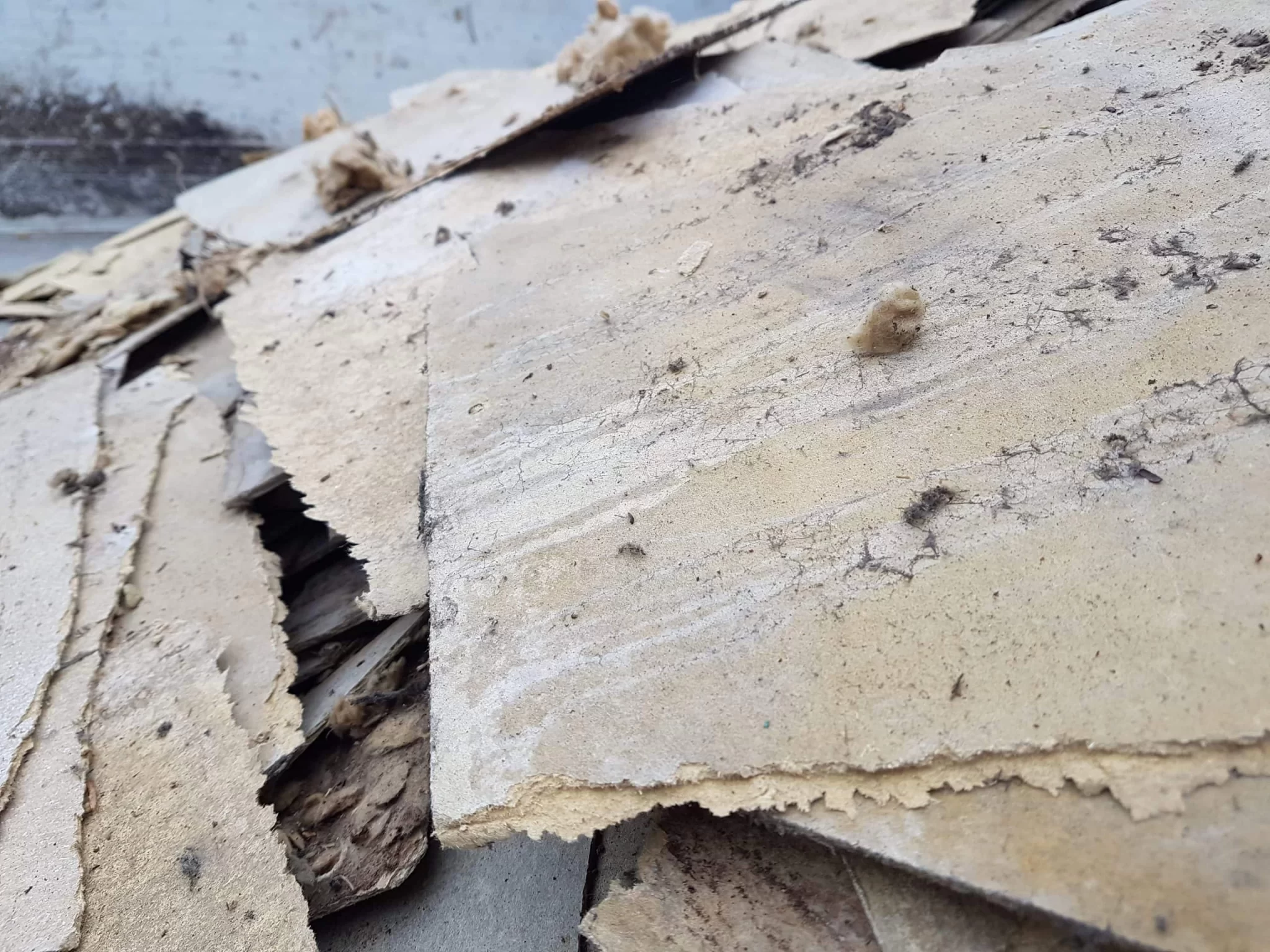
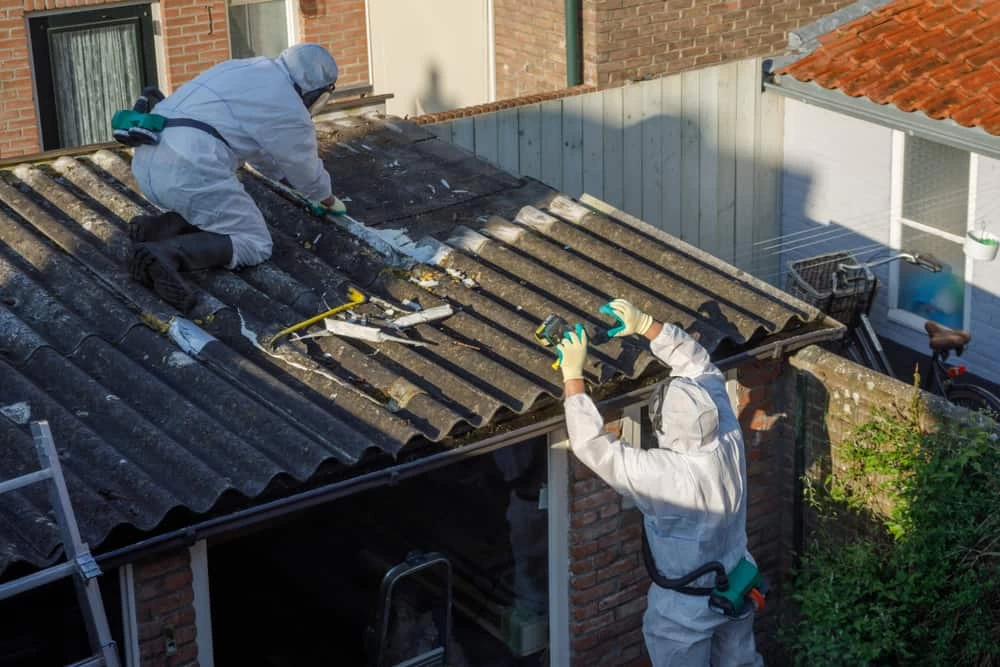
Asbestos doesn’t show up in just one place. In New Cassel’s mid-century homes, it turns up in 9×9 and 12×12 vinyl floor tiles — common in kitchens, bathrooms, and basements throughout the postwar housing stock here. It shows up in the mastic adhesive beneath those tiles, in the textured popcorn ceilings that were standard before 1978, in pipe and boiler insulation in basement mechanical rooms, in roofing shingles, and in the joint compound used throughout walls and ceilings. We handle all of it.
Asbestos tile removal includes both the tiles and the mastic — because leaving contaminated adhesive behind isn’t a complete job. Popcorn ceiling removal starts with testing, moves through full containment during the work, and ends with air clearance confirmation before the space is handed back to you. For homeowners dealing with deteriorating pipe wrap around older boilers — a common situation in New Cassel homes where aging insulation has become friable over decades of freeze-thaw cycles — the removal process follows the same containment and clearance protocol.
For property owners and developers working within the New Cassel Brownfield Opportunity Area or the Urban Renewal Overlay District, we also handle the commercial and industrial asbestos abatement that pre-construction environmental clearance requires. Whether it’s a single-family home on Grand Boulevard or a mixed-use redevelopment project south of the LIRR tracks, the process meets the same standard: fully documented, fully compliant, and built to satisfy every regulatory requirement the Town of North Hempstead and New York State put in front of you.
Does my New Cassel home actually need an asbestos inspection before I renovate?
Yes — and this isn’t a suggestion, it’s a legal requirement. Under New York State’s Industrial Code Rule 56, any demolition, renovation, remodeling, or repair work on a building requires a pre-work asbestos survey conducted by a certified NYS Asbestos Inspector before the project begins. The Town of North Hempstead’s Building Department expects this documentation as part of the permit process, so there’s no way around it if you’re pulling permits — which any legitimate contractor will require you to do.
Beyond the legal side, it’s worth understanding why this rule exists. The majority of homes in New Cassel were built between 1940 and 1969, when asbestos was a standard construction material. A kitchen gut, a bathroom remodel, a basement finishing project — any of these can disturb asbestos-containing materials that were sealed and harmless for decades. Once disturbed, the fibers become airborne and create a real health risk. The inspection tells you exactly what’s there and where, so the abatement can be targeted and the renovation can proceed safely.
What does asbestos abatement typically cost for a New Cassel home?
Cost varies based on the type of material, the amount present, and the complexity of the containment required. For a single room with asbestos floor tile removal — a common scenario in New Cassel homes where 9×9 vinyl tiles are found in kitchens or basements — you’re generally looking at a range starting in the hundreds of dollars for smaller areas and climbing from there depending on square footage and whether the mastic adhesive beneath the tiles also needs to be addressed.
Larger projects — like popcorn ceiling removal throughout multiple rooms, pipe insulation abatement in a basement boiler room, or full pre-demolition clearance for a renovation — can run into several thousand dollars. The inspection report gives you a clear picture of the scope before any work is priced, so you’re not guessing. What’s worth keeping in mind is that cutting corners here — hiring an unlicensed contractor to save money — can result in project shutdowns, fines, and personal liability for the property owner. In a real estate transaction, it can kill the deal entirely. The cost of doing it right is almost always less than the cost of doing it wrong.
How do I know if my popcorn ceiling in New Cassel contains asbestos?
You can’t tell by looking at it. Popcorn ceilings applied before 1978 frequently contain asbestos — the texture was created using a spray-applied material that commonly included asbestos fibers as a binder and fire retardant. In New Cassel, where a significant portion of the housing stock dates to the 1950s and 1960s, this is a common situation. The only way to know for certain is to have a certified NYS Asbestos Inspector collect a sample and have it analyzed by an accredited laboratory.
The key thing to avoid is disturbing the ceiling before testing. Scraping, sanding, or attempting to remove textured ceiling material without knowing what’s in it can release fibers directly into your living space. If the ceiling is intact and undisturbed, it’s generally not an immediate hazard — but the moment renovation begins, that changes. Get it tested before any work starts, and if asbestos is confirmed, have it removed by a licensed abatement contractor who will contain the work area and conduct air clearance testing before you re-enter the room.
Can I legally remove asbestos floor tiles myself in New York State?
New York State has strict rules on this, and they apply to homeowners as well as contractors. Under Industrial Code Rule 56, certain limited asbestos removal activities by homeowners in their own primary residence may be permitted in very narrow circumstances — but the restrictions are significant, and the disposal requirements are the same regardless of who does the work. Asbestos-containing waste must be properly packaged and transported to an approved disposal facility. You cannot put it in the regular trash.
More practically, the risk of doing this wrong is high. The 9×9 vinyl floor tiles common in New Cassel’s postwar homes often contain chrysotile asbestos, and the mastic adhesive beneath them frequently does as well. Breaking or scraping those tiles releases fibers. Without proper containment, a HEPA vacuum, and appropriate personal protective equipment, you’re creating an exposure risk for yourself and anyone else in the home. Most homeowners who look into the requirements and the risks end up concluding that professional abatement is the right call — not because it’s required in every case, but because the consequences of getting it wrong aren’t worth it.
How long does asbestos abatement take for a typical New Cassel home?
For a focused removal project — a single room of floor tile, a section of pipe insulation, or one area of popcorn ceiling — the abatement work itself often takes one to two days. What adds time to the overall timeline is the inspection phase at the beginning and the air clearance testing at the end. The pre-work inspection and lab analysis typically takes a few days to a week. Post-abatement air clearance testing is conducted after the work is complete and the area has been cleaned — results usually come back within 24 to 48 hours.
For homeowners in New Cassel who are working against a renovation or real estate deadline, the key is to start the inspection process as early as possible. If you’re planning a renovation and you know your home was built before 1980, don’t wait until the contractor is ready to start demo to order the inspection. Getting that step done in advance keeps the overall project timeline intact and avoids the situation where everyone is waiting on environmental clearance before work can legally continue.
Does the active redevelopment in New Cassel affect asbestos requirements for property owners?
It does, and it’s worth understanding if you own property in or near the redevelopment zones. The New Cassel Brownfield Opportunity Area and the Urban Renewal Overlay District — both active frameworks under the Town of North Hempstead — govern properties along Prospect Avenue, Brush Hollow Road, and the surrounding industrial corridor south of the LIRR tracks. Any property within these zones that undergoes renovation, demolition, or redevelopment is subject to the same asbestos survey and abatement requirements as residential properties — and in many cases, the regulatory scrutiny is higher because federal and state funding is involved.
The EPA-funded brownfield assessments currently underway in New Cassel include environmental site evaluations that may identify asbestos alongside other contaminants like heavy metals and petroleum. If you’re a property owner, developer, or investor working on a site in this area, asbestos clearance documentation is part of the pre-construction package that lenders, the Town’s Community Development Agency, and state reviewers will expect to see. We have experience with the commercial and industrial abatement work these projects require — not just the residential side — which matters when the scope and documentation standards are more complex.