If your home was built before 1980, asbestos isn’t a maybe it’s a real possibility. We provide licensed asbestos abatement in New Hurley, NY, so you know exactly what you’re dealing with and exactly how it gets resolved.
I needed a professional consultation explanation of procedure for safe removal of Asbestos in my apartment complex. Without having an account yet, I was very impressed with the caring, knowledgeable and generous advice offered by Jessica, and will look forward to doing business in the future. Thank you so much! I feel much more informed about a sometimes scary endeavor. Peace. Nancy Silva Mineola, NY.
Mia Munoz
Used this company to clean up some water flood in my house. They were fast and easy to work with.very professional, Would recommend to anyone!
Nini Valle
Great company, had a flood and they responded quickly and efficiently. Billed my insurance company directly. I highly recommend this company!
joe colapietro, jr
I had pipe freeze in my basement right before a snow storm and they made to within an hour to help start the clean up process. They we by our side throughout the entire process and even helped with the insurance company. They did such a great job with the cleanup, repair, remidiation, I contracted them to perform the repairs and finishes in the basement. They came with enough manpower and material to get the job done. Leo and Jessica were nothing but a pleasure to deal with!!
Cristian Arredondo c
I had some water damage in my home and Green Island was able to take care of my issue quickly and effectively. I am very pleased with the work they did. They responded quickly and were very professional.
Michael M
Outstanding service! From the office to the field crew everyone was friendly, helpful and responsive. I highly recommend Green Island Group.
There’s a version of this where you find something suspicious under old floor tiles mid-renovation, make one call, and get a straight answer. No panic, no contractor juggling, no wondering if it was handled right. That’s what this is supposed to look like.
The Town of Plattekill has a housing stock that tells its own story. Farmhouses, mid-century ranches, rural properties along Route 208 that haven’t been touched in decades these are exactly the kinds of homes where original materials are still in the walls, under the floors, and wrapped around old pipes. When you disturb those materials without knowing what they are, you’re not just taking a risk with your health. Under New York State Industrial Code Rule 56, you’re also stepping into legal territory that can stop a renovation cold or complicate a home sale fast.
When abatement is done correctly licensed contractor, proper containment, post-removal air monitoring you walk away with documented clearance. Not a verbal assurance. Actual results in writing that confirm the air is clean. For a homeowner in New Hurley who’s been living with uncertainty about what’s inside their walls, that piece of paper matters more than most people realize until they have it.
We hold the New York State Department of Labor Asbestos Handling License the specific credential required by law to perform asbestos abatement work in this state. That’s not a general contractor license or a private certification. It’s the one that actually authorizes this work under NYS Industrial Code Rule 56, and any contractor without it is operating illegally.
We serve Ulster County, including the Town of Plattekill and New Hurley, with communities running along the Route 208 corridor from Wallkill through the area and north toward Gardiner. Beyond the asbestos license, we also carry NYS DOL Mold, IICRC, and USEPA Lead certifications which matters in older homes where asbestos rarely shows up alone. One problem often leads to another, and having one company that can handle all of it keeps your project moving.
No Surprises Here's What the Process Actually Looks Like
It starts with an inspection. Before any work happens, the materials in question get assessed. If testing confirms asbestos-containing materials are present, the scope of work gets defined what needs to come out, how much of it, and what the job will require. You’ll know what you’re looking at before anything moves forward.
From there, we handle the NYS DOL notification and permit process on your behalf. For most homeowners in the Plattekill area, this is the part that feels the most overwhelming the paperwork, the regulatory requirements, the documentation that has to follow the project for 30 years under state law. You don’t have to figure that out alone. We manage it as part of the job.
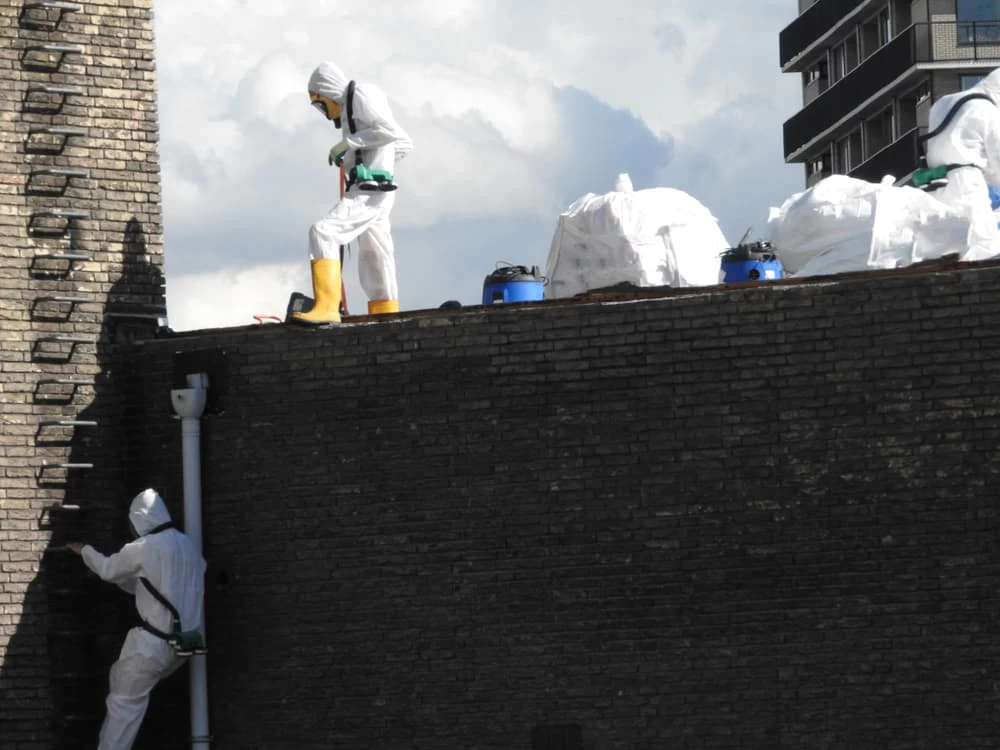
Once abatement begins, the work area is fully contained and sealed off. Removal follows strict NYS Industrial Code Rule 56 protocols proper protective equipment, regulated disposal, no shortcuts. When the physical work is complete, post-abatement air monitoring is conducted to confirm clearance. You receive those results in writing. That’s the close of every job not a handshake, but documented proof that the space is clean.
Asbestos shows up in more places than most homeowners expect. In homes built between the 1940s and late 1970s which covers a significant portion of the residential stock in and around New Hurley it was used in floor tile adhesives, pipe insulation, popcorn ceiling texture, joint compound, roofing shingles, and attic insulation materials like vermiculite. We handle asbestos tile removal, asbestos popcorn ceiling removal, pipe and duct insulation abatement, and full-structure remediation depending on what the inspection turns up.
Every project includes the inspection and assessment, permit and notification filing with the NYS DOL, full containment setup, licensed removal and regulated disposal, and post-abatement air monitoring with written clearance documentation. If your situation involves an insurance claim storm damage that exposed asbestos siding, for example, which is a real scenario in the Hudson Valley we bill insurance directly and manage that process for you.
For homeowners in the Wallkill Central School District area preparing to sell, the written clearance documentation that comes with every job is also exactly what a buyer’s inspector or attorney will want to see. It removes the question from the transaction entirely, which is often worth more than the abatement cost itself when a deal is on the line.
How do I know if my New Hurley home actually contains asbestos?
The honest answer is that you can’t know for certain without testing. Visual inspection alone isn’t reliable asbestos-containing materials often look identical to non-asbestos versions of the same product. The only way to confirm it is to have a sample collected and sent to a certified lab.
That said, if your home was built before 1980 and you’re in the Town of Plattekill area, the probability is real. Homes in New Hurley include a mix of mid-century construction where asbestos was standard in floor tiles, ceiling texture, pipe wrap, and insulation. If you’re planning any renovation even something as straightforward as pulling up old flooring or opening a wall an inspection before you start is the move that keeps the project from getting stopped mid-way by a regulatory requirement you didn’t see coming.
What happens if I accidentally disturb asbestos during a renovation?
Stop work immediately. Don’t try to clean it up, don’t run a vacuum, and don’t keep going with the project. Disturbing asbestos-containing materials releases microscopic fibers into the air, and once they’re airborne, the exposure risk is real. The area needs to be sealed off until a licensed contractor can assess it.
Under New York State Industrial Code Rule 56, any disturbance of asbestos-containing materials covering 10 square feet or more, or 25 linear feet or more, triggers mandatory licensed abatement. This isn’t optional, and it applies to homeowners in New Hurley the same as it applies everywhere else in New York State. The good news is that calling early before the situation gets worse keeps the scope manageable. We’re available around the clock for exactly these situations, including after-hours and weekends when renovation projects tend to surface these discoveries.
Does asbestos abatement in New York require permits, and who handles that?
Yes. In New York State, asbestos abatement projects require advance notification to the NYS Department of Labor, along with project documentation, air monitoring, and waste disposal manifests. These records have to be maintained for 30 years under state law. It’s a real regulatory process, not a formality.
We handle the entire permit and notification process as part of every job. You don’t have to learn the NYS DOL filing system or figure out what documentation the project requires that’s handled on your behalf. For homeowners in the Plattekill area who are already managing a renovation timeline or a pending home sale, removing that administrative layer from the equation makes a meaningful difference. The goal is that you make one call and the compliance side of the project gets managed for you, start to finish.
How long does asbestos abatement typically take for a home in the Plattekill area?
It depends on the scope, but most residential jobs fall somewhere between one and five days for the physical abatement work. A single area like asbestos tile removal in a basement or popcorn ceiling removal in one room typically moves faster. Larger projects involving multiple materials across several areas of the home take longer, and the permit notification process with the NYS DOL requires advance lead time before work can begin.
For homeowners in New Hurley who are working against a renovation deadline or a real estate closing date, the best thing you can do is call early. The timeline on these jobs is usually driven more by the front-end scheduling and permitting than by the physical work itself. Getting the inspection and assessment done as soon as you suspect a problem gives you the most flexibility on timing and keeps the rest of your project from stalling while you wait.
What does asbestos abatement cost for a typical home in Ulster County?
For residential projects in the Ulster County area, asbestos abatement typically ranges from around $1,500 on the low end for a limited, contained removal a single floor tile area or small section of pipe insulation up to $15,000 or more for larger-scope projects involving multiple materials or whole-room remediation. Complex jobs in older homes with extensive original materials can run higher.
The number that matters more than the abatement cost is what it costs you not to act. A failed home inspection that flags suspected ACMs can stall or kill a sale. A renovation project that gets stopped by a regulatory violation is far more expensive than the abatement would have been. And the health risk of ongoing exposure to disturbed asbestos fibers isn’t a financial figure at all. We provide free estimates so you know what you’re looking at before committing to anything and if insurance applies to your situation, we bill directly so you’re not fronting costs and waiting for reimbursement.
Can asbestos abatement be done while my family is still living in the house?
In many cases, yes but it depends on where the work is happening and the extent of the abatement. When the affected area is contained to a specific room or section of the home, proper containment barriers and negative air pressure systems can isolate the work zone so that the rest of the house remains safe and livable. Your family would typically need to stay out of the immediate work area during the project, but full displacement isn’t always required.
For larger projects or situations where the abatement involves a central area like a basement, HVAC system, or attic temporary relocation during the active work phase is often the safer and more practical call. We’ll walk you through what makes sense for your specific situation during the assessment. The post-abatement air monitoring that closes every job is what gives you the objective confirmation that it’s safe to return to the space not just a contractor’s word, but clearance results in writing.