New Rochelle's Older Homes Deserve More Than a Guess
If your home was built before 1980, there’s a real chance asbestos is somewhere in it and we give you the facts, the licensed removal, and the documentation to move forward with confidence.
I needed a professional consultation explanation of procedure for safe removal of Asbestos in my apartment complex. Without having an account yet, I was very impressed with the caring, knowledgeable and generous advice offered by Jessica, and will look forward to doing business in the future. Thank you so much! I feel much more informed about a sometimes scary endeavor. Peace. Nancy Silva Mineola, NY.
Mia Munoz
Used this company to clean up some water flood in my house. They were fast and easy to work with.very professional, Would recommend to anyone!
Nini Valle
Great company, had a flood and they responded quickly and efficiently. Billed my insurance company directly. I highly recommend this company!
joe colapietro, jr
I had pipe freeze in my basement right before a snow storm and they made to within an hour to help start the clean up process. They we by our side throughout the entire process and even helped with the insurance company. They did such a great job with the cleanup, repair, remidiation, I contracted them to perform the repairs and finishes in the basement. They came with enough manpower and material to get the job done. Leo and Jessica were nothing but a pleasure to deal with!!
Cristian Arredondo c
I had some water damage in my home and Green Island was able to take care of my issue quickly and effectively. I am very pleased with the work they did. They responded quickly and were very professional.
Michael M
Outstanding service! From the office to the field crew everyone was friendly, helpful and responsive. I highly recommend Green Island Group.
More than a third of homes in New Rochelle were built before 1939. The pre-war Tudors and Colonials in Wykagyl, Quaker Ridge, and Bonnie Crest weren’t built with today’s safety standards in mind they were built with pipe insulation, floor tiles, ceiling texture, and joint compound that routinely contained asbestos. When you finally get it removed the right way, you stop carrying that uncertainty every time someone picks up a drill or a sledgehammer near those walls.
For homeowners in New Rochelle preparing to renovate, the clearance documentation you receive after a licensed abatement isn’t just paperwork. It’s what your contractor needs to proceed, what your insurer may require before closing out a water damage claim, and what protects your sale price when you eventually list. In a market where the median home value sits near $687,000, having that documentation in hand isn’t optional it’s protection.
New Rochelle’s position on Long Island Sound adds another layer most inland Westchester towns don’t deal with. Nor’easters and storm surges regularly push water into older basements, and when floodwater contacts asbestos-containing floor tiles or deteriorating pipe insulation, it creates a hazardous situation that has to be addressed before any restoration work begins. Getting ahead of that or responding to it correctly when it happens is exactly what this process is built for.
We are a full-service environmental remediation contractor serving New Rochelle and all of Westchester County. We hold the NYS Department of Labor Asbestos Handling License the specific credential required for abatement work in New Rochelle along with EPA certification, NYS DEC disposal compliance, and approvals for New York State agency contracts. Every worker on your job holds an individual NYS DOL handler or supervisor certificate. This isn’t a subcontracted crew. It’s the same licensed team from start to finish.
With more than 5,000 completed projects across the New York metro area, we have handled the exact scenarios most common in New Rochelle’s housing stock steam pipe insulation in pre-war homes, 9×9 vinyl asbestos tiles in 1950s construction like the ranch homes throughout Bayberry, popcorn ceiling texture, and multi-material abatement in whole-home renovations. We are also M/WBE certified by the NYS Office of General Services, a formal state-issued designation that matters for institutional clients like Iona University, the New Rochelle City School District, and commercial developers working in the city’s downtown redevelopment corridor.
No Surprises Here's Exactly What the Process Looks Like
It starts with a free on-site inspection. One of our licensed representatives comes to your property, assesses the materials in question, and tells you plainly what you’re dealing with whether that’s pipe insulation in a pre-war basement, floor tiles from a 1950s kitchen, or ceiling texture in a mid-century addition. You get a clear scope and a written estimate before anything else happens.
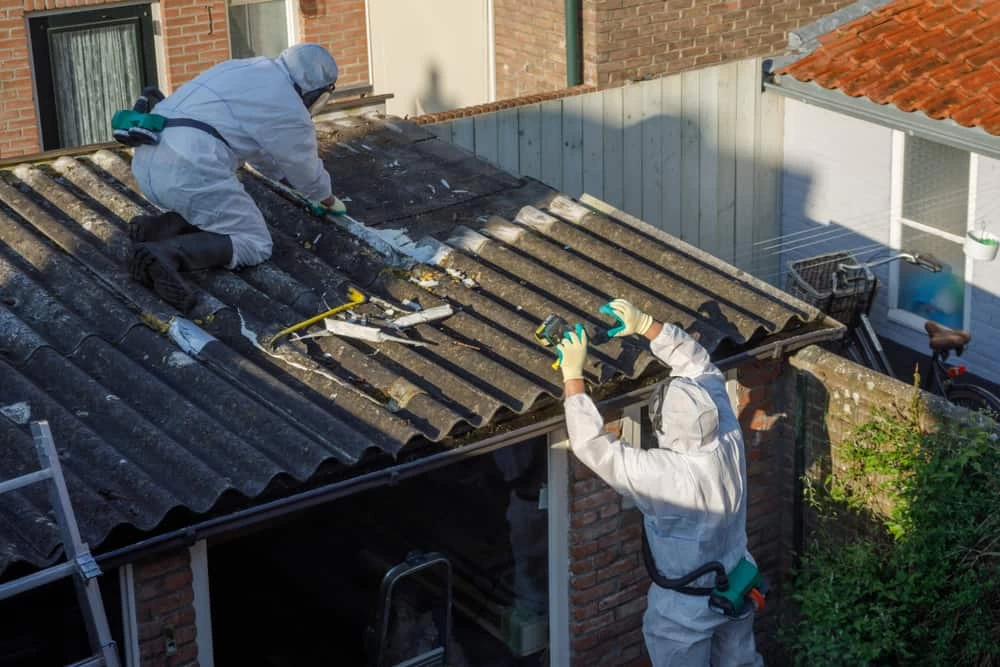
Once you move forward, the work area is contained using negative air pressure and sealed barriers to prevent any fiber migration to the rest of your home. In New Rochelle, where so many homes have active living spaces directly above or adjacent to the work area, that containment step is non-negotiable. The materials are then removed by NYS DOL-certified workers following New York State Industrial Code Rule 56, which governs every aspect of the abatement process from how the work area is prepared to how the waste is packaged and disposed of at an approved facility with a documented chain of custody.
After removal, post-abatement air clearance testing is conducted. You receive the results in writing. That clearance documentation confirms the air in the work area has returned to safe levels and is the official record that your building department, insurer, real estate attorney, or future buyer can reference. For properties in New Rochelle’s downtown redevelopment zone, the process also includes the pre-demolition survey and EPA NESHAP compliance documentation that commercial projects require before demolition can proceed.
Every Material Type Found in New Rochelle Homes, Handled in One Project
New Rochelle’s housing stock spans nearly four centuries of construction, and asbestos shows up differently depending on when and how a home was built. In the pre-war neighborhoods Bonnie Crest, Beechmont, Rochelle Park the most common scenarios are steam pipe insulation wrapped around radiator systems, original floor tile installations, and drywall joint compound. In the postwar neighborhoods like Bayberry, built in 1954, it’s typically the 9×9 vinyl asbestos floor tiles in basements and utility areas that need to come out. Mid-century homes throughout the city often have popcorn ceiling texture that tests positive. We handle all of it asbestos tile removal, popcorn ceiling removal, pipe insulation, roofing materials, and exterior transite siding under one project, one license, and one set of clearance documents.
You won’t need to coordinate separate contractors for different material types or wonder whether one crew’s work is compatible with another’s documentation. The full scope is managed in-house, from the initial inspection through disposal and final air clearance. We also work directly with insurance carriers for flood-triggered abatement situations a real and recurring scenario in New Rochelle’s coastal neighborhoods, where storm events regularly disturb ACMs in older basements. If your abatement is part of a larger water damage claim, the billing coordination happens on our end, not yours.
Does my pre-war home in New Rochelle likely contain asbestos materials?
If your home was built before 1940 and more than a third of New Rochelle’s homes were the honest answer is yes, it probably does. Asbestos was a standard building material through most of the 20th century, and pre-war construction in neighborhoods like Wykagyl, Quaker Ridge, and Bonnie Crest almost universally incorporated it in some form. The most common locations are the pipe insulation on steam heating systems, the original floor tile installations, drywall joint compound, and ceiling texture.
The important distinction is between asbestos that’s intact and undisturbed versus asbestos that’s been damaged, is deteriorating, or is about to be disturbed by renovation work. Intact asbestos in good condition may not require immediate removal but the moment you’re planning any work that involves cutting, drilling, sanding, or demolishing materials in a pre-1980 home, a professional assessment is the right first step. Our inspection is free, and it gives you the actual facts about what’s in your home before you commit to any course of action.
What does asbestos abatement actually cost in the New Rochelle area?
Cost varies based on the type of material, the quantity, the location in the home, and the complexity of the containment required. A single-room asbestos tile removal in a New Rochelle basement typically runs differently than a whole-home multi-material abatement in a pre-war Tudor in Wykagyl and the only way to get an accurate number is an on-site assessment, not a phone estimate.
What you should expect from any legitimate quote is a fully itemized scope: containment setup, removal labor, waste disposal with documented chain of custody, post-abatement air clearance testing, and the clearance documentation itself. If a quote leaves any of those line items out, ask why. In a market where New Rochelle home values average near $687,000, the cost of professional abatement is modest relative to what incomplete or undocumented work can do to a future sale or renovation project. We provide written estimates at no charge after an on-site inspection.
Do I have to leave my home during asbestos removal in New Rochelle?
It depends on the scope and location of the work. For a contained single-room project say, floor tile removal in a basement with a separate entrance occupants can often remain in the home as long as the work area is fully sealed and negative air pressure is maintained throughout the job. For larger projects involving multiple rooms, HVAC-adjacent materials, or work in central living areas, temporary relocation during the active abatement phase is the safer call.
We’ll give you a straight answer on this during the inspection, based on your specific home and the scope of work. In New Rochelle’s older housing stock, where pre-war homes often have open floor plans or shared ductwork between the work area and living spaces, containment requirements are taken seriously. The goal is always to minimize disruption while making sure the process is done correctly and that means being honest about when staying put is fine and when it isn’t.
Is asbestos testing or abatement required before renovating a New Rochelle home?
Under New York State Industrial Code Rule 56, any renovation or demolition that will disturb materials in a pre-1980 building requires either a prior asbestos survey by a licensed inspector or a licensed abatement contractor’s determination that no ACMs are present. This applies to residential and commercial properties alike. For homeowners in New Rochelle planning a kitchen renovation, basement finishing, or heating system upgrade in a pre-war or postwar home, skipping this step isn’t just a health risk it exposes your general contractor to significant liability if they disturb asbestos unknowingly.
The New Rochelle Building Department requires permits for covered renovation and demolition work, and asbestos clearance documentation is part of what keeps that permit process clean. Contractors who pull permits in Westchester County are increasingly asking for asbestos clearance before they begin work on pre-1980 structures, because the liability of disturbing undisclosed ACMs falls on everyone involved. Getting the inspection and abatement done first protects you, your contractor, and your timeline.
My basement flooded after a storm do I need asbestos testing before cleanup in New Rochelle?
If your home was built before 1980 and your basement flooded, the answer is almost always yes you should have it assessed before any aggressive cleanup or restoration work begins. New Rochelle’s position on Long Island Sound makes coastal flooding a recurring reality, particularly in areas near the Stephenson Brook watershed and the city’s six major drainage basins. When floodwater contacts asbestos-containing floor tiles or deteriorating pipe insulation, it can disturb fibers that were previously stable and contained.
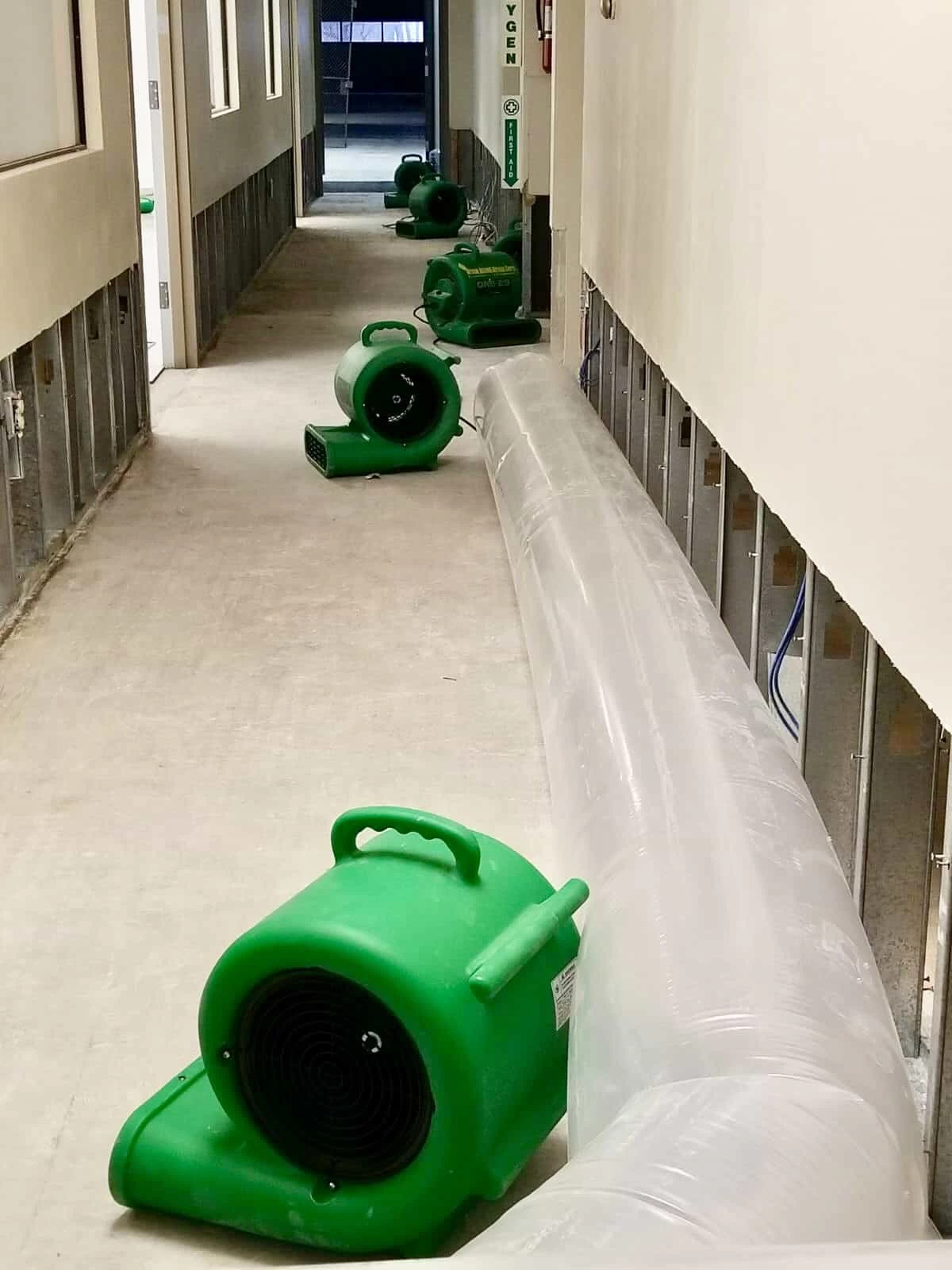
Restoration contractors are not licensed to handle asbestos, and beginning demolition or drying work in a flooded pre-1980 basement without an asbestos assessment puts everyone in the space at risk. If your abatement is connected to a flood damage insurance claim, we work directly with carriers on billing so you’re not managing two separate processes while already dealing with the damage. Getting the asbestos situation assessed and resolved first is what allows the restoration work to proceed legally and safely.
How do I verify that an asbestos contractor is actually licensed to work in New Rochelle?
New Rochelle is in Westchester County, outside New York City limits, which means the operative licensing requirement is the NYS Department of Labor Asbestos Handling License not the NYC DEP contractor license. These are separate credentials, and a contractor who holds only the NYC DEP license is not properly licensed for work in New Rochelle. You can verify any contractor’s NYS DOL license status directly through the New York State Department of Labor’s online contractor database it’s a public record and takes about two minutes to check.
Beyond the company license, every individual worker on a licensed abatement job in New York State is required to hold their own NYS DOL asbestos handler or supervisor certificate. Ask for it. A legitimate contractor will hand it over without hesitation. We hold the NYS DOL license, EPA certification, NYS DEC disposal compliance, and New York State agency contractor approval and every crew member working on your New Rochelle project carries individual certification. If a contractor can’t produce those credentials on request, that’s your answer.