If your New Vernon property was built before 1980, there’s a real chance asbestos is somewhere inside it and the only way to know for sure is to test. We provide licensed asbestos abatement in New Vernon, NY, with full documentation from start to finish.
I needed a professional consultation explanation of procedure for safe removal of Asbestos in my apartment complex. Without having an account yet, I was very impressed with the caring, knowledgeable and generous advice offered by Jessica, and will look forward to doing business in the future. Thank you so much! I feel much more informed about a sometimes scary endeavor. Peace. Nancy Silva Mineola, NY.
Mia Munoz
Used this company to clean up some water flood in my house. They were fast and easy to work with.very professional, Would recommend to anyone!
Nini Valle
Great company, had a flood and they responded quickly and efficiently. Billed my insurance company directly. I highly recommend this company!
joe colapietro, jr
I had pipe freeze in my basement right before a snow storm and they made to within an hour to help start the clean up process. They we by our side throughout the entire process and even helped with the insurance company. They did such a great job with the cleanup, repair, remidiation, I contracted them to perform the repairs and finishes in the basement. They came with enough manpower and material to get the job done. Leo and Jessica were nothing but a pleasure to deal with!!
Cristian Arredondo c
I had some water damage in my home and Green Island was able to take care of my issue quickly and effectively. I am very pleased with the work they did. They responded quickly and were very professional.
Michael M
Outstanding service! From the office to the field crew everyone was friendly, helpful and responsive. I highly recommend Green Island Group.
You stop guessing. That’s the first thing. When asbestos-containing materials are properly identified, removed by a licensed contractor, and cleared by an independent industrial hygienist, you walk away with a written clearance certificate documented proof that the air in your home meets New York State’s legal standard for safe occupancy. No more wondering whether that old floor tile is a problem. No more holding off on the renovation because you’re not sure what’s under the surface.
For homeowners in New Vernon and the surrounding Minisink Valley, that peace of mind is especially relevant. The housing stock here skews old farmhouses, mid-century rural homes, and post-war structures that were built during the decades when asbestos was standard in floor tiles, pipe insulation, ceiling texture, and joint compound. The freeze-thaw cycles that western Orange County gets every winter degrade older building materials over time, and deteriorating materials are exactly when asbestos becomes a breathing hazard rather than a dormant one.
If you’re in the middle of a real estate transaction, the clearance certificate is what your attorney needs to close the deal. If you’re mid-renovation and work has stopped, it’s what gets things moving again. Either way, the outcome isn’t just safety it’s certainty. And in a community where properties have been through decades of layered renovations without ever being tested, that certainty is worth a lot.
12 Years In, Every License Earned, Nothing Delegated
We’ve been doing this work for over 12 years as an independently owned environmental remediation contractor not a franchise, not a national brand with a local phone number. Our name and reputation are attached to every job in New Vernon and across Orange County, which means the standard doesn’t change based on the size of the project or the zip code.
The credentials are real and verifiable. We hold the New York State Department of Labor Asbestos Contractor License required to legally perform abatement anywhere in the state, including the Town of Minisink and the rest of Orange County. We also carry USEPA Lead/RRP Certification and dual NYS and NYC Minority/Women-Owned Business Enterprise certification a government-audited designation, not a self-reported label.
We’ve performed abatement work for the NYS Office of General Services, the Dormitory Authority of the State of New York, Nassau County, and Suffolk County. Government agencies vet contractors before they hire them. That track record doesn’t happen by accident, and it doesn’t stay intact without consistent, accountable work on every project including yours.
No Surprises Here's Exactly What the Process Looks Like
It starts with an inspection and testing. Before anything is removed, the materials in question are sampled and sent to an accredited laboratory to confirm whether asbestos is present and at what concentration. You get a written estimate based on actual findings not a ballpark number that shifts once work begins. For properties in New Vernon, this step often turns up more than one type of material: it’s common to find vinyl asbestos floor tiles, pipe insulation on old heating systems, and popcorn ceiling texture all in the same structure, especially in homes that were renovated in phases over several decades.
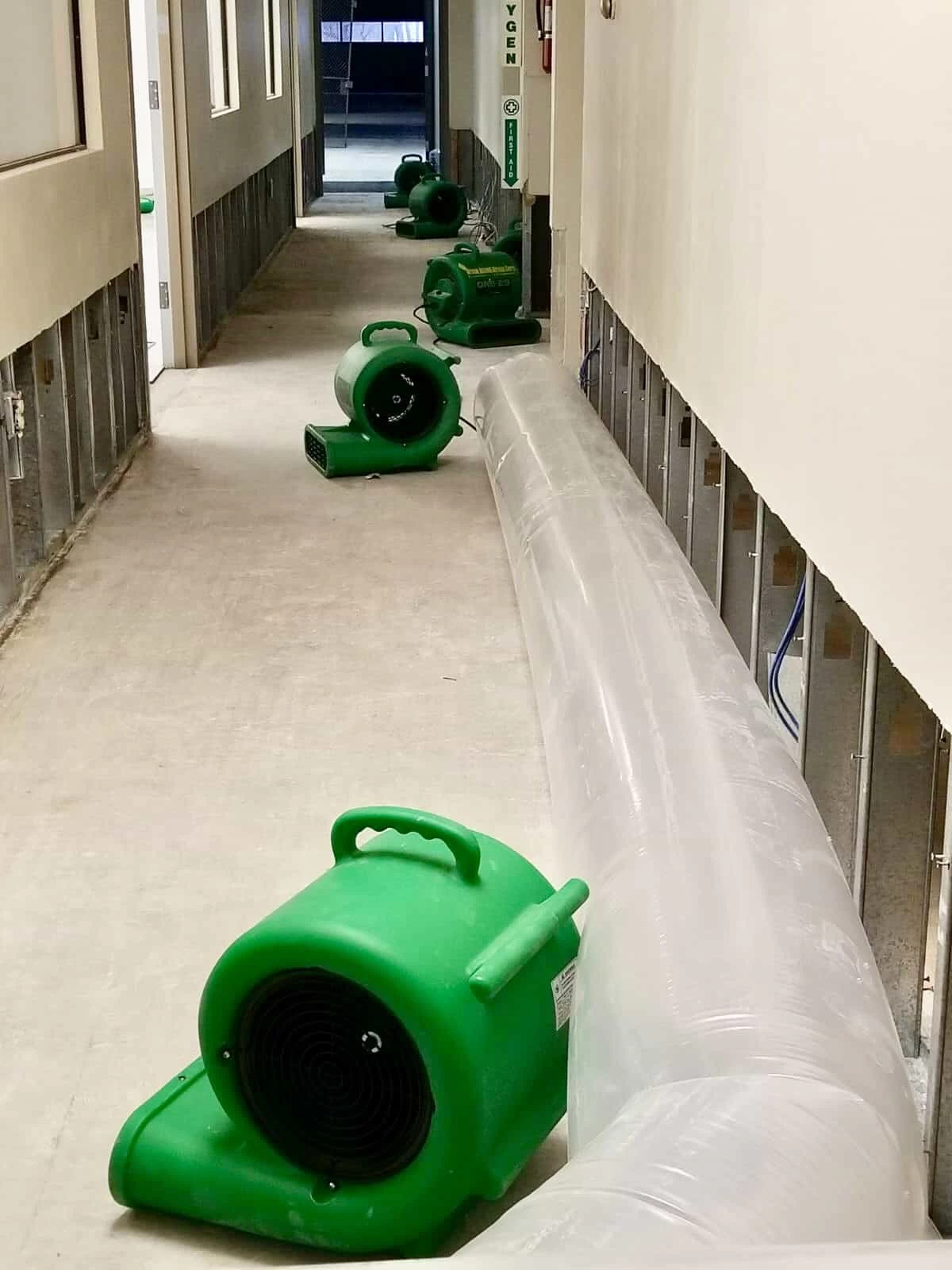
Once testing confirms what needs to go, the abatement work begins under full containment. The work area is sealed off with negative air pressure systems that prevent fibers from migrating to other parts of the home. All materials are removed, bagged, and transported to a licensed disposal facility in compliance with 12 NYCRR Part 56 New York State’s governing regulation for asbestos handling. Because New Vernon falls under the Town of Minisink’s building department and NYS DOL jurisdiction (not NYC’s separate framework), the permit and notification process is straightforward, but it still requires a properly licensed contractor to execute correctly.
The final step is post-abatement air monitoring by an independent industrial hygienist. This isn’t something we do in-house it’s conducted by a third party specifically so the result is objective. When the air clears and the numbers meet the state standard, you receive a written clearance certificate. That document is your proof of completion, and it’s what every downstream party your real estate attorney, your building department, your renovation contractor will ask for.
Every asbestos abatement project with us covers the full scope inspection, testing, licensed removal, proper containment and disposal, and post-abatement air monitoring with a written clearance certificate. There’s no version of the job where the clearance step gets skipped. It’s required by New York State law, and it’s the only objective confirmation that the work was done correctly.
For New Vernon homeowners, the most common materials we’re called in to address are vinyl asbestos floor tiles particularly the 9×9 tiles that were laid in mid-century rural homes throughout the Minisink Valley along with pipe insulation on older steam and hot water heating systems, popcorn acoustic ceiling texture, and asbestos-containing joint compound in walls. Storm damage to older roofing materials is another scenario that comes up regularly in this area, especially after the nor’easters and ice events that western Orange County sees each winter. When storm damage is involved and the work is connected to an insurance claim, we bill the insurance company directly and work through the claims process on your behalf.
For projects where the cost is unexpected which describes most asbestos discoveries 0% APR financing up to $200,000 is available for qualifying projects. Finding asbestos mid-renovation doesn’t have to stop everything. The work can get done properly, the documentation gets issued, and the cost gets managed in a way that doesn’t derail the rest of your project. We also handle mold remediation, lead paint removal, water damage, and fire damage, so if the inspection turns up more than one issue which is common in older New Vernon properties you’re not coordinating four different contractors to get it resolved.
Does asbestos abatement in New Vernon require a licensed contractor or can anyone do it?
In New York State, asbestos abatement must be performed by a contractor holding a valid NYS Department of Labor Asbestos Contractor License. This is not the same as a general contractor license it’s a separate credential that requires specific training, equipment, and compliance with 12 NYCRR Part 56, the state’s asbestos handling code. A general contractor who removes asbestos without this license is performing illegal work, and any documentation they produce will not be accepted by the Town of Minisink building department, a real estate attorney, or a court.
The reason this matters for New Vernon specifically is that the area sits close to the New Jersey state line, and some contractors who operate in Sussex County, NJ may not hold proper New York credentials. If you’re vetting a contractor, ask for their NYS DOL Asbestos Contractor License number and verify it directly on the NYS DOL website before signing anything. We hold a current, verifiable license specific to New York State abatement work.
How do I know if my older New Vernon home actually contains asbestos?
The honest answer is that you can’t tell by looking. Asbestos fibers are invisible to the naked eye, and many asbestos-containing materials look identical to their non-asbestos counterparts. The only way to confirm presence is laboratory testing of a physical sample. That said, if your home was built or renovated between roughly 1940 and 1980, there are specific places worth testing: vinyl floor tiles (especially 9×9 inch tiles), pipe insulation on older heating systems, popcorn or textured ceilings, drywall joint compound, and roofing felt or shingles.
In the Minisink Valley, the housing stock is old enough that many properties have been through multiple renovation cycles a bathroom update in one decade, new flooring over old in another without ever being formally tested. Each layer of renovation is a potential point of disturbance. If you’re planning any work that involves opening walls, pulling up floors, or disturbing ceiling materials in a New Vernon home built before 1980, testing before you start is the right call. It’s significantly less expensive than stopping a renovation mid-project when something unexpected turns up.
What is a clearance certificate and do I actually need one after asbestos removal?
A clearance certificate is a written document issued by an independent industrial hygienist confirming that post-abatement air monitoring found airborne asbestos fiber levels below the threshold required by New York State for safe occupancy. Under 12 NYCRR Part 56, a space that has undergone asbestos abatement cannot legally be reoccupied until this clearance has been issued. It is not optional, and it is not something the abatement contractor issues about their own work it comes from a third-party professional specifically to ensure objectivity.
In practical terms, the clearance certificate is the document your real estate attorney will ask for if the abatement was part of a transaction, the document your building department needs to close out a permit, and the document that gives you and your family documented confirmation that the air in your home is safe. If a contractor tells you clearance testing isn’t necessary or offers to skip it to save time, that’s a significant red flag. Every project we complete includes this step as a standard part of the process, not an add-on.
Does homeowners insurance cover asbestos abatement for a property in Orange County, NY?
It depends on how the asbestos was disturbed and what your specific policy covers. In most cases, standard homeowners insurance does not cover asbestos removal as a standalone maintenance or renovation expense if you simply discover old floor tiles or pipe insulation during a planned renovation, that’s typically considered a pre-existing condition and falls outside coverage. However, if the asbestos was disturbed or exposed as a result of a covered event storm damage, a burst pipe, a fire there’s a reasonable case for the remediation costs to be included in the claim.
For New Vernon homeowners, storm-related scenarios are the most common insurance-connected abatement situations. Nor’easters and ice storms regularly damage older roofing and exterior materials in western Orange County, and when that damage exposes asbestos-containing roofing felt or siding, the remediation can potentially be part of the property damage claim. We bill insurance companies directly and work through the claims process on your behalf, which removes a significant administrative burden when you’re already managing property damage. If you’re not sure whether your situation qualifies, call and describe what happened the answer is usually clear within the first conversation.
Do we have to leave our home during asbestos abatement, and how long does it take?
For most residential abatement projects, yes you and your family should plan to be out of the home during active removal work. The work area is sealed under negative air pressure containment to prevent fiber migration, but the safest approach for families, especially households with children, is to vacate for the duration of the removal phase. In a community like New Vernon where nearly half of households have children under 18, this is a question we hear often and take seriously.
Timeline varies based on the scope of work. A single-room tile removal might be completed in one to two days. A more extensive project multiple material types across several areas of an older farmhouse, for example can take longer. After removal is complete, the space goes through a thorough cleaning before post-abatement air monitoring is conducted by the independent industrial hygienist. Once the clearance certificate is issued, the space is legally cleared for reoccupancy. We’ll walk you through the expected timeline during the estimate process so you can plan accordingly no vague timelines, no surprises mid-project.
We're selling our home in New Vernon does asbestos need to be removed before closing?
Not always, but it’s increasingly common for buyers and their inspectors to flag asbestos-containing materials and require remediation as a condition of sale especially as home values in the Minisink area have climbed significantly over the past decade. Whether removal is legally required depends on the condition of the material. Intact, non-friable asbestos that isn’t being disturbed may not trigger a mandatory removal requirement. But friable materials anything crumbling, deteriorating, or likely to be disturbed during a renovation the buyer is planning are a different story, and most buyers’ attorneys will push for documented remediation before closing.
What matters most in a real estate context is documentation. A buyer’s attorney isn’t just asking whether the asbestos is gone they’re asking for proof. That proof is the written clearance certificate issued after post-abatement air monitoring. If you’re a seller in New Vernon facing an asbestos contingency, the fastest path to closing is hiring a licensed contractor who can complete the work and produce that certificate on a timeline that works for your transaction. We’ve handled this exact scenario many times and understand the time pressure involved. A call today can tell you how quickly the work can realistically be scheduled and completed.