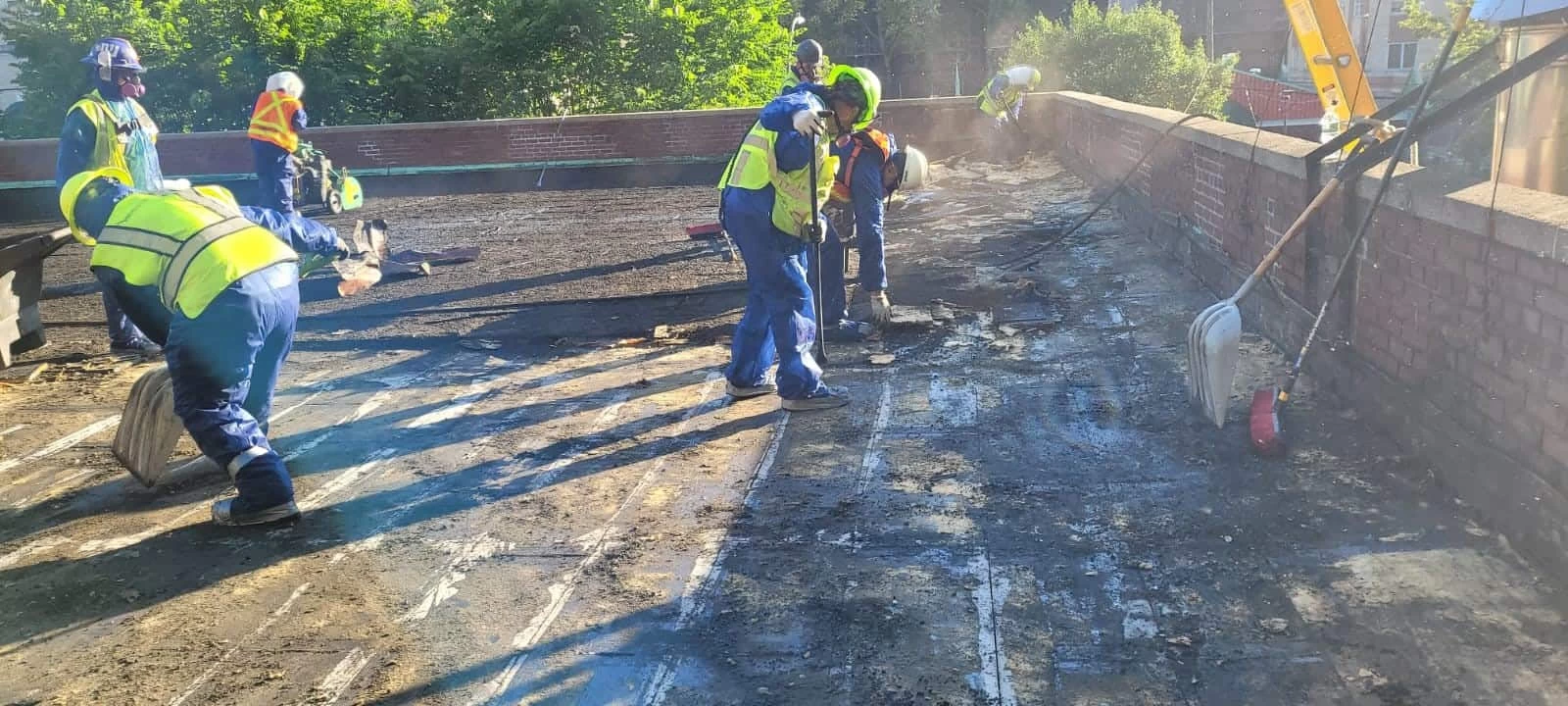
If your building went up before 1987, asbestos abatement in New York isn’t optional it’s the law. We handle the full process, from survey to clearance, so you’re covered.
I needed a professional consultation explanation of procedure for safe removal of Asbestos in my apartment complex. Without having an account yet, I was very impressed with the caring, knowledgeable and generous advice offered by Jessica, and will look forward to doing business in the future. Thank you so much! I feel much more informed about a sometimes scary endeavor. Peace. Nancy Silva Mineola, NY.
Mia Munoz
Used this company to clean up some water flood in my house. They were fast and easy to work with.very professional, Would recommend to anyone!
Nini Valle
Great company, had a flood and they responded quickly and efficiently. Billed my insurance company directly. I highly recommend this company!
joe colapietro, jr
I had pipe freeze in my basement right before a snow storm and they made to within an hour to help start the clean up process. They we by our side throughout the entire process and even helped with the insurance company. They did such a great job with the cleanup, repair, remidiation, I contracted them to perform the repairs and finishes in the basement. They came with enough manpower and material to get the job done. Leo and Jessica were nothing but a pleasure to deal with!!
Cristian Arredondo c
I had some water damage in my home and Green Island was able to take care of my issue quickly and effectively. I am very pleased with the work they did. They responded quickly and were very professional.
Michael M
Outstanding service! From the office to the field crew everyone was friendly, helpful and responsive. I highly recommend Green Island Group.
In New York City, discovering asbestos mid-renovation doesn’t just create a health concern it creates a legal one. Work stops. Permits get held. Your timeline collapses. When abatement is handled correctly, all of that gets resolved: the DEP paperwork is filed, the notification window runs its course, the clearance testing comes back clean, and your project moves forward with documentation that holds up at the DOB, at your next sale, and in front of your co-op board.
What most people don’t realize is how often asbestos shows up alongside something else entirely. A burst pipe in a pre-war Manhattan building exposes asbestos pipe insulation and floods two floors at the same time. A gut renovation in a Brooklyn brownstone turns up asbestos floor tiles and mold behind a damaged wall in the same afternoon. When you’re dealing with both, having one contractor who handles the full scope abatement, water damage, mold remediation removes a layer of coordination that costs time and money in a city where every day of delay has a price.
The other thing that changes is clarity. A lot of people who call us have never dealt with asbestos before. They don’t know what an ACP-5 is, they don’t know whether their insurance covers it, and they’re not sure what they’re legally responsible for. By the time the job is done, that confusion is gone replaced by a complete documentation package and a property that’s legally cleared for whatever comes next.
We are a licensed environmental remediation contractor based in Bohemia, NY, on Long Island directly connected to all five boroughs via the Long Island Expressway. We hold the NYS Department of Labor asbestos contractor license and the NYC DEP asbestos abatement contractor certification required to legally perform this work in New York City. Those aren’t marketing claims they’re verifiable credentials that protect you as the property owner if anything is ever questioned.
We’ve worked across Manhattan, Brooklyn, Queens, the Bronx, and Staten Island in pre-war co-ops, post-war rental towers, mixed-use commercial buildings, and single-family homes in Staten Island’s residential neighborhoods. We know how New York City buildings are built, where asbestos tends to hide in each type, and how the DEP process works from the first survey call through the ACP-21 completion form.
We also handle water damage restoration, mold remediation, fire damage, and demolition. That matters in New York City because these problems rarely arrive alone, and coordinating multiple licensed contractors through a building’s management structure is slow and expensive. One call covers it.
It starts with a survey. Before any work can begin in a pre-1987 New York City building, a DEP-certified asbestos investigator needs to assess the space. That survey determines what’s present, what’s regulated, and what form needs to be filed either an ACP-5 if no regulated materials will be disturbed, or an ACP-7 if they will. As of January 2026, ACP-5 forms must be filed digitally through DEP eFiling paper submissions are no longer accepted and the February 2025 rule amendments added new chain-of-custody documentation requirements from sample collection through lab analysis. We stay current on all of it so you don’t have to.
Once the ACP-7 is filed, there’s a mandatory 10-business-day notification period before abatement work can legally begin. We use that window to coordinate with your building management, schedule equipment access, and handle any neighbor or board notification requirements which in a co-op or condo building are real logistical considerations, not afterthoughts.
The abatement itself is performed under full containment, with negative air pressure and proper PPE throughout. When the work is done, post-abatement air clearance testing is conducted by an independent monitoring firm not us, because regulations require that separation. Once clearance is confirmed, DEP issues the ACP-21 completion form. That document, along with the clearance results, is your legal record that the job was done correctly. We deliver the full package before we close the file.
New York City’s building stock is unlike anywhere else in the country. Pre-war co-ops on the Upper West Side have asbestos in boiler room pipe insulation and plaster walls. Post-war rental towers in the Bronx and Queens have it in floor tiles, ceiling tiles, and ductwork. Mid-century commercial buildings being converted to residential a trend accelerating across Manhattan and Long Island City often have spray-applied asbestos fireproofing on structural steel, which is among the most complex and costly ACM types to abate. We handle all of it.
Our asbestos removal services cover pipe insulation, floor tile removal, popcorn ceiling removal, roofing and siding materials, joint compound, and spray-applied fireproofing. Asbestos tile removal in a single room in the New York City metro area runs $2,200 to $6,500 depending on scope. Popcorn ceiling removal runs $4 to $8 per square foot under full containment. Indoor remediation broadly runs $5 to $20 per square foot, and exterior work roofing, siding runs $49 to $147 per square foot. Costs in the New York City market increased 8 to 12 percent in 2025 and 2026 due to updated NYS DOL licensing requirements and higher disposal fees. We give you a clear, written, itemized estimate before anything starts.
We also work directly with insurance carriers when abatement is triggered by a covered event a burst pipe, storm damage, or fire which is common in older New York City buildings and removes a significant administrative burden from property owners who are already managing a building emergency.
Do I need a permit for asbestos removal in New York City?
Yes, and the process is more layered in New York City than almost anywhere else in the country. Before asbestos is disturbed in any pre-1987 building, the NYC Department of Environmental Protection requires either an ACP-5 or ACP-7 form to be filed depending on whether regulated asbestos-containing materials will be disturbed. The ACP-5 is filed when a DEP-certified investigator determines the project won’t disturb regulated ACMs. The ACP-7 is the full project notification, required when regulated materials will be disturbed, and it triggers a mandatory 10-business-day waiting period before abatement can legally begin.
Separately, the NYC Department of Buildings requires evidence of DEP compliance before processing renovation or demolition permit applications. As of January 2026, ACP-5 forms must be submitted digitally through DEP eFiling paper is no longer accepted. On top of that, NYS DOL Industrial Code Rule 56 governs contractor licensing statewide, and EPA NESHAP applies to larger projects at the federal level. We navigate all of it on your behalf, so nothing gets filed incorrectly or out of sequence.
How much does asbestos removal cost in New York City?
Costs in New York City are higher than the national average, and they went up another 8 to 12 percent in 2025 and 2026 due to updated NYS DOL licensing requirements and increased disposal fees. For context: asbestos tile removal per room runs $2,200 to $6,500. Popcorn ceiling removal runs $4 to $8 per square foot under full containment. General indoor remediation runs $5 to $20 per square foot depending on the material type and scope. Exterior work roofing, siding runs $49 to $147 per square foot. Whole-building projects in larger residential or commercial buildings can reach $50,000 or more.
The range is wide because the scope varies dramatically. A single bathroom’s worth of floor tile is a very different job than a pre-war co-op building’s boiler room pipe insulation or a mid-century commercial building’s spray-applied fireproofing. We provide written, itemized estimates before any work begins, so you know exactly what you’re paying for and why. If your abatement is connected to a covered insurance event a burst pipe, storm damage we work directly with your carrier to handle billing, which is something a lot of New York City property owners don’t realize is an option.
Can I stay in my apartment during asbestos abatement in NYC?
It depends on the scope and location of the work. For contained projects in a single room say, floor tile removal in a kitchen it may be possible to remain in other parts of the unit while work is underway, provided proper containment barriers are in place and negative air pressure is maintained. For larger projects involving shared building systems, pipe chases, or whole-floor abatement, temporary relocation is typically required.
In New York City’s co-op and condo buildings, this question also involves your building management. Depending on what’s being abated and where, your building’s superintendent or property manager may have specific requirements about access hours, elevator use for equipment and waste removal, and neighbor notification. High-rise buildings with shared mechanical systems present specific logistical considerations asbestos pipe insulation in one unit’s walls may connect to systems serving an entire floor. We coordinate directly with building management to make sure those logistics are handled before work begins, not worked out on the fly once we’re on site.
What happens if a contractor disturbs asbestos without a permit in New York City?
The consequences fall on the property owner, not just the contractor. In New York City, performing renovation or demolition work that disturbs asbestos without the required DEP filings exposes the property owner to fines, stop-work orders from the Department of Buildings, and potential personal liability if workers or occupants are exposed. The DEP takes unpermitted asbestos disturbance seriously enforcement activity is real, and violations become part of the building’s public record, which surfaces during future property transactions.
This is one of the more common situations we get called into: a renovation contractor starts work, discovers what looks like asbestos tile or pipe insulation, and stops leaving the property owner scrambling to figure out what to do next. At that point, the clock is already running. The right move is to stop all work immediately, get a DEP-certified investigator on site, and file the appropriate paperwork before anything else is touched. We respond quickly in those situations the 30-minute to one-hour response time that our customers reference in reviews is especially relevant when a project has hit an unexpected stop.
Does my co-op board need to approve asbestos abatement work in New York City?
In most cases, yes. New York City co-op and condo boards typically require advance notice and approval before any contractor performs work inside a unit and abatement work, which involves containment barriers, negative air machines, and waste removal through common areas, is exactly the kind of project that triggers board review. Some buildings have specific rules about permitted work hours, elevator access for equipment, and how waste must be removed from the building. Ignoring those rules doesn’t just create friction with your neighbors it can result in the board stopping the work mid-project.
We’re familiar with how New York City’s co-op and condo building management ecosystem works. When we take on a project in a co-op or condo, we communicate directly with the building’s superintendent or property manager to understand the building’s specific requirements before we show up. That means scheduling access correctly, handling neighbor notification where required, and making sure the work plan aligns with whatever the board has approved. It’s not a complication it’s just part of how abatement works in New York City’s residential buildings, and we’ve done it enough times to know how to manage it without creating problems for you.
Is asbestos common in New York City's older buildings, and how do I know if my building has it?
It’s very common. The New York Times reported as far back as 1988 that the majority of buildings constructed in New York City between 1920 and 1970 were built with asbestos-containing insulation, fireproofing, and soundproofing. An NYC manufacturer first popularized asbestos in construction materials in 1958, and it was used routinely in floor tiles, ceiling tiles, pipe insulation, spray-applied fireproofing, joint compound, plaster, and roofing throughout the city’s pre-war and post-war building boom. If your building was constructed before 1987, there’s a real possibility that asbestos-containing materials are present somewhere in the structure.
The only way to know for certain is to have a DEP-certified asbestos investigator conduct a survey. Visual identification is not reliable asbestos-containing materials often look identical to materials that don’t contain asbestos. If you’re planning a renovation, buying a unit in an older New York City building, or dealing with damage from a burst pipe or storm, a survey is the right first step before any work begins. It’s also your legal protection: if a survey is on record showing the property was properly assessed before work started, you’re in a much stronger position if questions arise later. We can walk you through what that process looks like for your specific building and situation before you commit to anything.