Your 1960s North Bay Shore Home Deserves a Clean Bill of Health
Most homes in North Bay Shore were built before asbestos was banned and the materials it hid in are still there. We handle asbestos abatement the right way: licensed, permitted through the Town of Islip, and documented from start to finish.
I needed a professional consultation explanation of procedure for safe removal of Asbestos in my apartment complex. Without having an account yet, I was very impressed with the caring, knowledgeable and generous advice offered by Jessica, and will look forward to doing business in the future. Thank you so much! I feel much more informed about a sometimes scary endeavor. Peace. Nancy Silva Mineola, NY.
Mia Munoz
Used this company to clean up some water flood in my house. They were fast and easy to work with.very professional, Would recommend to anyone!
Nini Valle
Great company, had a flood and they responded quickly and efficiently. Billed my insurance company directly. I highly recommend this company!
joe colapietro, jr
I had pipe freeze in my basement right before a snow storm and they made to within an hour to help start the clean up process. They we by our side throughout the entire process and even helped with the insurance company. They did such a great job with the cleanup, repair, remidiation, I contracted them to perform the repairs and finishes in the basement. They came with enough manpower and material to get the job done. Leo and Jessica were nothing but a pleasure to deal with!!
Cristian Arredondo c
I had some water damage in my home and Green Island was able to take care of my issue quickly and effectively. I am very pleased with the work they did. They responded quickly and were very professional.
Michael M
Outstanding service! From the office to the field crew everyone was friendly, helpful and responsive. I highly recommend Green Island Group.
You can move forward. That renovation you’ve been holding off on the kitchen remodel, the basement finish, the ceiling you’ve wanted to redo for years none of that can safely happen until the asbestos is out. Once it is, you’re not just cleared to renovate. You’re protected legally, your home is documentable for a future sale, and your family isn’t breathing something that has no safe exposure level.
North Bay Shore’s housing stock tells the story. A significant portion of homes here were built between the 1940s and 1970s right in the window when asbestos was standard in floor tiles, joint compound, pipe wrap, and popcorn ceilings. These aren’t rare edge cases. They’re the norm in this part of the Town of Islip, and they show up constantly during renovations, water damage repairs, and home inspections.
The South Shore’s humidity and the occasional nor’easter that pushes water into older North Bay Shore homes don’t help. Moisture accelerates material deterioration, and deteriorating asbestos-containing materials don’t stay contained on their own. If your home has taken on water damage whether from a storm, a plumbing failure, or years of slow intrusion there’s a real chance something that was previously stable isn’t anymore. That’s when abatement stops being a future project and becomes an immediate one.
Licensed Asbestos Contractor in North Bay Shore, NY
We Already Know This Part of Long Island
We’re a Long Island–based environmental remediation company, and North Bay Shore isn’t new territory. We’re already active in Bay Shore right next door, same ZIP code, same Town of Islip building department. The homes here, the permit process, the housing era, the materials we know what we’re walking into before we arrive.
Every project we run is fully compliant with New York State Industrial Code Rule 56, which governs all asbestos abatement work statewide. That means licensed contractors, certified workers, proper containment, licensed waste transport, and documentation that holds up with the Town of Islip, with Suffolk County, and with anyone who looks at your property records down the line.
What that means for you practically: you’re not managing the paperwork, chasing permits, or figuring out which county office handles what. We handle the full process from initial inspection through final clearance certificate so you can focus on whatever comes next.
Asbestos Remediation Process in North Bay Shore, NY
No Guesswork Here's Exactly What the Process Looks Like
It starts with an inspection. Before anything is removed, the suspected materials get assessed either through visual identification or bulk sampling sent to a certified lab. That tells us exactly what we’re dealing with and what the project scope looks like. For North Bay Shore homes built before 1980, it’s common to find more than one material type involved, and identifying all of them upfront prevents surprises mid-project.
Once the scope is confirmed, we handle permitting with the Town of Islip Building Department and any required notifications to the Suffolk County Department of Health Services. Projects above the threshold more than 10 square feet or 25 linear feet of asbestos-containing material require formal permits and third-party air monitoring under NYS ICR 56. We coordinate all of that. You don’t need to know the difference between a state notification and a county one. We do.
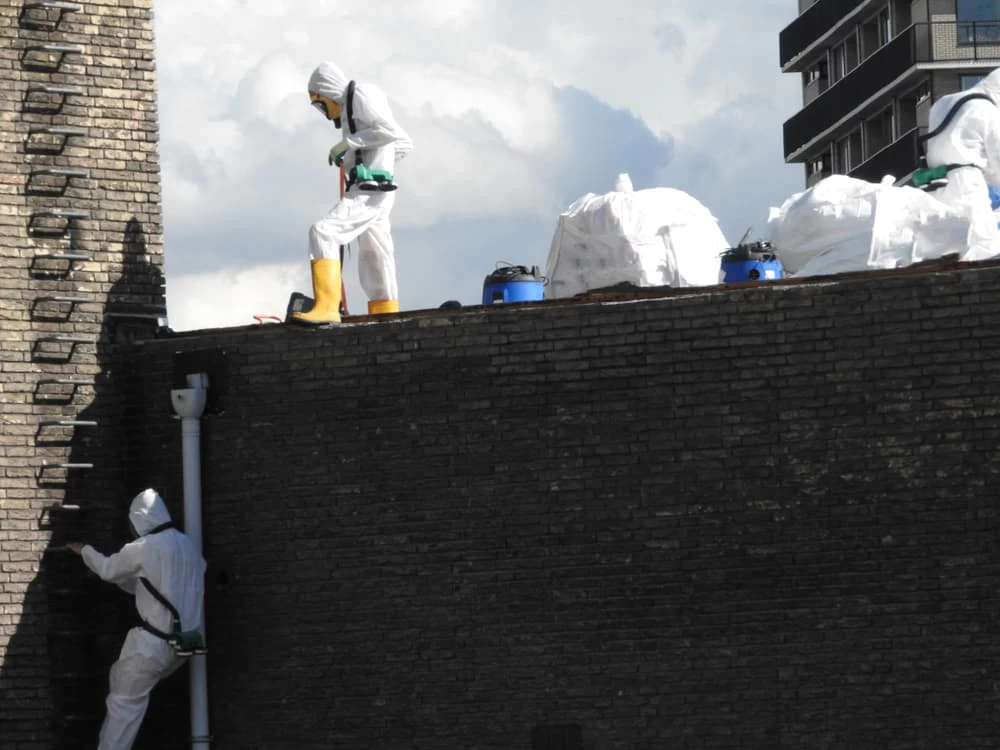
The removal itself follows strict containment protocol: negative air pressure, full enclosure of the work area, HEPA filtration, and wet methods to keep fibers from becoming airborne. When the work is done, independent post-abatement air clearance testing confirms the space is safe before containment comes down. You get a clearance certificate at the end the actual documentation that the job is complete, compliant, and verified.
Asbestos Abatement Services in North Bay Shore, NY
Every Material Type Common to This Area, Covered
The asbestos materials we remove most often in North Bay Shore reflect exactly what was built here. The 9×9 vinyl asbestos floor tiles that were standard in post-war Long Island construction are one of the most frequent calls we get and the mastic adhesive underneath them often contains asbestos too. Popcorn acoustic ceilings applied through the 1970s and 1980s are another common one, especially as homeowners modernize interiors in homes that have held their value through the roof in recent years.
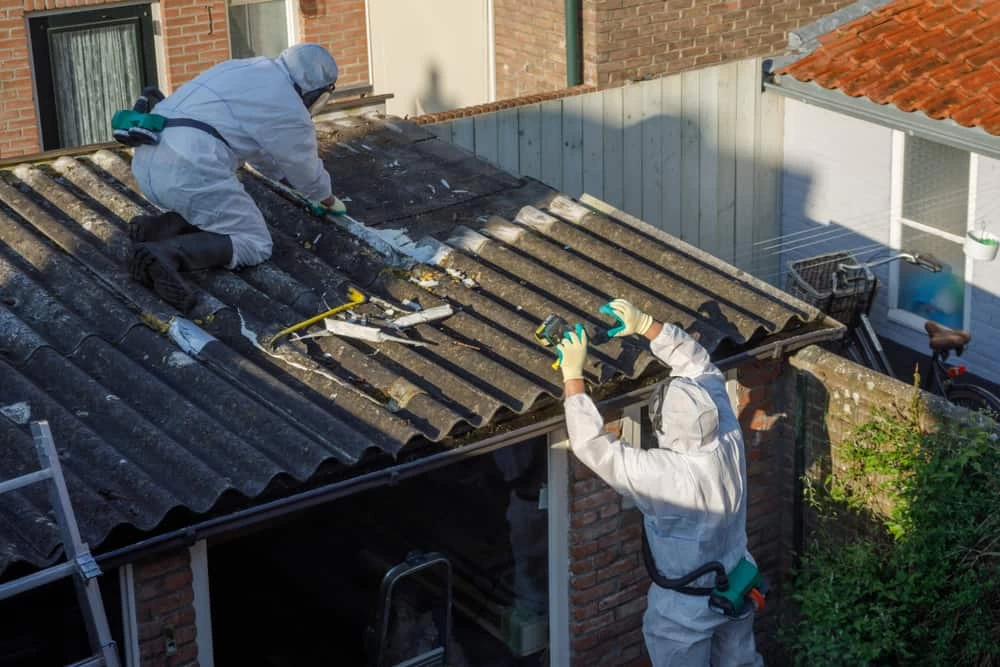
Beyond tiles and ceilings, we handle pipe and boiler insulation in homes with older heating systems, joint compound and drywall texture in 1960s and 1970s construction, roofing and siding materials, and vermiculite attic insulation where present. If your North Bay Shore home was built before 1985 and you haven’t had it assessed, there’s a reasonable chance at least one of these materials is present somewhere.
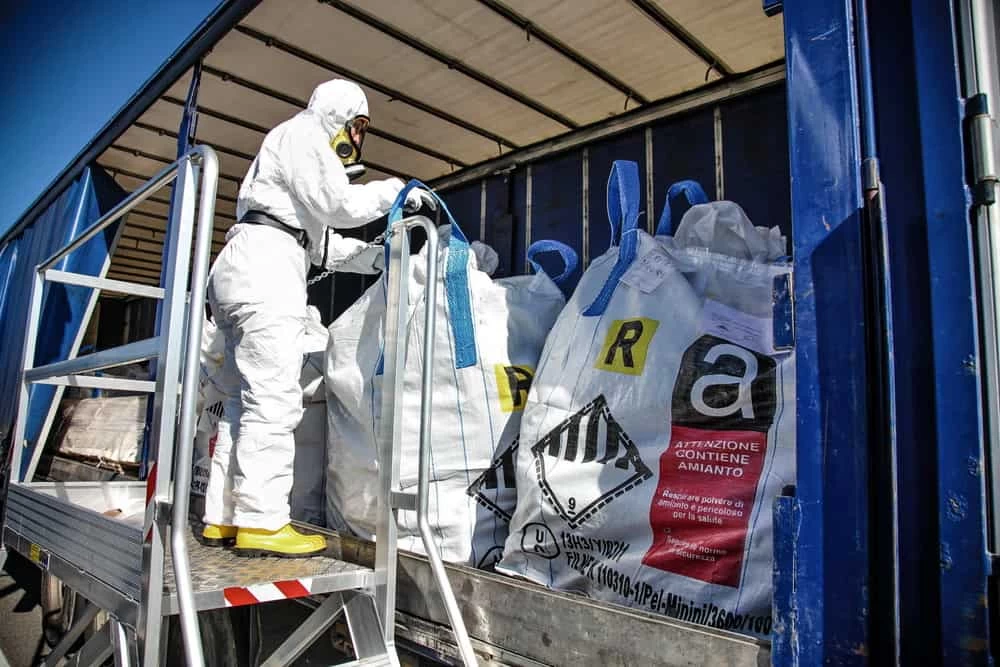
Every project includes the full scope: pre-abatement inspection, permit coordination with the Town of Islip, certified removal with proper containment, licensed transport and disposal to an approved facility, and post-clearance air testing with written documentation. That final clearance certificate matters for your family’s peace of mind, for your contractor to start work, and for any buyer, lender, or insurer who asks about it later.
Do I need a permit for asbestos removal in North Bay Shore, NY?
Yes and the requirements here come from more than one direction. New York State’s Industrial Code Rule 56 sets the baseline: any project involving more than 10 square feet or 25 linear feet of asbestos-containing material requires a formal permit, third-party air monitoring, and written notification before work begins. That’s the state layer.
On top of that, North Bay Shore falls under the Town of Islip Building Department, which has its own local permit requirements for abatement work. Suffolk County also routes certain project notifications through the county Department of Health Services. So there are effectively three layers of compliance state, town, and county that need to be satisfied before a single tile comes up or a ceiling gets touched.
This is one of the most common places homeowners run into problems when they hire an unlicensed contractor or try to handle removal themselves. The paperwork gap doesn’t just create legal risk it can result in stop-work orders, fines, and documentation problems that follow the property into future sales. We handle all three layers as part of every project.
How do I know if my North Bay Shore home actually contains asbestos?
The honest answer is: you can’t tell by looking. Asbestos fibers are microscopic, and the materials that contain them floor tiles, joint compound, pipe wrap, popcorn ceilings look completely normal. Age is the best starting indicator. If your North Bay Shore home was built before 1980, there’s a meaningful probability that at least one asbestos-containing material is present somewhere. Homes built between 1940 and 1970 carry the highest risk, and that cohort represents a significant portion of the housing stock in this part of the Town of Islip.
The only way to confirm it is through bulk sampling a small piece of the suspect material is collected and sent to a certified laboratory for analysis. The results tell you definitively whether asbestos is present and at what concentration. That information drives the entire project scope: what needs to be removed, what can be encapsulated, and what the permit requirements will be.
If you’re planning a renovation, just had water damage, or are preparing to sell, getting an assessment done before you start is the right move. Disturbing asbestos-containing material without knowing it’s there during a demo, a ceiling scrape, or a floor refinish is exactly how uncontrolled exposure happens.
What happens if asbestos gets disturbed before it's professionally removed?
Once asbestos-containing material is disturbed sanded, scraped, broken, or cut the fibers it releases become airborne and can stay suspended for hours. You can’t see them, and standard dust masks don’t filter them. That’s the core danger: by the time you realize something went wrong, the exposure has already happened.
In a practical sense, this comes up most often during renovations. A homeowner starts scraping a popcorn ceiling, pulls up old floor tiles, or cuts through drywall in a 1960s-era North Bay Shore home without knowing what’s in the material. The work stops, the area gets contaminated, and now the remediation scope is larger and more expensive than it would have been with a proper assessment upfront.
From a regulatory standpoint, disturbing regulated asbestos-containing material without permits and proper containment is a violation of NYS ICR 56, regardless of whether it was intentional. That can create liability for the homeowner and, if it’s a rental property, for the landlord. Getting an inspection done before any demolition or renovation work begins in an older home isn’t just a safety measure it’s the legally correct sequence.
How long does asbestos abatement take in a typical North Bay Shore home?
It depends on the scope, but most residential projects in North Bay Shore fall into a predictable range. A single-room floor tile removal or a popcorn ceiling in one area of the house typically takes one to two days of active abatement work, plus time for post-clearance air testing results to come back. Larger projects multiple rooms, combined materials like tiles plus pipe insulation plus joint compound can run three to five days or more.
What adds time in this market isn’t usually the removal itself. It’s the permitting and notification process. Town of Islip permits and any required Suffolk County notifications need to be filed and approved before work begins, and that timeline varies. Starting the permit process as early as possible before your contractor is scheduled to mobilize is the single best way to keep a project on schedule.
If you’re coordinating abatement around a renovation timeline, give yourself a realistic buffer between the clearance certificate and the start of your next contractor’s work. Most general contractors and renovation crews won’t begin work in a space until they see that clearance documentation in hand, and that’s the right call.
Can I stay in my home during asbestos abatement in North Bay Shore?
In most cases, yes but it depends on the location and scope of the work. When abatement is contained to a single area, like a basement, one room, or an attic, the rest of the house can typically remain occupied as long as proper containment barriers are in place and the work area is fully sealed off. We use negative air pressure systems and HEPA filtration to prevent fibers from migrating into unaffected parts of the home during active removal.
That said, the affected area itself needs to stay off-limits until post-abatement air clearance testing confirms it’s clean. For families with young children and North Bay Shore has a young median age, which means a lot of households with kids we’re direct about this: if there’s any doubt about whether the work area can be reliably isolated from the rest of the living space, temporary relocation for the duration of the project is the safer call.
Every situation is different, and we walk through it with you during the initial assessment. The goal is always to be clear about what the realistic options are so you can make a decision that works for your family and your timeline.
Why does asbestos abatement cost what it does in North Bay Shore, NY?
The cost reflects the actual requirements of doing the job legally and safely in New York State. NYS ICR 56 mandates licensed contractors, certified workers, proper containment materials, HEPA equipment, licensed waste transport to an approved disposal facility, and independent air clearance testing. None of those are optional line items they’re legal requirements for any regulated project. When you see a significantly lower quote, the question to ask is which of those steps is being skipped.
In North Bay Shore specifically, the Town of Islip permit fees and any Suffolk County notification requirements add a layer of cost that contractors unfamiliar with this area sometimes underestimate or omit from their initial quote. That’s how surprise costs show up at the end of a project. We build all of it into the estimate upfront permits, containment, disposal, clearance testing, and documentation so the number you see at the start is the number you pay.
For context, a standard residential project in this area a single room of floor tile removal or a popcorn ceiling typically runs in the range most homeowners find reasonable once they understand what’s included. Larger, multi-material projects scale from there. The clearance certificate and compliance documentation you receive at the end protect your home’s value and your legal standing, and that’s part of what you’re paying for.