North Bellmore's 1950s Homes Deserve More Than a Guess
Most homes in North Bellmore were built during the peak era of asbestos use. If yours hasn’t been professionally assessed, there’s a real chance it’s still in there — and asbestos abatement done right starts with knowing exactly what you’re dealing with.
I needed a professional consultation explanation of procedure for safe removal of Asbestos in my apartment complex. Without having an account yet, I was very impressed with the caring, knowledgeable and generous advice offered by Jessica, and will look forward to doing business in the future. Thank you so much! I feel much more informed about a sometimes scary endeavor. Peace. Nancy Silva Mineola, NY.
Mia Munoz
Used this company to clean up some water flood in my house. They were fast and easy to work with.very professional, Would recommend to anyone!
Nini Valle
Great company, had a flood and they responded quickly and efficiently. Billed my insurance company directly. I highly recommend this company!
joe colapietro, jr
I had pipe freeze in my basement right before a snow storm and they made to within an hour to help start the clean up process. They we by our side throughout the entire process and even helped with the insurance company. They did such a great job with the cleanup, repair, remidiation, I contracted them to perform the repairs and finishes in the basement. They came with enough manpower and material to get the job done. Leo and Jessica were nothing but a pleasure to deal with!!
Cristian Arredondo c
I had some water damage in my home and Green Island was able to take care of my issue quickly and effectively. I am very pleased with the work they did. They responded quickly and were very professional.
Michael M
Outstanding service! From the office to the field crew everyone was friendly, helpful and responsive. I highly recommend Green Island Group.
You stop guessing. That’s the first thing. When a certified inspector has gone through your home — the basement floor tiles, the pipe wrap around the boiler, the textured ceiling in the living room — and given you a clear picture of what’s there and what isn’t, the anxiety that comes with not knowing disappears. For a lot of North Bellmore homeowners, that alone is worth the call.
The homes in North Bellmore were built fast, mostly between the late 1940s and early 1960s, when asbestos was in nearly everything. Floor tile adhesive, attic insulation, joint compound, roofing materials — it was standard. That doesn’t mean your home is dangerous right now, but it does mean that the moment you start opening walls, pulling up floors, or gutting a bathroom, you need to know what you’re dealing with before anyone swings a hammer.
If you’re selling, abatement documentation gives buyers and their attorneys exactly what they need to move forward without delays. If you’re renovating, it keeps your Town of Hempstead building permit on track and your contractor working without a stop-work order. Either way, you’re not left holding a problem someone else created decades ago.
We Know North Bellmore's Housing Stock — Not Just Asbestos
We’re a Nassau County-based asbestos abatement company that works across the South Shore, including North Bellmore, Bellmore, Merrick, and Wantagh. We’re not a Suffolk County operation making occasional trips west. This is our market, and the post-war housing stock along the Jerusalem Avenue corridor in North Bellmore is exactly the kind of work we do regularly.
Every technician on a Green Island Group project is certified under New York State Industrial Code Rule 56. That’s not optional in New York — it’s the law — and it means every job is done by people who are trained, credentialed, and accountable to the state, not just to us.
What that means for you practically: no subcontracting the work out to whoever’s available, no skipped steps on containment or disposal, and no vague paperwork at the end. You get a clear record of what was found, what was removed, and what the post-abatement air test showed. That documentation matters — for your permit, your sale, or simply your own peace of mind.
Asbestos Abatement Process for North Bellmore Homeowners
No Surprises — Here's Exactly How the Job Gets Done
It starts with an inspection. A certified inspector walks your home, identifies materials that could contain asbestos, and takes bulk samples for laboratory analysis. In a North Bellmore home built in the 1950s or 60s, that typically means checking the basement floor tiles and the black mastic adhesive underneath them, any pipe or boiler insulation in the utility room, the attic, and any textured ceiling surfaces. The lab results tell us what we’re actually dealing with — not what we assume.
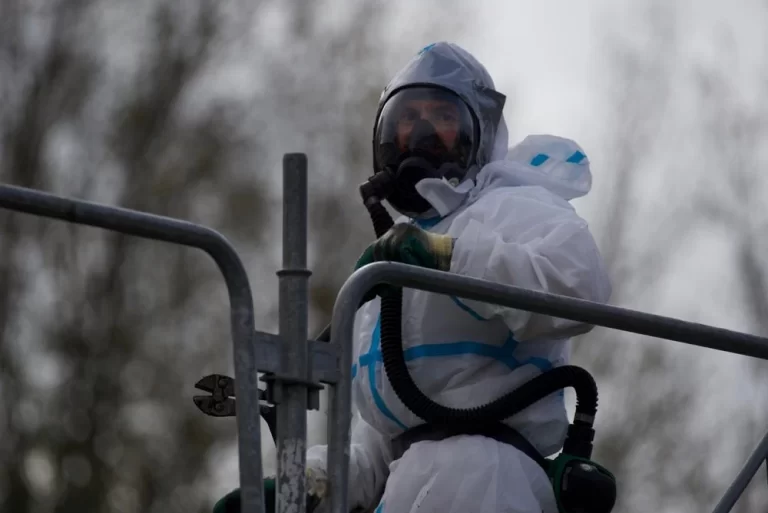
If asbestos-containing materials are confirmed, we set up proper containment before any removal begins. That means negative air pressure, sealed work zones, and HEPA filtration — so fibers don’t migrate into the rest of your living space while the work is happening. For projects in North Bellmore that require Town of Hempstead building permits, we make sure all required notifications and documentation are handled correctly under New York State Industrial Code Rule 56 before work starts.
Once removal is complete, a post-abatement air clearance test is conducted by an independent party to confirm the space is clean. You get the full paper trail — inspection report, lab results, project completion documentation, and clearance test — everything your contractor, your building inspector, or a buyer’s attorney might ask to see.
Asbestos Tile and Popcorn Ceiling Removal in North Bellmore
The Materials We Handle Most in North Bellmore Homes
The 9-by-9-inch floor tiles in your basement almost certainly contain asbestos if your home was built before 1980 — and the black adhesive underneath them usually does too. That combination is one of the most common things we encounter in North Bellmore homes, and it requires specific handling. You can’t just pull them up and bag them. The adhesive especially tends to be friable once disturbed, which means fibers can go airborne fast without proper containment.
Popcorn ceiling removal is the other one that catches people off guard. A lot of North Bellmore homes still have their original acoustic ceiling texture in living rooms, bedrooms, and hallways. It was applied through the 1970s, and many formulations contained up to 10% chrysotile asbestos. If you’re planning to paint over it, remove it, or renovate the room in any way, testing first isn’t optional — it’s required under New York State law before any work can begin.
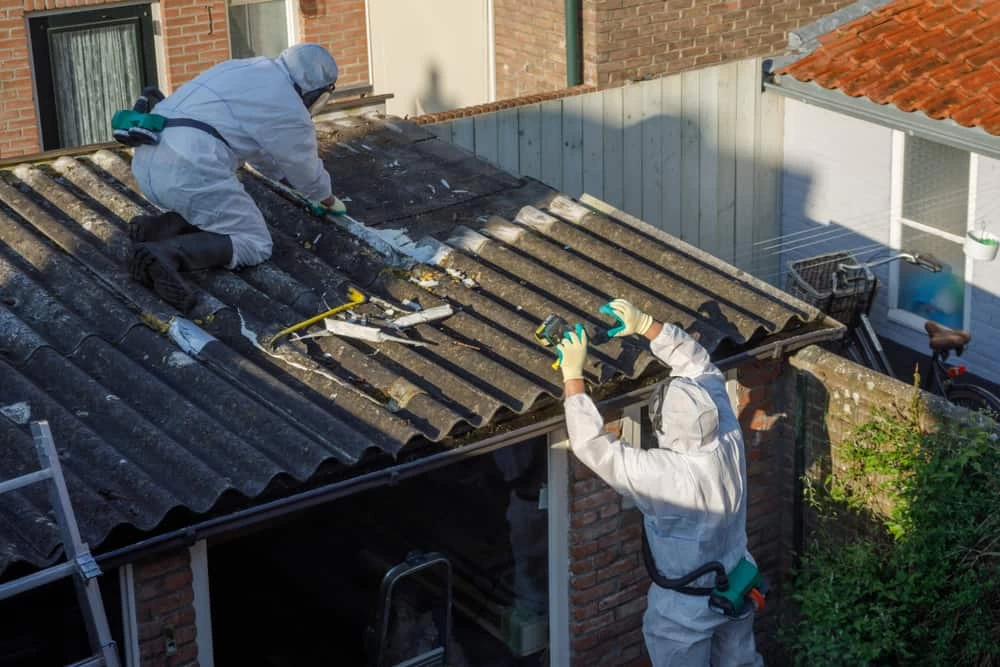
We also handle pipe and mechanical insulation, attic insulation, joint compound, and asbestos siding or roofing materials — all common in the post-war construction that defines most of North Bellmore’s housing stock. Every service we provide includes the full scope: inspection, removal, proper disposal through licensed Nassau County-approved facilities, and post-abatement clearance testing.
Does my North Bellmore home actually have asbestos if it was built in the 1950s?
The honest answer is: probably, somewhere. Homes built in North Bellmore during the 1950s and 1960s were constructed during the height of asbestos use in residential building materials. It was in floor tile and the adhesive beneath it, in pipe and boiler insulation, in attic insulation products, in joint compound used to finish walls and ceilings, and in textured ceiling coatings. Not every home has every one of these materials, and not every material that contains asbestos is immediately dangerous — but the only way to know for sure is to have a certified inspector take samples and send them to a lab.
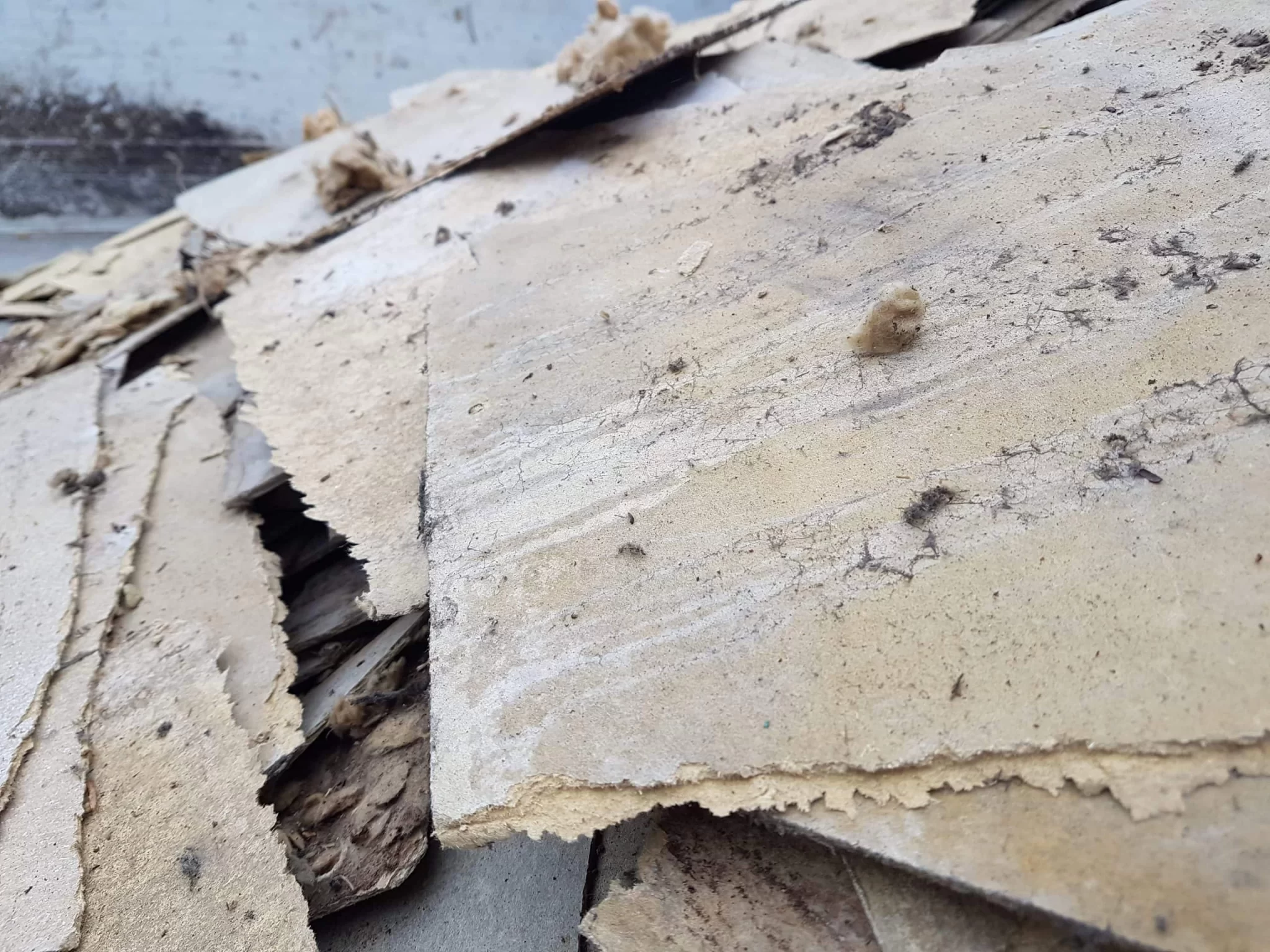
What matters most is whether the materials are friable, meaning they can crumble and release fibers into the air. Stable, undisturbed asbestos in a sealed floor tile is a different situation than deteriorating pipe wrap in a basement that’s been flooding. If you’re planning any renovation, or if you’ve noticed damaged insulation or crumbling ceiling texture, that’s when you need to act before anything else gets touched.
Do I need a permit for asbestos removal before renovating in North Bellmore?
Yes — and the requirements apply before your renovation permit gets approved, not after. North Bellmore falls under the Town of Hempstead Building Department’s jurisdiction, and any renovation or demolition project that could disturb asbestos-containing materials requires a certified asbestos survey first. New York State Industrial Code Rule 56 governs the entire process, and it requires that all abatement work be performed by NYS Department of Labor-certified contractors using certified workers.
For larger projects, there are also advance notification requirements to the NYS Department of Labor Asbestos Control Bureau. Skipping this step doesn’t just create a health risk — it can result in a stop-work order, failed inspections, and fines that cost more than the abatement itself would have. Getting the survey and abatement handled before your contractor starts keeps everything on track and gives the building department exactly what they need to move your permit forward.
How do I know if my popcorn ceiling in North Bellmore contains asbestos?
You can’t tell by looking at it. The only way to know is to have a certified inspector take a bulk sample and send it to an accredited laboratory for analysis. Popcorn ceiling texture — also called acoustic or stipple ceiling — was applied in homes across Long Island through the 1970s, and many formulations used during that period contained chrysotile asbestos at concentrations up to 10%. If your North Bellmore home still has its original textured ceiling, there’s a real possibility it’s in there.
The concern isn’t just touching it. Painting over an asbestos-containing popcorn ceiling can actually increase the risk of fiber release if the paint causes the texture to crack or peel. And any contractor who sands or scrapes it without knowing what’s in it is creating a serious hazard. If you’re planning to remove it, update the room, or even repaint, get it tested first. It’s a straightforward process and it gives you a clear answer before anyone puts a tool near the ceiling.
What does asbestos abatement actually cost for a typical North Bellmore home?
The cost depends on what’s found, where it is, and how much of it needs to be removed. A certified inspection and bulk sampling typically runs a few hundred dollars on its own. Abatement costs vary based on the scope — removing asbestos floor tiles from a single basement room is a different job than addressing pipe insulation throughout a utility room, popcorn ceiling in multiple rooms, and attic insulation all at once.
In Nassau County, where disposal fees, permit requirements, and labor costs reflect the local market, most residential abatement projects fall somewhere between a few thousand dollars for a limited scope and significantly more for whole-home work ahead of a major renovation. With North Bellmore median home values approaching $700,000, most homeowners find that the cost of abatement is a small fraction of what a failed inspection, a delayed closing, or a stop-work order would actually cost them. Getting a specific quote based on your home’s actual conditions is the only way to get a number that means anything.
Can I sell my North Bellmore home if it has asbestos-containing materials?
You can, but it almost always becomes a negotiating point — and not in your favor. When a buyer’s home inspector identifies suspected asbestos-containing materials, the buyer’s attorney will typically require either remediation before closing or a significant price reduction to account for it. In a market where North Bellmore homes are selling at median values near $700,000, that’s a meaningful number. More practically, it can delay or derail a closing entirely if the parties can’t agree on how to handle it.
The cleaner path is to have a certified survey done before you list, address any confirmed ACMs, and have the post-abatement clearance documentation ready to hand to the buyer’s attorney. It removes the uncertainty from the transaction and gives you more control over your timeline. Buyers in this market are sophisticated — many are purchasing older homes specifically knowing they’ll renovate — and having clean abatement records signals that the home has been properly maintained and disclosed.
What's the difference between asbestos testing and asbestos abatement in North Bellmore?
Testing and abatement are two separate steps, and they have to happen in that order. Testing — more formally called an asbestos inspection or survey — is when a certified inspector physically examines your home, identifies materials that could potentially contain asbestos, and collects bulk samples for laboratory analysis. The lab results tell you definitively what’s there and at what concentration. That’s the diagnostic step.
Abatement is what happens if the lab results confirm asbestos-containing materials that need to be addressed. It’s the actual removal, encapsulation, or enclosure of those materials — done under containment, by certified workers, following the protocols required under New York State Industrial Code Rule 56. In North Bellmore, both steps need to be performed by NYS Department of Labor-certified professionals. We handle both, which means you’re not coordinating between a separate testing company and a separate abatement contractor. One call, one point of contact, and a complete paper trail from first sample to final clearance test.