A lot of North Castle’s homes were built during the same postwar boom that brought IBM to Armonk. That era built well but it built with asbestos. If you’re renovating, selling, or just found something that doesn’t look right, we offer free on-site inspections and licensed asbestos abatement across North Castle, Armonk, North White Plains, and Banksville.
I needed a professional consultation explanation of procedure for safe removal of Asbestos in my apartment complex. Without having an account yet, I was very impressed with the caring, knowledgeable and generous advice offered by Jessica, and will look forward to doing business in the future. Thank you so much! I feel much more informed about a sometimes scary endeavor. Peace. Nancy Silva Mineola, NY.
Mia Munoz
Used this company to clean up some water flood in my house. They were fast and easy to work with.very professional, Would recommend to anyone!
Nini Valle
Great company, had a flood and they responded quickly and efficiently. Billed my insurance company directly. I highly recommend this company!
joe colapietro, jr
I had pipe freeze in my basement right before a snow storm and they made to within an hour to help start the clean up process. They we by our side throughout the entire process and even helped with the insurance company. They did such a great job with the cleanup, repair, remidiation, I contracted them to perform the repairs and finishes in the basement. They came with enough manpower and material to get the job done. Leo and Jessica were nothing but a pleasure to deal with!!
Cristian Arredondo c
I had some water damage in my home and Green Island was able to take care of my issue quickly and effectively. I am very pleased with the work they did. They responded quickly and were very professional.
Michael M
Outstanding service! From the office to the field crew everyone was friendly, helpful and responsive. I highly recommend Green Island Group.
Most people don’t call about asbestos until something forces their hand a contractor stops mid-renovation, a home inspector flags a material, or a buyer’s attorney asks a question the seller can’t answer. When that happens, what you actually need isn’t just someone to remove a material. You need documentation that proves the job was done right, by a licensed contractor, with post-abatement air testing that holds up in a real estate transaction or an insurance claim.
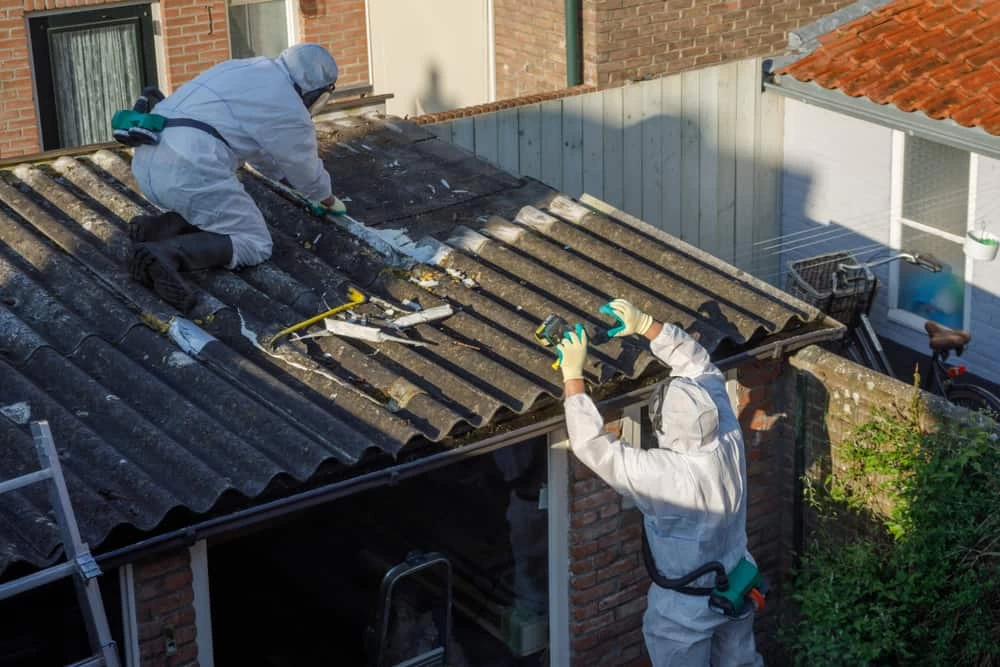
North Castle’s housing stock makes this more common than most homeowners expect. The ranch homes, split-levels, and colonials built throughout Armonk and North White Plains during the 1950s and 1960s were constructed with materials we now know contain asbestos vinyl floor tiles, pipe insulation, acoustic spray ceilings, duct wrap, and joint compound. These materials don’t always look damaged. They often look completely fine. But once a renovation disturbs them, the fibers are airborne, invisible, and a documented health risk under EPA and OSHA standards.
When the work is done correctly, you walk away with a clean air clearance certificate, a complete chain-of-custody disposal record, and the ability to hand documentation to whoever needs it your contractor, your real estate attorney, or your insurance carrier. In a market where the median home value in Armonk exceeds $1.3 million, that paperwork isn’t a formality. It’s protection.
Every License Required. No Subcontracted Shortcuts.
We hold a NYS Department of Labor Asbestos Handling License, EPA certification, and NYC DEP contractor approval all at once. That matters because it means every phase of your project, from removal through disposal, is handled by a single licensed contractor with no portions handed off to a third party. Every worker on your job site holds an individual NYS DOL asbestos handler or supervisor certification. These are verifiable, public-record credentials not marketing language.
We also carry a Minority/Women-owned Business Enterprise certification from the NYS Office of General Services, a state-issued credential that required formal documentation and review to obtain. With more than 5,000 completed projects across the New York metro area and an established presence serving Westchester County including the Armonk area and North Castle specifically we bring direct familiarity with the building stock, the regulatory environment, and the specific conditions found in homes across North Castle’s three hamlets.
No Surprises Here's What Happens in Your North Castle Home
It starts with a free on-site inspection. We send a representative to your North Castle property, assess the materials in question, and give you a complete picture of what’s present not just the one tile or ceiling texture you noticed, but the full scope of potential asbestos-containing materials throughout the home. That assessment drives an accurate estimate, so there are no scope changes once work begins.
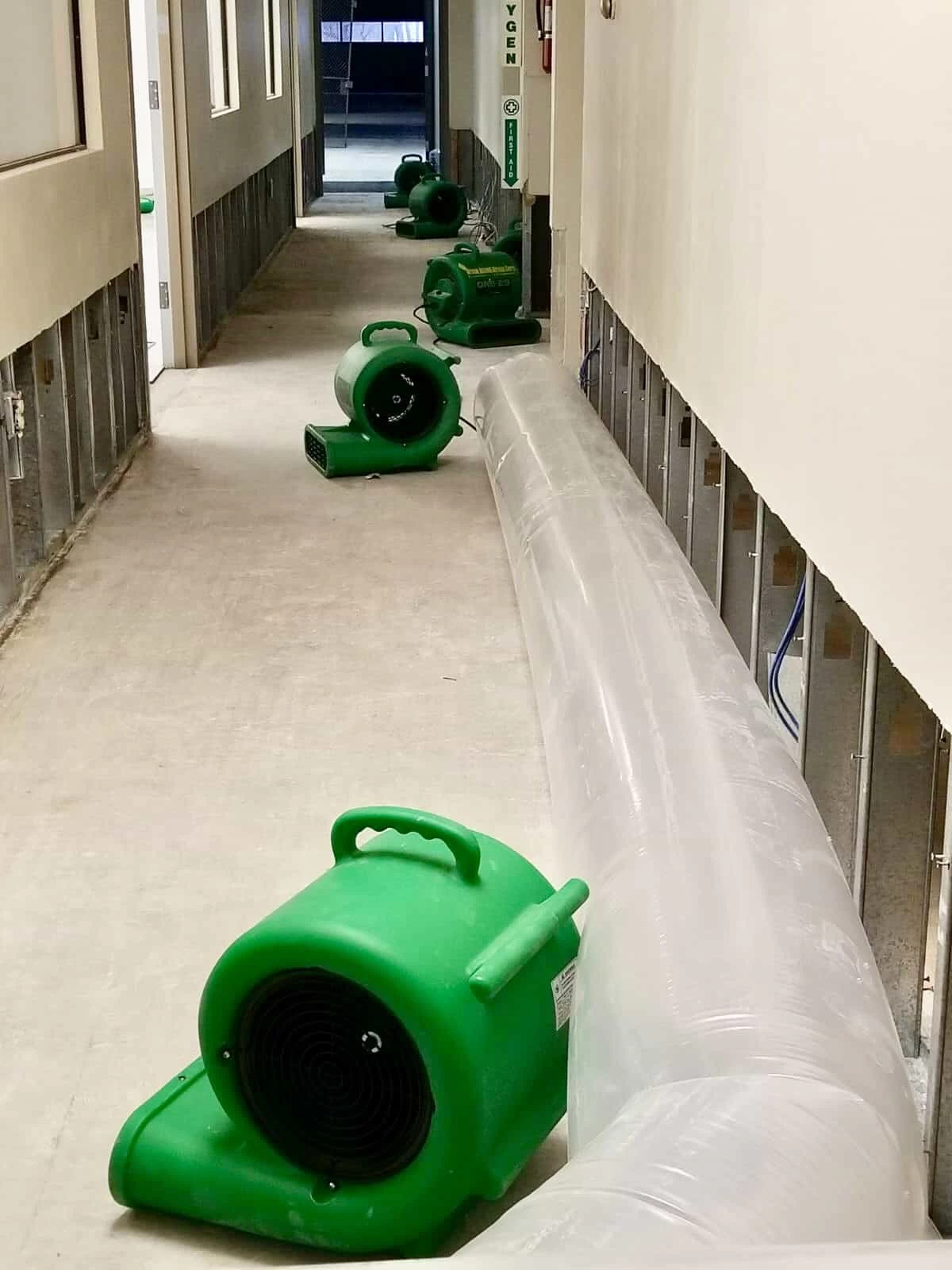
Before any removal starts, we conduct pre-project air sampling to establish a baseline. The work area is fully contained using polyethylene sheeting and negative air pressure machines with HEPA filtration meaning air flows into the containment, not out into the rest of your home. All removal is done using wet methods to suppress fiber release. Every material removed is double-bagged, labeled, and transported to an approved disposal facility with a complete chain-of-custody manifest maintained throughout. This is a legal requirement under NYS Industrial Code Rule 56, which governs all asbestos abatement in New York and is more stringent than federal OSHA standards in several areas.
After removal, all surfaces in the containment area are HEPA vacuumed, and post-abatement air clearance testing is conducted by an independent party. When that test confirms fiber counts are below the regulatory threshold, you receive formal clearance documentation. That’s the deliverable that actually closes the loop for your renovation contractor, your insurer, or the next buyer of your home.
Every Material Type North Castle Homes Actually Have
Homes built during North Castle’s postwar development surge don’t usually have asbestos in one place. They tend to have it in several. We handle the full inventory: vinyl asbestos floor tiles particularly the 9×9 inch format common in 1950s and 1960s kitchens and basements acoustic spray ceiling texture, pipe and boiler insulation, HVAC duct wrap, and drywall joint compound. If your home was built before 1980, it’s worth knowing what you have before a renovation contractor starts swinging a hammer.
For North White Plains, where the town’s oldest and most densely developed housing stock sits closest to the White Plains border, the likelihood of encountering multiple ACM types in a single home is high. For Armonk’s mid-century neighborhoods, pipe insulation around older heating systems and vinyl tile under newer flooring layers are the most common finds. We also serve commercial clients including the pre-demolition asbestos survey and abatement requirements that apply to any renovation or demolition of older commercial buildings along the I-684 corridor, including the former corporate campuses in Armonk currently under redevelopment consideration.
We work directly with insurance carriers and handle billing on your behalf when abatement is part of a water damage or restoration claim which is more common in North Castle’s older homes during winter pipe bursts and spring snowmelt events than most homeowners anticipate.
Does my 1950s or 1960s Armonk home likely contain asbestos materials?
Almost certainly, yes at least in some form. Homes built during Armonk’s postwar development boom, which accelerated significantly after IBM established its world headquarters there in the mid-1950s, were constructed during the peak period of asbestos use in residential building materials. Vinyl floor tiles in 9×9 inch formats, acoustic spray texture on ceilings, insulation around pipes and boilers, duct wrap on HVAC systems, and joint compound on drywall were all routinely manufactured with asbestos during that era.
The important thing to understand is that the presence of asbestos doesn’t automatically mean you have an emergency. Materials that are in good condition and undisturbed don’t release fibers. The risk comes when those materials are cut, sanded, drilled, or otherwise disturbed which is exactly what happens during a kitchen renovation, bathroom gut, or basement finishing project. Before any renovation work begins in a pre-1980 North Castle home, a professional inspection is the right first step.
What happens if asbestos is discovered mid-renovation in my North Castle home?
Stop the work. That’s the most important first step. If a contractor uncovers a material they suspect contains asbestos a crumbling pipe wrap, a tile that looks like the 9×9 vinyl common in postwar Westchester homes, or a ceiling texture that’s being disturbed the work area should be sealed off and the space vacated until a licensed inspector can assess the material.
Under NYS Industrial Code Rule 56, which governs all asbestos abatement in New York State, any disturbance of asbestos-containing materials above a certain threshold requires licensed removal before work can continue. This isn’t optional, and it isn’t just a formality it’s a legal requirement that also protects you from liability. We can typically schedule a same-day or next-day inspection for mid-renovation discoveries in North Castle, assess the scope, and give you a clear timeline so your renovation contractor knows when they can return to the job.
Do I need asbestos testing or removal before selling my home in North Castle?
There’s no blanket legal requirement in New York that forces a seller to test or remove asbestos before listing. But in North Castle’s real estate market where homes regularly sell above $1 million and buyers are represented by attorneys who know exactly what questions to ask the practical answer is more complicated than the legal one.
If a home inspector or buyer’s attorney identifies suspected asbestos-containing materials during due diligence, you’re likely looking at a negotiated price reduction, a delayed closing, or a buyer who walks. Proactive abatement with our post-abatement clearance documentation changes that dynamic entirely. You can disclose not just that asbestos was present, but that it was professionally removed by a NYS DOL licensed contractor and the home has been independently certified clean. In a market where a price concession on a $1.3 million property can easily reach $50,000 or more, the cost of abatement is almost always the better financial decision.
How does asbestos abatement in North Castle comply with New York State regulations?
All asbestos abatement in North Castle falls under NYS Industrial Code Rule 56 (12 NYCRR Part 56), administered by the NYS Department of Labor Asbestos Control Bureau. This is the regulatory framework that governs how abatement is conducted, who can legally perform it, and how asbestos waste must be handled from the moment it’s removed to the moment it reaches an approved disposal facility.
The requirements are specific: the contractor must hold a NYS DOL Asbestos Handling License, every individual worker on the job must hold a personal NYS DOL asbestos handler or supervisor certification, and a complete chain-of-custody waste manifest must be maintained throughout transport and disposal. Westchester County does not have a separate county-level licensing requirement on top of the state’s, but the state standard is more stringent than federal OSHA requirements in several areas. We meet every requirement at the state level and can provide documentation confirming compliance for any project in North Castle.
How much does asbestos removal typically cost for a Westchester County home?
Cost varies depending on the type of material, the quantity, the location within the home, and how many material types are involved. For a single material type say, vinyl floor tile in one room or pipe insulation around a basement boiler you’re generally looking at a range starting around $1,500 to $3,000. A more comprehensive project involving multiple material types across several areas of a pre-1980 home, which is common in North Castle’s older housing stock, typically runs $5,000 to $15,000 or more depending on scope.
The free on-site inspection we provide is the only accurate way to get a real number for your specific property. Phone estimates in this category are rarely accurate because the scope of ACMs in older homes isn’t visible until someone is physically on-site assessing the materials. What’s worth keeping in mind is that in Westchester County’s real estate market, the cost of professional abatement with proper documentation almost always costs less than the price concession a buyer will demand if the issue surfaces during a transaction.
Can water damage in my North Castle home expose or disturb asbestos-containing materials?
Yes, and it happens more often than most homeowners expect. North Castle’s older homes particularly in North White Plains and the mid-century neighborhoods of Armonk have heating systems, basement pipe runs, and floor assemblies that were built with asbestos-containing materials. When a pipe bursts during a Westchester winter, or when spring snowmelt and rain push water into a basement, those materials can be saturated, cracked, or physically displaced by the water intrusion or the restoration work that follows.
When that happens, the asbestos abatement and the water damage restoration become part of the same project. We work directly with insurance carriers and handle billing coordination on your behalf, which means you’re not serving as the go-between while your basement is compromised and your claim is open. The abatement gets handled as part of the broader restoration scope, with all required documentation waste manifests, clearance testing, compliance records provided at the close of the project.