Harlem Valley Farmhouses Hide This We Remove It Safely
If you’ve started a renovation on an older home near Millerton and something stopped you in your tracks, you’re not overreacting. Asbestos abatement in North East starts with one licensed call and ends with documentation that your home is safe.
I needed a professional consultation explanation of procedure for safe removal of Asbestos in my apartment complex. Without having an account yet, I was very impressed with the caring, knowledgeable and generous advice offered by Jessica, and will look forward to doing business in the future. Thank you so much! I feel much more informed about a sometimes scary endeavor. Peace. Nancy Silva Mineola, NY.
Mia Munoz
Used this company to clean up some water flood in my house. They were fast and easy to work with.very professional, Would recommend to anyone!
Nini Valle
Great company, had a flood and they responded quickly and efficiently. Billed my insurance company directly. I highly recommend this company!
joe colapietro, jr
I had pipe freeze in my basement right before a snow storm and they made to within an hour to help start the clean up process. They we by our side throughout the entire process and even helped with the insurance company. They did such a great job with the cleanup, repair, remidiation, I contracted them to perform the repairs and finishes in the basement. They came with enough manpower and material to get the job done. Leo and Jessica were nothing but a pleasure to deal with!!
Cristian Arredondo c
I had some water damage in my home and Green Island was able to take care of my issue quickly and effectively. I am very pleased with the work they did. They responded quickly and were very professional.
Michael M
Outstanding service! From the office to the field crew everyone was friendly, helpful and responsive. I highly recommend Green Island Group.
You stop guessing. That’s the first thing. When suspected asbestos has been sitting in your pipe insulation, under your floor tiles, or wrapped around a boiler in a 100-year-old farmhouse off Route 22, the uncertainty is its own kind of stress. Once it’s properly tested, removed, and cleared you have written documentation that the space is safe. That’s not a small thing.
For homeowners in North East, the risk isn’t abstract. The Harlem Valley’s freeze-thaw winters are hard on older building materials. Pipe insulation that was intact five years ago can become brittle and friable after enough cold seasons. If you’ve got a pre-1960 home and you’ve been putting off a renovation because you’re not sure what’s in the walls or under the floors, that concern is well-founded and it’s exactly the kind of thing a licensed asbestos inspection resolves before a single wall comes down.
The other thing that changes is your property’s position. North East has seen a real influx of buyers since 2020 people from the city and Connecticut who bought older farmhouses and are now in active renovation mode. A property with documented, professionally completed asbestos abatement and a clean air clearance report is a stronger asset. Whether you’re renovating to stay or eventually planning to sell, that paperwork matters.
12 Years In, 5,000 Jobs Done We Know North East's Housing Stock
We’ve been doing licensed asbestos abatement across New York State for over 12 years, with more than 5,000 completed projects behind us. We hold current NYS Department of Labor Asbestos Contractor licensure the specific credential New York law requires to legally perform this work. That’s not a general contractor’s license. It’s the one that actually matters here.
We’re also a certified Minority and Woman-Owned Business Enterprise (MWBE) and an approved contractor for New York State agencies. That level of vetting doesn’t happen without a track record. It means we’ve met financial, operational, and compliance standards that most regional operators have never been evaluated against.
For North East specifically a town where the housing stock runs heavily toward 19th and early 20th century farmhouses, and where a lot of new owners are discovering what’s inside those walls for the first time we know what we’re walking into before we arrive. We’ve seen every configuration of asbestos-containing materials that older Dutchess County homes produce. You won’t be our learning curve.
From First Call to Clear Air Here's the Honest Walkthrough
It starts with a call and we answer, around the clock, including weekends. If you’re a second-home owner who arrives at your Millerton property on a Friday evening and discovers a contractor has disturbed old pipe insulation, you don’t wait until Monday. Someone picks up, we gather the details, and we get eyes on the situation fast.
From there, the first step is inspection and testing. Suspect materials get sampled and sent to an accredited laboratory. Once results confirm the presence of asbestos-containing materials, we put a remediation plan together that’s specific to your property what’s there, where it is, and how it needs to come out. In New York State, any renovation or demolition work in a pre-1980 structure that disturbs suspect materials requires licensed abatement before the work proceeds. That’s not optional, and we walk you through exactly what the NYS DOL requirements mean for your specific project.
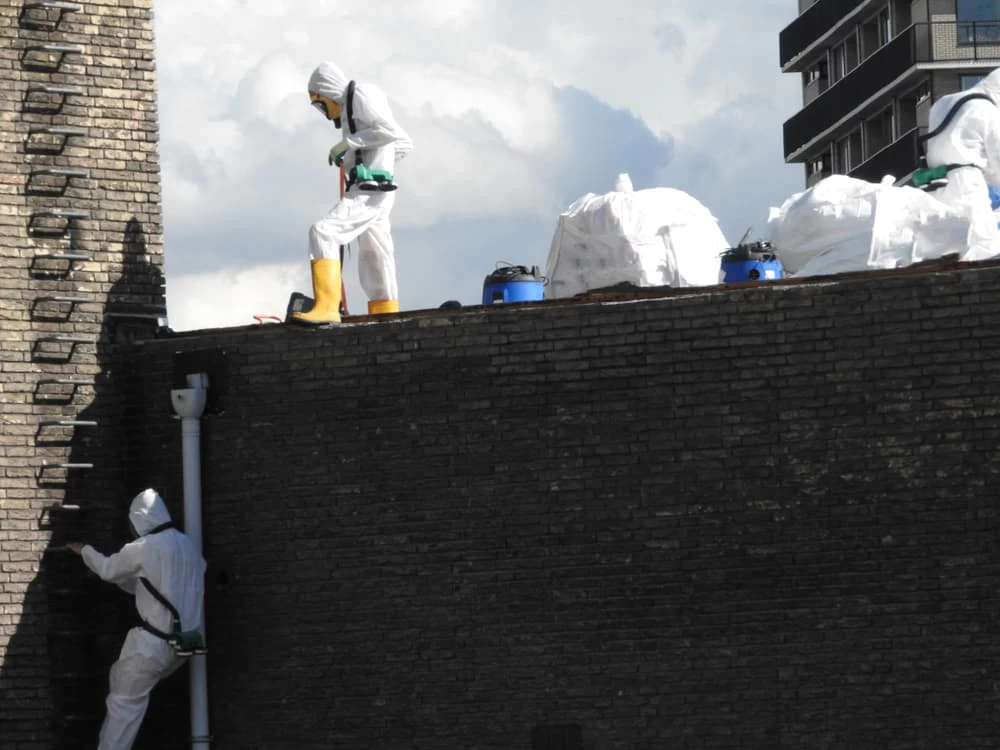
The abatement itself is done under controlled conditions containment, negative air pressure, proper PPE, and strict protocols for handling and packaging waste. When the work is complete, we conduct post-abatement air clearance testing. That’s the step that confirms the treated space meets safe air quality standards before you or your family re-enters. You get written documentation of the entire process the testing results, the clearance report, everything because that paperwork is part of what you’re paying for.
Every Material Type Every North East Property Throws at Us
The asbestos profile in North East’s housing stock is specific. Pre-1940 farmhouses along the Route 22 corridor tend to show up with pipe insulation and boiler wrap steam and hot water heating systems that were standard in cold-climate northeastern construction and almost always insulated with asbestos-containing materials. Mid-century additions and renovations bring 9×9 vinyl floor tiles and their adhesive mastic, popcorn ceiling texture, and joint compound. Older roofing and transite siding show up on properties that haven’t been touched in decades. Vermiculite attic insulation which may be contaminated with asbestos appears in homes that were insulated with Zonolite or similar products from the mid-20th century.
We handle all of it. Asbestos tile removal, popcorn ceiling removal, pipe and boiler insulation, roofing materials, siding, attic insulation the full range of materials that appear in this area’s older properties. And because North East properties often present more than one issue at once, we also handle mold remediation and water damage restoration. If a burst pipe in a Harlemville farmhouse damages an old floor and exposes asbestos underneath, one call covers the abatement and the water damage. You don’t manage three different contractors across a rural county.
All asbestos waste is packaged, transported by licensed haulers, and disposed of at NYS DEC-approved facilities. No shortcuts on disposal that’s a liability issue for you as a property owner, and we don’t create it.
Do I need a licensed asbestos contractor for my North East renovation project?
Yes and this isn’t a technicality you can work around. New York State law requires that any renovation or demolition work disturbing suspect asbestos-containing materials in a pre-1980 structure be performed by a contractor holding current NYS Department of Labor Asbestos Contractor licensure. Individual workers must hold an Asbestos Handler license, and supervisors must hold an Asbestos Supervisor license. These are state-specific credentials a general contractor’s license doesn’t cover this work, and neither does a license from Connecticut, which matters in North East given how close the state line sits.
If your general contractor disturbs asbestos-containing materials without going through proper licensed abatement first, the legal and health liability lands on you as the property owner. That’s true whether you knew the materials were there or not. Before any walls come down, floors come up, or boiler systems get replaced in an older North East home, get a licensed inspection done first. It’s the step that keeps the rest of the project legal and on schedule.
How much does asbestos removal typically cost for a Dutchess County home?
The honest answer is that it depends on what’s there and how much of it needs to come out. For a single material type in a contained area say, asbestos floor tile removal in one room, or pipe insulation on a short section of heating line costs in the New York market typically run in the range of $1,500 to $3,000. More extensive projects involving multiple material types, larger square footage, or complex access situations can run higher. The average cost of asbestos removal in a New York home sits around $2,170, with most homeowners landing somewhere between $1,300 and $3,100 depending on scope.
In Dutchess County specifically, costs have trended upward in recent years alongside tighter NYS DOL licensing requirements and higher disposal fees. Hiring an unlicensed operator to save money on the front end isn’t a real savings it creates legal exposure for you and produces no documentation that would satisfy an inspector, a buyer’s attorney, or an insurance adjuster. A written estimate from a licensed contractor, with a clear scope of work, is the only number worth comparing.
What are the most common places asbestos hides in older North East farmhouses?
In the pre-1940 and early 20th century construction that dominates North East’s housing stock, the most common locations are pipe insulation and boiler wrap. Steam and hot water heating systems standard in cold-climate northeastern homes were almost universally insulated with asbestos-containing materials before the 1970s. If your farmhouse still has its original boiler or radiator system, or if it’s been partially updated but the old insulation was left in place, that’s the first place to look.
After that, 9×9 vinyl floor tiles and their adhesive mastic are extremely common in mid-century renovations and additions. Popcorn ceiling texture applied between the late 1950s and early 1980s frequently contains asbestos. Older plaster and joint compound can as well. Attic insulation is worth checking if the home was insulated with vermiculite Zonolite brand insulation, which was sold widely through the 1980s, is potentially contaminated with asbestos and should be tested before any attic work begins. The freeze-thaw cycling that North East gets through a hard Taconic winter accelerates the degradation of these materials, which is why a stable material from a decade ago can become friable and hazardous today.
What happens if water damage in my North East home disturbs asbestos-containing materials?
This is one of the more common emergency scenarios we see in North East properties, and it’s one where timing matters. When water damage from a burst pipe, ice dam, or snowmelt intrusion soaks into old flooring, ceiling tiles, or insulation, it can destabilize materials that were previously intact and non-friable. Once those materials are disturbed, asbestos fibers can become airborne. At that point, the affected area needs to be treated as a potential asbestos hazard until testing confirms otherwise.
The right move is to stop work in the affected area, limit access, and call a licensed abatement contractor before any cleanup or restoration begins. We handle both the asbestos abatement and the water damage restoration, which matters in a situation like this because the two scopes of work have to be sequenced correctly you can’t remediate water damage in a space that hasn’t been cleared of asbestos first. In North East, where older homes and harsh winters create exactly this kind of scenario with some regularity, having one contractor who can handle both sides of it is a real practical advantage.
How long does the asbestos abatement process take from start to finish?
For a straightforward residential project one material type, a contained area the abatement work itself often takes one to two days. What extends the timeline is the testing and clearance process on either end. Initial lab results from material sampling typically come back within a few days, though rush testing is available when a project timeline demands it. Post-abatement air clearance testing needs to happen after the work is complete and before the space is reoccupied, and those results need to come back clean before we sign off.
From initial call to final clearance documentation, a typical residential asbestos abatement project in the North East area runs one to two weeks when you account for testing on both ends. If you’re working against a renovation schedule or a real estate transaction deadline both common scenarios in a market where a lot of older properties are changing hands and being renovated let us know upfront. We can often prioritize scheduling and expedite lab turnaround to keep your project moving without cutting corners on the process itself.
Can asbestos abatement be covered by homeowner's insurance in New York?
It depends on how the asbestos was discovered and what caused it to become a problem. If asbestos-containing materials were disturbed or damaged as a result of a covered event a burst pipe, storm damage, or another sudden and accidental loss there’s a reasonable basis to file a claim, and many homeowners in this situation do receive coverage for the abatement work. If the asbestos is simply present in an older home and you’re proactively removing it before a renovation, that’s typically considered a maintenance or improvement expense rather than a covered loss.
We bill insurance directly, which takes the administrative burden off you during an already stressful situation. If you’re not sure whether your situation qualifies, call us before you call your insurer we can help you understand what documentation the claim will need and how to present the scope of work accurately. For North East homeowners dealing with asbestos discovered alongside water damage or a heating system failure, the insurance angle is often worth pursuing, and having a licensed contractor’s documentation from the start puts you in the strongest possible position with your adjuster.