When Renovation Uncovers What's Been Hidden for Decades
North Haven’s older homes carry more than character many carry asbestos. We provide licensed asbestos abatement for North Haven homeowners who need it done right, documented properly, and finished on time.
I needed a professional consultation explanation of procedure for safe removal of Asbestos in my apartment complex. Without having an account yet, I was very impressed with the caring, knowledgeable and generous advice offered by Jessica, and will look forward to doing business in the future. Thank you so much! I feel much more informed about a sometimes scary endeavor. Peace. Nancy Silva Mineola, NY.
Mia Munoz
Used this company to clean up some water flood in my house. They were fast and easy to work with.very professional, Would recommend to anyone!
Nini Valle
Great company, had a flood and they responded quickly and efficiently. Billed my insurance company directly. I highly recommend this company!
joe colapietro, jr
I had pipe freeze in my basement right before a snow storm and they made to within an hour to help start the clean up process. They we by our side throughout the entire process and even helped with the insurance company. They did such a great job with the cleanup, repair, remidiation, I contracted them to perform the repairs and finishes in the basement. They came with enough manpower and material to get the job done. Leo and Jessica were nothing but a pleasure to deal with!!
Cristian Arredondo c
I had some water damage in my home and Green Island was able to take care of my issue quickly and effectively. I am very pleased with the work they did. They responded quickly and were very professional.
Michael M
Outstanding service! From the office to the field crew everyone was friendly, helpful and responsive. I highly recommend Green Island Group.
Most North Haven homes were built between the 1940s and 1980s exactly when asbestos was standard in floor tiles, ceiling texture, pipe insulation, roofing, and joint compound. If your home hasn’t been tested and you’re planning any kind of renovation, there’s a real chance something in that structure contains it. The question isn’t whether to deal with it it’s whether you deal with it correctly before work starts or after something goes wrong.
When asbestos-containing materials are properly removed and documented, your renovation can move forward without legal exposure, insurance complications, or health risk. For North Haven properties being prepared for sale in a market where homes regularly transact in the millions, that clearance documentation isn’t just a formality it’s a deal-protecting asset that buyers, their attorneys, and lenders will expect to see.
North Haven’s peninsula location adds another layer. Surrounded by Noyack Bay, Shelter Island Sound, and Sag Harbor Cove, these properties live in constant salt air and coastal humidity. That environment accelerates the deterioration of older insulation, roofing, and siding materials that may contain asbestos and that break down faster here than they would ten miles inland. If a material becomes friable, it releases fibers. That’s when a manageable situation becomes an urgent one.
We are a licensed asbestos abatement contractor serving Suffolk County and the East End of Long Island. We already serve the Village of Sag Harbor just across the Veterans Memorial Bridge from North Haven so this area isn’t new territory for us. We know how to navigate North Haven’s neighborhoods, we understand the building stock, and we’re familiar with the regulatory requirements that govern abatement work in the Town of Southampton.
Every project we take on is performed by certified asbestos handlers in full compliance with New York State Industrial Code Rule 56 and the NYS Department of Labor’s Asbestos Control Bureau. That means the work is legal, the documentation is complete, and you’re not left holding liability someone else created.
We handle asbestos testing, abatement, and final clearance air monitoring under one roof. No handing you off to a separate firm for each step. One team, start to finish.
What Actually Happens From First Call to Final Clearance
It starts with an assessment. Before any work begins, the affected materials need to be properly identified and sampled by a certified investigator. If asbestos is confirmed, we’ll walk you through exactly what’s present, where it is, and what removal involves no vague estimates, no pressure.
Once the scope is clear, we file the required notification with the NYS Asbestos Control Bureau and coordinate with the Village of North Haven’s Building Department to make sure your project stays on the right side of the permit process. This step matters more than most people realize. Skipping it or hiring someone who skips it can void your insurance coverage, create liability in a future sale, and expose you to regulatory penalties. Given that nearly half of North Haven’s homes are seasonally occupied, we understand that timing is often tied to the Hamptons calendar. We work around your schedule, whether that’s getting ahead of a summer renovation or wrapping up before a fall closing.
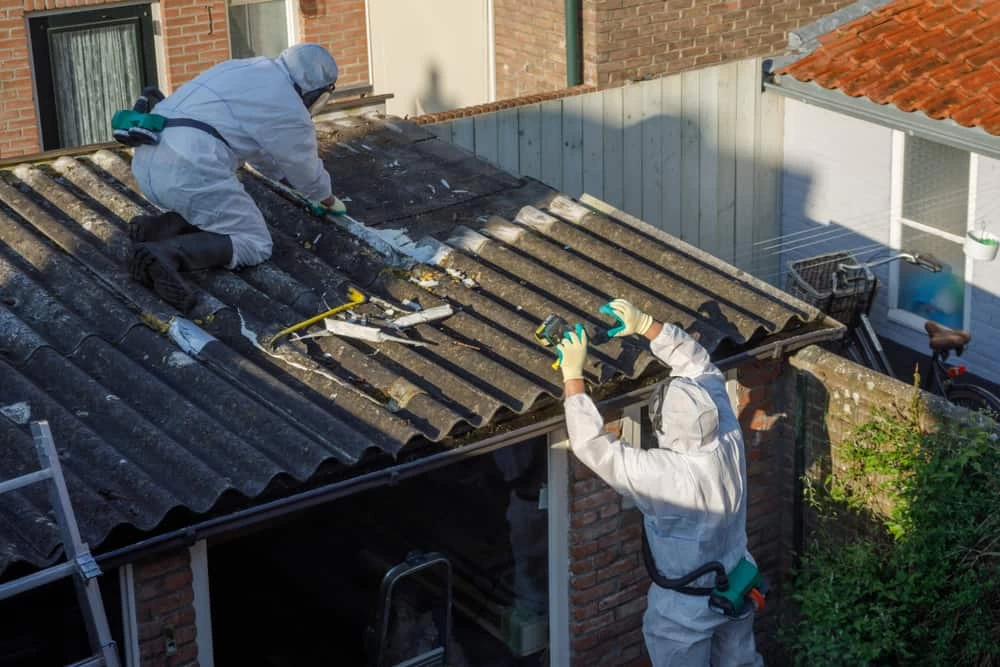
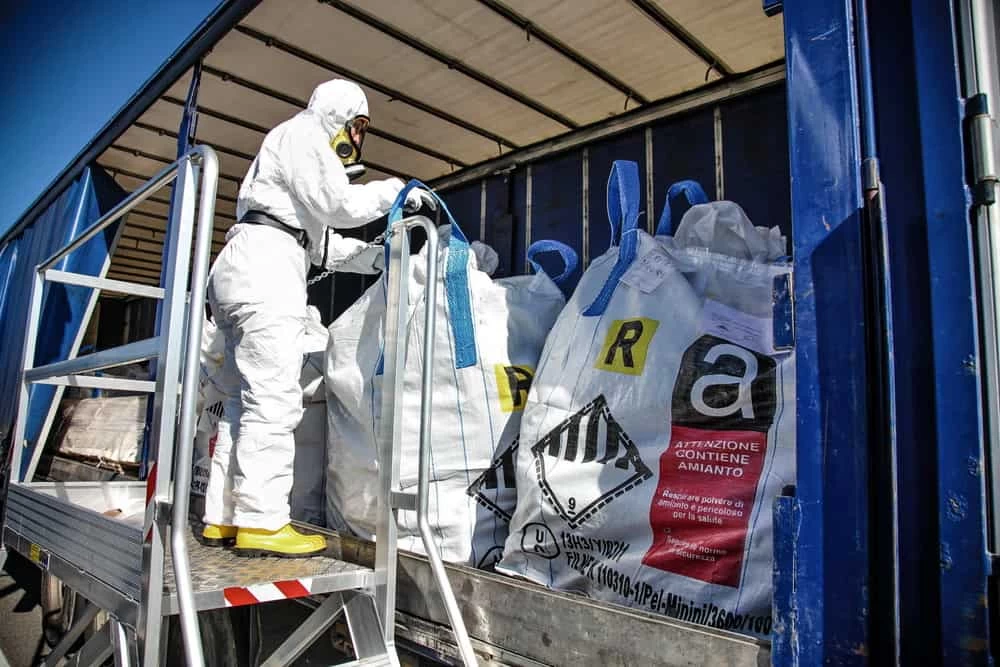
The abatement itself is performed under containment, with proper air filtration and personal protective equipment. When removal is complete, we conduct final clearance air monitoring the independent confirmation that the space is safe. You receive full documentation: contractor certifications, waste disposal manifests, and clearance results. That paper trail is what protects you going forward.
Asbestos doesn’t show up in just one place. In the mid-century homes and estates that define North Haven’s residential character particularly in communities like North Haven Manor, West Banks, and North Haven Point it tends to appear in several locations at once. Popcorn ceiling texture was one of the most common applications of chrysotile asbestos through the late 1970s. Vinyl asbestos floor tiles were standard in kitchens, bathrooms, and basements. Pipe and boiler insulation, roofing shingles, exterior siding, and drywall joint compound are all materials worth testing in any pre-1980 structure.
We provide asbestos tile removal, asbestos popcorn ceiling removal, pipe insulation abatement, and full-structure remediation for residential and estate properties throughout North Haven. Each project is scoped individually what’s in a 1950s waterfront estate on Ferry Road is different from what’s in a 1970s subdivision home in West Banks, and the approach reflects that.
For homeowners dealing with storm damage or moisture intrusion common in a coastal community that takes the full force of nor’easters and tropical weather we also handle situations where asbestos-containing materials have already been disturbed. If a roof leak, basement flood, or structural issue has compromised a material that may contain asbestos, that requires immediate professional attention, not a wait-and-see approach.
Does my North Haven home actually need an asbestos test before renovation?
If your home was built before 1980, yes and in North Haven, that covers a significant portion of the housing stock. New York State requires that asbestos-containing materials be identified before any renovation, demolition, or alteration that could disturb them. This isn’t a suggestion it’s a regulatory requirement tied to Industrial Code Rule 56, and it applies whether you’re updating a kitchen, replacing flooring, or doing a full gut renovation.
The practical reason is straightforward. If a contractor disturbs asbestos-containing materials without proper abatement, the work has to stop, the area has to be contained, and remediation costs can escalate significantly. Getting a test done before renovation starts is almost always faster and less expensive than dealing with a discovered problem mid-project. For North Haven properties where renovation budgets are substantial and timelines are often tied to the Hamptons season that upfront step protects both your schedule and your investment.
How long does asbestos abatement typically take for a residential property in North Haven?
It depends on the scope how many materials are affected, where they are in the structure, and how large the impacted area is. A single-room asbestos tile removal or popcorn ceiling abatement can often be completed in one to two days. A more complex project involving multiple material types, mechanical systems, or larger square footage will take longer, sometimes several days to a week or more.
What adds time in New York isn’t just the physical work it’s the regulatory process. The NYS Asbestos Control Bureau requires advance notification before abatement begins, and final clearance air monitoring has to be completed and verified before the space can be reoccupied or renovation work can resume. For North Haven homeowners working toward a specific closing date or trying to open a seasonal property before summer, understanding that timeline upfront is important. We’ll give you a realistic schedule at the assessment stage so there are no surprises.
What happens if asbestos is found during a home inspection in North Haven?
It’s one of the more common situations we see on the East End. A home inspection surfaces a suspect material popcorn ceiling, old floor tile, pipe insulation and suddenly a straightforward real estate transaction has a complication. The good news is that a confirmed asbestos finding doesn’t have to kill a deal. It needs to be handled correctly, and it needs to be documented.
In most cases, the seller arranges for licensed abatement before closing, and the clearance documentation becomes part of the transaction record. Buyers, their attorneys, and lenders in the North Haven market are accustomed to this process they just want to see that it was done by a licensed contractor with proper clearance verification, not patched over or ignored. We provide the full documentation package that satisfies all parties: contractor certifications, NYS ACB notification records, waste disposal manifests, and final air clearance results. That paperwork is what moves the deal forward.
Is asbestos removal in North Haven covered by homeowner's insurance?
Sometimes, but it depends on how the asbestos issue arose. If asbestos-containing materials were disturbed as a result of a covered event a storm, a roof failure, flooding there’s a reasonable basis to file a claim, and some policies will cover the abatement costs associated with that damage. North Haven’s coastal exposure makes storm-related disturbance a real scenario, particularly after nor’easters or tropical weather systems that can compromise roofing, attic insulation, and basement materials.
However, if the asbestos was discovered during a routine renovation or pre-sale inspection with no triggering event most standard homeowner’s policies won’t cover it. The abatement becomes an out-of-pocket project cost. Either way, having a licensed contractor perform the work and produce complete documentation is essential. If you’re filing an insurance claim, that documentation is what supports it. If you’re paying out of pocket, it’s what protects your property value and satisfies any future buyer or lender.
Can I remove asbestos myself in my North Haven home?
New York State law does include a limited owner-occupant exemption that allows homeowners to perform certain asbestos removal in their own single-family residence without a licensed contractor but this exemption is narrow, and for most North Haven homeowners, it’s not the right path. The exemption doesn’t apply to rental properties, properties being prepared for sale, or any situation where the work is being done as part of a broader renovation project that requires a building permit.
Beyond the legal question, there’s the practical one. Asbestos abatement requires proper containment, air filtration equipment, personal protective gear, and regulated disposal at an approved facility. Doing it incorrectly doesn’t just create a health risk it can contaminate other areas of the home, trigger regulatory penalties, and create disclosure obligations that complicate any future sale. In a market where North Haven properties carry significant value, the cost of professional abatement is a small fraction of what a mishandled DIY removal could cost you downstream.
Why does asbestos seem to come up more in North Haven than in other areas?
A few things converge here that you don’t see in most Long Island communities. The bulk of North Haven’s residential development happened between the 1940s and 1980s the exact window when asbestos was most widely used in building materials. West Banks, North Haven Point, and the older waterfront estates along Ferry Road all represent housing stock from that era. Add in the fact that nearly half of all properties in the village are seasonally occupied, which means many homes have gone decades without renovation, and you have a large number of structures where original materials are still in place.
The coastal environment accelerates the problem. Salt air and persistent humidity from Noyack Bay and Shelter Island Sound degrade building materials faster than inland conditions do. Insulation, roofing, and siding that might hold up for fifty years in a drier climate can become damaged and friable here in far less time. When those materials contain asbestos, deterioration isn’t just a maintenance issue it becomes a health and safety issue that requires professional remediation, not just a repair.