North Hempstead's Older Homes Deserve More Than a Guess
If your home was built before 1980 — and most in North Hempstead were — there’s a real chance asbestos is somewhere inside it. We handle asbestos abatement the right way, with full Nassau County licensing, so you can renovate, sell, or simply breathe easier.
I needed a professional consultation explanation of procedure for safe removal of Asbestos in my apartment complex. Without having an account yet, I was very impressed with the caring, knowledgeable and generous advice offered by Jessica, and will look forward to doing business in the future. Thank you so much! I feel much more informed about a sometimes scary endeavor. Peace. Nancy Silva Mineola, NY.
Mia Munoz
Used this company to clean up some water flood in my house. They were fast and easy to work with.very professional, Would recommend to anyone!
Nini Valle
Great company, had a flood and they responded quickly and efficiently. Billed my insurance company directly. I highly recommend this company!
joe colapietro, jr
I had pipe freeze in my basement right before a snow storm and they made to within an hour to help start the clean up process. They we by our side throughout the entire process and even helped with the insurance company. They did such a great job with the cleanup, repair, remidiation, I contracted them to perform the repairs and finishes in the basement. They came with enough manpower and material to get the job done. Leo and Jessica were nothing but a pleasure to deal with!!
Cristian Arredondo c
I had some water damage in my home and Green Island was able to take care of my issue quickly and effectively. I am very pleased with the work they did. They responded quickly and were very professional.
Michael M
Outstanding service! From the office to the field crew everyone was friendly, helpful and responsive. I highly recommend Green Island Group.
Your renovation doesn’t have to stay on hold. One of the most frustrating parts of discovering asbestos mid-project — whether you’re tearing up old floor tiles in a Herricks cape cod or gutting a bathroom in a Great Neck colonial — is that everything stops. Work can’t continue, decisions can’t be made, and costs keep climbing. When abatement is handled correctly and completely, your project gets moving again with documentation that satisfies your contractor, your building department, and your attorney.
For homeowners in North Hempstead, the stakes are higher than most people realize. With median home values approaching $944,000 in this town, a real estate transaction that stalls over an undocumented asbestos issue is a serious financial problem — not just an inconvenience. Buyers’ attorneys in this market ask questions, and they expect paperwork. A proper abatement means you have the clearance letter, the lab results, and the disposal records to close without a fight.
There’s also the longer-term picture. The post-war homes that fill communities like New Hyde Park, Carle Place, and Albertson were built with materials that were completely standard at the time — 9-inch vinyl asbestos floor tiles, textured acoustic ceilings, pipe wrap on the boiler. None of that was a problem when it was undisturbed. But once renovation starts, it becomes your responsibility. Getting it handled properly means your family isn’t living in a space where fibers were disturbed and never cleared.
We are a Nassau County–based environmental services contractor. That distinction matters more than it might seem. To legally perform asbestos abatement anywhere in North Hempstead — from Manhasset to Port Washington to Roslyn Heights — a contractor needs both New York State Department of Labor licensing under Industrial Code Rule 56 and Nassau County’s own EHRP and EHRT certifications. Not every company advertising on Long Island holds both. We do.
Our team has worked in the full range of properties you find across North Hempstead’s 30 villages and hamlets — post-war split-levels in Searingtown, larger pre-war estates near the waterfront communities of Sands Point and Kings Point, commercial spaces along the Northern Boulevard corridor in Manhasset, and medical office buildings near Northwell Health’s Great Neck campus. The housing stock here isn’t uniform, and the approach to abatement shouldn’t be either.
What you get is a contractor who knows exactly what to look for in the type of home or building you actually have, not a crew reading from a generic checklist.
No Surprises — Here's Exactly What Happens on Your Job
It starts with an inspection. Before anything is touched, a certified inspector identifies where asbestos-containing materials are present, what condition they’re in, and what the safest removal approach looks like. In North Hempstead, where pre-1980 homes are the rule rather than the exception, this step often turns up materials in places homeowners didn’t expect — under flooring layers, inside wall cavities, around old boiler systems. The inspection report gives you a clear picture of what you’re dealing with before any work begins.
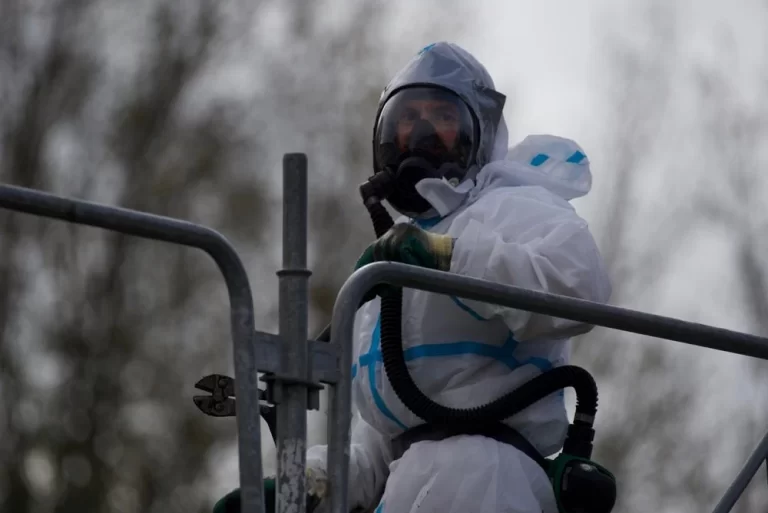
From there, the work area is sealed and contained. Negative air pressure is established using HEPA filtration equipment, which means air from the contained space can’t migrate into the rest of your home during removal. This isn’t optional under New York State’s Industrial Code Rule 56 — it’s required — but the quality of how it’s done varies significantly between contractors. We follow these protocols to the letter, because the containment is what protects your family during the process.
Once the material is removed and bagged for licensed disposal, post-abatement air clearance testing is conducted by a certified industrial hygienist. That testing confirms fiber levels are below safe thresholds before the containment comes down and the space is re-occupied. You receive a complete documentation package at the end — clearance letter, lab results, disposal manifests — everything the Town of North Hempstead’s building department or a buyer’s attorney would need to see.
Asbestos Testing and Removal in North Hempstead, NY
Every Common ACM in North Hempstead's Homes, Covered
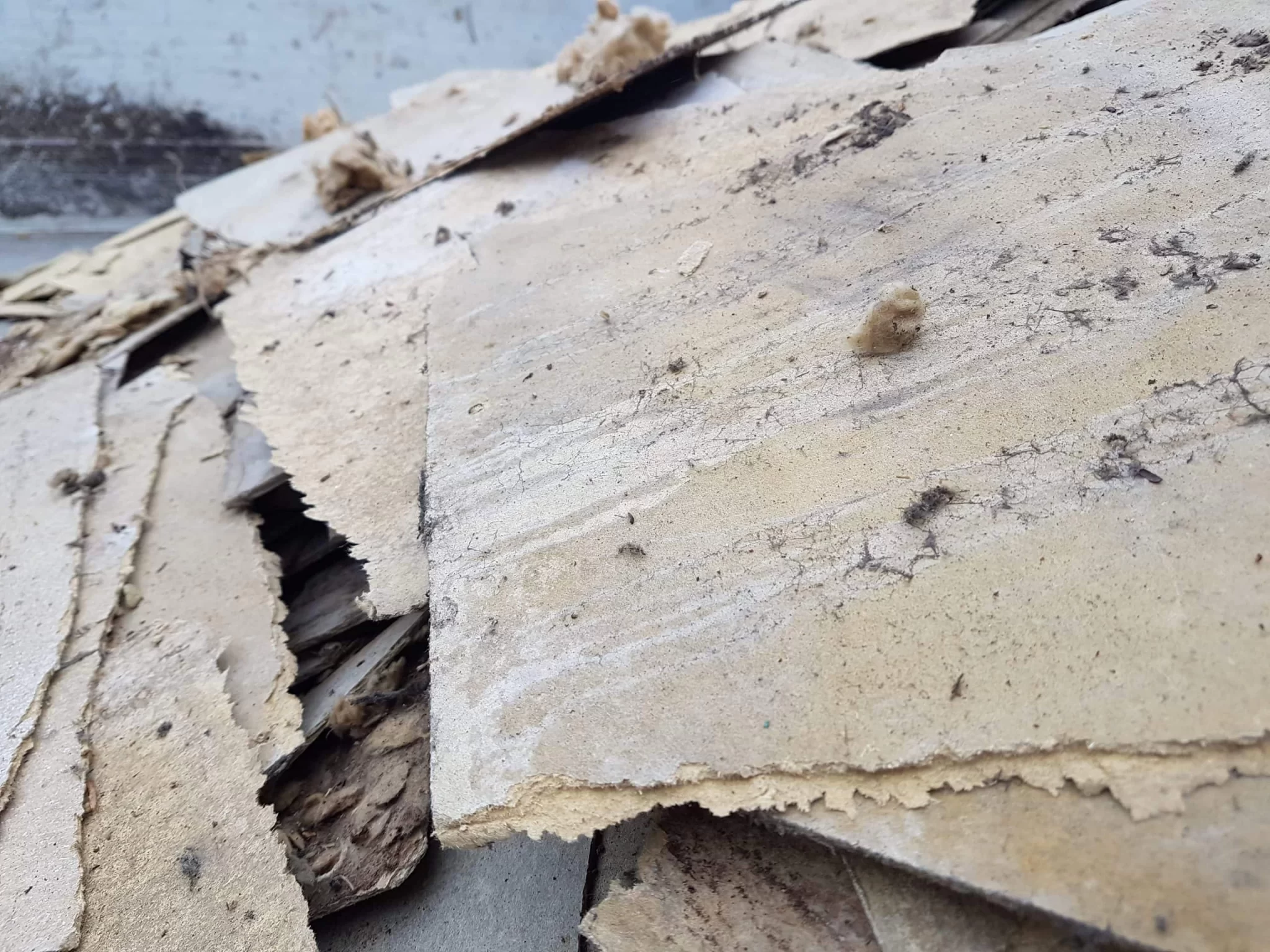
The asbestos abatement services we provide in North Hempstead cover the full range of asbestos-containing materials found in this town’s housing stock. Asbestos tile removal is one of the most frequent requests — the 9-inch vinyl asbestos tiles used in virtually every Nassau County home built between the late 1940s and early 1970s are still sitting under floors in thousands of homes across Herricks, Albertson, New Hyde Park, and Carle Place. Removing them requires proper containment and licensed disposal, not a crowbar and a dumpster.
Asbestos popcorn ceiling removal is another common service in this area. Acoustic textured ceilings applied through the 1970s frequently contained chrysotile asbestos, and a large portion of the split-levels and ranches built across North Hempstead’s inland communities still have them. Scraping that ceiling without testing first — or hiring someone who isn’t licensed to do it — creates a serious health and legal problem. We handle this under full containment with air monitoring before and after.
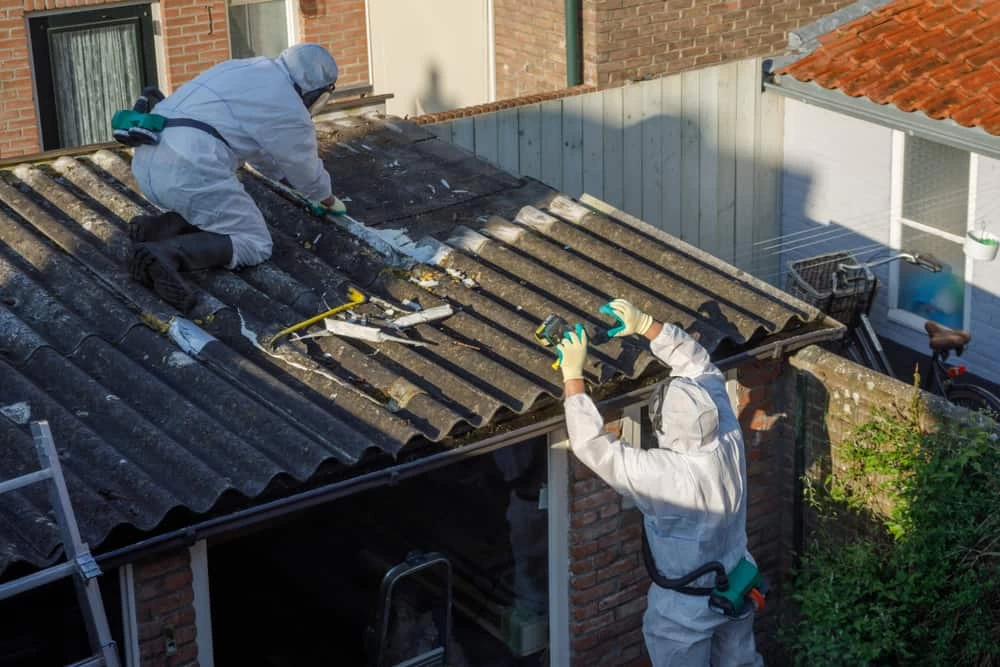
Beyond tile and ceilings, we also handle pipe and boiler insulation removal, joint compound abatement in pre-1978 drywall, roofing material abatement, and full pre-demolition asbestos surveys for commercial properties. If you’re managing a tenant build-out near the Great Neck or Mineola commercial corridors, or preparing a property for sale anywhere in the town, the process and documentation are the same: thorough, licensed, and fully compliant with Nassau County and NYS requirements.
Does my North Hempstead home actually need an asbestos inspection before renovation?
Yes — and it’s not optional. Under New York State’s Industrial Code Rule 56, any property built before 1980 is required to have a certified asbestos inspection before renovation or demolition work begins. That requirement applies directly to the majority of homes in North Hempstead, where the post-war building boom of the late 1940s through 1960s produced tens of thousands of cape cods, split-levels, and colonials that are still standing today.
The inspection isn’t just a legal formality. It’s the step that tells you whether the materials you’re about to disturb — floor tiles, ceiling texture, pipe insulation, drywall compound — actually contain asbestos. Skipping it and proceeding with renovation exposes you to significant liability: health risk if fibers are released, legal exposure if the work is done without proper documentation, and potential complications when you eventually sell the property. In a real estate market as active and high-value as North Hempstead’s, that documentation gap can become a serious problem at closing.
How do I know if my contractor is actually licensed for asbestos work in Nassau County?
This is one of the most important questions you can ask, and the answer has two parts. In New York State, asbestos abatement contractors must hold a license from the NYS Department of Labor under Industrial Code Rule 56. You can verify that license directly through the NYSDOL’s online database. But in Nassau County specifically, there’s an additional layer: contractors must also hold an EHRP (Environmental Hazard Remediation Practitioner) license issued by the county, and individual technicians must carry an EHRT (Environmental Hazard Remediation Technician) certification.
This Nassau County requirement is unique — it doesn’t apply in Suffolk County or New York City. That means a contractor who is fully licensed to work in, say, Babylon or Brookhaven may not be legally authorized to perform abatement work in North Hempstead, Great Neck, or Port Washington. Before you sign anything, ask for both the NYS DOL license number and the Nassau County EHRP license number, and verify them. Any legitimate contractor will hand those over without hesitation.
What does asbestos abatement typically cost for a home in North Hempstead?
Cost varies based on the type of material, the quantity, and the complexity of the containment required. For a straightforward asbestos tile removal in a single room — which is one of the most common requests in North Hempstead’s post-war homes — you’re generally looking at a range that reflects the size of the area, the condition of the tiles, and whether there are additional layers of flooring above them. Popcorn ceiling removal tends to run higher because of the containment requirements and the surface area involved.
What most homeowners in North Hempstead don’t account for upfront is the cost of the post-abatement air clearance testing, which is required by law and conducted by a separate certified industrial hygienist. That testing is part of the process, not an add-on to be skipped. When you get a quote, make sure it includes the full scope: containment, removal, disposal, air monitoring, and the documentation package. A quote that doesn’t include all of those items isn’t a complete quote, and the gaps tend to show up as surprise charges later.
We found asbestos mid-renovation in our Herricks home — what do we do right now?
Stop work immediately and seal off the area as best you can without disturbing the material further. If tiles have been broken, insulation has been cut, or a ceiling has been partially scraped, don’t try to clean it up yourself — that makes it worse. Close the room, turn off any HVAC systems that could circulate air from that space through the rest of the house, and call a licensed abatement contractor.
This situation is more common than people realize in Herricks and the surrounding communities of New Hyde Park, Albertson, and Carle Place, where post-war construction is dense and the original flooring and ceilings are often still in place under newer finishes. The good news is that mid-renovation discoveries, while stressful, are manageable. A licensed contractor can assess the extent of the disturbance, determine whether any fiber release occurred, set up proper containment, and get the material removed so your renovation can continue. The key is not to panic and not to keep working — those are the two things that turn a manageable situation into a serious one.
Does asbestos abatement need to be done before selling a home in North Hempstead?
Not always — but it depends on what the inspection turns up and what the buyer’s attorney requires. In North Hempstead’s real estate market, where home values are high and transactions are closely scrutinized, buyers and their legal representation routinely request documentation on any asbestos-containing materials identified during inspection. If ACMs are present and in good condition, encapsulation with proper documentation may satisfy the buyer. If they’re deteriorating or in an area that will be disturbed during any planned renovation, abatement is typically expected before closing.
The more important point is that sellers who have already completed abatement — and have the clearance letter and lab results to prove it — are in a significantly stronger negotiating position. It removes a major contingency from the deal and signals to buyers that the home has been properly maintained. For a pre-war estate in Roslyn Harbor or a post-war colonial in Plandome, that documentation can be the difference between a clean close and a prolonged negotiation. Getting it done before listing is almost always the more efficient path.
How long does the asbestos abatement process take from start to finish?
For a typical residential project in North Hempstead — a single room of floor tile removal or a popcorn ceiling in one area — the physical abatement work itself usually takes one to two days. The containment setup, removal, and breakdown happen within that window. What extends the overall timeline is the post-abatement air clearance testing, which requires samples to be sent to a certified lab and analyzed before the containment can be removed and the space re-occupied. That lab turnaround typically adds one to two business days.
For larger or more complex projects — multiple rooms, a full basement, or a commercial property in the Great Neck or Mineola area — the timeline scales accordingly. Projects that require notification to the NYS Department of Labor (required for abatement jobs exceeding 160 square feet of ACM) must also factor in the required notice period before work can begin. We walk you through the full timeline during the initial assessment so you’re not guessing at scheduling. If you’re coordinating abatement around a renovation contractor or a real estate closing date, that planning conversation matters — and it happens before anyone picks up a tool.