North Hills Homeowners Deserve More Than a Generic Abatement Crew
When your renovation uncovers something unexpected, you need asbestos abatement handled fast, correctly, and by someone who actually knows North Hills — not a crew reading your address off a map for the first time.
I needed a professional consultation explanation of procedure for safe removal of Asbestos in my apartment complex. Without having an account yet, I was very impressed with the caring, knowledgeable and generous advice offered by Jessica, and will look forward to doing business in the future. Thank you so much! I feel much more informed about a sometimes scary endeavor. Peace. Nancy Silva Mineola, NY.
Mia Munoz
Used this company to clean up some water flood in my house. They were fast and easy to work with.very professional, Would recommend to anyone!
Nini Valle
Great company, had a flood and they responded quickly and efficiently. Billed my insurance company directly. I highly recommend this company!
joe colapietro, jr
I had pipe freeze in my basement right before a snow storm and they made to within an hour to help start the clean up process. They we by our side throughout the entire process and even helped with the insurance company. They did such a great job with the cleanup, repair, remidiation, I contracted them to perform the repairs and finishes in the basement. They came with enough manpower and material to get the job done. Leo and Jessica were nothing but a pleasure to deal with!!
Cristian Arredondo c
I had some water damage in my home and Green Island was able to take care of my issue quickly and effectively. I am very pleased with the work they did. They responded quickly and were very professional.
Michael M
Outstanding service! From the office to the field crew everyone was friendly, helpful and responsive. I highly recommend Green Island Group.
Your North Hills Renovation Moves Forward — Without the Risk
When asbestos shows up mid-project, everything stops. The general contractor waits. The designer waits. Your timeline shifts. Getting the right abatement team in quickly — one that knows exactly what’s required under New York State Industrial Code Rule 56 and how to coordinate with the North Hills Village building department — is what keeps your renovation on track instead of stuck in limbo.
North Hills has a significant amount of housing stock built between the 1950s and 1980s, the peak era for asbestos use in residential construction. Whether it’s a mid-century colonial off Shelter Rock Road or a home that’s been in the family for decades, the materials inside those walls, floors, and ceilings were standard for the time. That doesn’t make them safe to disturb without proper handling — and it’s exactly why a thorough assessment before any demolition or remodel work matters so much here.
With nearly 40% of North Hills residents over the age of 65, many homeowners are undertaking major renovations for the first time in 30 or 40 years. That’s when asbestos becomes a real concern — not because the materials are failing on their own, but because renovation activity disturbs them. Once the work is done right, you get clearance documentation, a clean bill of health for your property, and the confidence to move forward.
We Know North Hills. We Know Your Home's Age and What's Inside It.
Green Island Group is a Nassau County-based asbestos abatement contractor, not a regional chain dispatching crews from three counties away. We know the North Shore. We know the building stock along Shelter Rock Road in North Hills. We know what it takes to work inside a gated community like Gracewood at North Hills — coordinating with gatehouse security, respecting HOA expectations, and leaving a job site cleaner than we found it.
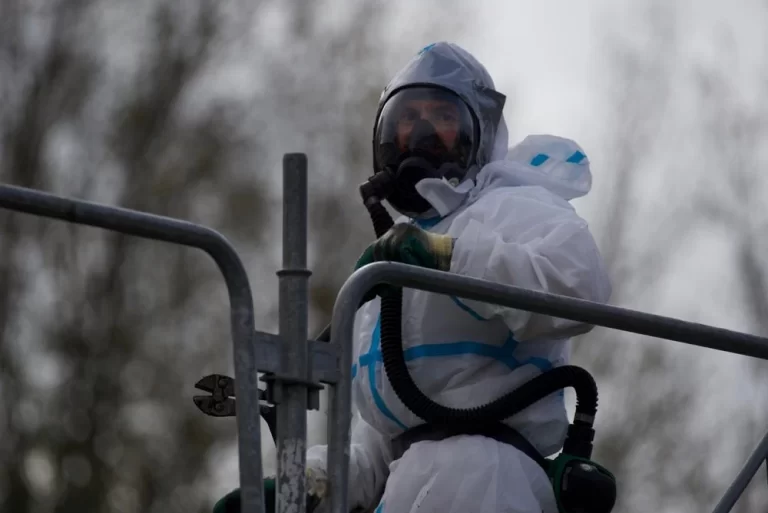
Every project we take on is handled by NYS Department of Labor-licensed supervisors and certified handlers. That’s not optional in New York — it’s the law under Industrial Code Rule 56 — but it’s also the standard we’d hold ourselves to regardless. Your home is worth more than a crew cutting corners on containment.
We’ve worked with North Hills homeowners preparing for major renovations, managing estate properties, and navigating pre-sale timelines in one of Nassau County’s most competitive real estate markets. We understand what’s at stake, and we show up ready to handle it.
What Happens From Your First Call to Final Clearance
It starts with an inspection. A NYS-certified inspector comes out, collects bulk samples from suspected materials — floor tiles, ceiling texture, pipe insulation, joint compound — and sends them to a NYS ELAP-approved laboratory for analysis. You get real results, not guesswork. If asbestos is confirmed, we design a project scope that meets ICR 56 requirements and submit the required notification to the NYS Asbestos Control Bureau before any work begins.
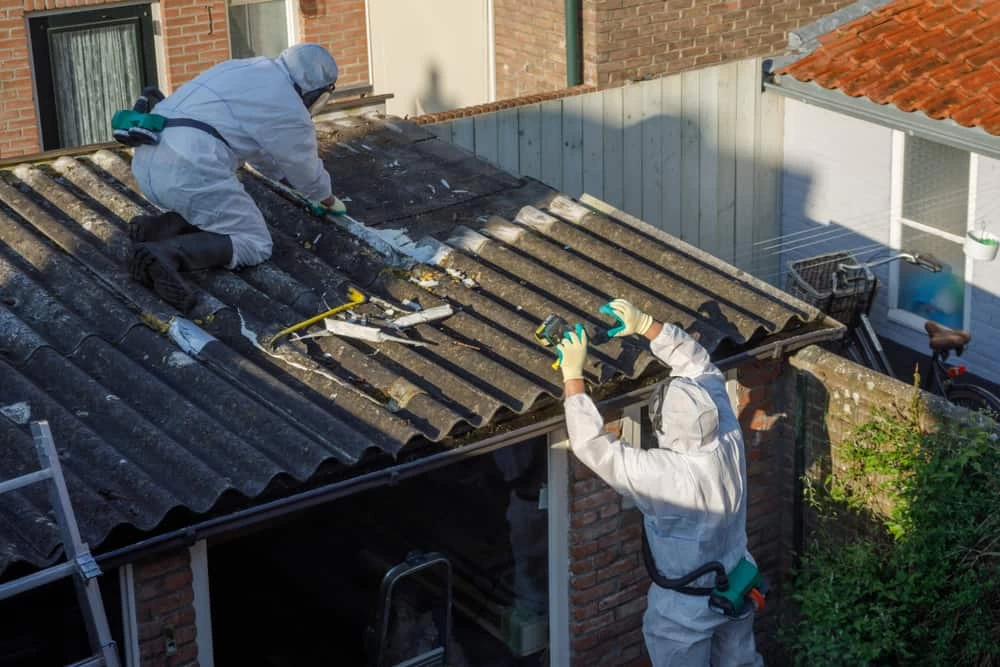
On the job, the work area is fully contained — sealed off with plastic sheeting, placed under negative air pressure, and equipped with HEPA filtration to prevent any fiber migration to the rest of your home. We remove materials using wet methods to keep fibers from becoming airborne, then package, label, and transport everything to an approved disposal facility. If you’re in Gracewood or another gated community in North Hills, we coordinate access and scheduling in advance so there are no surprises for you, your neighbors, or your HOA.
Once abatement is complete, a certified industrial hygienist performs post-clearance air testing. When the results come back clean, you receive a full documentation package — everything your general contractor, your attorney, or your real estate agent needs to confirm the work was done properly. From there, your renovation picks up right where it left off.
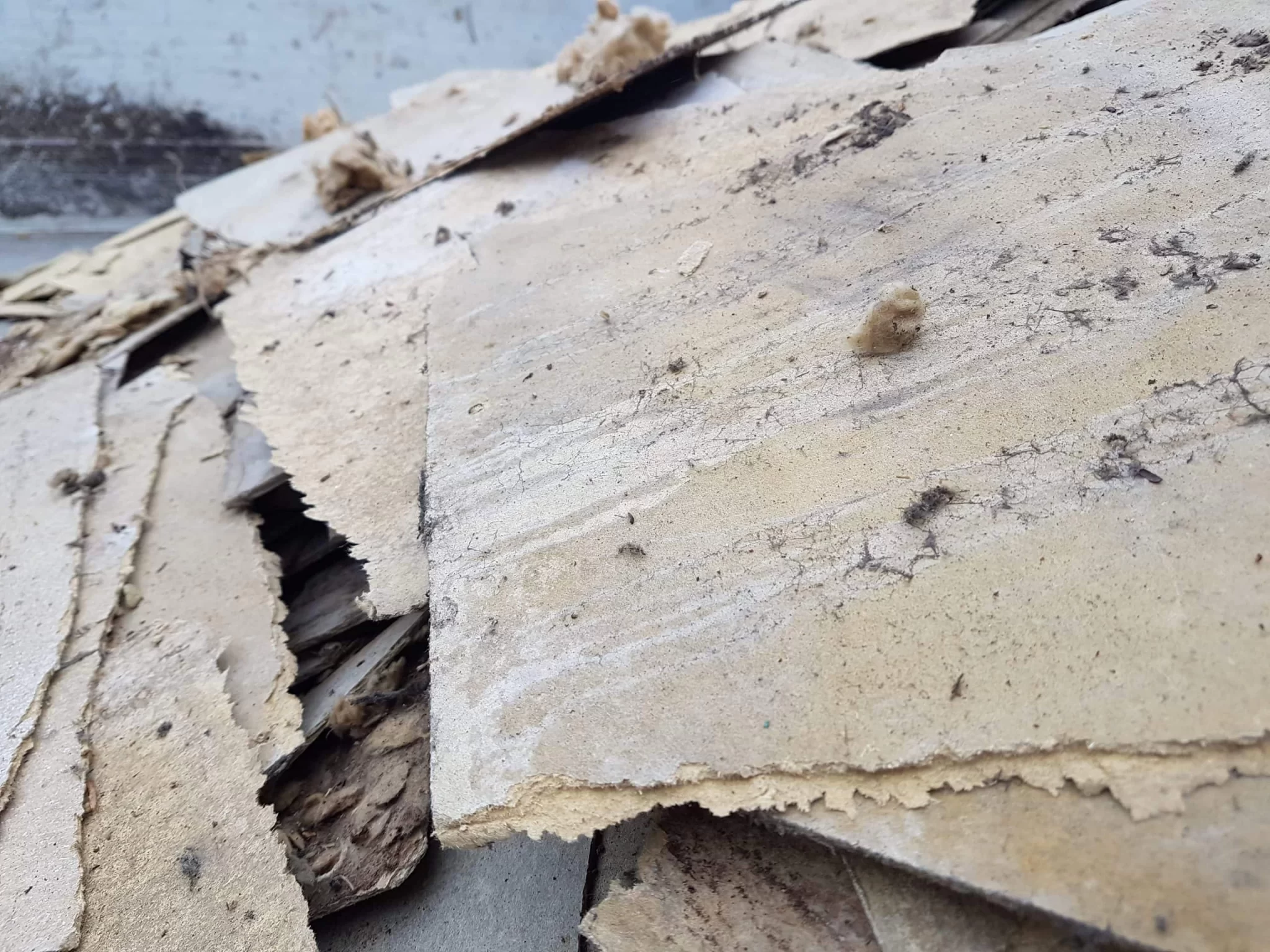
Asbestos doesn’t always announce itself. In North Hills homes built before 1987, it can be in the 9×9 vinyl floor tiles under your hardwood, in the popcorn ceiling texture you’ve been meaning to update, in the pipe insulation in your basement mechanical room, or in the roofing felt under a layer of newer shingles. Each of those materials requires a different removal approach — and all of them fall under the same strict NYS ICR 56 protocols that govern every asbestos abatement project in Nassau County.
Asbestos tile removal is one of the most common jobs we handle in North Hills and the surrounding area. The vinyl asbestos tiles themselves need to come out carefully, but the mastic adhesive beneath them frequently contains asbestos too — and that layer gets missed by contractors who aren’t specifically trained for it. Asbestos popcorn ceiling removal is another frequent call, particularly in North Hills homes from the 1960s and 1970s where that texture was applied as a standard finish. Both require full containment and clearance testing before any new finishes go in.
For North Hills homeowners navigating a pre-sale timeline, we also offer pre-listing asbestos inspections. In a market where the median home sale price sits around $1.9 million, buyers and their attorneys conduct thorough due diligence. Addressing asbestos before it becomes a negotiating issue — or a deal-stopper — is a straightforward way to protect your sale price and keep the transaction moving.
Do I need an asbestos inspection before renovating my North Hills home?
In New York State, yes — and it’s not just a recommendation. Under NYS Industrial Code Rule 56, any renovation, demolition, or remodeling work in a building that may contain asbestos-containing materials requires an asbestos survey before work begins. This applies to residential properties, not just commercial buildings. If your home was built before 1987, you’re in the category where an inspection is required prior to pulling permits or starting demolition.
For North Hills specifically, the North Hills Village building department has its own permit process, and asbestos compliance is part of what keeps that process moving. Homeowners who skip the inspection and start renovation work without it can face stop-work orders, fines, and significant project delays — none of which are acceptable when you have a general contractor and an interior designer already scheduled. Getting the inspection done early, before your renovation timeline is set, is the cleanest way to handle it.
What asbestos-containing materials are most common in North Hills homes?
The most common materials we find in North Hills homes from the 1950s through the 1980s are 9×9 vinyl floor tiles and the mastic adhesive beneath them, popcorn or textured ceiling finishes, pipe and duct insulation in basements and mechanical rooms, roofing felt, joint compound used in drywall finishing, and exterior transite siding panels. Any of these can contain asbestos at concentrations that require professional abatement under state law.
The mix of mid-century ranch homes, split-levels, and older colonial-style properties throughout North Hills means these materials show up regularly — often in layers. A homeowner pulling up carpet to refinish hardwood floors might not realize there are vinyl asbestos tiles underneath. A bathroom renovation that touches the ceiling could disturb decades-old texture compound. The only way to know for certain what you’re dealing with is bulk sampling analyzed by a NYS ELAP-approved laboratory — not a visual guess, and not an assumption based on the home’s age alone.
How long does asbestos abatement take, and will it delay my North Hills renovation?
The timeline depends on the scope of work — how many materials are affected, how large the area is, and how complex the containment setup needs to be. A single room of asbestos tile removal or a popcorn ceiling abatement in one or two rooms can typically be completed in one to three days. Larger projects involving multiple materials across multiple areas of the home will take longer, and the post-clearance air testing adds time before your general contractor can re-enter the space.
The honest answer is that abatement does add time to your renovation — but far less time than a stop-work order or a failed permit inspection would. In North Hills, where renovation projects often involve coordinated teams of architects, contractors, and designers, the smartest move is to schedule the asbestos inspection and abatement at the front end of your project timeline, before other trades are lined up and waiting. We work efficiently and communicate clearly with your project team so the handoff from abatement to renovation is as clean as possible.
Is asbestos abatement in North Hills, NY required to be done by a licensed contractor?
Yes, absolutely. New York State law requires that all asbestos abatement work be performed by a contractor holding a valid asbestos handling license issued by the NYS Department of Labor. Individual workers must also be certified through state-approved training and examination. This isn’t something a general contractor or handyman can legally handle on the side — and any contractor who suggests otherwise is putting you and your family at risk while also exposing you to significant legal and financial liability.
Beyond the legal requirement, there’s a practical reason this matters in a market like North Hills. When your renovation is complete and you eventually sell a property valued at $1.5 million or more, the buyer’s attorney will ask for documentation. If the abatement was performed by an unlicensed contractor — or not performed at all — that becomes a serious issue at closing. Licensed abatement with proper NYS Asbestos Control Bureau notification and post-clearance documentation protects your project now and your property value later.
What happens if asbestos is found in a Gracewood or gated community home in North Hills?
The abatement process itself is the same regardless of where your home is located — the NYS ICR 56 requirements don’t change based on your neighborhood. What does change is the logistics. In gated communities like Gracewood at North Hills or the Hamlet at North Hills, we coordinate access with gatehouse security in advance, communicate with HOA management if required, and schedule work during hours that minimize disruption to neighboring residents. The containment setup inside your home ensures that nothing from the work area affects shared spaces or adjacent properties.
Gracewood homes, most of which were built in 1996, are now entering their first serious renovation cycle. While 1996 construction is largely post-asbestos-ban for most materials, some products used in the mid-1990s still fall under regulated categories, and any renovation that disturbs existing materials warrants a professional assessment. It’s a quick step that rules out a problem or confirms one — either way, you’re better off knowing before the demo crew shows up.
How much does asbestos abatement cost for a North Hills home?
Cost varies based on the type of material, the square footage involved, and the complexity of the containment and removal process. A single-room asbestos tile removal or popcorn ceiling abatement in a smaller space might run in the range of $1,500 to $3,500. Larger projects — multiple rooms, multiple material types, or more involved containment setups — can range from $5,000 to $15,000 or more depending on scope. The inspection and laboratory analysis are typically separate line items, usually in the $400 to $800 range.
In North Hills, where renovation budgets routinely run well into six figures and home values are among the highest in Nassau County, asbestos abatement is rarely the largest cost in a project — but skipping it or cutting corners on it can become the most expensive decision you make. A stop-work order, a failed permit inspection, or an asbestos disclosure issue at closing can cost far more than the abatement itself. We provide clear, itemized estimates before any work begins so you know exactly what you’re paying for and why.