North Lindy's Post-War Homes Deserve a Clean Bill of Health
If your North Lindenhurst home was built in the 1950s or 60s which describes most of the hamlet asbestos abatement isn’t a distant concern. It’s likely already in your floor tiles, your ceiling, or wrapped around your pipes. We handle it the right way, fully licensed under New York State law.
I needed a professional consultation explanation of procedure for safe removal of Asbestos in my apartment complex. Without having an account yet, I was very impressed with the caring, knowledgeable and generous advice offered by Jessica, and will look forward to doing business in the future. Thank you so much! I feel much more informed about a sometimes scary endeavor. Peace. Nancy Silva Mineola, NY.
Mia Munoz
Used this company to clean up some water flood in my house. They were fast and easy to work with.very professional, Would recommend to anyone!
Nini Valle
Great company, had a flood and they responded quickly and efficiently. Billed my insurance company directly. I highly recommend this company!
joe colapietro, jr
I had pipe freeze in my basement right before a snow storm and they made to within an hour to help start the clean up process. They we by our side throughout the entire process and even helped with the insurance company. They did such a great job with the cleanup, repair, remidiation, I contracted them to perform the repairs and finishes in the basement. They came with enough manpower and material to get the job done. Leo and Jessica were nothing but a pleasure to deal with!!
Cristian Arredondo c
I had some water damage in my home and Green Island was able to take care of my issue quickly and effectively. I am very pleased with the work they did. They responded quickly and were very professional.
Michael M
Outstanding service! From the office to the field crew everyone was friendly, helpful and responsive. I highly recommend Green Island Group.
Your Renovation Moves Forward. Your Family Stays Safe.
Most people in North Lindenhurst don’t call about asbestos until something forces the issue a contractor stops mid-job, a home inspector flags a concern, or a buyer’s attorney starts asking questions. By that point, the clock is already ticking. What you actually want is simple: get it confirmed, get it removed, and get back to whatever you were doing before this became your problem.
North Lindenhurst’s housing stock was built almost entirely during the post-war boom of the late 1940s through the 1960s the same era when asbestos was standard in floor tiles, pipe insulation, roofing, and textured ceilings. These aren’t hypothetical risks. The 9×9 vinyl tiles in your basement, the popcorn texture on your living room ceiling, the wrap around your boiler all of it falls squarely in the window when asbestos was routinely used. A home on a side street off Wellwood Avenue or near William Rall School built in 1957 could have ACMs in six different places.
When the abatement is done correctly, you get more than a clean space. You get documentation air clearance reports, disposal records, and licensed contractor paperwork that satisfies buyers, lenders, and the Town of Babylon’s permitting process. That paperwork matters whether you’re finishing a basement, listing the home, or just making sure your family isn’t breathing something they shouldn’t be.
Licensed Asbestos Remediation in North Lindenhurst
Local Knowledge You Can't Fake, Credentials You Can Verify
We’re a locally owned and operated environmental remediation company serving Suffolk County. We’re not a franchise. There’s no national call center routing your job to whoever’s available. When you call us, you’re talking to a team that already works throughout North Lindenhurst and the greater Lindenhurst area including the Village of Lindenhurst just to the south and knows exactly what’s inside the homes and commercial buildings along the Sunrise Highway corridor and the residential streets that make up North Lindy.
We’re fully licensed by the New York State Department of Labor under Industrial Code Rule 56, which is the only legal standard that matters in this state. Every crew member holds individual NYS DOL certification. We handle the required pre-project notifications, containment, air monitoring, and final clearance testing not because it’s a selling point, but because it’s the law and it protects you. The Town of Babylon’s Town Hall sits right on East Sunrise Highway. We know this area, and we know what its residents need when this situation comes up.
From the First Call to Final Clearance Here's What to Expect
The process starts with an inspection. A certified asbestos inspector comes to your property, identifies any materials that are suspected to contain asbestos, and takes bulk samples for laboratory analysis. In a North Lindenhurst home built in the 1950s or 60s, this typically means checking floor tiles and mastic, ceiling texture, pipe and boiler insulation, roofing materials, and potentially joint compound or exterior siding. The inspection is methodical, not rushed.
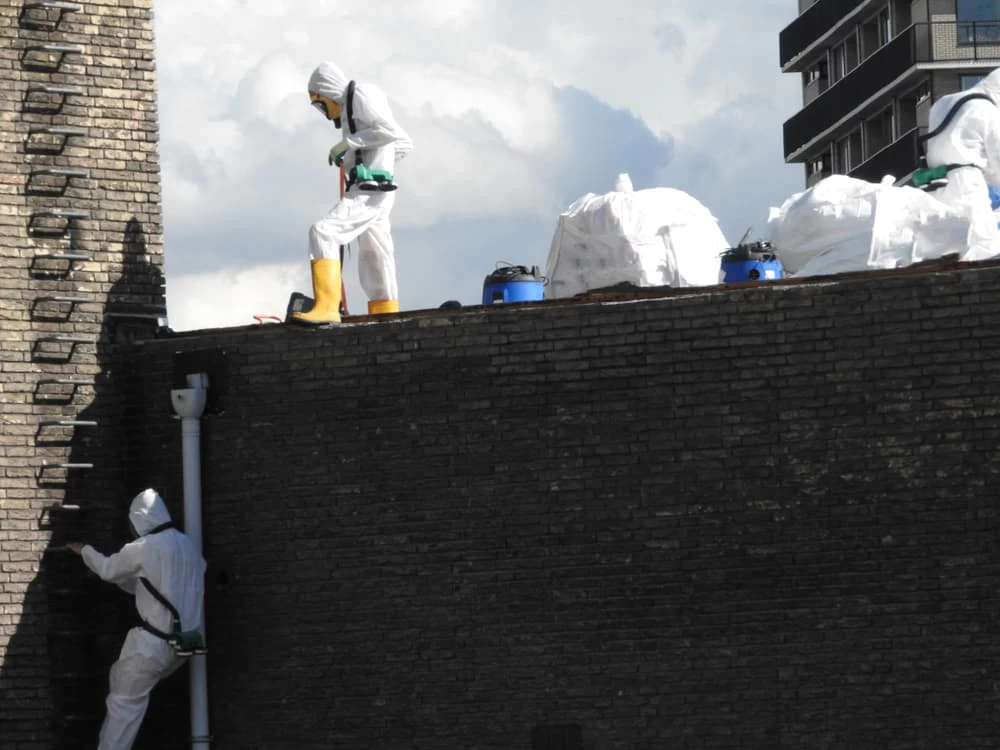
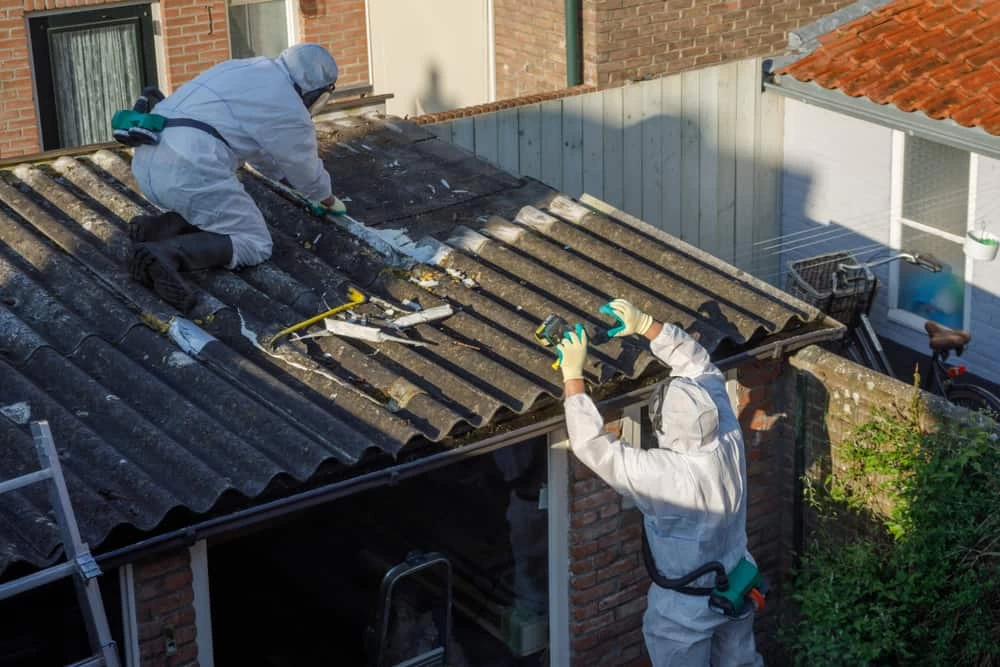
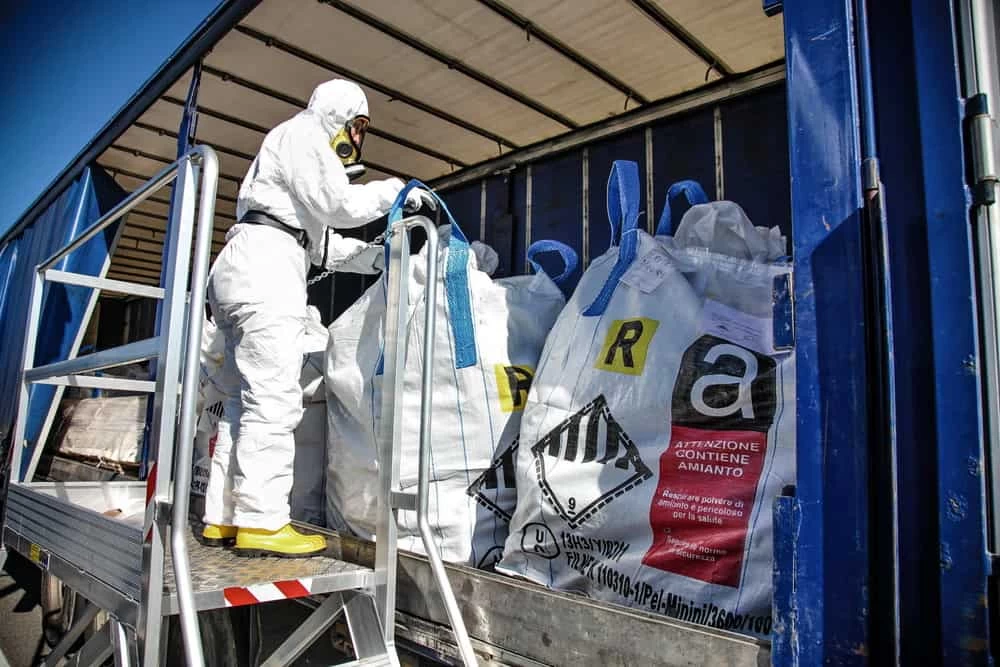
Once the lab results are back, you’ll know exactly what you’re dealing with and where. If abatement is needed, we develop a project plan that meets all NYS DOL ICR 56 requirements including mandatory notification to the state before work begins. The abatement itself involves full containment of the work area, negative air pressure, proper PPE for all workers, and careful removal and packaging of all ACMs for disposal at a licensed facility. This isn’t a process you want someone cutting corners on, and we don’t.
After the physical removal is complete, independent air clearance testing confirms the space is clean. You receive full documentation inspection reports, lab results, abatement records, and clearance certification. If your project requires a building permit through the Town of Babylon’s Department of Planning and Development, that documentation is exactly what they need to see. You’re not left figuring out paperwork on your own.
Asbestos Tile and Popcorn Ceiling Removal, North Lindenhurst
The Two Most Common Calls We Get from North Lindenhurst Homeowners
If you’re renovating a home in North Lindenhurst that was built before 1980, the two materials that come up most often are vinyl floor tiles and textured ceilings. The 9×9-inch floor tiles that were standard in post-war construction common in basements, kitchens, and entryways throughout this hamlet frequently contain chrysotile asbestos. The adhesive mastic underneath them often does too. Asbestos tile removal requires full containment and careful technique, because cutting or grinding those tiles releases fibers. Peeling them up without proper precautions isn’t a DIY project.
Popcorn ceiling removal is the other call we get regularly. Acoustic spray texture was applied in homes built through the early 1980s, and a significant percentage of it tests positive for asbestos. If you’re updating a bedroom, opening up a living space, or just tired of looking at that texture, the ceiling needs to be tested before anyone touches it. Asbestos popcorn ceiling removal is one of the more contained abatement jobs we do but it still requires a licensed contractor, proper air monitoring, and clearance testing before the space is reoccupied.
Beyond tiles and ceilings, we also handle pipe and boiler insulation removal, roofing material abatement, and asbestos remediation in commercial and light-industrial properties which matters for the older buildings along North Lindenhurst’s Sunrise Highway corridor. Whatever the material, whatever the scope, the process is the same: inspect, confirm, contain, remove, document.
Does my North Lindenhurst home actually have asbestos if it was built in the 1950s?
There’s no way to know for certain without testing, but statistically speaking, the odds are high. Homes built in North Lindenhurst during the post-war boom roughly 1945 through the mid-1960s were constructed during the peak period of asbestos use in American residential building. Floor tiles, pipe insulation, boiler wrap, roofing shingles, joint compound, and textured ceiling coatings all commonly contained asbestos during that era. A home built in 1955 could have asbestos-containing materials in multiple locations simultaneously.
The important distinction is between asbestos that’s intact and undisturbed versus asbestos that’s been damaged or is about to be disturbed by renovation work. If you’re not planning any renovations and the materials are in good condition, the immediate health risk may be low. But the moment you start a kitchen gut, a bathroom remodel, or a basement finish and most North Lindenhurst homeowners eventually do those materials need to be tested and potentially abated before work proceeds. A licensed inspection is the only way to know what you’re actually dealing with.
How much does asbestos removal cost in Suffolk County, NY?
Cost depends on the material, the quantity, and the scope of the job. For something like asbestos tile removal in a basement a very common situation in North Lindenhurst homes you might be looking at a few hundred to a couple thousand dollars depending on square footage. A full popcorn ceiling removal in a larger living area can run higher. Pipe and boiler insulation removal, or more complex multi-material abatement in an older home, will cost more based on the extent of the work.
What drives cost in New York specifically is the regulatory overhead NYS DOL requires mandatory pre-project notifications, certified workers, proper containment and air monitoring, and licensed disposal. That compliance infrastructure is built into every legitimate abatement job in the state, and it’s non-negotiable. What you should expect from us is a written, itemized estimate before work begins. If someone gives you a vague number over the phone without seeing the property, that’s a red flag. We provide free on-site assessments and written quotes so you know exactly what you’re paying for and why.
Do I need a permit for asbestos removal in the Town of Babylon?
The permit question has two layers. At the state level, New York State Industrial Code Rule 56 requires that licensed contractors file a mandatory notification with the NYS Department of Labor before beginning any regulated asbestos abatement project this applies to virtually all professional removal work regardless of location. That notification is our responsibility, not yours, but you should confirm your contractor is handling it.
At the local level, whether you need a building permit from the Town of Babylon’s Department of Planning and Development depends on what else is happening at the property. If you’re doing asbestos abatement as a standalone project with no associated renovation or demolition, a separate building permit typically isn’t required. But if the abatement is part of a larger renovation a kitchen remodel, a basement finish, an addition the renovation itself may require a permit, and the abatement documentation will be part of that file. The Town of Babylon’s Town Hall is right on East Sunrise Highway in North Lindenhurst, and their Planning and Development department handles these questions directly. We’re familiar with the Town’s requirements and can walk you through what applies to your specific project.
Can asbestos abatement be done while my family is still living in the house?
In most cases, yes but with important conditions. Licensed abatement work requires full containment of the affected area, negative air pressure to prevent fibers from migrating to other parts of the home, and restricted access to the work zone during the project. Depending on where the abatement is happening and how extensive it is, your family may need to vacate specific rooms or in some cases the entire home temporarily.
For a contained job like popcorn ceiling removal in a single bedroom or tile removal in a basement utility area, many families stay in the home with the work zone sealed off. For larger projects involving multiple areas or materials throughout the house, temporary relocation for the duration of the work is often the safer and more practical choice. After abatement is complete, post-clearance air testing confirms that fiber levels in the living space have returned to acceptable levels before anyone re-enters the work area. We’ll give you a realistic picture of what to expect for your specific situation during the initial assessment no vague reassurances, just a straight answer based on the actual scope of work.
Will asbestos come up as an issue when I sell my North Lindenhurst home?
It can, and it comes up more often than sellers expect. North Lindenhurst’s housing stock is heavily weighted toward homes built in the 1950s and 60s, and buyers especially those working with experienced agents or attorneys increasingly ask about asbestos during due diligence. A home inspection that flags suspected ACMs can trigger renegotiation, price reductions, or a buyer walking away entirely.
The cleaner approach is to address it before you list. A pre-sale asbestos inspection gives you a clear picture of what’s in the home. If abatement is needed, getting it done before listing means you control the timeline, the contractor, and the cost rather than negotiating under pressure with a closing date looming. More importantly, you’ll have documentation: inspection reports, lab results, abatement records, and air clearance certification. That paperwork gives buyers, lenders, and title companies exactly what they need to move forward with confidence. In a market where North Lindenhurst homes are actively selling and values have been rising, a clean asbestos record is a straightforward way to protect your sale.
What's the difference between asbestos testing and asbestos abatement do I need both?
Testing and abatement are two separate steps, and yes, you typically need both if asbestos is confirmed. Testing more formally called an asbestos inspection or survey is the process of identifying suspected materials, collecting bulk samples, and sending them to a certified laboratory for analysis. This tells you whether asbestos is present and in what concentration. In a North Lindenhurst home built before 1980, an inspection usually covers floor tiles and mastic, ceiling texture, pipe insulation, roofing, and any other materials that could contain ACMs based on the home’s age and construction.
Abatement is the physical removal and disposal of confirmed asbestos-containing materials. It requires a separately licensed contractor, full containment protocols, and post-removal air clearance testing. Some companies handle both inspection and abatement, which can simplify the process but New York State does have rules about the independence of certain roles within a project, so it’s worth asking your contractor how they structure this. We manage the full process from initial inspection through final clearance documentation, and we’ll explain clearly what each step involves and what it costs before any work begins.