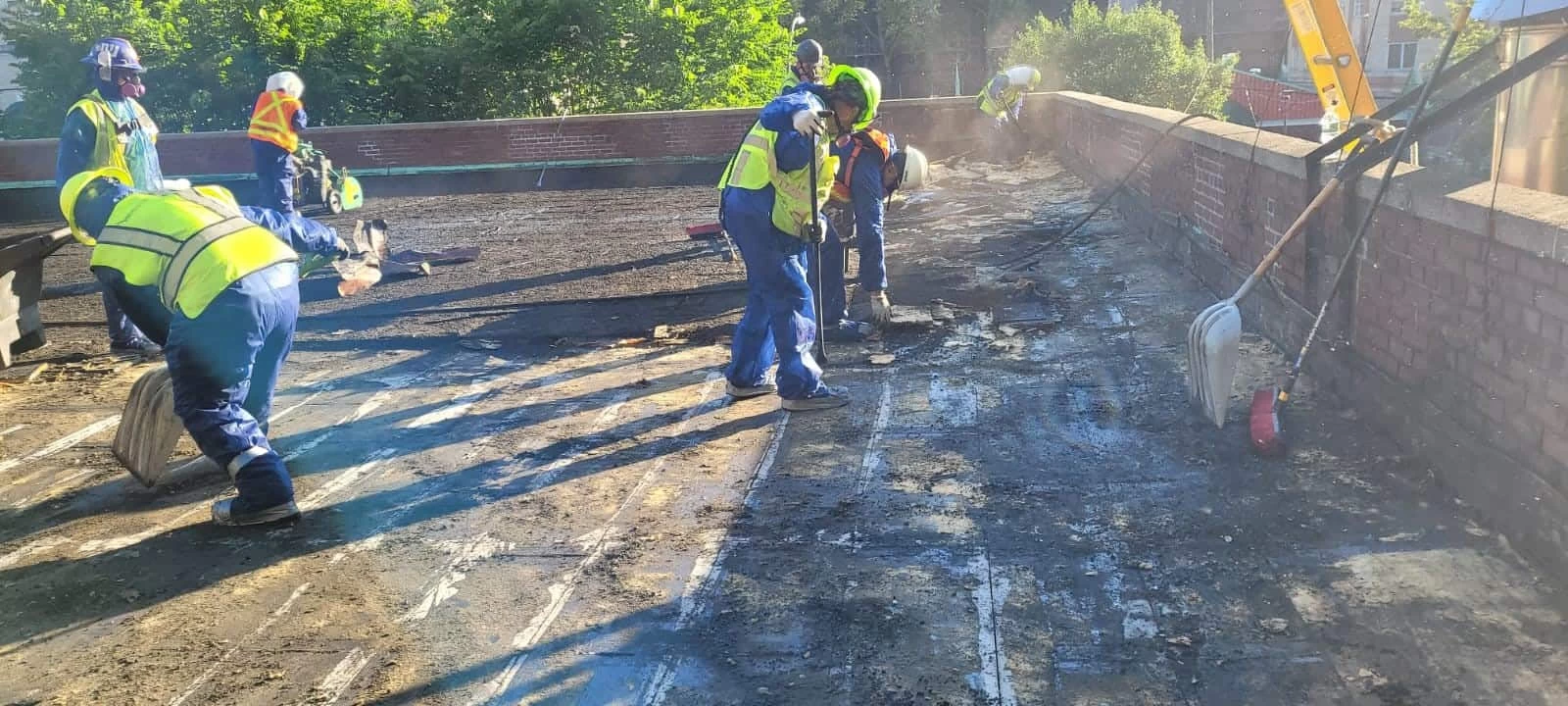
NYC's Pre-War Buildings Don't Hide Asbestos They're Full of It
If you’re renovating a pre-war co-op, managing a multi-family in Brooklyn, or dealing with a burst steam pipe at 2 AM, asbestos abatement in New York City isn’t a maybe it’s a requirement. We serve all five boroughs with licensed removal, full DEP compliance, and real emergency availability.
I needed a professional consultation explanation of procedure for safe removal of Asbestos in my apartment complex. Without having an account yet, I was very impressed with the caring, knowledgeable and generous advice offered by Jessica, and will look forward to doing business in the future. Thank you so much! I feel much more informed about a sometimes scary endeavor. Peace. Nancy Silva Mineola, NY.
Mia Munoz
Used this company to clean up some water flood in my house. They were fast and easy to work with.very professional, Would recommend to anyone!
Nini Valle
Great company, had a flood and they responded quickly and efficiently. Billed my insurance company directly. I highly recommend this company!
joe colapietro, jr
I had pipe freeze in my basement right before a snow storm and they made to within an hour to help start the clean up process. They we by our side throughout the entire process and even helped with the insurance company. They did such a great job with the cleanup, repair, remidiation, I contracted them to perform the repairs and finishes in the basement. They came with enough manpower and material to get the job done. Leo and Jessica were nothing but a pleasure to deal with!!
Cristian Arredondo c
I had some water damage in my home and Green Island was able to take care of my issue quickly and effectively. I am very pleased with the work they did. They responded quickly and were very professional.
Michael M
Outstanding service! From the office to the field crew everyone was friendly, helpful and responsive. I highly recommend Green Island Group.
Your renovation moves forward. Your co-op board stops asking questions. Your tenants can come back. That’s what proper asbestos abatement in New York City actually looks like not just a crew showing up, but a fully documented, DEP-compliant process that closes the loop on every requirement standing between you and the next step.
In NYC, the stakes are different than anywhere else. The majority of buildings constructed between the 1920s and 1970s were built with asbestos-containing materials in the pipe insulation, the floor tiles, the fireproofing, the joint compound behind your walls. When you’re gutting a pre-war Manhattan co-op or rehabbing a Bed-Stuy brownstone, asbestos isn’t a rare find. It’s expected. And when it’s handled correctly the first time, you’re not dealing with stop-work orders, DEP fines starting at $5,000 per day, or a co-op board that won’t sign off on reoccupancy.
Beyond compliance, there’s the air quality piece. Post-abatement air clearance testing confirms that fiber levels in your space are safe before anyone walks back in. That documentation matters for your board, your insurer, and anyone who buys this property down the road. Getting asbestos removal right in New York City doesn’t just protect your health. It protects your investment.
We Know the ACP-7 Process And Every Borough It Applies To
We’re based in Bohemia, NY, and have been serving the New York metro area around the clock, every day of the year. That proximity to the city isn’t incidental it means faster response times, real familiarity with NYC DEP requirements, and a team that’s worked in pre-war co-ops on the Upper West Side, brownstones in Carroll Gardens, and multi-family buildings across the Bronx and Queens.
Every asbestos project we handle in New York City is performed under both NYC DEP and NYS Department of Labor licensing the two credentials required before any abatement work begins in the five boroughs. We’re not a national franchise applying a generic template to your building. We’re a metro-area contractor who knows what’s inside NYC’s walls, how the DEP notification process works, and what co-op boards and property managers actually need to see when the job is done.
We also work directly with insurance carriers billing them, managing documentation, and walking you through the claims process so you’re not left handling that on top of everything else.
The NYC Regulatory Clock Starts the Moment You Call
Here’s what most people don’t realize until they’re already behind: in New York City, you can’t start asbestos abatement the day you find it. NYC DEP requires a formal ACP-7 project notification to be filed at least 10 business days before any abatement work begins. That waiting period is mandatory no exceptions. The sooner you call, the sooner that clock starts, and the sooner your project can actually move.
Before the ACP-7 is filed, a DEP-certified asbestos investigator completes an ACP-5 assessment of the space. This tells you what’s there, where it is, and whether it needs to be removed before your renovation or demolition permit can be issued by the NYC Department of Buildings. Once the notification window clears, our licensed team sets up full containment, removes the asbestos-containing materials following all NYS DOL Part 56 and EPA NESHAP protocols, and disposes of everything properly through approved channels.
After abatement is complete, an independent air monitoring contractor conducts post-abatement air clearance testing now required by NYC DEP for all residential projects over 25 square feet. When that clearance certificate comes back clean, you have everything you need: the documentation, the sign-off, and the confidence to move forward. Whether you’re in Midtown, Flatbush, Astoria, or Riverdale, the process is the same and we handle every step of it.
Asbestos removal in New York City isn’t one-size-fits-all, and the materials involved vary significantly by building type, age, and borough. In pre-war Manhattan co-ops, the most common finds are asbestos-wrapped steam risers and branch heating lines the kind that don’t show up on a basic surface inspection but appear the moment a contractor opens a wall. In Brooklyn brownstones, it’s often the plumbing insulation, the adhesive beneath original hardwood floors, or the roofing material on the flat roof. In older Bronx and Queens multi-families, floor tiles, ceiling tiles, and pipe wrapping are the usual culprits.
We handle asbestos tile removal, pipe insulation removal, popcorn ceiling removal, fireproofing removal, and full-scope abatement for both residential and commercial properties across all five boroughs. Every project includes proper containment, licensed removal, regulated disposal, and the complete DEP documentation package your co-op board, property manager, or insurance carrier will ask for.
Costs in New York City run higher than the national average typically between $2,200 and $6,500 for floor tile removal per room, $800 to $2,500 per 25 linear feet of pipe insulation, and $4 to $8 per square foot for popcorn ceiling work. Larger full-building scopes can reach $18,000 to $45,000 or more. We provide free inspections and clear, itemized estimates before any work begins no guessing, no surprises.
Do I need a permit for asbestos removal in New York City before renovating?
Yes and the process is more involved than most people expect. Before any renovation or demolition permit can be issued by the NYC Department of Buildings, you need an ACP-5 form completed and sealed by a DEP-certified asbestos investigator. That form documents whether asbestos-containing materials are present, and if they are, it confirms they’ll be abated before other work begins.
On top of that, once asbestos abatement is planned, your contractor must file an ACP-7 project notification with NYC DEP at least 10 business days before work starts. That waiting period is mandatory it doesn’t matter how urgent your renovation timeline is. The earlier you get the inspection done and the ACP-7 filed, the less this regulatory window disrupts your project schedule. Working without these approvals carries fines starting at $5,000 per day, and stop-work orders can shut down your entire renovation.
How much does asbestos removal typically cost in New York City?
New York City is the most expensive asbestos abatement market in the country roughly 45% above the national average. For context, the average NYC asbestos project runs around $9,425, though smaller contained jobs can come in between $1,300 and $3,000, and larger scopes can reach $43,500 or more depending on the square footage and materials involved.
More specifically: floor tile removal typically runs $2,200 to $6,500 per room, pipe insulation removal comes in around $800 to $2,500 per 25 linear feet, and popcorn ceiling removal runs $4 to $8 per square foot. Pricing in the NYC and Long Island metro area also increased 8 to 12 percent in 2025 and 2026 due to updated NYS DOL licensing requirements and higher disposal fees. The best way to get an accurate number for your specific situation is a free on-site inspection phone estimates for New York City asbestos work are rarely reliable given how much building type and scope can vary.
Is asbestos common in pre-war apartment buildings and brownstones in NYC?
Extremely common. The majority of New York City buildings constructed between the 1920s and 1970s were built with asbestos-containing materials and in pre-war buildings specifically, it shows up in places that aren’t obvious until work begins. Steam risers and branch heating lines in pre-war Manhattan co-ops are frequently wrapped in asbestos insulation. It’s inside the walls, not on them, which is why a basic visual inspection won’t catch it.
In Brooklyn brownstones, asbestos is often found in the plumbing insulation, the adhesive beneath original flooring, and the roofing material. In older Bronx and Queens multi-family buildings, floor tiles, ceiling tiles, and pipe wrapping are the most common sources. If your building was constructed before 1980, NYC DEP regulations presume it may contain asbestos and require an assessment before any renovation permit is issued. That presumption exists for a reason in NYC’s older housing stock, asbestos isn’t the exception. It’s the baseline.
Can I stay in my apartment during asbestos abatement work in New York City?
It depends on the scope and location of the work, but in most cases, the area being abated needs to be fully vacated during the project. Licensed asbestos abatement requires negative air pressure containment, which means the work area is physically sealed off and air is filtered before it’s exhausted. During active removal, no one outside the abatement crew should be in the contained area.
For work in a single room or isolated section of a unit, it’s sometimes possible to remain in other parts of the apartment but that determination needs to be made on a case-by-case basis by a licensed professional, not assumed. In NYC co-op buildings, your board’s house rules may also dictate additional requirements around building access, elevator use, and hours of operation during abatement work. After the job is complete, post-abatement air clearance testing must confirm that fiber levels are safe before the space is reoccupied. That clearance certificate is your confirmation not just the contractor’s word that the job is done.
Does homeowner's or building insurance cover asbestos removal in NYC?
It can but it depends on how the asbestos was disturbed and what triggered the claim. If asbestos-containing materials were damaged as a result of a covered event a burst steam pipe, water damage, storm-related flooding your insurance policy may cover the abatement as part of the overall damage restoration claim. This is actually a fairly common scenario in New York City, where aging steam heating systems and older plumbing regularly fail and disturb asbestos-wrapped pipe insulation in the process.
What insurance typically won’t cover is planned abatement as part of a routine renovation that’s generally considered a maintenance or improvement cost, not a covered loss. The key is how the claim is framed and documented. We work directly with insurance carriers, handle the billing, and manage the documentation process on your behalf. If your situation involves both water or storm damage and asbestos exposure, having one contractor who can address both and communicate directly with your insurer makes the claims process significantly less complicated.
What happens if a contractor disturbs asbestos without proper permits in New York City?
The consequences are serious and they move fast. NYC DEP enforcement of asbestos regulations has intensified in recent years, and fines for unpermitted asbestos disturbance start at $5,000 per day. Beyond the fines, the NYC Department of Buildings can issue a stop-work order that halts your entire renovation not just the asbestos portion until the violation is resolved and proper abatement is completed and documented.
There’s also the liability exposure. If asbestos fibers are released into a shared building environment common areas, adjacent units, an HVAC system the building owner or property manager can face claims from tenants or neighboring occupants. In New York City’s dense residential environment, where walls are shared and ventilation systems are building-wide, an improper disturbance doesn’t stay contained to one unit. The cost of doing it wrong almost always exceeds the cost of doing it right. NYC DEP also maintains a publicly accessible record of asbestos violations by building address a history that follows the property through every future sale and transaction.