Historic Homes at the End of the Road Deserve the Right Contractor
Orient’s housing stock is old, the roads in are long, and most contractors won’t make the trip. We do with full NYS DOL licensing and the experience to work safely inside the kind of homes that line Village Lane.
I needed a professional consultation explanation of procedure for safe removal of Asbestos in my apartment complex. Without having an account yet, I was very impressed with the caring, knowledgeable and generous advice offered by Jessica, and will look forward to doing business in the future. Thank you so much! I feel much more informed about a sometimes scary endeavor. Peace. Nancy Silva Mineola, NY.
Mia Munoz
Used this company to clean up some water flood in my house. They were fast and easy to work with.very professional, Would recommend to anyone!
Nini Valle
Great company, had a flood and they responded quickly and efficiently. Billed my insurance company directly. I highly recommend this company!
joe colapietro, jr
I had pipe freeze in my basement right before a snow storm and they made to within an hour to help start the clean up process. They we by our side throughout the entire process and even helped with the insurance company. They did such a great job with the cleanup, repair, remidiation, I contracted them to perform the repairs and finishes in the basement. They came with enough manpower and material to get the job done. Leo and Jessica were nothing but a pleasure to deal with!!
Cristian Arredondo c
I had some water damage in my home and Green Island was able to take care of my issue quickly and effectively. I am very pleased with the work they did. They responded quickly and were very professional.
Michael M
Outstanding service! From the office to the field crew everyone was friendly, helpful and responsive. I highly recommend Green Island Group.
Your renovation can actually move forward. That’s the most immediate thing. Whether you’re updating a kitchen in a mid-century cottage on Oysterponds Lane or preparing a Victorian-era farmhouse for sale, asbestos stops everything until it’s handled and handled correctly. Once it’s gone, your contractor can work, your permit can proceed, and your timeline stops being held hostage.
For Orient homeowners specifically, that matters more than most people realize. The Town of Southold requires documented asbestos compliance before renovation permits are issued. If you’re working inside a pre-1980 home which describes the vast majority of Orient’s housing stock you need a licensed abatement contractor before anyone else sets foot in the space. Skipping that step doesn’t save time. It creates delays, liability, and potential fines that cost far more than the abatement itself.
There’s also the peace of mind side of it. Salt air, coastal humidity, and decades of deferred maintenance mean that asbestos-containing materials in Orient homes have often been quietly deteriorating for years. Knowing it’s been removed properly documented, disposed of legally, and cleared by air monitoring means you can renovate, sell, or simply live in your home without that question hanging over you.
We’re a Long Island–based asbestos abatement company, licensed by the New York State Department of Labor’s Asbestos Control Bureau. That license isn’t a formality it’s the legal requirement for any contractor who touches asbestos in New York State, and not every company you’ll find online actually holds it.
Orient sits at the absolute end of Route 25, roughly 35 miles past the last exit of the Long Island Expressway. We know that. We’ve made that drive. A lot of contractors based in central Suffolk County quietly decline jobs this far east too remote, too much windshield time. That’s not how we operate. If your home is near Orient Beach State Park, off Gull Pond Lane, or anywhere along the North Fork’s eastern tip, we’ll be there.
We work across all of Southold Town and the surrounding North Fork communities, and we understand the specific permit and compliance requirements that come with working in this area.
No Surprises Here's Exactly What the Process Looks Like
It starts with an assessment. Before any removal happens, a NYS-certified asbestos investigator surveys the property to identify what materials are present and where. In Orient, that survey almost always turns up something floor tiles, pipe insulation, ceiling texture, roofing underlayment because most of the homes here were built during the decades when asbestos was standard. The survey tells you exactly what you’re dealing with before any decisions are made.
Once the scope is confirmed, we file the required project notification with the NYS Department of Labor. This is a non-negotiable step under Industrial Code Rule 56, and it’s something unlicensed contractors skip which creates serious legal exposure for the property owner. We handle the paperwork so you don’t have to track it down later when your real estate attorney or building inspector asks for it.
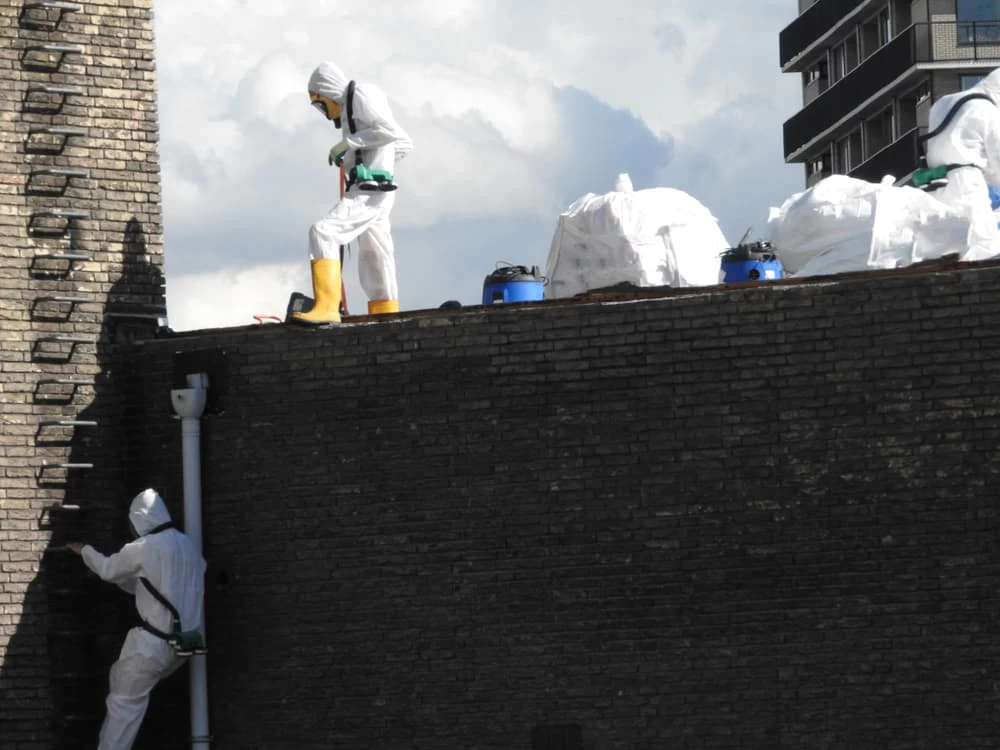
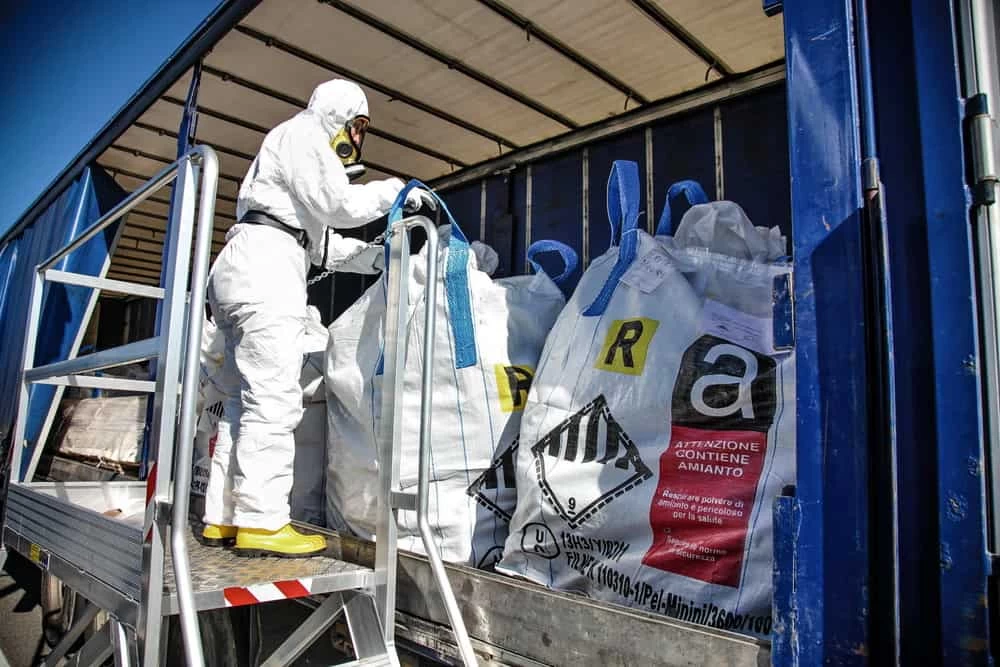
The removal itself is done under full containment. The work area is sealed, negative air pressure is maintained, and all materials are wetted before removal to prevent fiber release. After the work is complete, air monitoring confirms the space is clear. Everything is double-bagged and transported to a NYSDEC-approved disposal facility there’s a documented chain of custody from your home to the disposal site. You’ll have the paperwork to prove it.
The most common materials we remove in Orient-area homes are 9×9 vinyl asbestos floor tiles, pipe and boiler insulation, and popcorn ceiling texture. The floor tiles show up constantly in mid-century kitchens, bathrooms, and utility rooms they’re brittle, and any attempt to pry them up without proper containment releases fibers. The pipe insulation wraps around old boilers and heating systems in basements, and it’s often the first thing disturbed when someone upgrades an HVAC system. The popcorn ceilings are a pre-sale issue more often than anything else buyers from New York City and Connecticut who purchase North Fork second homes come with sharp inspectors, and a failed asbestos test at closing can derail a transaction fast.
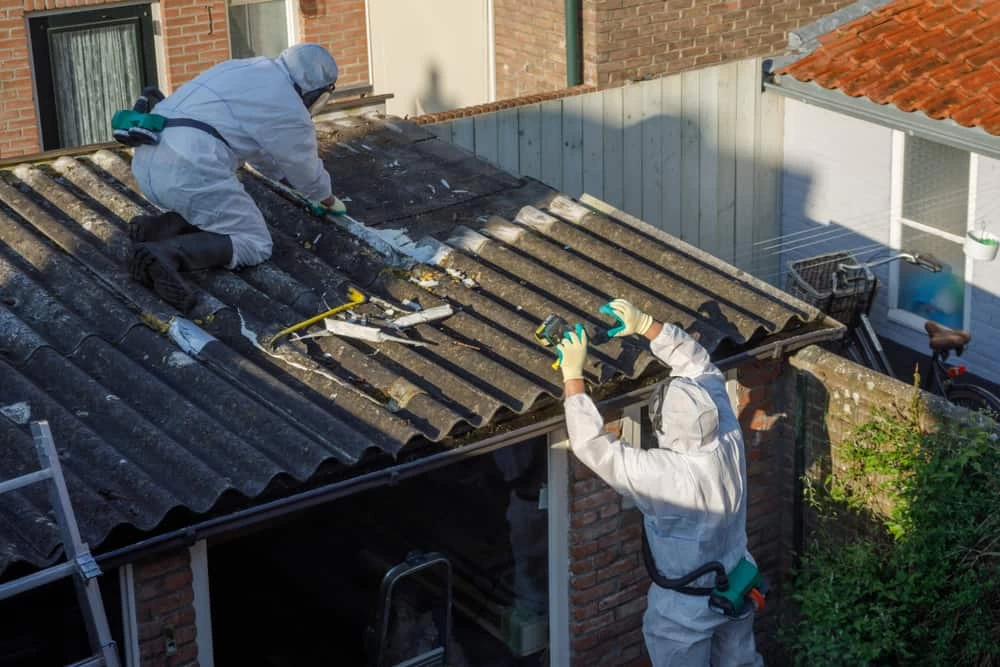
We also handle roofing materials, plaster compounds, and wall and ceiling tiles all of which appear in Orient’s older housing stock with regularity. If a property is in the Orient Historic District, we work with the additional care those structures require. Original finishes, period hardware, and architectural details that can’t be replaced get treated accordingly.
Asbestos removal, asbestos remediation, asbestos tile removal, asbestos popcorn ceiling removal whatever the material, the process is the same: licensed, contained, documented, and fully compliant with NYS DOL and NYSDEC requirements. You get the completion paperwork, the air monitoring results, and the disposal manifests. Everything you need for your permit, your closing, or your own records.
Does my Orient home actually need an asbestos inspection before renovation?
If your home was built before 1980, yes and in Orient, that covers the overwhelming majority of the housing stock. New York State Industrial Code Rule 56 requires that a NYS-certified asbestos investigator survey a property before any renovation, demolition, or repair work that may disturb building materials. This isn’t optional, and it’s not just a formality. It’s a legal requirement, and the Town of Southold’s building department will ask for documented asbestos compliance before issuing renovation permits.
The practical reason matters just as much as the legal one. Orient’s homes whether they’re Federal-style houses near Village Lane or 1960s ranch cottages closer to the water were built during decades when asbestos was used in floor tiles, pipe insulation, ceiling texture, roofing, and plaster compounds. You often can’t tell by looking. The only way to know what’s there is to test it. Skipping the inspection and discovering asbestos mid-renovation means stopping work, calling in a licensed contractor anyway, and dealing with a mess that’s far more expensive than the inspection would have been.
How long does asbestos abatement typically take for a North Fork home?
It depends on the scope, but most residential abatement jobs in the Orient area run anywhere from one day to a few days. A single room with asbestos floor tiles or a popcorn ceiling is usually a one-day job. A larger project multiple rooms, pipe insulation throughout a basement, or a combination of material types can take two to three days. Full-house surveys before major renovations or estate sales sometimes add a day on the front end.
What affects the timeline more than the size of the job is the notification requirement. Under NYS Industrial Code Rule 56, project notification must be filed with the NYS Department of Labor before work begins. That filing has a required waiting period depending on the project type, so the scheduling window needs to account for it. When you contact us, we walk through the scope, explain the notification timeline, and give you a realistic schedule not a rushed estimate that falls apart when the paperwork catches up. For Orient homeowners working around seasonal windows or real estate closing dates, getting that timeline right from the start matters.
What kinds of asbestos-containing materials are most common in Orient, NY homes?
The most frequent finds in Orient are 9×9 vinyl asbestos floor tiles, pipe and boiler insulation, and popcorn ceiling texture. The floor tiles are almost universal in mid-century homes kitchens, bathrooms, laundry rooms, and basements built between the late 1940s and the mid-1970s used them as standard. They look like ordinary vinyl tile, and many homeowners don’t know what they have until a contractor or inspector flags it.
Pipe insulation is the other big one. Older homes with original boilers or steam heating systems common in Orient’s pre-war and early post-war housing often have asbestos-wrapped pipes running through the basement and into the walls. It’s usually the first thing disturbed when someone replaces a boiler or upgrades the heating system. Popcorn ceilings applied before 1978 are the third common finding, and they come up frequently in pre-sale scenarios. Beyond those three, we also find asbestos in roofing shingles, exterior siding panels, and plaster compounds in older homes particularly in the historic district, where properties have sometimes gone through multiple renovation layers over the course of a century or more.
Can I sell my Orient home if asbestos is present, or does it need to be removed first?
You’re not automatically required to remove asbestos before selling but the reality of the Orient real estate market makes it a conversation worth having with your attorney and real estate agent. Buyers purchasing North Fork properties, especially those coming from New York City or Connecticut, tend to arrive with thorough home inspectors. When asbestos is identified during inspection, it almost always triggers a negotiation price reduction, credit, or a requirement to abate before closing. In a high-value, low-inventory market like Orient’s eastern tip, that negotiation can get complicated quickly.
The cleaner path for most sellers is to handle the abatement before listing. You control the contractor, the timeline, and the documentation. You can present buyers with completed air monitoring results and disposal manifests, which removes the issue from the inspection conversation entirely. If asbestos is found in a material that’s intact and not being disturbed encapsulated pipe insulation in an area that won’t be touched, for example your attorney may advise disclosure rather than removal. But anything that’s deteriorating, friable, or in a space that will be renovated should be addressed before the transaction moves forward.
Does coastal exposure or salt air in Orient affect asbestos risk in any way?
It doesn’t change what the asbestos is, but it does affect how quickly building materials deteriorate and deteriorating materials are where the risk increases. Orient sits on a narrow peninsula surrounded by Long Island Sound, Gardiners Bay, and Orient Harbor, with an average elevation of about 13 feet. Homes here are exposed to persistent salt air, high humidity, and storm-related moisture in ways that inland Suffolk County properties simply aren’t.
That coastal exposure accelerates the breakdown of roofing materials, siding, and insulation systems all common locations for asbestos-containing materials. When a nor’easter damages your roof or moisture works its way into a basement wall, it can disturb materials that have been safely encapsulated for decades. Friable asbestos material that’s crumbling or breaking apart releases fibers and becomes an active health hazard. This is why Orient homeowners dealing with storm damage or moisture remediation should have an asbestos assessment done before repair work begins, not after. The coastal environment makes that step more urgent here than in most other Long Island communities.
How much does asbestos abatement cost for a home in Orient or the surrounding area?
The honest answer is that it varies, and any contractor quoting you a firm number before seeing the property is guessing. That said, here’s what typical ranges look like for residential work in the Orient and North Fork area. A single-room asbestos tile removal a kitchen or bathroom floor, for example generally runs in the range of $1,500 to $3,000 depending on square footage and access. Popcorn ceiling removal for a standard room is in a similar range. Pipe insulation removal in a basement can run from $2,000 to $5,000 or more depending on how much linear footage is involved and how accessible the space is.
Larger projects full-house surveys before a major renovation, multi-room abatement, or combined material types scale accordingly. What you’re paying for isn’t just the labor. It’s the licensed crew, the containment setup, the NYS DOL project notification, the air monitoring, and the certified disposal with documented chain of custody. That last part matters in Orient specifically: if you’re selling a property or pulling a Southold Town building permit, you need that paperwork. A low-bid contractor who skips the documentation saves you nothing it just creates problems downstream when the attorney or building inspector asks for records that don’t exist.