Oyster Bay Cove Estates Deserve More Than a Guess and a Dumpster
Most homes in Oyster Bay Cove were built right in the middle of the asbestos era — and if yours is one of them, asbestos abatement isn’t something you want to hand off to just anyone with a license number.
I needed a professional consultation explanation of procedure for safe removal of Asbestos in my apartment complex. Without having an account yet, I was very impressed with the caring, knowledgeable and generous advice offered by Jessica, and will look forward to doing business in the future. Thank you so much! I feel much more informed about a sometimes scary endeavor. Peace. Nancy Silva Mineola, NY.
Mia Munoz
Used this company to clean up some water flood in my house. They were fast and easy to work with.very professional, Would recommend to anyone!
Nini Valle
Great company, had a flood and they responded quickly and efficiently. Billed my insurance company directly. I highly recommend this company!
joe colapietro, jr
I had pipe freeze in my basement right before a snow storm and they made to within an hour to help start the clean up process. They we by our side throughout the entire process and even helped with the insurance company. They did such a great job with the cleanup, repair, remidiation, I contracted them to perform the repairs and finishes in the basement. They came with enough manpower and material to get the job done. Leo and Jessica were nothing but a pleasure to deal with!!
Cristian Arredondo c
I had some water damage in my home and Green Island was able to take care of my issue quickly and effectively. I am very pleased with the work they did. They responded quickly and were very professional.
Michael M
Outstanding service! From the office to the field crew everyone was friendly, helpful and responsive. I highly recommend Green Island Group.
Your contractor can finally move forward. Your home inspector stops flagging the same concern. Your real estate attorney gets the documentation they need. That’s what proper asbestos removal actually unlocks — not just peace of mind, but real, tangible forward motion on whatever project brought you here in the first place.
In Oyster Bay Cove, the majority of homes were built between the 1950s and late 1970s — right when asbestos was standard in floor tiles, pipe insulation, ceiling textures, and joint compound. The median construction year here is 1975. That means most renovation projects on these properties will eventually cross paths with asbestos-containing materials.
The other thing worth knowing: at this price point in this market, documentation matters as much as the work itself. Buyers’ attorneys in Oyster Bay Cove are thorough. Title companies ask questions. A properly documented abatement — with air clearance reports, waste manifests, and a certificate of completion — protects your investment at closing and eliminates the kind of last-minute surprises that derail high-value transactions. When the work is done right, it stays done.
Nassau County Compliance Isn't Optional — We Know That
Green Island Group is a Nassau County-based asbestos abatement company that works exclusively on Long Island. We understand that asbestos work in Nassau County isn’t governed by just one set of rules — it requires compliance with both New York State Industrial Code Rule 56 and Nassau County’s own Environmental Hazard Remediation Program (EHRP/EHRT) licensing. Many contractors hold the state license and stop there. We hold both, and so do our technicians.
We’ve worked on estate-level homes across the North Shore — including properties in and around Oyster Bay Cove, Cove Neck, Upper Brookville, and Muttontown — and we understand what that kind of project actually requires. Large square footage, older construction, high expectations, and homeowners who aren’t looking for the cheapest option. They’re looking for the right one.
When you call 631-613-8945, you’re reaching our Long Island team directly — not a call center, not a national franchise. Someone who knows the Town of Oyster Bay’s Building Division, knows the EHRP requirements, and knows what it takes to get your project cleared and documented properly.
It starts with an inspection. Before anything is removed, a certified inspector identifies where asbestos-containing materials are located, whether they’re friable or stable, and what level of abatement is required. In a pre-1980 home in Oyster Bay Cove — especially one that’s been added onto or partially renovated over the decades — this step isn’t a formality. It’s where we figure out exactly what you’re dealing with.
From there, we handle the permit coordination. Any abatement work that precedes structural or mechanical renovation requires proper notification and, in many cases, coordination with the Town of Oyster Bay Building Division. We manage that process so you don’t have to track down the right department or figure out what filings apply to your specific project.
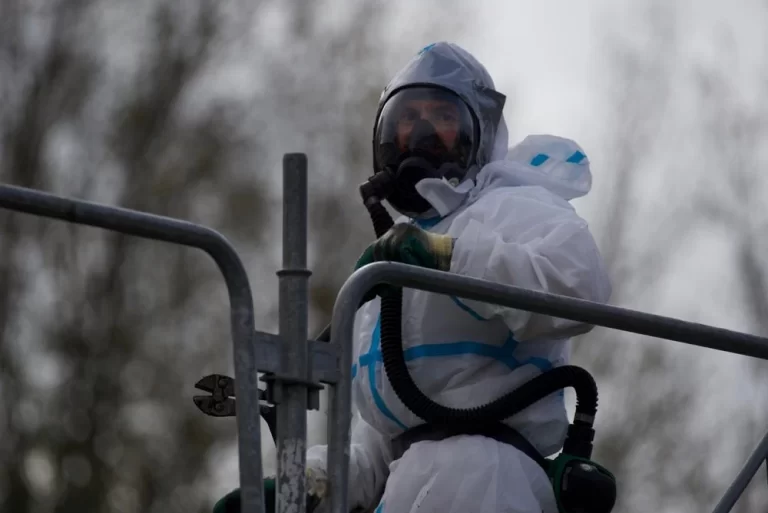
The removal itself is done under full containment — sealed work areas, negative air pressure, and HEPA filtration throughout. Air monitoring happens before, during, and after the job. When the work is complete, you receive a final air clearance report confirming the space is clean, along with all waste manifests and documentation your attorney or contractor will need. The goal isn’t just to remove the material — it’s to hand you a clean, documented, move-forward-ready result.
Every Material, Every Room — Handled to Nassau County Standard
The two most common asbestos-containing materials we encounter in Oyster Bay Cove homes are vinyl floor tiles and textured ceiling coatings. The 9×9 and 12×12 floor tiles installed in basements, kitchens, and utility rooms throughout the 1950s, 60s, and 70s almost universally contain asbestos. Popcorn ceilings — standard in homes built between the 1960s and early 1980s — frequently do too. We handle asbestos tile removal and asbestos popcorn ceiling removal under the same containment and air monitoring protocol.
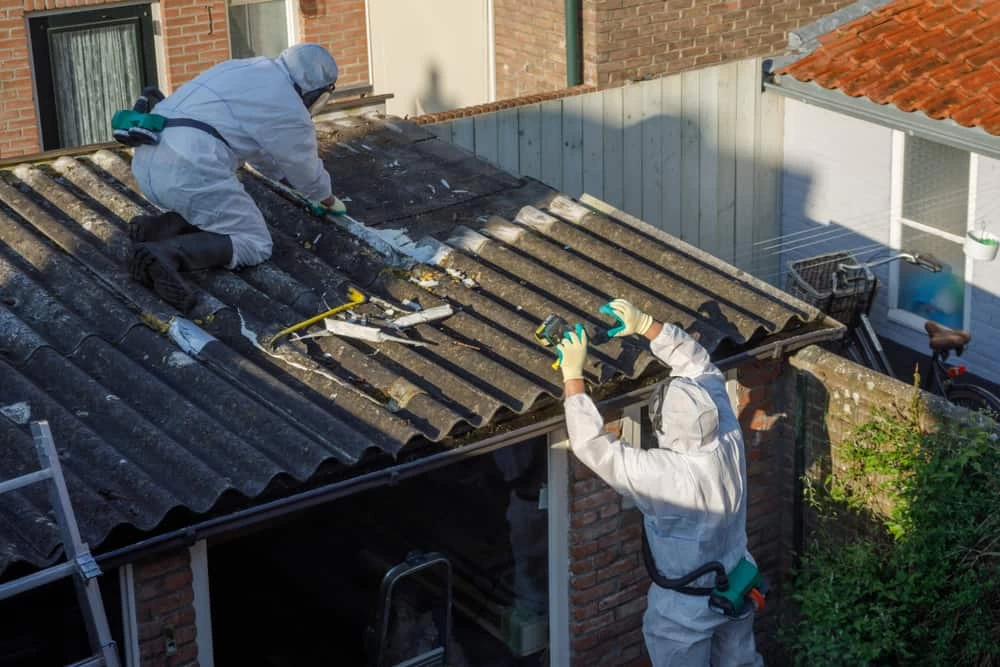
Beyond tiles and ceilings, we also handle pipe and duct insulation, joint compound, roofing materials, and exterior siding — all materials commonly found in the estate-scale homes that make up virtually all of Oyster Bay Cove’s housing stock. Every project includes the full scope: inspection, containment, removal, air clearance, and complete documentation.
Because Oyster Bay Cove sits within Nassau County, all work must comply with both NYS ICR 56 and the county-specific EHRP/EHRT licensing requirements. We don’t subcontract and we don’t cut corners on disposal — asbestos waste is transported to an approved facility under NYS DEC regulations, and your paperwork reflects every step of that chain. What you get at the end isn’t just a cleared space — it’s a documented record that holds up under scrutiny.
Does my Oyster Bay Cove home actually need asbestos testing before renovation work starts?
If your home was built before 1980, testing before renovation isn’t just a good idea — in most cases, it’s required. New York State Industrial Code Rule 56 mandates that suspect materials be tested before any work that could disturb them. In Oyster Bay Cove, where the median construction year is 1975, that applies to the overwhelming majority of homes in the village.
The practical reason matters too. Renovation contractors are required to stop work if they encounter suspect materials mid-project. That kind of delay — especially on a large-scale estate renovation — can cost more in contractor downtime than the abatement itself. Getting a pre-renovation inspection done before demolition begins keeps your project on schedule and keeps everyone on the right side of the law.
What's the difference between friable and non-friable asbestos, and does it matter for my project?
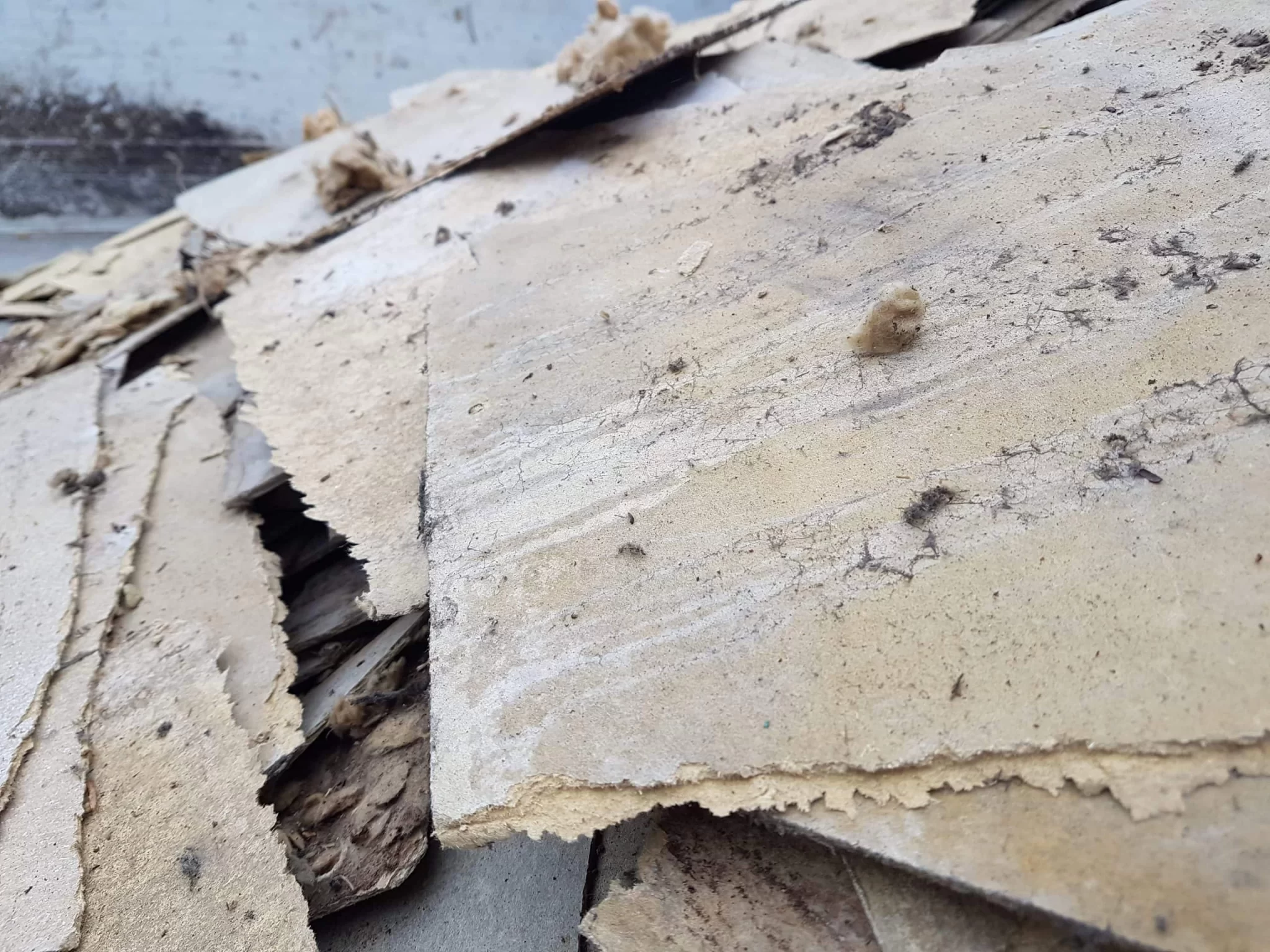
Friable asbestos means the material can be crumbled or reduced to powder by hand pressure — think deteriorating pipe insulation or damaged ceiling texture. Non-friable means it’s still bound in a solid matrix, like intact floor tiles or roofing shingles. The distinction matters because friable materials release fibers into the air much more easily, which changes the level of containment and air monitoring required during removal.
In practical terms, both types need to be handled by a licensed contractor — the difference is in the scope of precautions. A stable, intact 12×12 floor tile that’s being removed as part of a kitchen renovation is a different project than damaged pipe wrap in a basement mechanical room. When we inspect your Oyster Bay Cove property, we assess the condition of every suspect material and tell you exactly what category it falls into and what that means for your project timeline and cost.
What does Nassau County's EHRP license requirement mean for homeowners hiring an asbestos contractor?
Nassau County requires asbestos abatement contractors to hold an Environmental Hazard Remediation Professional (EHRP) license — and individual technicians to hold an EHRT certification — in addition to the standard New York State license under Industrial Code Rule 56. This is a Nassau County-specific requirement that goes beyond the state baseline, and not every contractor working on Long Island holds it.
For you as a homeowner, this matters for a few reasons. First, hiring an unlicensed contractor exposes you to liability if the work is ever audited or challenged — especially in a real estate transaction where documentation is scrutinized. Second, the EHRP requirement exists because Nassau County has its own enforcement infrastructure, and work performed without proper county credentials can be flagged during permit review or at closing. Before you hire anyone for asbestos abatement in Oyster Bay Cove, ask specifically for their EHRP contractor license number and verify it. It’s a simple check that protects you from a significant risk.
How long does asbestos abatement typically take for a home in Oyster Bay Cove?
Timeline depends on the scope of the project — what materials are involved, how many areas of the home are affected, and whether the work is part of a larger renovation sequence. A single-room floor tile removal in a basement might take one to two days. A multi-room project covering popcorn ceilings, floor tiles, and pipe insulation in a large North Shore estate could take several days to a week, plus time for final air clearance testing results to come back.
One factor that affects timing in Oyster Bay Cove specifically is permit coordination with the Town of Oyster Bay Building Division. If the abatement is connected to a larger renovation that requires a building permit, we factor that into the project schedule from the start. We also account for the air clearance process — results from post-abatement air sampling need to confirm the space is clean before containment comes down. We walk you through the realistic timeline during the inspection phase so you can plan your renovation schedule around it accurately.
Will asbestos abatement affect my home sale or closing in Oyster Bay Cove?
In the Oyster Bay Cove real estate market — where transactions routinely involve buyers’ attorneys, environmental inspectors, and title companies doing thorough due diligence — undocumented or improperly handled asbestos can absolutely affect a closing. Buyers at this price point have representation that asks detailed questions, and a home inspector’s notation of suspect materials without a corresponding abatement record is the kind of thing that creates delays, price renegotiations, or deal-killers.
The good news is that properly documented abatement actually strengthens a sale. When you can hand a buyer’s attorney a complete package — air clearance report, waste manifests, certificate of completion, and permit records — it removes the uncertainty entirely. Sellers in Oyster Bay Cove who handle abatement proactively, before listing, are in a much stronger position than those who try to negotiate it at the table. We provide the full documentation package with every project specifically because we know how transactions in this market work.
Is asbestos commonly found in the older homes along Berry Hill Road and Sandy Hill Road?
Yes — and it’s not unique to any one street. The homes throughout Oyster Bay Cove, including those along Berry Hill Road, Sandy Hill Road, Yellow Cote Road, and the other residential corridors in the village, were largely built during the same construction era: the 1950s through the late 1970s. During that period, asbestos was a standard building material across the industry — used in floor tiles, ceiling textures, pipe insulation, roofing, and joint compound. Its presence in homes of this age isn’t an anomaly. It’s the norm.
What varies from property to property is where the materials are located, whether they’ve been disturbed by previous renovations, and what condition they’re currently in. Homes that have had partial updates over the decades sometimes have a patchwork situation — some original materials still intact, others disturbed without proper remediation. That’s exactly why a thorough inspection matters more than assumptions. If you’re planning any renovation work on a pre-1980 property in Oyster Bay Cove, the right starting point is always a professional assessment before the first wall comes down.