If your Pacama home was built or renovated before 1980, there’s a real chance asbestos is somewhere inside it and we’re NYS DOL licensed to find it, remove it, and document it properly.
I needed a professional consultation explanation of procedure for safe removal of Asbestos in my apartment complex. Without having an account yet, I was very impressed with the caring, knowledgeable and generous advice offered by Jessica, and will look forward to doing business in the future. Thank you so much! I feel much more informed about a sometimes scary endeavor. Peace. Nancy Silva Mineola, NY.
Mia Munoz
Used this company to clean up some water flood in my house. They were fast and easy to work with.very professional, Would recommend to anyone!
Nini Valle
Great company, had a flood and they responded quickly and efficiently. Billed my insurance company directly. I highly recommend this company!
joe colapietro, jr
I had pipe freeze in my basement right before a snow storm and they made to within an hour to help start the clean up process. They we by our side throughout the entire process and even helped with the insurance company. They did such a great job with the cleanup, repair, remidiation, I contracted them to perform the repairs and finishes in the basement. They came with enough manpower and material to get the job done. Leo and Jessica were nothing but a pleasure to deal with!!
Cristian Arredondo c
I had some water damage in my home and Green Island was able to take care of my issue quickly and effectively. I am very pleased with the work they did. They responded quickly and were very professional.
Michael M
Outstanding service! From the office to the field crew everyone was friendly, helpful and responsive. I highly recommend Green Island Group.
Discovering asbestos mid-renovation is one of the most common ways Pacama homeowners end up on the phone with us. A contractor pulls up old floor tiles, spots black mastic underneath, and stops work on the spot. That’s not a worst-case scenario that’s actually the right call. What happens next is where it matters.
When the abatement is handled by our licensed team, you get more than just the material removed. You get air clearance documentation that confirms your home is safe, permit records that satisfy the Town of Marbletown’s requirements, and a 30-year project file that protects you in any future sale or liability situation. That paperwork isn’t just bureaucracy it’s proof the job was done right.
Homes in northern Marbletown sit on some of the oldest residential land in New York State. The area was settled in the 1600s, and the structures here have been modified layer by layer ever since each decade adding its own materials, many of which we now know are hazardous. Add in the Catskill climate, where hard freeze-thaw cycles crack and crumble old insulation and adhesives over time, and you’ve got a situation where disturbing those materials without a licensed team isn’t just risky it’s illegal under NYS Industrial Code Rule 56.
A lot of contractors in the Ulster County market use the phrase “OSHA certified” when they talk about asbestos work. That credential is real, but it’s not what New York State requires. The legal requirement for asbestos abatement here is a NYS Department of Labor Asbestos Handling License a separate, specific certification issued under Industrial Code Rule 56. We hold it. You can verify that before you ever pick up the phone.
Beyond the core license, we carry IICRC certification for water and fire damage, USEPA Lead and RRP credentials, and hold MBE, WBE, MWBE, and SBE designations through New York State. That’s not a list of marketing badges those are government-verified credentials that matter when you’re filing permits with the NYS DOL Albany District Office, which oversees all asbestos compliance for Ulster County projects.
We serve Pacama, Lapla, Stone Ridge, and the surrounding northern Marbletown area. If your home is near the Ashokan watershed corridor or anywhere along the Esopus Creek, we know the terrain, the housing stock, and the local permit process.
No Guesswork Here's What the Job Actually Looks Like
It starts with an inspection. Before any work begins, the materials in question are assessed visually and through sampling if needed to confirm whether asbestos is present and in what condition. Friable material (the kind that crumbles or flakes) is treated as a priority because it’s actively releasing fibers. In older Pacama homes, that often means pipe insulation in basements, floor tile adhesive, or ceiling texture applied during the 1960s and 70s.
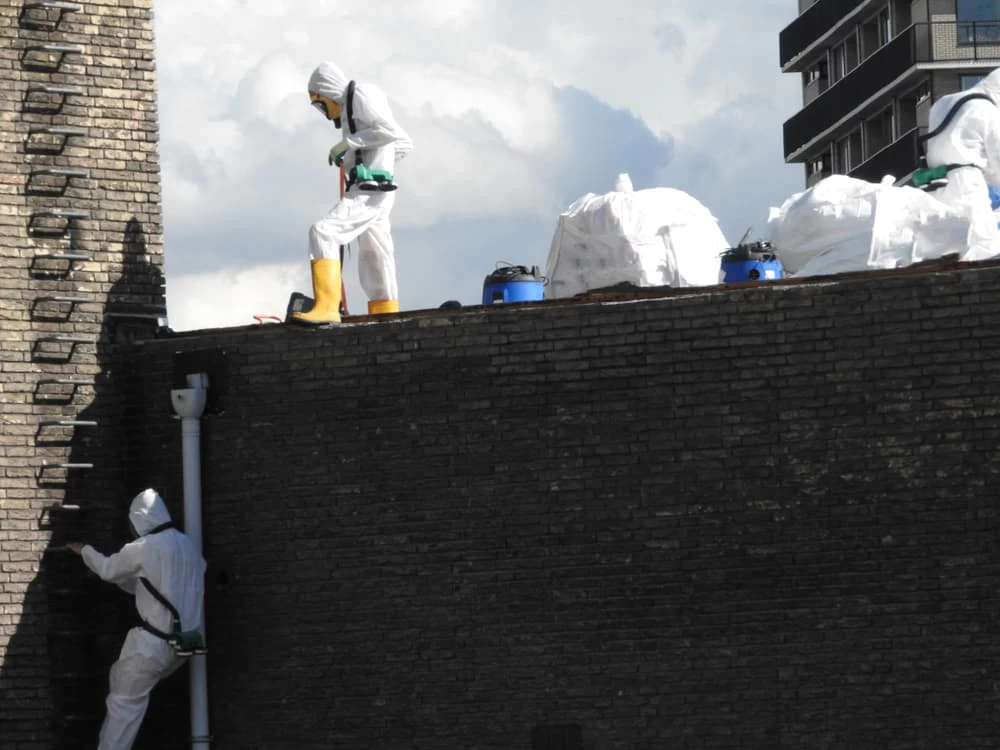
Once the scope is confirmed, we handle the NYS DOL notification and any required permits through the Town of Marbletown before a single piece of material is touched. Containment goes up, negative air pressure is established, and our licensed removal team works within a fully sealed environment. You don’t need to manage the regulatory side of this that’s handled.
After removal, post-abatement air monitoring is conducted by a third party to confirm fiber levels meet the legal clearance threshold. You receive written documentation of those results. That clearance certificate is what allows your general contractor to return to the job site and it’s what protects you if a buyer’s inspector or attorney ever asks about the work years down the road. For projects in the Esopus Creek corridor where flood damage is involved, we can coordinate water damage and mold remediation alongside the asbestos scope, so you’re not managing multiple contractors through the same disruption.
Every asbestos abatement project through us covers the full scope not just the removal itself. That means initial assessment, containment setup, licensed removal by NYS DOL certified workers, post-abatement air monitoring, written clearance documentation, proper waste disposal with manifests, and a complete project file maintained for the state-required 30 years. For Pacama homeowners, that last piece matters more than most people realize. Ulster County’s real estate market has gotten competitive, and buyers are asking harder questions about environmental disclosures than they were five years ago.
Common materials we handle in northern Marbletown homes include pipe and boiler insulation (especially in older stone farmhouses with steam heat systems), 9×9 and 12×12 floor tiles and their adhesive backing, popcorn acoustic ceilings from the 1970s, joint compound on older drywall additions, and vermiculite attic insulation. If you’re not sure what you’re looking at, that’s exactly what the inspection phase is for you don’t need to self-diagnose before calling.
For projects that involve more than asbestos a renovation that uncovered lead paint, a flood that triggered mold alongside disturbed insulation, or a full gut renovation of a pre-1960 structure we handle asbestos removal, mold remediation, water damage restoration, and lead abatement under one project. One call, one coordinator, one invoice. That matters when you’re already managing a renovation in a rural hamlet where contractor coordination isn’t always easy.
Does my Pacama home actually need a licensed contractor for asbestos removal?
Yes and this isn’t a gray area in New York State. Under NYS Industrial Code Rule 56, any disturbance of asbestos-containing materials covering 10 square feet or more, or 25 linear feet or more, requires a licensed abatement contractor. That means a contractor holding a NYS Department of Labor Asbestos Handling License not just a general contractor’s license, not just OSHA training, but that specific credential. Attempting to remove regulated quantities of asbestos without it exposes you to significant legal and financial liability, and it puts anyone in the space at risk.
For Pacama homeowners, this comes up most often during renovations. Your general contractor may be fully licensed for construction work but legally prohibited from touching asbestos-containing materials. The right sequence is: identify the material, bring in a licensed abatement contractor, get clearance documentation, then resume the renovation. We handle the abatement phase and coordinate directly with your GC so the project timeline stays as tight as possible.
How do I know if my old Marbletown farmhouse has asbestos before I start renovating?
The honest answer is: you don’t know until you test. Visual inspection alone can’t confirm asbestos the only way to know for certain is to have a sample analyzed by an accredited laboratory. That said, there are strong probability indicators based on the age and type of your home. If your Pacama property was built or substantially renovated before 1980, the following materials are high-probability: floor tiles (especially 9×9 inch vinyl tiles and their black adhesive), pipe and boiler insulation, popcorn or textured ceilings, older drywall joint compound, and vermiculite attic insulation.
In northern Marbletown, where the housing stock includes everything from 18th-century stone farmhouses to mid-century Catskill retreats, the odds are not in your favor if you assume these materials are clean. The smartest move before any renovation that will disturb walls, floors, ceilings, or mechanical systems is a pre-renovation asbestos inspection. It’s a small upfront cost relative to what a mid-project discovery does to your timeline and budget.
What happens if flood damage in my home disturbs asbestos-containing materials?
This is a real scenario for homes in the Esopus Creek watershed area, which includes parts of northern Marbletown near Pacama. When flood water penetrates walls, floors, and mechanical spaces, it can saturate and damage materials that were previously stable pipe insulation, floor tile adhesive, and wall systems that had been intact for decades. Once those materials are wet and disturbed, they can release asbestos fibers into the air, which is why standard water damage cleanup crews are not equipped to handle this situation on their own.
If you’ve had flood damage and there’s any chance asbestos-containing materials were affected, the area needs to be assessed by a licensed contractor before any cleanup or drying work proceeds. We handle exactly this scenario asbestos abatement coordinated alongside water damage restoration and mold remediation, so you’re not trying to sequence three separate contractors through the same damaged space. We work directly with insurance and handle the full scope under one project.
How long does asbestos abatement take, and can I stay in my home during the work?
The timeline depends on the scope a single room with floor tile removal might be completed in one to two days, while a larger project involving pipe insulation throughout a basement or multiple rooms can run several days to a week or more. The containment setup, removal, and post-abatement air monitoring all have to happen in sequence, and the air clearance testing can’t be rushed it has to confirm that fiber levels have dropped to the legal threshold before the containment comes down.
Whether you can stay in the home during the work depends on where the abatement is happening and how the containment is set up. In many cases, especially for isolated areas like a basement or single room, the rest of the home remains accessible. In larger or more complex projects, temporary relocation may be the safer choice. We walk through this with you during the assessment phase so you can plan accordingly there are no surprises about access or timing once the project scope is defined.
Do I need to pull a permit in Marbletown before asbestos abatement work begins?
There are two separate regulatory tracks that apply here, and both matter. The Town of Marbletown requires permits for structural and major interior changes to residential properties so if your asbestos abatement is part of a larger renovation project, that renovation likely requires a local permit. Separately, any asbestos abatement project that meets the threshold under NYS Industrial Code Rule 56 requires notification to the NYS DOL Albany District Office, which oversees asbestos compliance for Ulster County.
We manage both of these processes on your behalf. You don’t need to navigate the Town of Marbletown’s permit office and the state DOL notification system simultaneously while also managing a renovation. The regulatory coordination is built into how we run the project it’s not an add-on or something you have to chase down yourself. All required documentation is filed before work begins, and copies are included in your project file at completion.
What does asbestos abatement typically cost for a home in Pacama, NY?
Residential asbestos abatement in the New York area generally ranges from around $1,500 on the lower end for a contained, single-material removal up to $10,000 or more for larger scopes involving multiple materials or whole-room abatement. The specific cost for your Pacama home depends on the type and quantity of material, the accessibility of the space, and whether the project involves any emergency or flood-related conditions that affect the setup.
One thing worth knowing: pricing in this market has shifted upward in recent years, partly due to mandatory third-party air monitoring requirements that are now standard on regulated projects. If you received a quote more than a year ago, it may not reflect current costs. The more important frame, though, is what the alternative costs. A general contractor who discovers asbestos mid-project will stop work and the cost of that delay, plus emergency contractor coordination, typically far exceeds what a planned abatement would have run. Getting the inspection done before demolition starts is almost always the smarter financial move for Pacama homeowners working on older properties.