If your Palentown property was built before 1980, there’s a real chance asbestos is somewhere inside it and we have the NYS license to find it, remove it, and clear it safely.
I needed a professional consultation explanation of procedure for safe removal of Asbestos in my apartment complex. Without having an account yet, I was very impressed with the caring, knowledgeable and generous advice offered by Jessica, and will look forward to doing business in the future. Thank you so much! I feel much more informed about a sometimes scary endeavor. Peace. Nancy Silva Mineola, NY.
Mia Munoz
Used this company to clean up some water flood in my house. They were fast and easy to work with.very professional, Would recommend to anyone!
Nini Valle
Great company, had a flood and they responded quickly and efficiently. Billed my insurance company directly. I highly recommend this company!
joe colapietro, jr
I had pipe freeze in my basement right before a snow storm and they made to within an hour to help start the clean up process. They we by our side throughout the entire process and even helped with the insurance company. They did such a great job with the cleanup, repair, remidiation, I contracted them to perform the repairs and finishes in the basement. They came with enough manpower and material to get the job done. Leo and Jessica were nothing but a pleasure to deal with!!
Cristian Arredondo c
I had some water damage in my home and Green Island was able to take care of my issue quickly and effectively. I am very pleased with the work they did. They responded quickly and were very professional.
Michael M
Outstanding service! From the office to the field crew everyone was friendly, helpful and responsive. I highly recommend Green Island Group.
When asbestos gets disturbed during a renovation, after a burst pipe, or when old insulation finally starts to break down the risk isn’t just physical. It’s legal, financial, and logistical all at once. Getting it handled correctly the first time means you’re not dealing with failed inspections, delayed contractors, or liability questions down the road.
Palentown’s building stock is genuinely old. The hamlet grew around a tannery established in 1831, and many of the homes and structures in this part of the Town of Rochester were built or renovated during the decades when asbestos was standard in floor tiles, pipe insulation, ceiling texture, and joint compound. The Catskill Mountain climate makes things worse the freeze-thaw cycles, the moisture from Mettacahonts Creek, and years of deferred maintenance in seasonal properties all accelerate the breakdown of materials that might otherwise stay stable.
Once the work is done, you’ll have written post-abatement air clearance documentation that confirms the space is safe to re-enter and re-occupy. That documentation matters whether you’re bringing contractors back in to finish a renovation, preparing to list the property, or just wanting to know your home is clean. It’s a permanent record and in New York State, those project records are required to be kept for 30 years.
Licensed Asbestos Contractor Serving Palentown, NY
The License Is Real and It's the One That Matters
We hold the NYS Department of Labor Asbestos Handling License the specific credential required under Industrial Code Rule 56 to legally perform asbestos abatement in New York State. That’s not a general contractor’s license. It’s not a training certificate. It’s the license the state actually requires, enforced by the DOL’s Albany District Office, which covers all of Ulster County including Palentown.
Beyond the license, we’re certified MBE, WBE, MWBE, and SBE and hold IICRC certification for water and fire damage restoration. That combination matters in a place like Palentown, where an older home often has more than one problem going on at once. Asbestos in the basement, mold from a slow roof leak, water damage from a winter freeze we handle all of it under one roof, so you’re not trying to coordinate three different specialty contractors out to a hamlet off Samsonville Road.
We explicitly serve Palentown as part of our Ulster County service area. We come out here regularly. That’s not a given with every contractor.
It starts with an inspection by a NYS-certified asbestos inspector. Before any abatement work begins in New York State, a licensed inspector has to identify and document the materials in question. If you’re mid-renovation and work has already stopped, this step happens fast the goal is to assess what’s there and give you a clear picture of what you’re dealing with.
From there, we handle the NYS DOL project notification on your behalf. Under Industrial Code Rule 56, any disturbance of asbestos-containing material covering 10 square feet or more or 25 linear feet of pipe insulation requires a formal notification to the state before work begins. Most homeowners in Palentown have never dealt with this process before, and managing it while also coordinating a renovation in a remote part of Ulster County is genuinely overwhelming. We take that off your plate entirely.
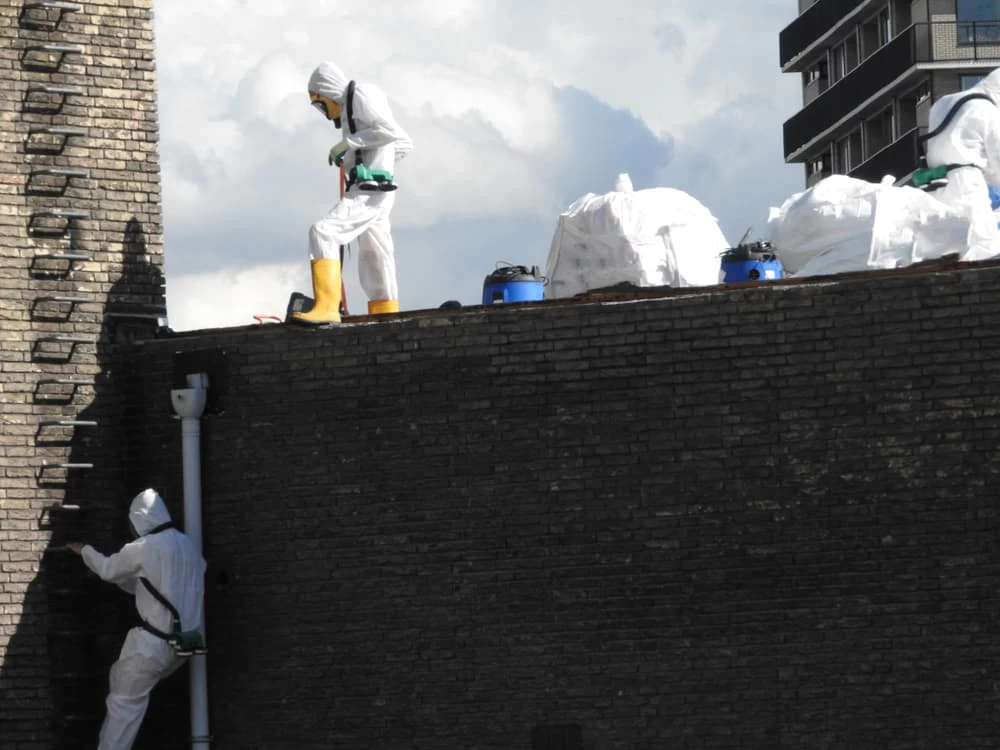
The abatement itself is performed under containment, with air monitoring running throughout. When the work is complete, post-abatement clearance testing confirms that fiber levels meet the state’s re-occupancy standards. You get the written documentation. The waste is disposed of at a licensed facility in compliance with NYS regulations. And if there’s mold, water damage, or anything else that surfaced during the process, that can be addressed in the same engagement no second round of scheduling, no second contractor to track down.
What's Actually Included When We Come to Your Property
Asbestos shows up in more places than most people expect in pre-1980 Catskill homes. The 9×9 floor tiles in the kitchen or bathroom and the black mastic adhesive underneath them are a common find. So is the insulation wrapped around boiler pipes in the basement, the popcorn ceiling texture in older bedrooms, the joint compound on walls, and the vermiculite that sometimes fills attic spaces. We handle asbestos tile removal, popcorn ceiling removal, pipe insulation abatement, and full-structure remediation depending on what the inspection turns up.
Every project includes the inspection, state notification, contained removal, air monitoring during abatement, post-abatement clearance testing, and proper licensed disposal. The clearance documentation you receive at the end isn’t a formality it’s what your contractor needs to come back in, what a buyer’s attorney will ask for during a sale, and what a vacation rental owner needs on file. For properties in and around Palentown that are used as short-term rentals, that documentation is especially important from a liability standpoint.
We also bill insurance directly, which matters when asbestos is discovered as part of a larger water damage or storm-related claim something that happens regularly in the Catskills after hard winters. If the scope of work expands beyond asbestos into mold remediation, water damage restoration, or structural work, we handle that as well. One call, one team, one project timeline even out here.
Does my older Palentown home actually have asbestos, or is that just a concern?
If your home was built or significantly renovated before 1980, the honest answer is: probably yes, somewhere. That doesn’t mean the whole house is a hazard it means there are specific materials that were commonly manufactured with asbestos during that era, and there’s a reasonable chance at least some of them are present. In Palentown and the broader Town of Rochester, the housing stock is genuinely old. The hamlet’s roots go back to the 1830s, and even homes built in the 1950s and 1960s like those associated with the resort era around the former Peg Leg Bates Country Club fall squarely in the high-probability range.
The materials to watch for are floor tiles (especially 9×9 inch tiles with black adhesive), pipe insulation in the basement, popcorn or textured ceilings, joint compound on walls, and vermiculite in attic spaces. None of these are automatically dangerous if they’re in good condition and left undisturbed. The risk comes when you start a renovation and disturb them. If you’re planning any work on a pre-1980 property in Palentown, the right move is to have a licensed inspector assess the materials before any demolition or removal begins.
What happens if I find asbestos in the middle of a renovation do I stop work?
Yes stop work in that area immediately and don’t disturb the material further. This is exactly the situation where calling a licensed contractor quickly matters most. Under NYS Industrial Code Rule 56, any disturbance of asbestos-containing material over 10 square feet requires licensed abatement with a state notification filed before work resumes. If your general contractor hit something suspicious during demolition, the clock is already ticking on your renovation timeline.
We handle emergency and mid-renovation asbestos discoveries regularly. The process moves as quickly as the state notification requirement allows the DOL notification has to be filed before abatement begins, but once that’s submitted, we can mobilize fast. For Palentown property owners who may be managing a renovation remotely, or who are working against a seasonal deadline before winter, the ability to get a licensed crew out to a rural hamlet off Samsonville Road without a multi-week wait is a real differentiator. The sooner you call, the sooner your renovation gets back on track.
How much does asbestos removal typically cost in the Palentown area?
Cost depends heavily on what’s there, where it is, and how much of it needs to be removed. A single contained area like pipe insulation around a basement boiler will run significantly less than a full-floor tile removal or a multi-room ceiling remediation. In New York, asbestos abatement projects typically range from around $1,500 on the lower end for small, contained jobs up to $10,000–$30,000 or more for larger whole-home or commercial projects. Costs in the state have also increased 8–12% in recent years, partly driven by mandatory post-abatement air monitoring requirements that are now standard under NYS law.
For Palentown specifically, the age and character of the local housing stock means that multi-location finds are not uncommon floor tiles, pipe insulation, and ceiling texture all in the same property. That affects total scope and cost. The best way to get an accurate number is through an inspection that documents exactly what’s present and where. We provide that assessment as part of the project process, so you know what you’re working with before any commitments are made on scope or price.
Do I need permits for asbestos removal in New York, and who handles that?
In New York State, asbestos abatement isn’t permitted through your local building department the way a deck or addition would be. Instead, it’s governed by the NYS Department of Labor under Industrial Code Rule 56, which requires a formal project notification filed with the DOL’s Asbestos Control Bureau before any licensed abatement work begins. For Ulster County including Palentown that’s handled through the Albany District Office.
The notification process requires documentation of the project scope, the licensed contractor’s credentials, and the planned abatement methodology. It’s not complicated if you’ve done it before, but for most homeowners it’s completely unfamiliar territory. We manage this entire process on your behalf. You don’t need to learn the regulatory framework or figure out which office to contact. The notification gets filed, the timeline gets set, and the work proceeds in compliance with state law. When it’s done, the clearance documentation and project records are yours to keep and under NYS law, those records need to be maintained for 30 years.
Can I stay in my home during asbestos abatement, or do I need to leave?
It depends on the scope and location of the work. For a contained removal in a single area like a basement boiler room or a closed-off section of the house it’s sometimes possible to remain in the property while work is ongoing in the contained zone. For larger projects involving multiple rooms, ceiling removal, or whole-floor tile abatement, temporary displacement is typically recommended to avoid any exposure risk during the active remediation phase.
This question matters more in Palentown than it might in a more urban setting, because temporary housing options in this part of Ulster County are limited. We’ll give you a straight answer about whether displacement is necessary for your specific project not a blanket policy that doesn’t account for your actual situation. The containment barriers, negative air pressure systems, and air monitoring used during abatement are specifically designed to isolate the work area from the rest of the structure. Post-abatement clearance testing then confirms that fiber levels throughout the property meet the state’s safe re-occupancy standards before anyone moves back into affected areas.
Is asbestos abatement required before selling a home in Palentown, NY?
New York State does not require sellers to remove asbestos before listing a property but it does require disclosure of known material defects, and asbestos that’s been identified falls into that category. In practice, what happens during a sale in the Catskills real estate market is that buyers who discover asbestos during an inspection often make abatement a condition of closing, either requiring the seller to complete removal before the transaction or adjusting the purchase price to account for it. Either way, the issue surfaces and has to be dealt with.
For Palentown properties specifically especially older homes, former vacation properties, or any structure that’s changed hands multiple times having a clean abatement record going into a sale is a meaningful advantage. It removes a negotiating point for buyers, satisfies inspection contingencies before they become deal-breakers, and gives the buyer’s attorney documentation that the work was done by a licensed contractor with proper state notification and post-abatement clearance testing. If you’re thinking about selling a pre-1980 property in the Kerhonkson ZIP code area and you haven’t had an asbestos inspection, that’s worth doing before you list not after a buyer’s inspector finds something first.