Peach Lake's Older Homes Deserve More Than a Guess
If your Peach Lake home started as a summer cottage and got renovated somewhere between the 1940s and 1970s, there’s a real chance asbestos is somewhere inside it. We handle licensed asbestos abatement in Peach Lake, NY from the first test to the final clearance report.
I needed a professional consultation explanation of procedure for safe removal of Asbestos in my apartment complex. Without having an account yet, I was very impressed with the caring, knowledgeable and generous advice offered by Jessica, and will look forward to doing business in the future. Thank you so much! I feel much more informed about a sometimes scary endeavor. Peace. Nancy Silva Mineola, NY.
Mia Munoz
Used this company to clean up some water flood in my house. They were fast and easy to work with.very professional, Would recommend to anyone!
Nini Valle
Great company, had a flood and they responded quickly and efficiently. Billed my insurance company directly. I highly recommend this company!
joe colapietro, jr
I had pipe freeze in my basement right before a snow storm and they made to within an hour to help start the clean up process. They we by our side throughout the entire process and even helped with the insurance company. They did such a great job with the cleanup, repair, remidiation, I contracted them to perform the repairs and finishes in the basement. They came with enough manpower and material to get the job done. Leo and Jessica were nothing but a pleasure to deal with!!
Cristian Arredondo c
I had some water damage in my home and Green Island was able to take care of my issue quickly and effectively. I am very pleased with the work they did. They responded quickly and were very professional.
Michael M
Outstanding service! From the office to the field crew everyone was friendly, helpful and responsive. I highly recommend Green Island Group.
Your Renovation Moves Forward. Your Family Stays Safe.
Most Peach Lake homeowners don’t go looking for asbestos. They find it mid-renovation after the contractor pulls up old flooring, cuts into a wall, or disturbs insulation that’s been sitting undisturbed since the Eisenhower administration. At that point, the project stops. And the clock starts.
What you actually need is someone who can come in, assess what you’re dealing with, handle the abatement legally and completely, and give you the documentation to prove it’s done. That’s what moves your renovation forward and keeps your home legally clear whether you’re updating a kitchen, finishing a basement, or preparing to sell.
Peach Lake’s housing stock is specific. The communities around the lake Vail’s Grove, Pietsch Gardens, Bloomerside, Starr Ridge Manor began as summer colonies around 1914 and were converted to year-round homes over the following decades. That conversion process, done mostly through the 1940s, 50s, and 60s, is exactly when asbestos use in construction materials was at its peak. Floor tiles, pipe insulation, roofing, joint compound, popcorn ceilings all of it was standard issue during those years. Add the fact that Peach Lake drains into the Croton Reservoir system, and proper disposal of hazardous materials here isn’t just a best practice. It’s something the community actively monitors.
We’ve been doing environmental remediation work across New York State for over 12 years. We hold the NYS DOL Asbestos Contractor License required by law under Industrial Code Rule 56 the credential that separates a legal abatement from a liability. We also carry USEPA Lead and RRP certifications, NYS DOL Mold licensing, IICRC Water and Fire Damage certification, and a NYC BIC Trade Waste License for proper hazardous material disposal. That last one matters in Peach Lake specifically, where drainage flows into the Croton Reservoir and disposal standards are taken seriously.
Our public-sector track record speaks for itself NYS Office of General Services, NYS Office of Mental Health, the Dormitory Authority of the State of New York, and county governments across New York have all put us on their contractor lists. Those agencies don’t hand out contracts without verifying credentials first. We’re also NYS and NYC M/WBE certified, a distinction no local competitor serving the Putnam County market currently holds. Our 4.7-star rating reflects what customers actually experience a company that shows up prepared, communicates clearly, and delivers the documentation you need when the job is done.
No Surprises. Here's Exactly What the Process Looks Like.
It starts with an inspection and material sampling. We identify suspect materials floor tiles, insulation, roofing, ceiling texture, joint compound and samples are sent to an accredited laboratory for analysis. If asbestos is confirmed, the next step is permit filing. In Peach Lake, depending on which side of the county line your property sits on, that may involve the Town of Southeast, the Town of North Salem, or both. We handle the permit process you don’t need to figure out which jurisdiction applies to your address.
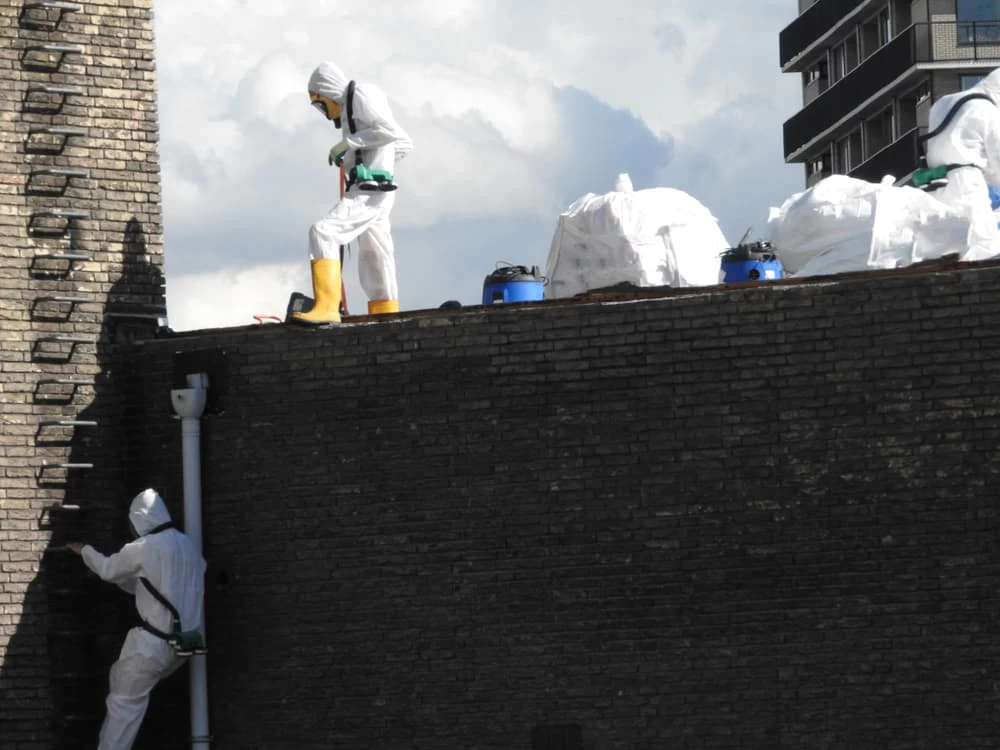
Once permits are in place, the work begins. The affected area is sealed off with negative air pressure containment, which keeps fibers from migrating into the rest of your home during removal. All materials are removed using wet methods as required under NYS Industrial Code Rule 56, bagged, labeled, and transported for proper disposal in compliance with NYC BIC waste handling protocols. For a community in the Croton watershed, that compliance isn’t optional.
After removal, an independent licensed air monitoring contractor a separate party from our abatement crew conducts post-abatement air clearance testing. This is the step that confirms the space is actually clean, not just visually clear. You receive the full documentation package: permits, lab results, clearance test results, and compliance records. For cooperative boards at Vail’s Grove or Pietsch Gardens, for homeowners preparing to sell, or for anyone who simply wants proof in writing, that paperwork is the deliverable that makes everything official.
What's Included Goes Well Beyond the Removal Itself
Asbestos abatement with us covers the full scope not just the physical removal, but everything that has to happen before and after it. That means inspection and sampling, permit management across Putnam and Westchester County jurisdictions, full containment setup, licensed wet-method removal, proper hazardous waste disposal, independent air clearance testing, and a complete compliance documentation package at the end.
The materials most commonly found in Peach Lake homes include vinyl asbestos tile (VAT) from mid-century renovations, pipe and boiler insulation in older mechanical systems, textured popcorn ceilings from the 1960s and 70s, and roofing materials on structures that predate the 1980 construction cutoff. Asbestos tile removal and asbestos popcorn ceiling removal are two of the most frequent jobs in this area, and both require the same level of licensed, documented abatement as any other material type regardless of how small the affected area looks.
For the cooperative communities around the lake, the scope often extends to common areas, shared mechanical rooms, and building infrastructure that individual shareholders don’t control but are still affected by. We work directly with cooperative boards and HOA management to scope the project correctly, document everything for the board’s records, and complete the work with minimal disruption to residents. One contractor. Full compliance. Documentation that holds up.
Does my Peach Lake home actually need asbestos testing before I renovate?
If your home was built before 1980 and in Peach Lake, a significant portion of the housing stock was built well before that then yes, testing before any renovation is not just advisable, it’s legally required under New York State law. Disturbing asbestos-containing materials without proper abatement is a violation of NYS Industrial Code Rule 56, and it can expose you, your contractor, and anyone in the home to airborne fibers.
The homes around Peach Lake have a specific history worth understanding. Many started as summer cottages around 1914 and were renovated and winterized through the 1940s, 50s, and 60s the exact decades when asbestos was standard in floor tiles, insulation, roofing, and wall materials. Even if your home looks updated on the surface, the materials underneath may not be. A licensed inspection before you break ground is the only way to know for sure, and it’s the step that keeps your renovation from turning into a legal and health emergency halfway through.
How much does asbestos removal typically cost for a home in Putnam County?
The range is wide because scope varies significantly. Nationally, asbestos removal averages around $2,239, with projects ranging from roughly $462 on the low end to $6,000 or more for larger or more complex jobs. In Putnam County, the factors that affect cost most are the type of material being removed, the square footage involved, how accessible the area is, and how many distinct material types are present in the same project.
For Peach Lake homes specifically, it’s common to encounter multiple asbestos-containing materials in the same structure floor tiles in one area, pipe insulation in the mechanical room, and ceiling texture in another space because these homes were renovated in layers over several decades. Each material type may require its own containment setup and disposal documentation. Getting a proper assessment upfront, rather than pricing it by guessing, is the only way to get an accurate number. We provide clear, itemized quotes so you know exactly what you’re paying for before any work begins.
What materials in older homes most commonly contain asbestos?
The most common sources in homes built or renovated between the 1940s and late 1970s are vinyl floor tiles and the adhesive used to install them, pipe and boiler insulation, textured ceiling finishes (popcorn ceilings), roofing shingles and felt underlayment, joint compound used in drywall finishing, and exterior siding products like transite panels. In Peach Lake’s housing stock where conversion from seasonal to year-round use drove significant renovation activity during those decades it’s not unusual to find several of these materials in the same home.
The tricky part is that asbestos-containing materials don’t look different from non-asbestos versions. You can’t identify them visually. A floor tile from 1962 looks like a floor tile. Pipe insulation from 1955 looks like pipe insulation. The only way to confirm whether a material contains asbestos is laboratory analysis of a physical sample, conducted by a licensed inspector. If you’re planning any work that will disturb these materials demolition, renovation, or even a significant repair testing first is the only responsible path.
Can a cooperative board in Peach Lake be held liable for undisclosed asbestos in common areas?
Yes, and it’s a real exposure. Cooperative boards have a duty to maintain safe conditions in common areas, and if asbestos-containing materials in those areas are disturbed during maintenance, renovation, or infrastructure work without proper abatement, the board can face regulatory penalties, legal liability, and insurance complications. Three of Peach Lake’s five lakeside communities are organized as cooperatives: Vail’s Grove, Pietsch Gardens, and Bloomerside. Each of those communities has shared structures, mechanical systems, and common spaces that fall under the board’s responsibility.
The documentation requirement for cooperative abatement projects is more rigorous than for a standard single-family job. Boards need permit records, post-abatement air clearance results, and compliance documentation that can be filed with the cooperative’s records and presented to insurers, lenders, or future buyers of individual units. We provide the complete documentation package specifically because cooperative and HOA clients need more than just the physical work they need the paperwork that makes it legally defensible.
Does asbestos abatement near Peach Lake require special permits or watershed compliance?
It does, and the permit pathway in Peach Lake is more layered than in most Putnam County communities. Because the Peach Lake CDP straddles the Putnam/Westchester county line, properties on the eastern shore may fall under the Town of North Salem in Westchester County, while properties on the western side fall under the Town of Southeast in Putnam County. The applicable building permit jurisdiction depends on your specific address, and both counties have their own processes in addition to the NYS DOL requirements that apply statewide.
Beyond the county-level permits, Peach Lake’s drainage flows into the Croton Reservoir system the drinking water supply for Westchester County and New York City. The NYC Department of Environmental Protection actively monitors activity in this watershed, and hazardous material disposal in the area is subject to stricter scrutiny than in communities outside the watershed boundary. We hold the NYC BIC Trade Waste License required for proper asbestos waste disposal and have direct experience navigating NYC DEP permit processes. That experience applies directly here you’re not working with a contractor who’s figuring out the watershed rules for the first time on your job.
How long does a typical asbestos abatement job take from start to finish?
For most residential projects, the full timeline from initial inspection to final clearance documentation runs between one and three weeks, depending on scope. The inspection and lab analysis typically takes a few days. Permit filing adds time in Peach Lake, the dual-county jurisdiction can add a step or two depending on your property’s location relative to the county line. The physical removal itself, for a contained residential project like floor tile or ceiling texture in a defined area, often takes one to two days. Post-abatement air clearance testing happens after removal is complete and containment is still in place, and results are typically available within 24 to 48 hours.
Where timelines stretch is when multiple material types are involved, when permits require additional review, or when the scope expands during the inspection phase which happens more often in older Peach Lake homes that were renovated in multiple phases over several decades. The honest answer is that the timeline is driven by the scope of the job and the permit process, not by how fast a contractor works. We walk you through a realistic timeline before any work starts so you can plan your renovation schedule around it, not the other way around.