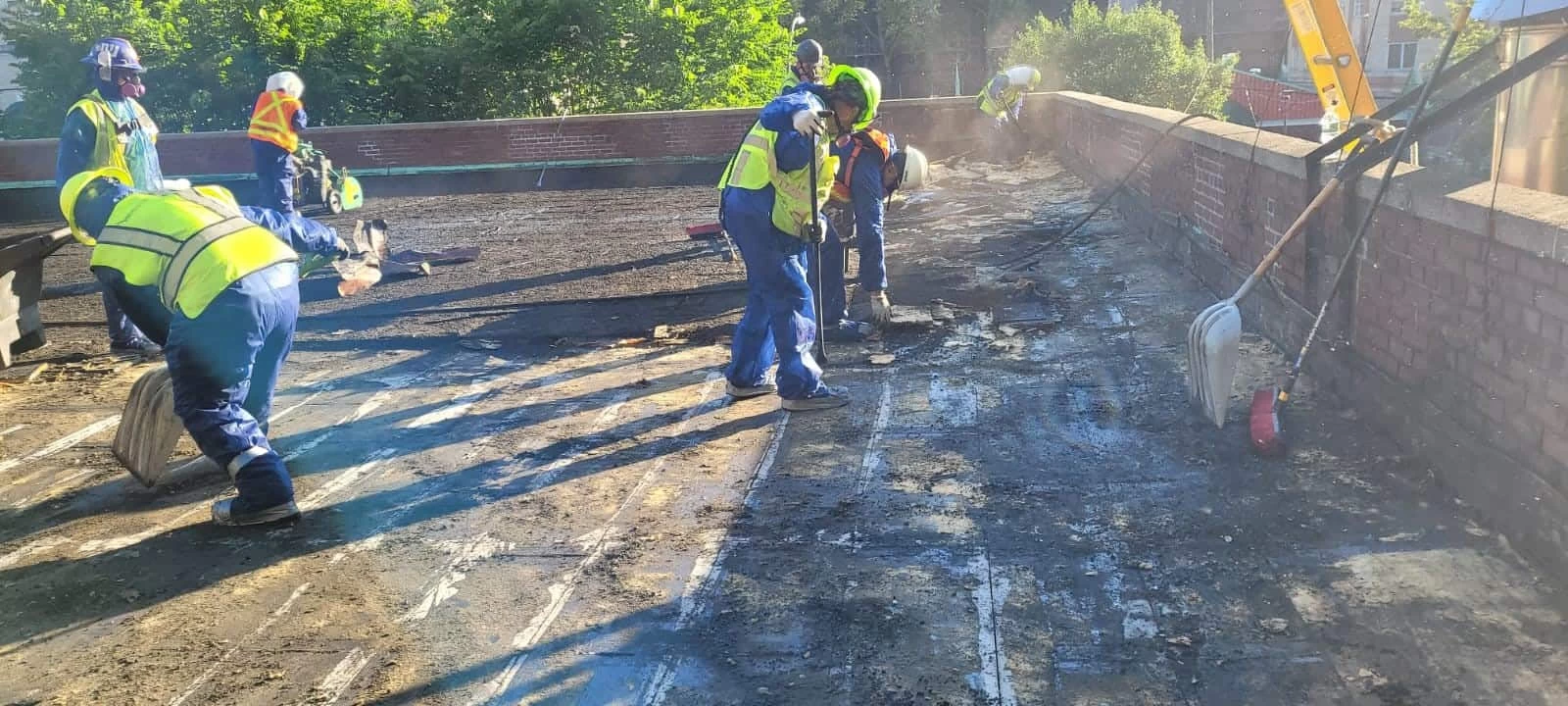
If your Peck Slip loft or converted warehouse unit needs renovation or just took on water there’s a real chance asbestos is part of the equation. We handle the removal, the paperwork, and the clearance testing so you can move forward without the guesswork.
I needed a professional consultation explanation of procedure for safe removal of Asbestos in my apartment complex. Without having an account yet, I was very impressed with the caring, knowledgeable and generous advice offered by Jessica, and will look forward to doing business in the future. Thank you so much! I feel much more informed about a sometimes scary endeavor. Peace. Nancy Silva Mineola, NY.
Mia Munoz
Used this company to clean up some water flood in my house. They were fast and easy to work with.very professional, Would recommend to anyone!
Nini Valle
Great company, had a flood and they responded quickly and efficiently. Billed my insurance company directly. I highly recommend this company!
joe colapietro, jr
I had pipe freeze in my basement right before a snow storm and they made to within an hour to help start the clean up process. They we by our side throughout the entire process and even helped with the insurance company. They did such a great job with the cleanup, repair, remidiation, I contracted them to perform the repairs and finishes in the basement. They came with enough manpower and material to get the job done. Leo and Jessica were nothing but a pleasure to deal with!!
Cristian Arredondo c
I had some water damage in my home and Green Island was able to take care of my issue quickly and effectively. I am very pleased with the work they did. They responded quickly and were very professional.
Michael M
Outstanding service! From the office to the field crew everyone was friendly, helpful and responsive. I highly recommend Green Island Group.
You stop guessing. That’s the first thing. When you’re living in a Peck Slip building that went up in the 1800s converted from a fish market or shipping warehouse into the loft you call home you don’t always know what’s inside the walls, under the floors, or wrapped around those old steam pipes in the basement. What you do know is that you can’t renovate, sell, or feel fully settled until you do.
Peck Slip’s building stock is genuinely old. The kind of old where original pine timbers are still holding up ceilings and period brick is still doing the work it was meant to do 150 years ago. That age is part of the appeal. It’s also why asbestos-containing materials turn up in places people don’t expect floor tiles from a mid-century update, pipe insulation from a 1960s mechanical overhaul, spray-applied ceiling texture from a renovation that happened before anyone was asking questions about what was in it.
And because Peck Slip sits steps from the East River, flooding is not a hypothetical. Superstorm Sandy put two to three feet of water in this neighborhood. When water gets into a building with asbestos-containing materials, it doesn’t just stay in the walls it can disturb those materials and turn a water damage situation into an asbestos exposure situation fast. Getting both handled by one team, under one roof, is the outcome that actually makes sense here.
We’re a full-service environmental remediation company serving all five boroughs, with deep roots in Lower Manhattan neighborhoods like Peck Slip. We handle asbestos abatement, water damage restoration, mold remediation, demolition, and more. That range matters when you’re dealing with a 19th-century building in the South Street Seaport area where problems rarely come one at a time.
Every job we perform is executed by certified professionals operating under NYC DEP, NYS Department of Labor, EPA, and OSHA requirements. That means proper notification filings, licensed abatement, independent air monitoring, and post-clearance testing the full compliance stack that New York City requires and that protects you from liability down the line.
We’re available 24 hours a day, every day of the year. In a waterfront neighborhood like Peck Slip where a pipe burst or a storm surge can create an asbestos emergency at 2 a.m. on a Saturday in January, that availability isn’t a marketing line. It’s just how this works.
It starts with an assessment. A certified asbestos investigator comes to your property, evaluates the materials in question, and collects samples for laboratory testing. In Peck Slip, that often means looking at more than one type of material floor tiles, pipe insulation, plaster, ceiling texture because buildings with this much history tend to have layered renovation histories too. You’ll get a clear picture of what’s there and what needs to happen next.
If abatement is required, the NYC DEP notification goes in at least seven days before work begins that’s a legal requirement, not a formality, and we handle the filing. The work area gets sealed and contained, negative air pressure is established, and our certified technicians remove the asbestos-containing materials following full NYC DEP and EPA protocol. Nothing gets skipped to save time.
After removal, independent air monitoring confirms that fiber levels meet safe reoccupancy standards. You get the clearance documentation you need whether that’s for a DOB permit, a co-op board, a real estate transaction, or just your own peace of mind. For buildings in the South Street Seaport Historic District near Peck Slip, where renovation work also triggers Landmarks Preservation Commission review, we can walk you through how the abatement timeline fits within the broader permit process.
Asbestos shows up differently depending on when a building was renovated and what it was originally built for. In Peck Slip’s converted warehouse and loft buildings, the most common materials include pipe and duct insulation from industrial-era mechanical systems, 9×9 floor tiles installed during mid-century updates, spray-applied popcorn ceiling texture from 1960s and 70s renovations, joint compound in drywall, and original plaster in pre-1900 structures. Our certified team is trained to identify, test, and safely remove all of them.
Asbestos tile removal and asbestos popcorn ceiling removal are two of the most frequent requests in this neighborhood especially from property owners in the middle of a kitchen or bathroom renovation who hit a wall when a contractor flags suspicious material. The work gets paused, the permit clock is ticking, and suddenly you need a licensed abatement contractor who can move quickly and file the right paperwork without you having to manage every step. That’s what we do.
For flood-related asbestos abatement which comes up regularly in a neighborhood this close to the East River we handle water damage restoration and asbestos remediation together. One team, one project, one point of contact. If your insurance carrier is involved, we bill them directly and handle the documentation. You focus on getting back into your home.
Do I need an asbestos survey before renovating my Peck Slip loft?
Yes and it’s not optional. New York City law requires an asbestos survey before any renovation, alteration, or demolition work begins in a pre-1980 building. In Peck Slip, where virtually every residential building predates 1980 by decades and many predate 1900, this applies to nearly every renovation project. Before your contractor can pull a Department of Buildings permit, an ACP-5 Asbestos Assessment Report needs to be on file.
The survey has to be conducted by a NYC DEP-certified asbestos investigator. If asbestos-containing materials are found in the areas affected by your renovation, abatement must be completed by a licensed contractor before the work can proceed. Skipping this step doesn’t just create a health risk it creates real legal and financial liability. We handle both the survey and the abatement, so you’re not coordinating two separate contractors while your renovation sits on hold.
How long does asbestos abatement take in a Manhattan apartment?
For a single room or contained area a bathroom floor, a section of pipe insulation, a popcorn ceiling in one bedroom abatement typically takes one to three days once the NYC DEP notification period clears. That notification has to go in at least seven days before work begins, so the realistic timeline from initial assessment to completion is usually two to three weeks when you account for testing, filing, and scheduling.
Larger or more complex projects full gut renovations in a Peck Slip loft with multiple material types, or abatement following water damage that affected several areas take longer and depend on the scope of what was found. The assessment gives you a clear picture upfront so there are no surprises mid-project. Post-abatement air clearance testing adds a day at the end, but it’s the step that confirms the space is actually safe to return to and gives you the documentation your contractor, co-op board, or buyer needs to move forward.
Can I stay in my apartment while asbestos removal is happening?
In most cases, no at least not in the immediate area where work is being done. The abatement zone is sealed under negative air pressure and contained to prevent fiber migration into other parts of the building. If the work is isolated to one room and the rest of your unit is fully separated, it may be possible to remain in other areas, but that’s assessed on a job-by-job basis.
For most Peck Slip loft owners dealing with full-floor units or open-plan spaces, temporary relocation during abatement is the practical reality. The timeline is usually short enough one to three days for most contained projects that it’s manageable. If your abatement is tied to a flood or water damage event and your unit is already uninhabitable, we can coordinate the water mitigation and asbestos removal simultaneously so you’re not adding extra time to an already disrupted situation.
Does flood damage trigger asbestos removal requirements in older Peck Slip buildings?
It can, and it’s more common in this neighborhood than people expect. When water intrudes into a building that contains asbestos-containing materials pipe insulation, floor tiles, original plaster it can physically disturb those materials and release fibers into the air. At that point, you’re not just dealing with water damage. You have an asbestos exposure situation that requires licensed remediation before the space can be safely occupied or repaired.
Peck Slip’s location steps from the East River makes this a real and recurring risk. Superstorm Sandy put two to three feet of water through ground-floor units in this part of Lower Manhattan. Pipe bursts in aging converted warehouse buildings are a regular winter event. Any time water damage occurs in a pre-1980 structure in Peck Slip, an asbestos assessment should be part of the initial response not an afterthought after the drywall is already torn out. We handle both the water mitigation and the asbestos remediation together, which is the only way to address the full problem without doubling your timeline and your coordination burden.
What does asbestos abatement cost in Lower Manhattan?
For a single-room residential project in Manhattan one bathroom, a section of pipe insulation, or a popcorn ceiling in a bedroom you’re typically looking at $2,200 to $6,500 all-in. Larger scope projects involving multiple material types, full loft abatement, or flood-related remediation across several areas can run $10,000 to $30,000 or more depending on what’s found and how much needs to come out.
Manhattan pricing runs higher than national averages for a few reasons: labor costs, the NYC DEP compliance requirements that add real time and process to every job, and the complexity of working in dense urban buildings where logistics matter. Pricing in the NYC market also increased 8 to 12 percent in 2025 and 2026 following updated NYS Department of Labor licensing requirements and higher disposal fees. The best way to get an accurate number for your specific situation is a professional assessment the scope of what’s actually there is what drives the cost, and you won’t know that until the materials are tested.
How do I know if my Peck Slip building is likely to have asbestos?
Age is the biggest indicator. Asbestos was used widely in building materials from the late 1800s through the late 1980s which means any building constructed or significantly renovated before 1980 should be professionally assessed before any work disturbs the materials. In Peck Slip, that covers nearly every residential building in the neighborhood. The converted warehouses along Water Street and Front Street, the landmarked rowhouses on the cobblestoned blocks near Beekman Street, the loft buildings at addresses like 25 and 40 Peck Slip these are all structures with layered renovation histories spanning multiple eras when asbestos was standard.
The materials most commonly found in buildings like these include steam pipe insulation, 9×9 floor tiles from mid-century updates, spray-applied ceiling texture, and joint compound in drywall installed before the mid-1980s. You won’t know for certain what’s there without testing visual inspection alone isn’t enough and isn’t legally sufficient for NYC DEP purposes. If you’re buying, selling, renovating, or dealing with any kind of damage in a Peck Slip building, a certified asbestos assessment is the right first step.