If you’re renovating a cabin off Peekamoose Road and something doesn’t look right under the floors or behind the walls, trust that instinct. We’re licensed for asbestos abatement in Peekamoose, NY and yes, we make the drive.
I needed a professional consultation explanation of procedure for safe removal of Asbestos in my apartment complex. Without having an account yet, I was very impressed with the caring, knowledgeable and generous advice offered by Jessica, and will look forward to doing business in the future. Thank you so much! I feel much more informed about a sometimes scary endeavor. Peace. Nancy Silva Mineola, NY.
Mia Munoz
Used this company to clean up some water flood in my house. They were fast and easy to work with.very professional, Would recommend to anyone!
Nini Valle
Great company, had a flood and they responded quickly and efficiently. Billed my insurance company directly. I highly recommend this company!
joe colapietro, jr
I had pipe freeze in my basement right before a snow storm and they made to within an hour to help start the clean up process. They we by our side throughout the entire process and even helped with the insurance company. They did such a great job with the cleanup, repair, remidiation, I contracted them to perform the repairs and finishes in the basement. They came with enough manpower and material to get the job done. Leo and Jessica were nothing but a pleasure to deal with!!
Cristian Arredondo c
I had some water damage in my home and Green Island was able to take care of my issue quickly and effectively. I am very pleased with the work they did. They responded quickly and were very professional.
Michael M
Outstanding service! From the office to the field crew everyone was friendly, helpful and responsive. I highly recommend Green Island Group.
You stop guessing. That’s the biggest shift. When you’re dealing with an older cabin in the Peekamoose Valley something built in the 1950s or ’60s, maybe used as a hunting camp for decades before you bought it the question isn’t really “is there asbestos?” It’s “where is it, and how much?” Once we properly remove it and clear the space, you move forward on your renovation without that weight hanging over the project.
For properties in Peekamoose specifically, the concern goes beyond just the building itself. The Rondout Creek runs right through this valley and feeds into the Rondout Reservoir part of the drinking water supply for over 9 million New Yorkers. Proper asbestos removal here isn’t just about your family’s health. It means licensed disposal, full waste manifesting, and zero shortcuts near that watershed. That’s not optional. That’s the standard we maintain.
The winters up here are hard on older structures. Freeze-thaw cycles crack pipe insulation that was once stable and locked in place. What wasn’t airborne last year might be this spring. After a proper abatement, you get written air clearance results not a verbal “looks good” so you know the space is clean before anyone sleeps there.
We hold a NYS Department of Labor Asbestos Handling License the specific credential required under New York State Industrial Code Rule 56 for any contractor legally performing asbestos work in this state. Not a general contractor license. Not a business registration. The actual license. You can verify it through the NYS DOL Asbestos Contractors Listing, and we’d encourage you to do exactly that before hiring anyone for this kind of work.
Beyond asbestos, our team is certified in mold remediation, lead abatement, water damage restoration, and more. That matters out here in Peekamoose because older cabins in the Town of Denning rarely have just one problem. If there’s asbestos-wrapped pipe insulation in the crawlspace, there’s a reasonable chance there’s mold nearby too. We can assess and handle both one call, one crew, one project.
We serve Ulster County including the Peekamoose Valley, and we make the trip out County Route 42 when the work needs doing.
It starts with an inspection. A licensed asbestos investigator comes to your property and identifies any suspected asbestos-containing materials floor tiles and mastic, pipe insulation, popcorn ceilings, roofing, boiler wrap, drywall joint compound. Older cabins in the Peekamoose area often have several of these at once, especially if the structure dates from the 1950s through the 1970s. Samples are collected and sent to an accredited lab. You get real results, not assumptions.
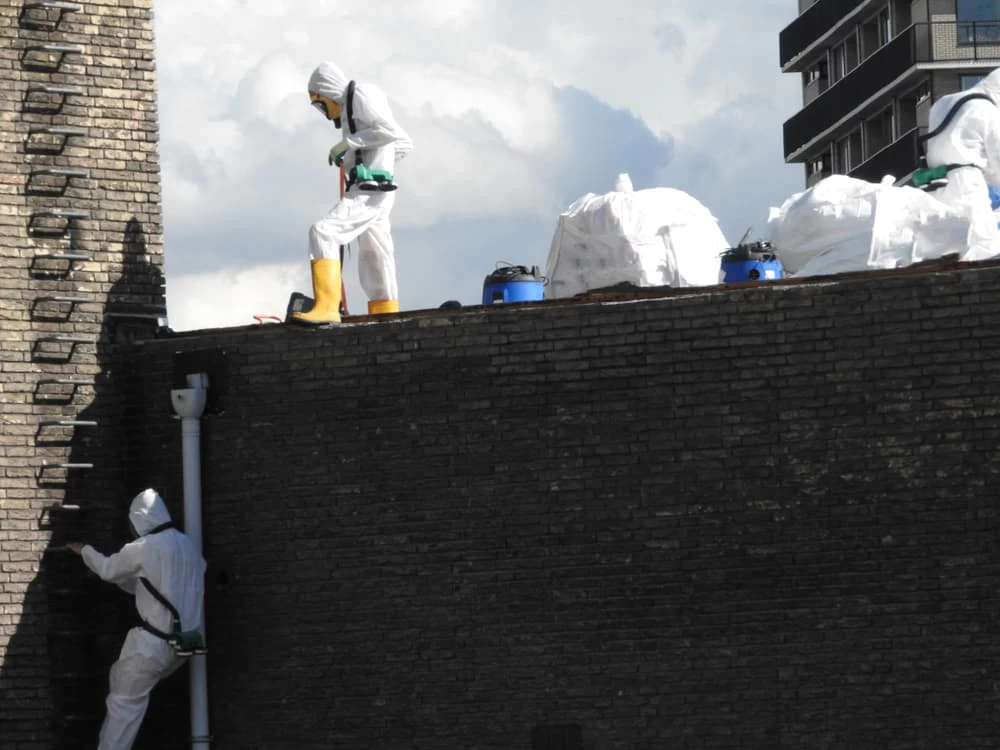
If asbestos is confirmed, we handle the project notification to the NYS DOL Asbestos Control Bureau before any work begins that’s a legal requirement under state law, and it’s on us to manage it, not you. The abatement itself is performed under strict containment: negative air pressure, HEPA filtration, full personal protective equipment for the crew, and sealed work zones so fibers don’t migrate into other areas of the structure. All waste is properly manifested and transported to a licensed disposal facility which, given that this property sits within the NYC drinking water watershed, is non-negotiable.
When the removal is complete, post-abatement air clearance monitoring is conducted by an independent party. You receive the results in writing. That documentation stays with the property and matters for resale, insurance, and your own peace of mind.
Asbestos abatement in a Catskills cabin is not the same job as a suburban gut renovation. The structures out here are older, more remote, often unoccupied for long stretches, and frequently present multiple hazardous materials at once. Our approach accounts for all of that.
Every project starts with a licensed inspection and lab-confirmed testing. From there, the scope is defined clearly whether that’s asbestos tile removal from a single room, pipe insulation removal from a crawlspace or basement, popcorn ceiling removal from a living area, or a full multi-material abatement across the whole structure. You know what’s being done and why before work begins. There are no surprise scope expansions mid-project.
Because most properties in the Peekamoose area rely on private wells and septic systems no municipal water or sewer out here we handle containment and disposal protocols with that in mind. Our crew also coordinates directly with your general contractor if you’re mid-renovation, so the abatement fits into your timeline rather than blowing it up. And if your insurance carrier is involved, we can work with them directly on documentation and billing. The goal is fewer moving parts for you, not more.
Does my Peekamoose cabin actually need asbestos testing before renovation?
If the structure was built before 1980, the honest answer is yes you should test before you demo anything. Asbestos was used in a wide range of residential building materials throughout the mid-twentieth century: vinyl floor tiles and the black mastic adhesive underneath them, pipe and boiler insulation, textured ceiling coatings, roofing shingles, and drywall joint compound. Many Catskills cabins and hunting camps in the Peekamoose Valley and surrounding Town of Denning were built squarely in that era.
The risk isn’t just exposure during the work itself. Under New York State Industrial Code Rule 56, disturbing 10 square feet or 25 linear feet of asbestos-containing material without a licensed contractor is a violation and the liability falls on the property owner, not the general contractor who swung the hammer. Testing before renovation protects your health, keeps your project legally compliant, and prevents the much more expensive scenario of discovering asbestos mid-demo when everything has to stop.
How long does asbestos abatement take for a small cabin or seasonal property?
For a single-material, contained scope one room of floor tile, or pipe insulation in a crawlspace the abatement work itself often takes one to two days. A full multi-material project across an entire cabin can run several days to a week depending on what’s found and how much square footage is involved. The part that adds time is the front end: lab results from the initial testing typically take a few days, and the required NYS DOL project notification must be submitted before work can begin.
For seasonal property owners in Peekamoose who are working against a summer renovation timeline or a rental calendar, the key is starting the process early ideally before you’ve already scheduled your general contractor for the following week. We can help you sequence the abatement into your broader project plan so it doesn’t become the bottleneck. The post-abatement air clearance results are typically available within 24 to 48 hours of the final inspection, which is usually the last step before your other trades can re-enter.
What does asbestos abatement cost for a property in the Peekamoose area?
Costs vary based on what materials are present, how much of it there is, and how accessible the work areas are. A smaller, single-material job like asbestos tile removal in one room might run in the range of $1,500 to $3,500. A larger scope involving multiple materials across a full cabin, including pipe insulation, ceiling texture, and flooring, can reach $10,000 to $30,000 or more depending on the size and complexity of the structure.
For properties in the Peekamoose Valley specifically, travel and mobilization are real factors this is not a quick drive from Kingston or Ellenville, especially in shoulder season when County Route 42 and Peekamoose Road can be slow going. We’re transparent about what goes into the project cost before any work is authorized. If your abatement is connected to an insured event a burst pipe that soaked pipe insulation, for example we can work directly with your insurance carrier on documentation and billing so you’re not managing that paperwork on top of everything else.
Can I do any of the asbestos removal myself to save money?
In New York State, the answer is effectively no not if the material is confirmed or suspected asbestos and the scope meets the threshold under Industrial Code Rule 56. Once you’re at or above 10 square feet or 25 linear feet of disturbed material, the work must be performed by a licensed asbestos contractor. DIY removal in that scenario isn’t just a health risk it’s a legal violation that can result in fines, mandatory re-remediation, and complications if you ever sell the property.
There’s also a practical concern specific to older Catskills cabins: what looks like a small job often isn’t. Pull up a few floor tiles and you find the mastic underneath is also positive. Open a wall and there’s pipe insulation behind it. The scope expands quickly in structures that haven’t been touched in decades. Starting with a licensed inspection gives you a real picture of what you’re dealing with before anyone touches anything and that information almost always saves money compared to discovering the full scope mid-demo.
What happens to the asbestos waste after it's removed from my property?
All asbestos-containing waste is double-bagged in 6-mil polyethylene bags, properly labeled, and transported by licensed waste haulers to an approved disposal facility. Every load is documented through a waste manifest a chain-of-custody record that tracks the material from your property to its final disposal destination. That documentation is kept on file and is available to you as the property owner.
This is especially relevant for properties in the Peekamoose Valley. The Rondout Creek flows through this area and drains into the Rondout Reservoir, which is part of the New York City drinking water supply. Improper disposal dumping, burning, or leaving material in an unsecured dumpster isn’t just a regulatory problem here. It’s a genuine environmental risk to a watershed that serves millions of people downstream. We follow all NYS DEC solid waste regulations and EPA NESHAP disposal requirements on every project, without exception.
Is there asbestos in the popcorn ceilings of older Catskills homes and cabins?
Potentially, yes. Textured ceiling coatings commonly called popcorn or acoustic ceilings were widely applied in residential construction from the late 1950s through the late 1970s, and many formulations during that period contained chrysotile asbestos as a binding and fire-retardant agent. The EPA effectively banned asbestos in textured coatings in 1977, but materials manufactured before that date were still installed after the ban. If your cabin in the Peekamoose area has an original textured ceiling and was built or renovated before 1980, it should be tested before anyone scrapes, sands, or disturbs it.
The reason this matters more than people expect is that popcorn ceiling removal is one of the most common DIY renovation tasks and one of the most common ways asbestos fibers get released into a living space. In a small, poorly ventilated cabin, that exposure can be significant. A licensed asbestos inspection costs a fraction of what remediation costs if the material is disturbed and spread throughout the structure. Testing first is always the right call.