If you’re renovating a pre-1980 home along Route 28 or Route 214, there’s a real chance asbestos is already in the walls, floors, or ceiling and disturbing it without a licensed contractor is a legal and health risk you don’t want to take.
I needed a professional consultation explanation of procedure for safe removal of Asbestos in my apartment complex. Without having an account yet, I was very impressed with the caring, knowledgeable and generous advice offered by Jessica, and will look forward to doing business in the future. Thank you so much! I feel much more informed about a sometimes scary endeavor. Peace. Nancy Silva Mineola, NY.
Mia Munoz
Used this company to clean up some water flood in my house. They were fast and easy to work with.very professional, Would recommend to anyone!
Nini Valle
Great company, had a flood and they responded quickly and efficiently. Billed my insurance company directly. I highly recommend this company!
joe colapietro, jr
I had pipe freeze in my basement right before a snow storm and they made to within an hour to help start the clean up process. They we by our side throughout the entire process and even helped with the insurance company. They did such a great job with the cleanup, repair, remidiation, I contracted them to perform the repairs and finishes in the basement. They came with enough manpower and material to get the job done. Leo and Jessica were nothing but a pleasure to deal with!!
Cristian Arredondo c
I had some water damage in my home and Green Island was able to take care of my issue quickly and effectively. I am very pleased with the work they did. They responded quickly and were very professional.
Michael M
Outstanding service! From the office to the field crew everyone was friendly, helpful and responsive. I highly recommend Green Island Group.
You stop guessing. That’s the biggest thing. Whether you bought a Route 28 cabin to renovate and rent, or you’ve lived in your Phoenicia home for thirty years and finally started tearing out the old kitchen, the moment asbestos gets confirmed, everything stalls contractors won’t touch it, your timeline collapses, and you’re suddenly trying to figure out who’s actually licensed to handle it in this part of Ulster County.
When it’s handled correctly, you get written air clearance documentation. That matters whether you’re listing on Airbnb, selling the property, or just trying to get your renovation back on schedule before summer tubing season on the Esopus. You’re not just removing a material you’re removing the liability that comes with it.
Phoenicia’s housing stock is old. Many of these homes were built during the railroad and resort era of the late 1800s and early 1900s, and a significant portion of the area’s cabins and bungalows went up in the 1940s through 1970s right in the window when asbestos was used in everything from pipe insulation to floor tile adhesive to popcorn ceilings. The Catskills renovation boom has put a lot of those materials in play. Getting it cleared properly means your project moves forward, your guests are protected, and you have the paperwork to prove it.
We hold the NYS Department of Labor Asbestos Handling License the specific credential required by New York State law before any asbestos abatement work can legally begin. This is not the same as a general contractor’s license. In a rural market like the Catskills, that distinction matters more than most people realize, because unlicensed operators are common and the consequences of hiring one fall on the property owner.
We serve Ulster County and the surrounding Catskills region, with established experience in the older and varied building stock you find along the Route 28 corridor from Phoenicia through Mount Tremper, Shandaken, and beyond. We also carry IICRC certification for water and fire damage restoration, which is directly relevant in a flood-prone community like Phoenicia, where Hurricane Irene-level events have a way of disturbing exactly the kind of materials basement pipe insulation, crawl space tile adhesive that require licensed abatement to address safely.
No Guesswork Here's What the Job Actually Looks Like
It starts with an inspection and material sampling. Before anything is removed, the suspect materials get tested floor tiles, pipe insulation, joint compound, ceiling texture, roofing materials. In a Phoenicia home, that list can be long, especially in structures that predate World War II or went through mid-century renovations. You’ll know exactly what you’re dealing with before any work begins.
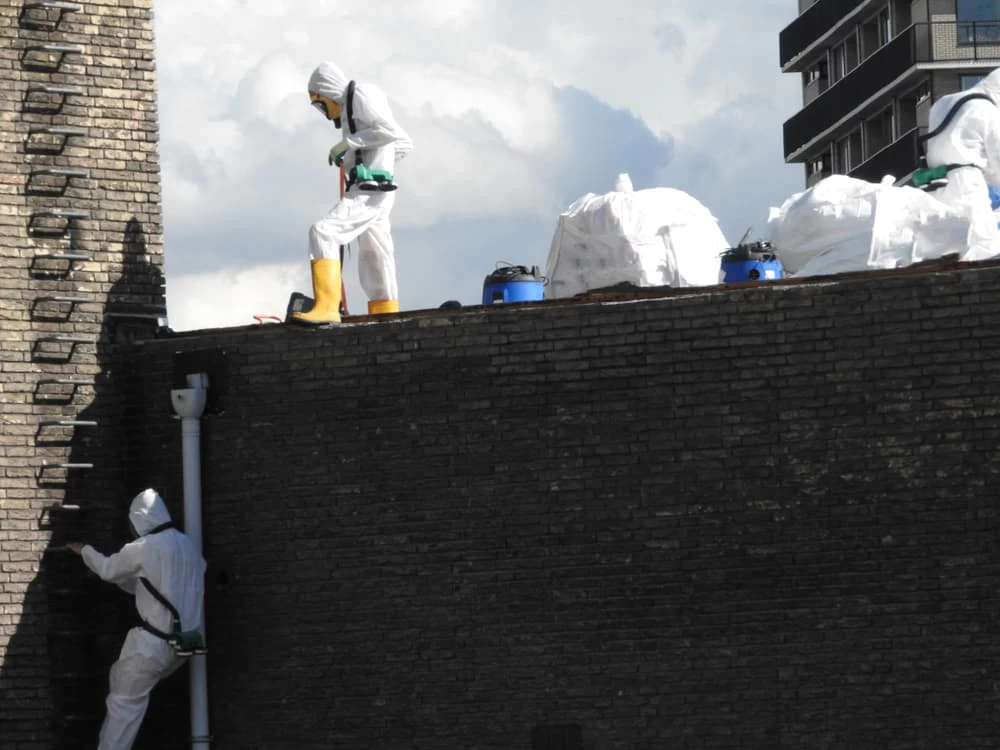
Once asbestos is confirmed, we file the required notification with the NYS Department of Labor before work starts that’s a legal requirement under Industrial Code Rule 56, and it’s part of what you’re paying for when you hire a licensed contractor. The abatement itself is done under containment, with negative air pressure and HEPA filtration, following all state-mandated work practices. Materials are disposed of properly, with documentation you can keep on file.
After removal, air clearance testing is conducted by qualified personnel. You get a written clearance certificate when the space meets the required standard. That document is what your insurance company, your real estate attorney, or your next contractor needs to see before they’ll move forward. For property owners managing renovations from New York City while their Phoenicia rental sits empty, that final clearance certificate is what gets the project to the finish line and gets the calendar back open for bookings.
Asbestos abatement covers more ground than most people expect going in. We handle the full scope: inspection and bulk sampling, NYS DOL permit filing and project notification, licensed removal under containment, post-abatement air monitoring, written clearance documentation, and compliant disposal with a recorded chain of custody. If your project also involves water damage or mold which is a real scenario in Phoenicia given the Esopus Creek flood history that work can be coordinated under the same team rather than handed off to a separate contractor.
Common materials found in Phoenicia-area homes include 9×9 inch vinyl floor tiles and the black mastic adhesive beneath them, popcorn and textured ceiling coatings applied before 1980, pipe and boiler insulation in older heating systems, joint compound in walls and ceilings, and exterior roofing or siding materials in structures dating to the early 1900s. Asbestos tile removal and asbestos popcorn ceiling removal are among the most frequent jobs in this area, particularly in properties being converted or updated for short-term rental use.
If your project is part of a larger renovation a gut rehab, a basement rebuild after flood damage, or a full HVAC replacement in an older Catskills cabin we can work alongside your general contractor and stay on schedule. The goal is to get the abatement done right, documented properly, and out of the way so the rest of your project doesn’t sit idle.
Does my Phoenicia home actually need asbestos testing before renovation?
If your home was built before 1980, yes and in Phoenicia, that covers a significant portion of the housing stock. Homes along Route 28 and Route 214 span everything from late 1800s boarding houses to mid-century tourist cabins, and the materials used in those builds floor tiles, pipe insulation, ceiling texture, joint compound frequently contain asbestos. New York State Industrial Code Rule 56 requires that any asbestos disturbance exceeding 10 square feet in area or 25 linear feet on pipe or duct work be handled by a licensed abatement contractor.
The practical implication is this: if you hire a general contractor to gut a kitchen or replace a boiler in an older Phoenicia home and they hit asbestos without proper protocols in place, the work stops, the liability lands on you, and the remediation cost goes up because now you’re dealing with a disturbance rather than a planned removal. Testing before the renovation starts is almost always cheaper and faster than cleaning up after an unplanned exposure.
How much does asbestos removal cost in Ulster County, NY?
The range is wide because the scope varies so much. A single room with asbestos floor tile removal might run $1,500 to $4,000. A more involved project pipe insulation throughout a basement, popcorn ceiling removal across multiple rooms, or a full HVAC system encased in asbestos wrap can reach $15,000 to $30,000 or more depending on the square footage and material type. In New York, licensed abatement also requires air monitoring and clearance testing, which adds to the total but is not optional.
For Phoenicia specifically, properties that experienced flooding particularly after Hurricane Irene in 2011 may have sustained damage to exactly the areas where asbestos materials are most concentrated: basement pipe insulation, crawl space flooring, and boiler room components. If your remediation is tied to flood damage or an insurance claim, we can work directly with your insurer, which takes a significant administrative burden off your plate. Get a scope-specific estimate before assuming the worst many jobs come in well under the high end of that range.
What materials in older Catskills homes most commonly contain asbestos?
The short list: 9×9 inch vinyl floor tiles and the black adhesive mastic beneath them, pipe and boiler insulation (often wrapped in a gray or white fibrous material), popcorn and spray-applied textured ceilings, joint compound used in drywall finishing, and some exterior roofing and siding materials like certain shingles and transite panels. In Phoenicia-area homes from the 1930s through 1970s, it’s common to find several of these materials in the same structure particularly in properties that went through multiple renovation cycles before asbestos was phased out.
One thing that surprises a lot of homeowners: the floor tile itself may not be the only problem. The black mastic adhesive used to set those tiles is frequently asbestos-containing even when the tile above it is not, and scraping or grinding that adhesive without proper containment is a serious exposure risk. If you’re looking at old 9×9 tiles in a basement or kitchen in your Phoenicia property, don’t assume the tile is the only thing that needs testing.
Can I stay in my home during asbestos abatement in Phoenicia?
It depends on the scope and location of the work. For a contained removal in a single room a basement, a utility area, or one bathroom it’s sometimes possible to remain in other parts of the house, provided the containment barriers are properly sealed and negative air pressure is maintained throughout the job. For larger projects involving multiple rooms, HVAC systems, or areas that connect to living spaces, temporary relocation is typically the safer and more practical option.
We’ll walk you through what’s realistic for your specific project before work begins. For Phoenicia property owners who are managing the home remotely particularly those who use the property primarily as a weekend retreat or short-term rental the logistics are often simpler: the abatement gets scheduled during a period when the property is vacant, the work is completed, air clearance is confirmed, and the property is ready for re-occupancy before the next booking or visit. Timing around the Catskills rental calendar particularly the summer tubing season and ski season at Belleayre is something we can work around.
Does homeowner's insurance cover asbestos removal in New York State?
Standard homeowner’s insurance policies typically do not cover asbestos removal as a standalone maintenance or renovation expense. However, if the asbestos disturbance is directly tied to a covered event a flood, a fire, storm damage there’s a reasonable case to make that the remediation is part of the covered loss. In Phoenicia, where flood events have repeatedly damaged older homes along the Esopus Creek and Stony Clove Creek, this situation comes up more than you’d expect.
The key is documentation. Insurance adjusters need to see that the asbestos disturbance was caused by the covered event, not pre-existing renovation activity. We can provide the project documentation, air monitoring records, and clearance certificates that support an insurance claim. We also work directly with insurers on billing, which means you’re not fronting the cost and waiting for reimbursement on a project that’s already stressful enough to manage. If you’re unsure whether your situation qualifies, the conversation starts with a call and an inspection not a commitment.
How do I verify that an asbestos contractor in New York is actually licensed?
The NYS Department of Labor maintains a public database of licensed asbestos contractors and certified workers. You can search by company name or license number at the DOL’s Asbestos Control Bureau portal. Any contractor performing asbestos abatement in New York State including in Phoenicia and the broader Ulster County area is required by law to hold this license. Workers on the job must also hold individual NYS DOL certifications as handlers or supervisors. These are not optional credentials, and they are not the same as a general contractor’s license or a home improvement license.
In a rural market like the Catskills, it’s not uncommon for general contractors or handymen to offer asbestos removal as part of a renovation package without holding the required DOL license. The risk to you as the property owner is significant: unlicensed abatement can result in fines, mandatory re-remediation at your expense, and personal liability if anyone is exposed. Before you sign anything, ask for the contractor’s NYS DOL Asbestos Handling License number and verify it yourself. Our license is current and verifiable and we’ll give you the number without hesitation.