Plainedge Homes Were Built With It — Here's How to Handle It Safely
Most homes in Plainedge were built during the same post-war boom that put asbestos in nearly every wall, floor, and ceiling on Long Island. We handle licensed asbestos abatement so your renovation doesn’t become a health risk.
I needed a professional consultation explanation of procedure for safe removal of Asbestos in my apartment complex. Without having an account yet, I was very impressed with the caring, knowledgeable and generous advice offered by Jessica, and will look forward to doing business in the future. Thank you so much! I feel much more informed about a sometimes scary endeavor. Peace. Nancy Silva Mineola, NY.
Mia Munoz
Used this company to clean up some water flood in my house. They were fast and easy to work with.very professional, Would recommend to anyone!
Nini Valle
Great company, had a flood and they responded quickly and efficiently. Billed my insurance company directly. I highly recommend this company!
joe colapietro, jr
I had pipe freeze in my basement right before a snow storm and they made to within an hour to help start the clean up process. They we by our side throughout the entire process and even helped with the insurance company. They did such a great job with the cleanup, repair, remidiation, I contracted them to perform the repairs and finishes in the basement. They came with enough manpower and material to get the job done. Leo and Jessica were nothing but a pleasure to deal with!!
Cristian Arredondo c
I had some water damage in my home and Green Island was able to take care of my issue quickly and effectively. I am very pleased with the work they did. They responded quickly and were very professional.
Michael M
Outstanding service! From the office to the field crew everyone was friendly, helpful and responsive. I highly recommend Green Island Group.
Your Project Stays on Track — and Your Family Stays Safe
When you find out your Plainedge home has asbestos, the first thing most people feel is stuck. The renovation pauses, the questions pile up, and suddenly you’re not sure who to call or what the law even requires. That uncertainty is exactly what we help you move through — fast, clearly, and without the runaround.
Plainedge’s housing stock is almost entirely mid-century. Homes built in the 1950s and 1960s — the same era that produced the Levittown subdivisions right next door — used asbestos-containing materials as a standard part of construction. Floor tiles, pipe insulation, popcorn ceilings, boiler wrap, joint compound — it was everywhere, and in a lot of these homes, it still is. That doesn’t mean your house is dangerous today. It means that the moment you start disturbing those materials during a renovation, you need a licensed contractor on the job.
What you get on the other side of this process is real: a cleared home, documented results, and a renovation that can actually move forward. If you’re planning to sell, that clearance documentation protects your asking price and keeps a deal from falling apart at inspection. If you’re staying, it means your family isn’t breathing in fibers that were sealed behind a wall or under a floor you just pulled up. Either way, the outcome is clarity — and the ability to move forward without wondering if you did it right.
We Know Plainedge — and the Town of Oyster Bay's Requirements
Green Island Group is a Nassau County-based environmental services company that specializes in asbestos abatement, removal, and remediation for residential and commercial properties. We’re not an out-of-area firm running ads in ZIP codes we’ve never worked in. Plainedge is part of our core service territory — and that matters when the permitting, the housing stock, and the regulatory environment are all specific to this corner of Long Island.
Because Plainedge is an unincorporated community, your renovation permits flow through the Town of Oyster Bay’s Building Department — not a village hall, not a city office. We know that process. We know what the Town requires, what the NYS Department of Labor’s Asbestos Control Bureau expects, and what documentation you’ll need to keep your project compliant from start to finish.
When the Plainedge School District required asbestos abatement before the demolition of Sylvia Packard Middle School, it was handled by licensed professionals following the same state-mandated protocol we follow on every job. That’s the standard your home deserves too.
Asbestos Abatement Process for Plainedge Homeowners
No Guesswork — Just a Clear Process From Survey to Clearance
It starts with a Phase I asbestos survey. Before any abatement work begins, a certified inspector assesses your property and identifies any materials that may contain asbestos. In Plainedge homes — most of which were built between the late 1940s and the late 1960s — that typically means checking basement floor tiles and the black mastic adhesive beneath them, pipe and boiler insulation, textured ceiling surfaces, and drywall joint compound. The survey tells you exactly what you’re dealing with, so there are no surprises mid-renovation.
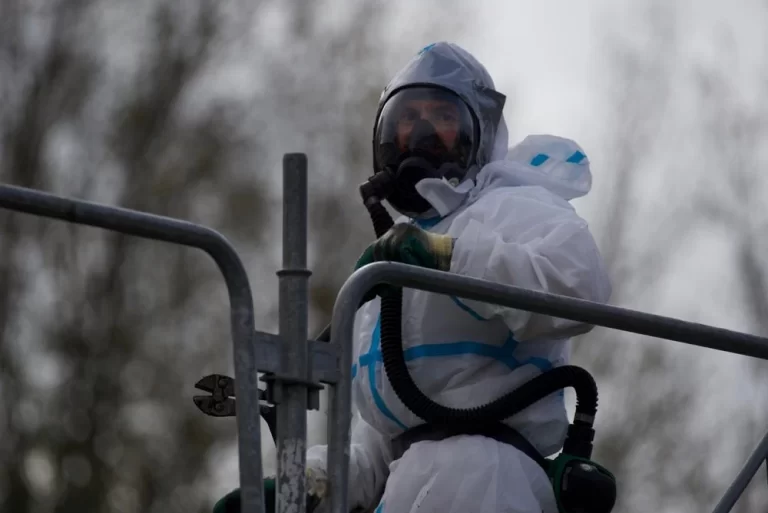
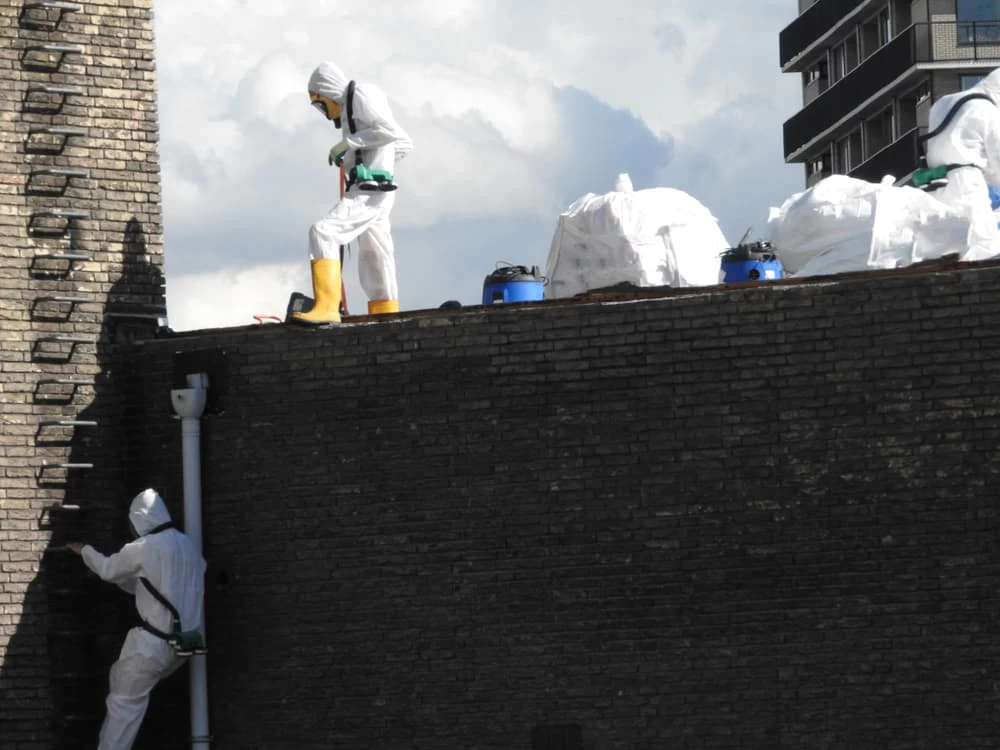
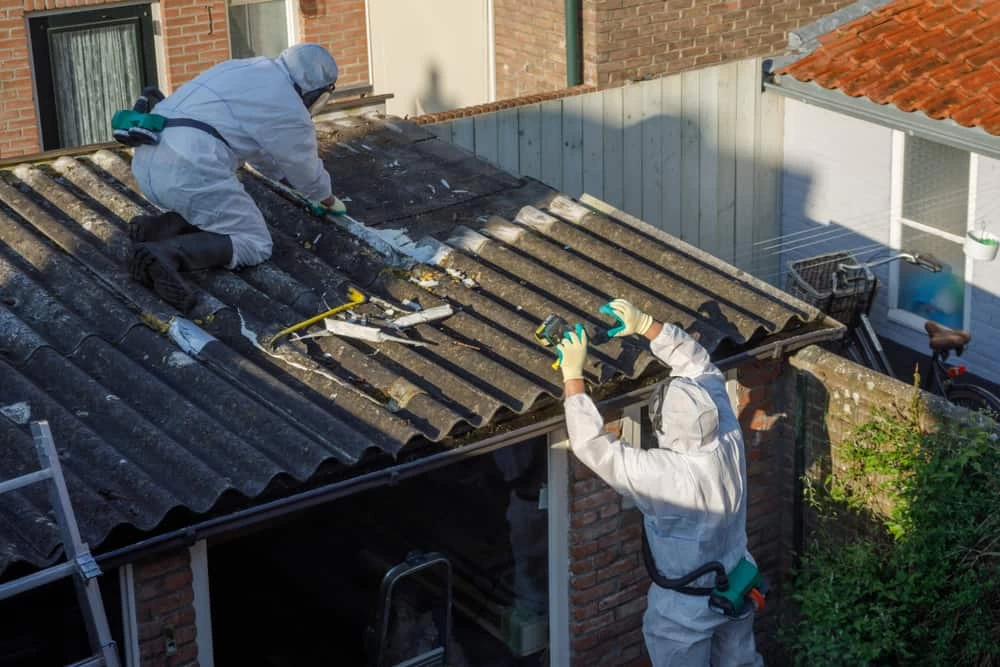
From there, we move into background air sampling, work area preparation, and containment. The abatement itself is conducted under controlled conditions by workers holding valid NYS asbestos handling certificates. For projects above the minor threshold, we file the required notification with the NYS Department of Labor before work starts — that’s a legal requirement under Industrial Code Rule 56, and it’s something unlicensed contractors skip entirely.
Once abatement is complete, we conduct final cleaning and clearance air testing. You receive a full documentation package — the kind of paper trail that satisfies the Town of Oyster Bay’s building inspectors, satisfies a buyer’s attorney during a home sale, and gives you a clear record that the work was done correctly. That final clearance report is what lets your general contractor get back to work.
Asbestos Tile and Popcorn Ceiling Removal in Plainedge
What's Actually Included When You Hire Us
Asbestos abatement isn’t one thing — it’s a sequence of regulated steps, and every one of them matters. We manage the entire process in-house: survey, air sampling, containment setup, abatement, final cleaning, clearance testing, and regulated waste disposal. You’re not handed off to a subcontractor halfway through. One team, one point of contact, full accountability.
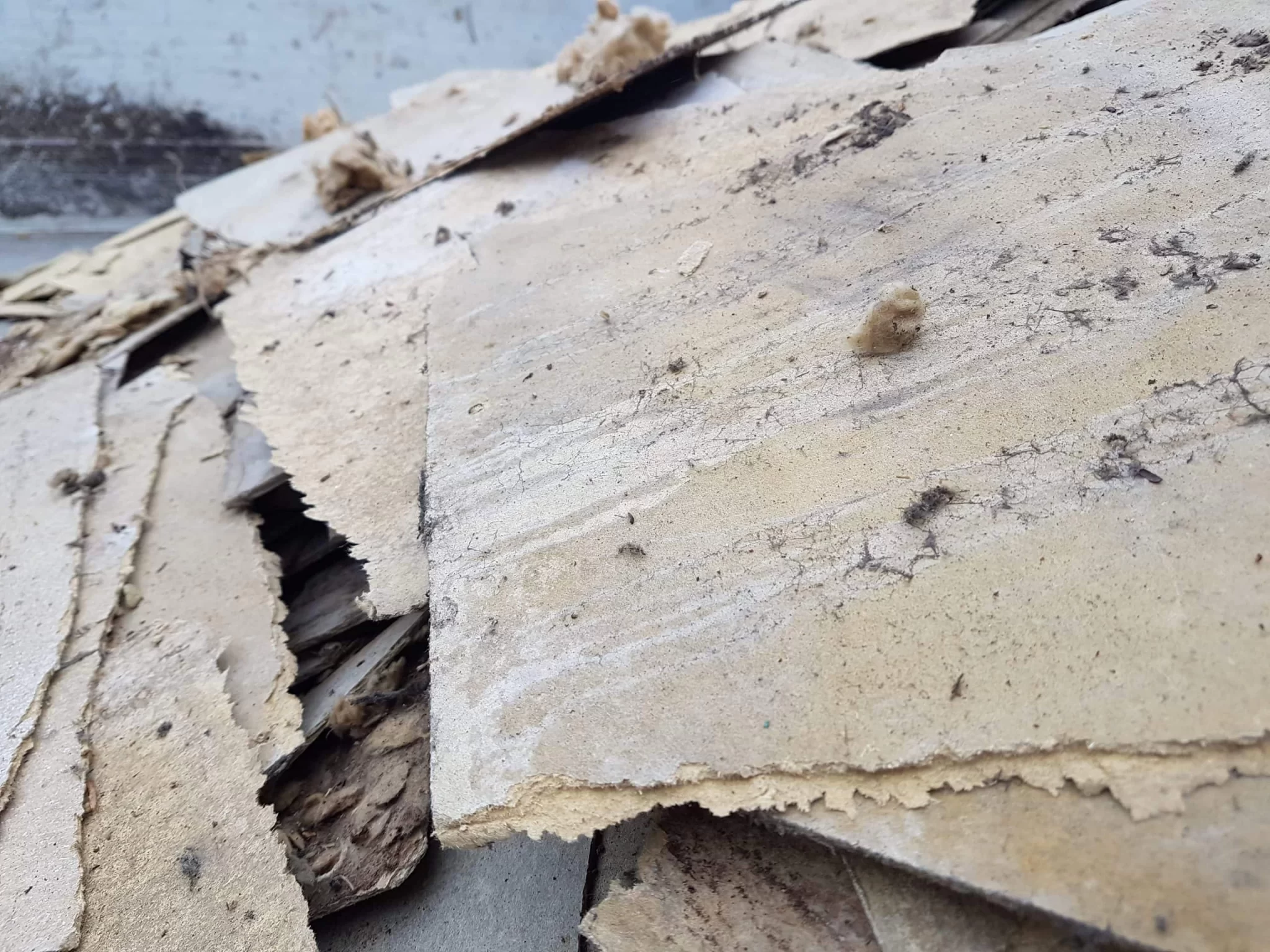
Two of the most common asbestos abatement scenarios we handle in Plainedge are floor tile removal and popcorn ceiling removal. The 9-by-9-inch vinyl floor tiles found in the basements, kitchens, and rec rooms of homes throughout this area frequently contain asbestos — and so does the black adhesive mastic used to install them. Scraping those tiles without proper containment releases fibers you can’t see and can’t smell. Popcorn ceiling texture, popular from the late 1950s through the early 1980s, is another common source. Sanding or scraping it without testing first is exactly the kind of disturbance New York State law is designed to prevent.
We also handle pipe and boiler insulation removal, which comes up frequently when Plainedge homeowners replace aging HVAC systems or undertake basement renovations. If a storm or water damage event has disturbed materials that were previously sealed — a real scenario in Nassau County, which has seen more than 30 declared natural disasters — we respond to emergency abatement needs as well. Whatever the trigger, the process is the same: thorough, documented, and fully compliant with NYS Industrial Code Rule 56.
Is asbestos abatement legally required before renovating a Plainedge home?
Yes — under New York State Industrial Code Rule 56, any renovation or demolition that disturbs asbestos-containing materials must be performed by a contractor licensed by the NYS Department of Labor. This applies to residential properties, not just commercial buildings. If your Plainedge home was built before 1980 and you’re planning to open walls, remove flooring, gut a bathroom, or replace insulation, you’re required by law to have the affected materials surveyed and, if ACMs are found, properly abated before the work proceeds.
This isn’t a gray area. The NYS Department of Labor’s Asbestos Control Bureau actively enforces these requirements, and homeowners who allow unlicensed work to proceed can face real legal exposure. Beyond the legal side, the health risk is serious — asbestos fibers released during renovation don’t cause immediate symptoms, which makes it easy to underestimate the danger. The consequences, including mesothelioma and lung cancer, can show up decades later. Getting it done right the first time isn’t just the law — it’s the responsible call.
How do I know if my Plainedge home actually contains asbestos?
You can’t tell by looking. Asbestos-containing materials don’t look different from materials that don’t contain asbestos — the only way to know for certain is to have a certified inspector collect samples and send them to an accredited laboratory for analysis. That’s what a Phase I asbestos survey does, and it’s the required starting point for any abatement project under NYS Industrial Code Rule 56.
In Plainedge, the materials most likely to contain asbestos are the ones that were standard in homes built during the 1950s and 1960s: 9-by-9-inch vinyl floor tiles and the black mastic adhesive beneath them, pipe and boiler insulation, textured popcorn ceilings, and drywall joint compound. If your home hasn’t been updated since it was built — or if previous renovations were done without proper testing — there’s a meaningful chance ACMs are present somewhere in the structure. A survey gives you a clear answer so you can make informed decisions about your renovation timeline and budget.
What happens if a contractor finds asbestos during my renovation mid-project?
Work stops. Under New York State law, once a contractor discovers or suspects ACMs during a renovation, they are required to halt work in the affected area and not disturb the material further until a licensed asbestos abatement contractor has assessed and addressed the situation. This is one of the most common ways homeowners end up in an emergency abatement scenario — and it’s also one of the most avoidable, because a pre-renovation survey would have caught it before the first wall came down.
If you’re mid-project and this happens, the practical reality is that your timeline shifts. The abatement needs to be completed, clearance air testing needs to confirm the area is safe, and only then can your general contractor return to the space. We handle these mid-project situations regularly — we understand that your renovation is on hold and that getting back on schedule matters. We move efficiently, but we don’t cut corners on the containment, the clearance testing, or the documentation that protects you legally and medically.
Do I need to leave my Plainedge home during asbestos abatement?
It depends on the scope of the work. For minor, contained projects — a small section of floor tile in a basement, for example — it may be possible for occupants to remain in unaffected parts of the home while work is underway, provided proper containment barriers are in place and air monitoring confirms the rest of the living space is not affected. For larger projects involving multiple rooms, significant disturbance of friable materials, or whole-floor abatement, temporary relocation is typically the safer and more practical choice.
We’ll give you a straightforward answer during the initial assessment — not a vague “it depends” that leaves you guessing. What we can tell you is that the containment protocols required under NYS Industrial Code Rule 56 are specifically designed to isolate the work area and prevent fiber migration into the rest of the home. When those protocols are followed correctly by a licensed team, the risk to occupants in unaffected areas is minimized. We’ll walk you through what the specific scope of your project requires before any work begins.
How long does asbestos abatement typically take for a Plainedge home renovation?
For a standard residential project — floor tile removal in a basement, popcorn ceiling abatement in one or two rooms, or pipe insulation removal around a boiler — the abatement work itself typically takes one to three days. The full timeline, from initial survey through final clearance air testing and documentation, is generally one to two weeks depending on the scope of the project and laboratory turnaround times for air samples.
For larger projects — a full gut renovation of a mid-century Plainedge home, for example, where multiple ACM types are present across several rooms — the timeline extends accordingly. The most important thing to understand is that clearance air testing happens after abatement is complete, and your general contractor cannot return to the space until that clearance is confirmed. Planning your renovation sequence with abatement as the first phase — not something you deal with after a surprise discovery — is what keeps your overall project on schedule. Spring is the busiest season for renovation work in Nassau County, so if you’re planning a warm-weather project, getting the survey done in late winter gives you the best chance of a smooth start.
Can asbestos abatement affect the sale of my Plainedge home?
It can — in both directions. Undisclosed or improperly handled asbestos is one of the issues that can derail a home sale in Nassau County. Buyers’ attorneys and home inspectors know what to look for in mid-century homes, and if ACMs are flagged during a sale inspection without proper documentation showing they’ve been addressed, you’re looking at renegotiation, price reduction, or a deal that falls apart entirely. With Plainedge median home values now above $600,000, that’s a significant financial exposure.
On the other side, a properly completed abatement with full clearance documentation — the air testing results, the licensed contractor records, the NYS DOL notification filings where applicable — is a genuine selling asset. It tells the buyer that the work was done correctly, by a licensed contractor, with independent air quality confirmation. That documentation travels with the property and gives buyers confidence that they’re not inheriting a problem. If you’re preparing a Plainedge home for sale and you know or suspect ACMs are present, addressing them before listing is almost always the cleaner, more financially sound path than leaving it for a buyer to discover.