Plainview Homes Have History — Some of It Needs to Go
If your Plainview home was built before 1980, there’s a real chance asbestos is somewhere in it. We handle asbestos abatement the right way — licensed, documented, and cleared for whatever comes next.
I needed a professional consultation explanation of procedure for safe removal of Asbestos in my apartment complex. Without having an account yet, I was very impressed with the caring, knowledgeable and generous advice offered by Jessica, and will look forward to doing business in the future. Thank you so much! I feel much more informed about a sometimes scary endeavor. Peace. Nancy Silva Mineola, NY.
Mia Munoz
Used this company to clean up some water flood in my house. They were fast and easy to work with.very professional, Would recommend to anyone!
Nini Valle
Great company, had a flood and they responded quickly and efficiently. Billed my insurance company directly. I highly recommend this company!
joe colapietro, jr
I had pipe freeze in my basement right before a snow storm and they made to within an hour to help start the clean up process. They we by our side throughout the entire process and even helped with the insurance company. They did such a great job with the cleanup, repair, remidiation, I contracted them to perform the repairs and finishes in the basement. They came with enough manpower and material to get the job done. Leo and Jessica were nothing but a pleasure to deal with!!
Cristian Arredondo c
I had some water damage in my home and Green Island was able to take care of my issue quickly and effectively. I am very pleased with the work they did. They responded quickly and were very professional.
Michael M
Outstanding service! From the office to the field crew everyone was friendly, helpful and responsive. I highly recommend Green Island Group.
Most Plainview homeowners don’t go looking for asbestos — they find it when they’re already in the middle of something else. A kitchen renovation stalls. A buyer’s inspector flags suspect floor tiles. A contractor walks off the job until the material is cleared. That’s a hard stop on a real estate deal or a renovation you’ve been planning for months.
When the abatement is done correctly, the project moves forward. The deal stays on track. You have a documented clearance certificate you can hand to your real estate attorney, your buyer’s inspector, or your building department without hesitation. That piece of paper matters more than most people realize until they need it.
Plainview’s housing stock is almost entirely from the 1950s through the 1970s — the exact decades when asbestos was standard in residential construction. Nine-by-nine vinyl floor tiles, popcorn ceiling texture, pipe insulation in oil-heated basements — these materials are common in the ranch homes and split-levels throughout this community. Properly abated and documented, none of it has to hold you back.
We Know Plainview's Housing Stock — And What's Inside It
We’re a fully licensed asbestos abatement contractor under the New York State Department of Labor — the credential New York requires, and the one your attorney and building department will ask for. Every project we complete comes with full documentation: written scope, air monitoring during the work, post-abatement clearance testing, and a Certificate of Completion.
Because Plainview is an unincorporated hamlet in the Town of Oyster Bay, permitted renovation work runs through Oyster Bay Town Hall — not a village hall. That distinction matters when abatement needs to integrate with a larger renovation permit, and it’s the kind of local detail that a Suffolk County franchise dispatching to Nassau often doesn’t know until it becomes your problem.
We’ve worked throughout Plainview — from the Route 135 corridor to the neighborhoods near Old Country Road. We understand the housing stock that defines this area and what’s typically inside it.
No Guesswork — Here's Exactly How the Work Gets Done
It starts with an assessment. Before anything is touched, we identify the suspect materials in your home and, where needed, collect bulk samples and send them to an accredited laboratory for testing. You get a clear answer — not an assumption — about what you’re dealing with and where it is.
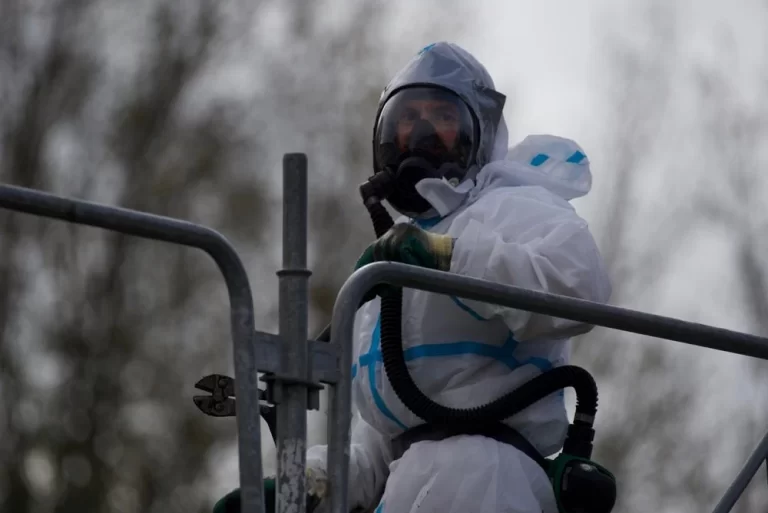
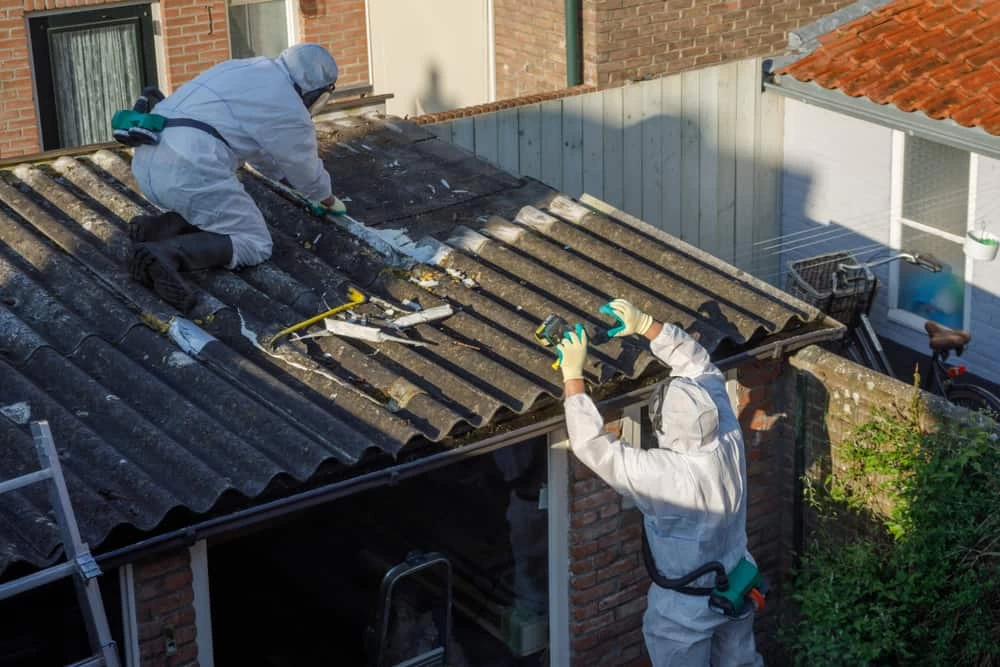
If abatement is needed, we prepare a written scope of work before the job begins. For projects above certain thresholds, New York State requires advance notification to the NYSDOL and a licensed project design — we handle that paperwork, not you. The work area is sealed under negative air pressure with HEPA-filtered air scrubbers running throughout the job, containing any disturbed fibers within the containment zone. Your home and your neighbors’ properties stay protected.
Once the physical abatement is complete, a licensed air monitor conducts post-abatement clearance testing before the containment is broken. That clearance report is part of the documentation package you receive at project close. Whether you’re handing it to a buyer’s agent, a title company, or the Town of Oyster Bay building inspector, it’s the paper trail that closes the loop.
Asbestos Tile and Popcorn Ceiling Removal Plainview
The Materials Found Here Require More Than a Guess
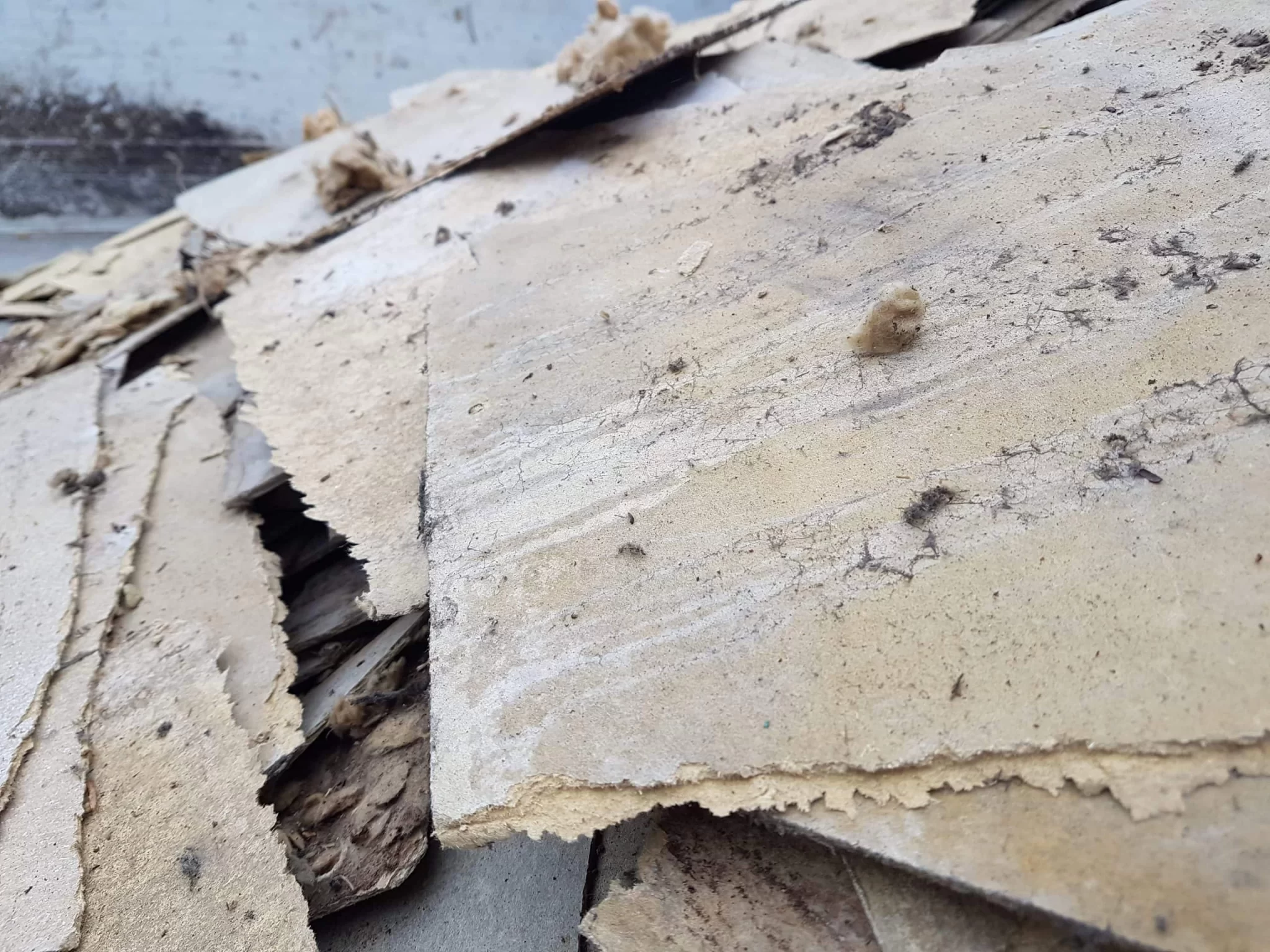
The most common asbestos discoveries in Plainview homes follow a predictable pattern. Nine-by-nine vinyl asbestos floor tiles show up under carpeting and linoleum during kitchen and bathroom renovations — they’re nearly universal in Nassau County homes from this era. Popcorn ceiling texture in bedrooms and living rooms is another frequent find, especially in homes that haven’t been updated since the 1970s. Pipe insulation in basements, particularly in homes that originally ran on oil heat, is a third common location that often gets overlooked until a mechanical contractor opens the utility room.
We handle all of it — asbestos tile removal, popcorn ceiling abatement, pipe insulation removal, and full interior abatement scopes for larger projects. Each service includes the same complete documentation package regardless of project size, because the clearance certificate matters whether you’re removing one room of floor tile or clearing an entire basement.
For Plainview homeowners preparing to sell, we also offer pre-listing assessments — a proactive look at the materials in your home before a buyer’s inspector finds something mid-deal. In a market where a single inspection report can reopen price negotiations, getting ahead of it is usually the smarter move.
Does my Plainview home built in the 1960s likely contain asbestos?
If your Plainview home was built between the late 1940s and the mid-1970s — which describes a large portion of this community’s housing stock — there is a reasonable chance asbestos is present in at least one material. The most common locations are nine-by-nine vinyl floor tiles (often found beneath carpeting or newer flooring), popcorn or acoustic ceiling texture, pipe and duct insulation in the basement, and in some cases joint compound used in walls and ceilings.
The presence of these materials doesn’t automatically mean you have a problem. Asbestos that is intact and undisturbed is generally not an immediate health concern. The issue arises when those materials are disturbed — during a renovation, a demo, or even aggressive scraping. If you’re planning any work on your home or preparing to sell, testing is the right first step before anyone touches anything.
How long does asbestos abatement typically take for a Plainview residential project?
Timeline depends on the scope — what materials are involved, how many rooms, and whether the project requires advance notification to the New York State Department of Labor. A single-room floor tile removal in a Plainview home can often be completed in one to two days once the project is set up and containment is in place. Larger scopes, like a full basement or multi-room popcorn ceiling removal, typically run three to five days including setup, abatement, and post-clearance air testing.
One thing that catches Plainview homeowners off guard is the NYSDOL notification requirement. For projects above certain size thresholds, New York State requires advance written notice before work can begin — that’s a regulatory step that adds lead time to the schedule. We handle that notification process as part of project setup, but it’s worth factoring in if you’re working against a real estate closing date or a renovation start date that’s already set.
What's the difference between asbestos abatement and encapsulation, and which do I need?
Abatement means the material is physically removed from the building and disposed of through a licensed waste facility — it’s gone. Encapsulation means the material is sealed in place with a binding compound that prevents fiber release without removing the material itself. Both are legitimate approaches under New York State regulations, and the right choice depends on the condition of the material, what you plan to do with the space, and whether a future renovation would disturb the encapsulated area anyway.
For Plainview homeowners preparing to sell or doing a gut renovation, abatement is almost always the better call. A buyer’s inspector or a future contractor will still flag encapsulated material as a known asbestos presence — it doesn’t disappear from the record the way removal does. If the material is in good condition, in an area that won’t be disturbed, and you’re not selling anytime soon, encapsulation can be a cost-effective option. The assessment phase is where that decision gets made, based on what’s actually in front of us.
Do I need a permit for asbestos abatement in Plainview, NY?
Asbestos abatement in New York is regulated at the state level through the NYSDOL, not through local building permits in the traditional sense. However, because Plainview is governed by the Town of Oyster Bay rather than an incorporated village, any larger renovation project that requires a Town of Oyster Bay building permit will need to show that asbestos abatement was completed and documented before certain phases of construction can proceed. The abatement clearance certificate becomes part of the documentation package your general contractor needs to move forward.
On the state side, projects above specific size thresholds require NYSDOL notification before work begins, and in some cases a licensed project designer must prepare a written project design. These aren’t optional steps — they’re legal requirements, and skipping them creates liability for the property owner, not just the contractor. We manage the regulatory side of every project, so you’re not navigating state paperwork on your own while also trying to keep a renovation or sale on schedule.
How much does asbestos abatement cost for a typical home in Plainview?
Cost varies based on the type of material, the size of the affected area, and the overall scope of the project. A single room of nine-by-nine floor tile removal in a Plainview home typically runs in the range of $1,500 to $3,000, depending on square footage and access conditions. A popcorn ceiling removal covering multiple rooms can run $2,500 to $5,000 or more. Larger scopes — full basement pipe insulation removal, multi-room combined projects — are priced based on a written assessment.
What’s included in that cost matters as much as the number itself. Our pricing covers the full scope: containment setup, licensed abatement work, proper disposal through a licensed facility, post-abatement air clearance testing, and the complete documentation package. There are no separate line items added after the fact for disposal fees or clearance reports. You get a written estimate before anything starts, and the final number matches it.
Can I stay in my home during asbestos abatement in Plainview?
It depends on the location of the work and the size of the project. For a contained single-room abatement — a bathroom floor tile removal or a small section of ceiling — it’s sometimes possible to remain in the home with the work area fully sealed off from the rest of the living space. For larger projects involving multiple rooms, basement work, or any scope where the containment zone intersects with primary living areas, temporary relocation during the active abatement phase is the standard recommendation.
In Plainview’s typical ranch and split-level floor plans, the layout often means that a basement abatement can be isolated from the main living level more easily than in a two-story colonial. That said, every home is different, and the assessment phase is where we look at your specific floor plan and give you a straight answer on what’s realistic. The post-abatement air clearance test is what confirms the space is safe to reoccupy — that step doesn’t get skipped regardless of project size.