Your 1938 Home Deserves More Than a Generic Contractor
Most homes in Plandome Heights were built before 1950 — and that means asbestos abatement isn’t a maybe, it’s a near-certainty. We know exactly what to look for in pre-war North Shore homes, and we’ve handled hundreds of projects across the village and surrounding neighborhoods.
I needed a professional consultation explanation of procedure for safe removal of Asbestos in my apartment complex. Without having an account yet, I was very impressed with the caring, knowledgeable and generous advice offered by Jessica, and will look forward to doing business in the future. Thank you so much! I feel much more informed about a sometimes scary endeavor. Peace. Nancy Silva Mineola, NY.
Mia Munoz
Used this company to clean up some water flood in my house. They were fast and easy to work with.very professional, Would recommend to anyone!
Nini Valle
Great company, had a flood and they responded quickly and efficiently. Billed my insurance company directly. I highly recommend this company!
joe colapietro, jr
I had pipe freeze in my basement right before a snow storm and they made to within an hour to help start the clean up process. They we by our side throughout the entire process and even helped with the insurance company. They did such a great job with the cleanup, repair, remidiation, I contracted them to perform the repairs and finishes in the basement. They came with enough manpower and material to get the job done. Leo and Jessica were nothing but a pleasure to deal with!!
Cristian Arredondo c
I had some water damage in my home and Green Island was able to take care of my issue quickly and effectively. I am very pleased with the work they did. They responded quickly and were very professional.
Michael M
Outstanding service! From the office to the field crew everyone was friendly, helpful and responsive. I highly recommend Green Island Group.
You stop guessing. That’s the first thing. When you’re sitting on a 1930s home in Plandome Heights and you’re about to gut a kitchen or pull up old floors, the uncertainty of what’s underneath is genuinely stressful. Once a licensed inspection confirms what’s there — and a proper abatement removes it — you can move forward with your renovation without legal exposure, without health risk, and without your general contractor pumping the brakes.
For homes in Plandome Heights specifically, that clarity matters more than most places. With over 70% of the village’s housing stock built before 1950, the materials that were standard in that era — floor tiles, pipe insulation, plaster compounds, acoustic ceiling coatings — are still sitting inside the walls, ceilings, and mechanical rooms of homes all along Plandome Road and beyond. These aren’t hypothetical risks. They’re the reality of owning a pre-war home on the North Shore.
There’s also the property value side of this. Homes here sell for well over a million dollars. Undocumented or improperly handled asbestos creates disclosure problems that can derail a sale or reduce what your home appraises for. When abatement is done right — with full documentation, clearance air testing, and proper waste disposal — you walk away with a paper trail that protects your investment long-term.
We've Been Handling Plandome Heights Pre-War Homes for Years
We’ve been handling asbestos abatement, mold remediation, and environmental restoration across Nassau County, Suffolk County, Queens, and New York City for years — with over 5,000 completed projects across the region. That’s not a number we throw around lightly. It means the team showing up to your Plandome Heights home has seen the exact materials, the exact construction patterns, and the exact regulatory requirements that apply to your project.
We serve the entire Greater Manhasset area, including Plandome, Plandome Manor, Port Washington North, Flower Hill, and Munsey Park. We hold all required licenses and worker certifications under New York State Industrial Code Rule 56 — the mandatory state standard for all asbestos work in New York. That’s not a bonus credential. It’s the legal baseline, and it’s what protects you if the NYS Department of Labor ever asks questions.
What you get with us isn’t a distant call center dispatching a subcontractor you’ve never met. It’s a local team that actually knows the 11030 ZIP code and the housing stock that comes with it.
It starts with an inspection. A certified inspector walks your property and collects samples from any materials that may contain asbestos — floor tiles, ceiling coatings, pipe insulation, joint compound, roofing underlayment, whatever applies to your home. Samples go to an accredited laboratory, and you get a clear answer: what’s there, where it is, and what needs to happen next.
If abatement is required, we submit the mandatory project notification to the NYS Department of Labor’s Asbestos Control Bureau before any work begins. That’s a legal requirement under ICR 56, and it’s something unlicensed contractors skip — which creates liability that lands on you, not them. In Plandome Heights, where the village runs its own permitting process through Village Hall, we coordinate that piece as well so nothing falls through the cracks.
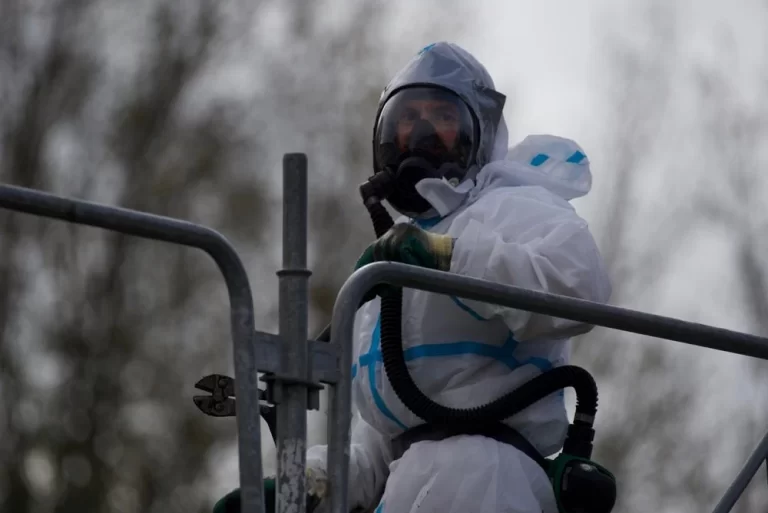
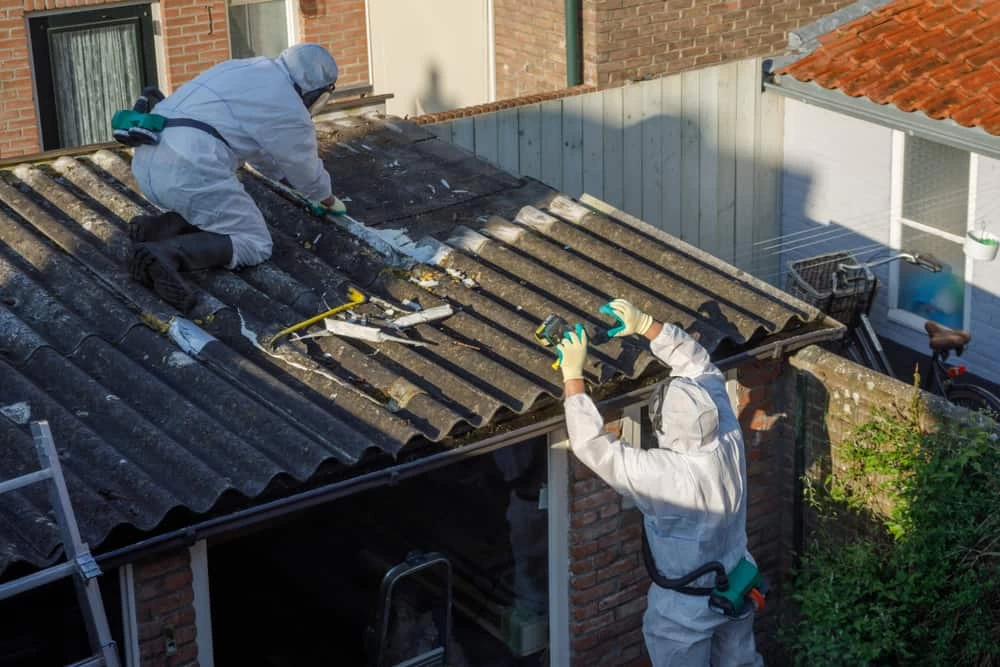
The removal itself happens under full containment — sealed work areas, HEPA-filtered negative air pressure, wet-removal methods that prevent fiber release. When the work is done, we conduct post-abatement air clearance testing to confirm the space is clean. You receive a complete documentation package: inspection report, lab results, notification records, air monitoring data, and waste disposal manifests. That file is your protection — for your renovation contractor, for future buyers, and for your own peace of mind.
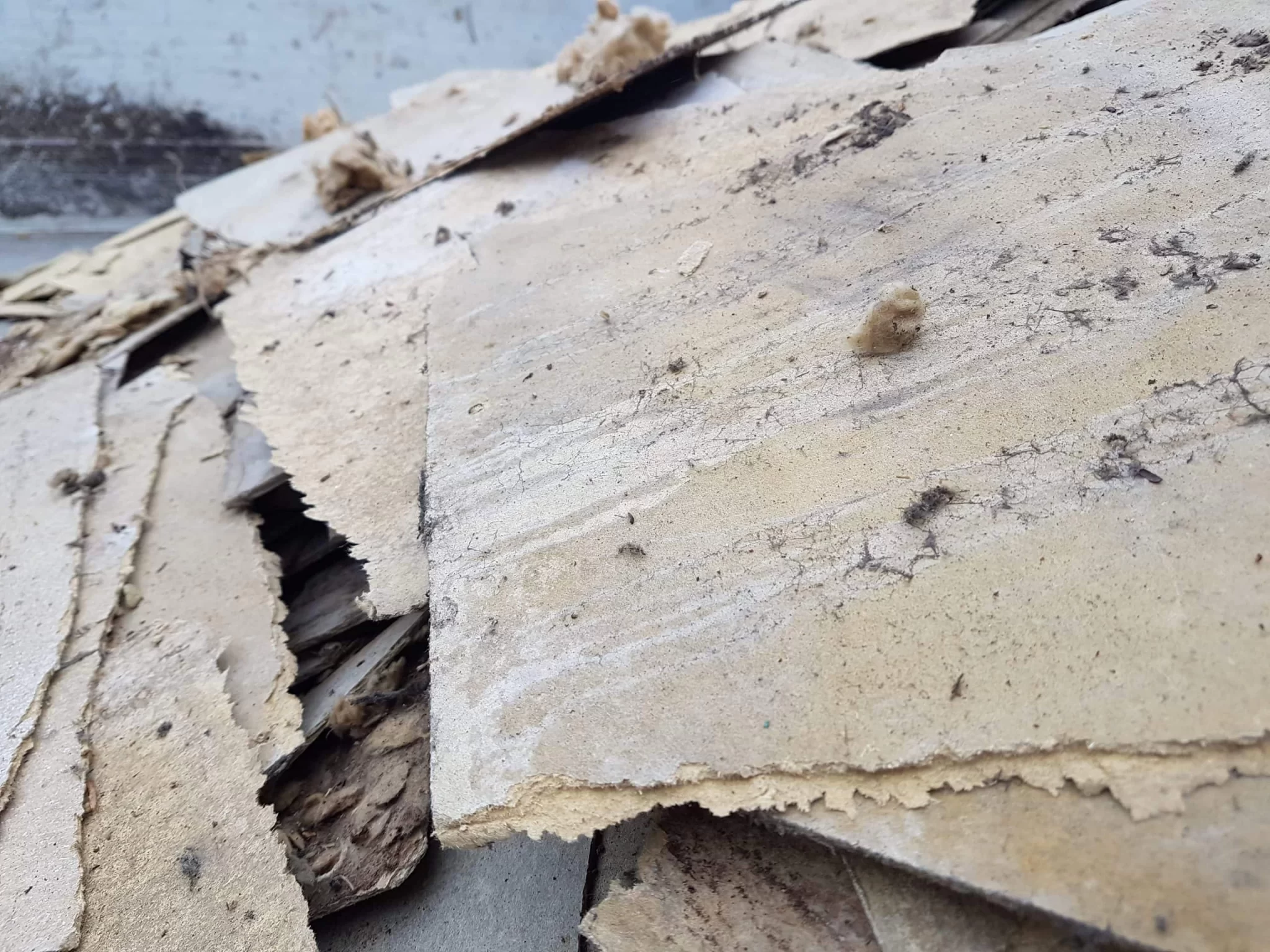
Pre-war homes in Plandome Heights don’t have just one asbestos risk — they have several. The 9-inch asphalt floor tiles common in 1930s and 1940s construction are one of the most frequent finds we encounter in this area, often hiding under hardwood floors or in basement utility spaces. Acoustic popcorn ceilings applied during 1960s and 1970s updates are another — and scraping them without testing first is both dangerous and illegal in New York State. Pipe and boiler insulation in older steam heating systems, which are standard in homes of this era, is a third category that needs to be properly abated before any HVAC or plumbing work begins.
We handle all of it — asbestos tile removal, popcorn ceiling removal, pipe and boiler insulation abatement, joint compound, roofing materials, and transite siding panels. You don’t need to hire separate companies for inspection, removal, and clearance testing. We manage the full sequence from initial sampling through final documentation, which means fewer delays and fewer coordination headaches for your renovation timeline.
For Plandome Heights homeowners working with licensed general contractors, this matters practically. Most licensed GCs in Nassau County require a clean asbestos survey before they’ll touch a pre-war home. We’ve worked alongside enough North Shore contractors to know how to move efficiently so your project doesn’t stall waiting on environmental clearance.
Does my pre-war home in Plandome Heights definitely contain asbestos?
Not every pre-war home tests positive for every material, but the odds are not in your favor if you’re renovating without checking first. More than 70% of homes in Plandome Heights were built before 1950, and that era of construction relied heavily on asbestos-containing materials — floor tiles, pipe insulation, plaster textures, roofing felt, and joint compounds were all standard products through the late 1970s. If your home hasn’t been fully inspected and you’re planning any kind of renovation, you’re essentially guessing.
The only way to know for certain is a proper inspection by a certified asbestos inspector followed by laboratory analysis of collected samples. It’s a straightforward process and gives you a definitive answer. If materials come back negative, you have documentation that protects you. If they come back positive, you know exactly what needs to be addressed before your contractor starts swinging a hammer.
Is asbestos testing legally required before a renovation in New York State?
In New York, asbestos surveys are required before renovation or demolition of buildings where asbestos-containing materials may reasonably be present — which, under NYS Industrial Code Rule 56, covers virtually every pre-1980 residential structure. For Plandome Heights homeowners, that means the majority of homes in the village fall under this requirement. It’s not optional guidance. It’s a regulatory standard enforced by the NYS Department of Labor’s Asbestos Control Bureau.
Beyond the legal requirement, most licensed general contractors in Nassau County won’t begin work on a pre-war home without a clean asbestos survey in hand. Their own licensing compliance depends on it. So even if you were inclined to skip the testing, your contractor likely won’t let you. Getting the inspection done upfront keeps your renovation on schedule and keeps everyone — you, your contractor, and your household — on the right side of the law.
What happens if I hire an unlicensed contractor for asbestos removal in Plandome Heights?
The liability lands on you. Under New York State law, asbestos abatement must be performed by a licensed contractor using individually certified workers. If an unlicensed crew removes asbestos-containing materials from your home — even if the work looks fine on the surface — you have no legal documentation, no clearance air testing, and no paper trail showing the work was done correctly. If the NYS Department of Labor investigates, the homeowner can face significant penalties alongside the contractor.
There’s also the long-term property value issue. When you go to sell a home in Plandome Heights — where median sale prices regularly exceed $1.5 million — buyers and their attorneys will ask about environmental work. If you can’t produce a proper abatement record from a licensed contractor, it becomes a negotiating problem at best and a deal-killer at worst. Proper documentation from a licensed company isn’t just about compliance during the project. It’s an asset you hold onto for the life of the home.
How long does asbestos abatement typically take for a home in Plandome Heights, NY?
Timeline depends on the scope of the work — what materials are affected, how much square footage is involved, and how many separate areas of your home need to be addressed. A single-room tile removal in a basement utility space might be completed in a day or two. A more involved project covering multiple material types across several rooms — which is not unusual in a 1930s or 1940s home in Plandome Heights that hasn’t been previously abated — can take several days to a week or more.
What adds time in New York specifically is the mandatory pre-project notification to the NYS Department of Labor’s Asbestos Control Bureau. This notification must be submitted and acknowledged before work begins, which requires some lead time in your project planning. We factor this into every project schedule upfront so there are no surprises. If you’re coordinating with a general contractor on a larger renovation in Plandome Heights, we can work directly with their timeline to make sure the abatement phase doesn’t create downstream delays.
What types of asbestos-containing materials are most common in Plandome Heights homes?
Given that most homes in Plandome Heights were built in the 1930s and 1940s, the materials we find most frequently are 9-inch asphalt floor tiles — often layered under hardwood or newer flooring — pipe and boiler insulation in steam heating systems, and joint compound used in plaster walls and ceilings. Acoustic popcorn ceiling coatings are also common in homes that were updated during the 1960s and 1970s, when that finish was popular and asbestos was still a legal ingredient in many building products.
Less visible but equally important are roofing underlayment, transite siding panels on exterior walls, and window glazing compounds. These exterior materials are often overlooked until a roofing or siding project triggers an inspection requirement. If your home is approaching a major exterior renovation — which is common in a village where freeze-thaw cycles and coastal humidity from Manhasset Bay gradually wear down older building envelopes — it’s worth having the full exterior assessed at the same time as any interior work.
How much does asbestos abatement cost for a home in Plandome Heights, NY?
Cost varies based on the type of material, the quantity, and the complexity of the containment required. A focused asbestos tile removal in a single room might run in the range of $1,500 to $3,000. A larger scope project — pipe insulation removal, popcorn ceiling abatement across multiple rooms, or a combination of material types — can range from $5,000 to $15,000 or more depending on what’s involved. These are real numbers, not minimums designed to get a foot in the door.
For Plandome Heights homeowners, the more useful frame is what improper or skipped abatement actually costs. Regulatory fines for ICR 56 violations run into the tens of thousands of dollars. Disclosure issues at the time of a home sale — on a property worth well over a million dollars — can cost far more than the abatement itself. The inspection and abatement cost is a fraction of what it costs to deal with the consequences of getting it wrong. We provide a clear, itemized estimate before any work begins so you know exactly what you’re approving.