When a 1950s Home Meets a Major Renovation, This Is the Call You Make First
Most homes in Plandome Manor were built before asbestos was phased out of residential construction. If you’re renovating, selling, or just found something that doesn’t look right, we handle certified asbestos abatement from inspection to final clearance — fully compliant with New York State law.
I needed a professional consultation explanation of procedure for safe removal of Asbestos in my apartment complex. Without having an account yet, I was very impressed with the caring, knowledgeable and generous advice offered by Jessica, and will look forward to doing business in the future. Thank you so much! I feel much more informed about a sometimes scary endeavor. Peace. Nancy Silva Mineola, NY.
Mia Munoz
Used this company to clean up some water flood in my house. They were fast and easy to work with.very professional, Would recommend to anyone!
Nini Valle
Great company, had a flood and they responded quickly and efficiently. Billed my insurance company directly. I highly recommend this company!
joe colapietro, jr
I had pipe freeze in my basement right before a snow storm and they made to within an hour to help start the clean up process. They we by our side throughout the entire process and even helped with the insurance company. They did such a great job with the cleanup, repair, remidiation, I contracted them to perform the repairs and finishes in the basement. They came with enough manpower and material to get the job done. Leo and Jessica were nothing but a pleasure to deal with!!
Cristian Arredondo c
I had some water damage in my home and Green Island was able to take care of my issue quickly and effectively. I am very pleased with the work they did. They responded quickly and were very professional.
Michael M
Outstanding service! From the office to the field crew everyone was friendly, helpful and responsive. I highly recommend Green Island Group.
Plandome Manor has roughly 275 homes, and a significant share of them were built squarely in the window when asbestos-containing materials were standard — floor tiles, pipe insulation, ceiling texture, roofing, siding. You may not see it, but it’s there in a lot of these homes. The real issue isn’t just health risk. It’s what happens when you don’t address it before a renovation starts, a contractor cuts into something, or a buyer’s attorney asks for documentation at closing.
When asbestos is handled correctly — surveyed, contained, removed, and cleared by a licensed contractor — you get something worth more than a clean air reading. You get a documented record that protects your property’s value, keeps your renovation on track, and removes a liability that could follow the home for years. In a village where homes regularly sell in the multi-million-dollar range and real estate transactions are high-stakes, that documentation matters.
The other thing worth knowing: Plandome Manor is entirely on cesspools and septic systems — no municipal sewer connection. If you’re upgrading your septic as part of Nassau County’s active replacement program, that ground disturbance can expose buried pipes and infrastructure that may contain asbestos insulation. It’s a scenario most homeowners in Plandome Manor don’t think about until a contractor raises it mid-project.
We Know Plandome Manor Homes — And the Rules That Govern Them
We’re a Nassau County-based environmental remediation contractor licensed by the New York State Department of Labor to perform asbestos abatement under Industrial Code Rule 56. Every technician on every job is certified. Every project we handle follows the full compliance chain — survey, containment, removal, regulatory filings, proper disposal at DEC-certified sites, and final air clearance documentation.
We already serve the Village of Plandome Manor and are active throughout the North Shore corridor — Manhasset, Port Washington, Great Neck, Sands Point, and the surrounding communities. That means we know the building practices common to this part of Nassau County, understand the permit requirements specific to incorporated villages like Plandome Manor, and have worked in homes that look exactly like yours.
Working in Plandome Manor specifically means meeting the village’s insurance and documentation requirements — including naming the Village of Plandome Manor as Certificate Holder and providing proper Workers’ Compensation documentation. We handle that as a matter of course on every project we take on here.
No Surprises — Here's Exactly How the Process Runs
It starts with an inspection by a Certified Asbestos Inspector. Before any renovation or demolition of a pre-1980 home in New York State, this survey is legally required under Industrial Code Rule 56 — not optional. The inspector identifies what materials are present, where they are, and what condition they’re in. You get a clear picture before anyone picks up a tool.
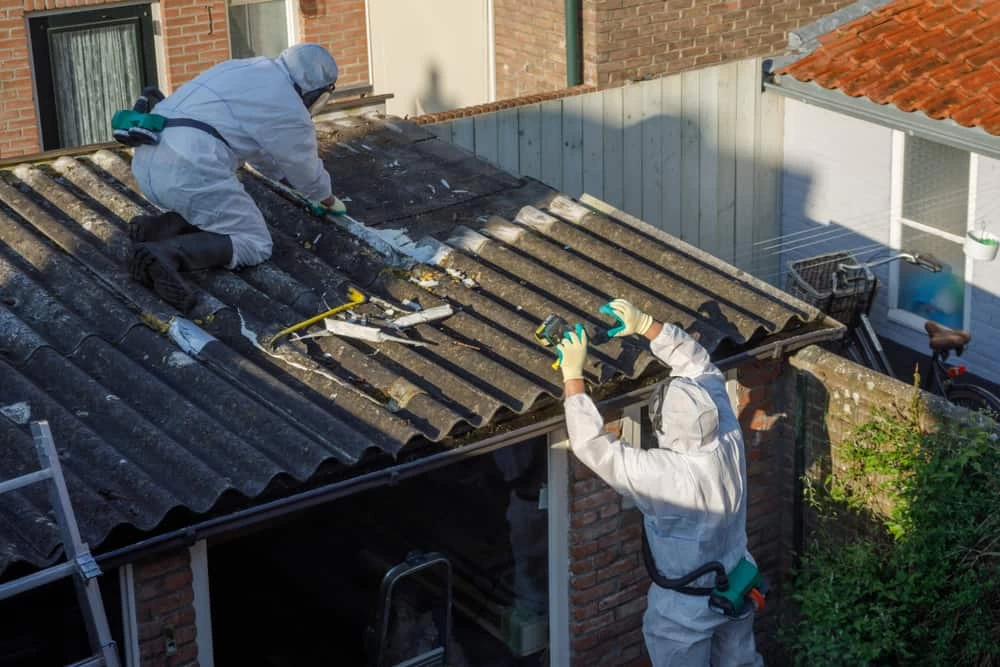
If asbestos-containing materials are confirmed, the abatement phase begins. The work area is contained and sealed, negative air pressure is established, and materials are removed using wet-method techniques that prevent fibers from becoming airborne. For common scenarios in Plandome Manor homes — 9-inch vinyl asbestos floor tiles from the 1950s and 1960s, textured popcorn ceilings, deteriorating pipe insulation around older boilers — these are well-established removal protocols that our crews have handled throughout Nassau County.
Once removal is complete, a final air clearance test is conducted by an independent party to confirm the space is safe. All asbestos waste is packaged, transported under proper protocols, and disposed of exclusively at DEC-certified sites — creating a documented chain of custody. You receive the full paperwork: inspection report, abatement records, clearance certification, and disposal manifests. That’s the file your real estate attorney, your contractor, and any future buyer will ask for.
What's Included Is Driven by What Your Home Actually Needs
Our asbestos abatement service covers the full range of materials found in Nassau County’s older residential housing stock. That includes asbestos floor tile removal — the 9-inch vinyl asbestos tiles standard in mid-century construction are one of the most common finds in Plandome Manor homes built between the 1940s and 1960s. It includes asbestos popcorn ceiling removal, pipe and boiler insulation, roofing materials, transite siding, joint compound, and window caulking. If it’s in the home, it’s in scope.
The service is end-to-end by design. You’re not coordinating between a separate inspector, an abatement crew, a disposal company, and a compliance specialist. One engagement covers the initial survey, the abatement work, all required state notifications, proper waste disposal, and final clearance documentation. For homeowners in a village like Plandome Manor — where projects tend to be large-scale, schedules are tight, and the properties themselves are significant investments — that single point of accountability is the right way to run it.
Because Plandome Manor is an incorporated village with its own permit requirements, we coordinate directly with the village’s administrative process. Insurance certificates are issued naming the Village of Plandome Manor at 55 Manhasset Avenue as Certificate Holder, and Workers’ Compensation documentation is provided in the required state format. You don’t have to chase that paperwork.
Do I legally need an asbestos inspection before renovating my Plandome Manor home?
Yes — and this isn’t a gray area. Under New York State Industrial Code Rule 56, any renovation or demolition that could disturb potential asbestos-containing materials in a pre-1980 building requires a mandatory asbestos survey by a Certified Asbestos Inspector before work begins. The vast majority of homes in Plandome Manor fall into that category, given the village’s median construction year of approximately 1956 and the fact that over 21% of homes were built before 1940.
Skipping this step doesn’t just create a health risk — it creates legal exposure. If a contractor disturbs asbestos without a prior survey, it’s a violation of state law. If it comes up during a future sale, the absence of documentation becomes a liability. The survey is the starting point for doing this correctly, and it’s required regardless of whether you plan to hire an abatement contractor afterward.
What types of asbestos materials are most commonly found in older Nassau County homes?
In homes built between the 1930s and late 1970s — which describes a large share of Plandome Manor’s housing stock — the most common asbestos-containing materials are 9-inch vinyl floor tiles, pipe and boiler insulation, textured or popcorn ceilings, roofing shingles, transite board siding, joint compound used in drywall finishing, and window glazing compound. These materials weren’t hidden or unusual — they were standard products used throughout the industry during that era.
The important distinction is between friable and non-friable asbestos. Friable materials — like deteriorating pipe insulation or crumbling ceiling texture — can release fibers without much disturbance. Non-friable materials, like intact floor tiles, are generally stable unless they’re being cut, drilled, or removed. Either way, the right move before any renovation is a professional inspection to understand what you’re dealing with and whether it needs to be addressed before work starts.
How long does a typical asbestos abatement project take for a home in Plandome Manor?
It depends on the scope — which is exactly why the inspection comes first. A single-room floor tile removal in a mid-century ranch might be completed in one to two days. A whole-home pre-renovation abatement covering multiple material types across a 4,000-square-foot Tudor Revival could take several days to a week, accounting for containment setup, removal, and final air clearance testing.
What affects the timeline in Plandome Manor specifically is the size and age of the homes. Properties here tend to be large, and many have been minimally updated since original construction — meaning there’s more to assess and sometimes more to address. The other factor is scheduling around your renovation contractor. We coordinate directly with your project timeline to make sure abatement is completed and cleared before other trades come in, so you’re not holding up a kitchen renovation or a full-home remodel waiting on clearance paperwork.
Will asbestos abatement affect my home sale in Plandome Manor, NY?
Done correctly, it protects the sale rather than complicating it. Home inspectors working the Port Washington and North Shore market routinely flag asbestos concerns in pre-1980 homes, and buyers’ attorneys in high-value transactions increasingly require abatement documentation before closing. If you’re selling a home in Plandome Manor and asbestos is identified during inspection, having a licensed abatement contractor complete the work — with full documentation — is what moves the transaction forward.
What stalls or kills deals is undisclosed asbestos or abatement that was done without proper licensing and clearance. In a market where homes sell in the multi-million-dollar range, a buyer’s counsel will ask for documentation. If it doesn’t exist or doesn’t meet New York State standards, that becomes a negotiating point at best and a deal-breaker at worst. The clearance file we provide — inspection report, abatement records, air clearance certification, and disposal manifests — is exactly what real estate attorneys and title companies need to move forward cleanly.
Can asbestos be a concern during septic replacement or yard excavation in Plandome Manor?
It can, and it’s a scenario that comes up more in Plandome Manor than in most Nassau County communities because the entire village runs on cesspools and septic systems — there’s no municipal sewer connection. Nassau County’s active Septic Replacement Program is encouraging homeowners across the area to upgrade aging systems, and the Village of Plandome Manor has even referenced the program directly on its permit applications page.
When ground is disturbed for septic work, buried pipes and older underground infrastructure can be exposed. Some of that infrastructure — particularly older clay or transite pipe — may contain asbestos. It’s not a guarantee, but it’s a real enough risk that it’s worth a conversation before excavation begins. If you’re planning a septic upgrade alongside a renovation, we can assess whether asbestos risk applies to the underground scope of the project before the digging starts.
How do I know if a contractor is actually licensed to do asbestos abatement in New York State?
New York State maintains a public database of licensed asbestos contractors through the Department of Labor. Any contractor performing asbestos abatement in New York — including in Nassau County and the incorporated villages of the North Shore — must hold a current NYS DOL license under Industrial Code Rule 56, and every worker on the job must be individually certified. You can verify a contractor’s license directly through the NYS DOL website before you hire anyone.
This matters because unlicensed asbestos work isn’t just a safety issue — it’s illegal, and it creates liability that follows the property. If abatement is performed by an unlicensed contractor, the work won’t produce the documentation that a real estate attorney or future buyer will ask for. In a village like Plandome Manor, where homes are significant assets and transactions are closely scrutinized, cutting corners on licensing is a risk that simply isn’t worth taking. Ask for license numbers upfront, and verify them. Any legitimate contractor will expect that question.