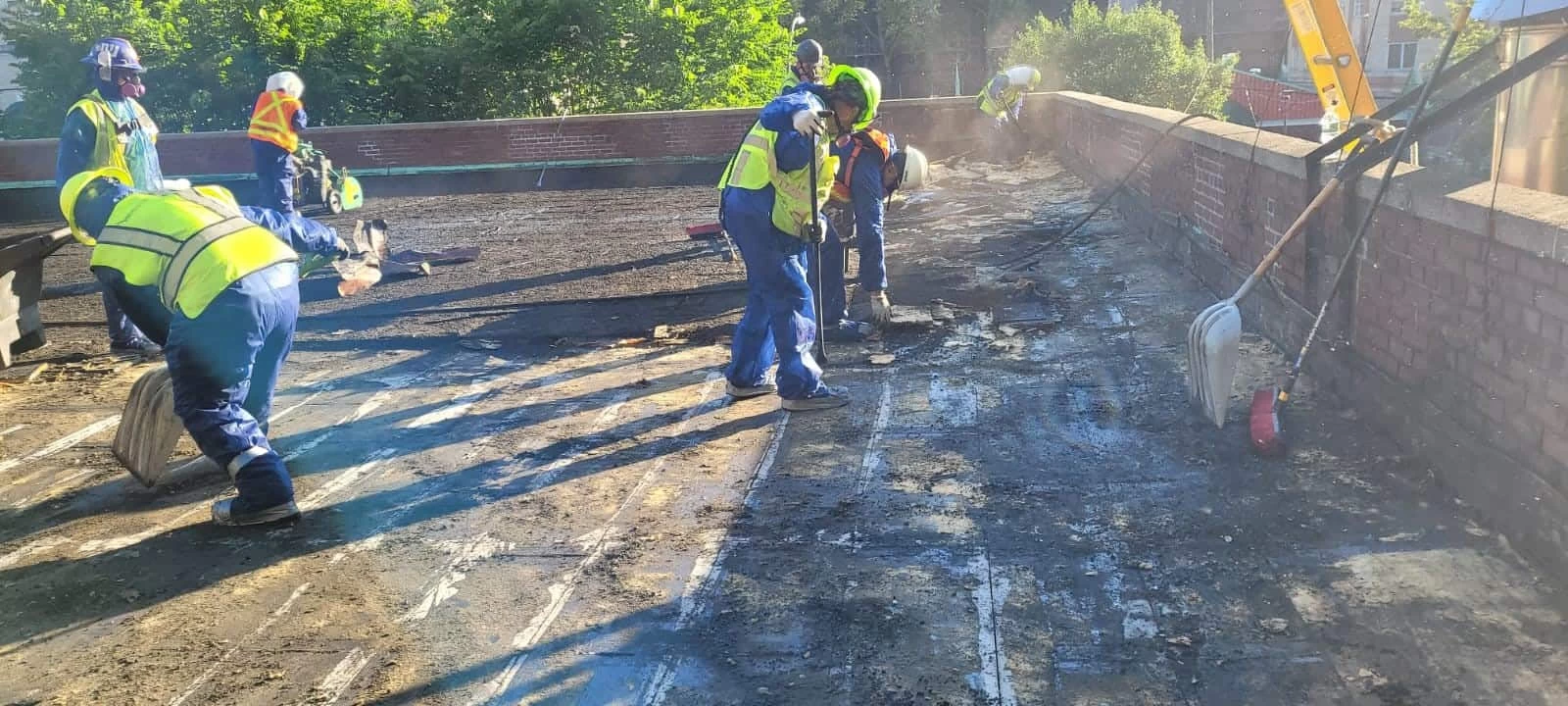
If your renovation just hit a wall literally because someone found asbestos in your Upper West Side co-op, you’re not alone. We handle asbestos abatement in Planetarium, NY and know exactly what it takes to keep your project moving inside these buildings.
I needed a professional consultation explanation of procedure for safe removal of Asbestos in my apartment complex. Without having an account yet, I was very impressed with the caring, knowledgeable and generous advice offered by Jessica, and will look forward to doing business in the future. Thank you so much! I feel much more informed about a sometimes scary endeavor. Peace. Nancy Silva Mineola, NY.
Mia Munoz
Used this company to clean up some water flood in my house. They were fast and easy to work with.very professional, Would recommend to anyone!
Nini Valle
Great company, had a flood and they responded quickly and efficiently. Billed my insurance company directly. I highly recommend this company!
joe colapietro, jr
I had pipe freeze in my basement right before a snow storm and they made to within an hour to help start the clean up process. They we by our side throughout the entire process and even helped with the insurance company. They did such a great job with the cleanup, repair, remidiation, I contracted them to perform the repairs and finishes in the basement. They came with enough manpower and material to get the job done. Leo and Jessica were nothing but a pleasure to deal with!!
Cristian Arredondo c
I had some water damage in my home and Green Island was able to take care of my issue quickly and effectively. I am very pleased with the work they did. They responded quickly and were very professional.
Michael M
Outstanding service! From the office to the field crew everyone was friendly, helpful and responsive. I highly recommend Green Island Group.
The buildings surrounding the Planetarium Station on West 83rd Street the grand pre-war co-ops along Central Park West, West End Avenue, and Riverside Drive were built in an era when asbestos was the standard. Pipe insulation, floor tile mastic, plaster, ductwork it was everywhere. And in a neighborhood where over 63% of homes were built before 1940, finding it during a renovation isn’t a surprise. It’s practically expected.
What matters when it shows up is what happens next. The right abatement contractor doesn’t just remove the material we file the NYC DEP paperwork, coordinate the mandatory post-abatement air clearance testing, and get your building’s managing agent the documentation they need so your renovation contractor can legally get back to work. That’s the outcome you’re actually paying for: not just safe removal, but a cleared path forward.
Pre-war steam heat systems add another layer to this. When a riser fails or pipe insulation starts deteriorating, you can end up dealing with water damage and mold at the same time as disturbed asbestos. We handle all three under one roof one call, one team, one invoice which matters a lot when your co-op board is already watching the clock.
We’re a full-service environmental remediation company serving New York City, Long Island, and the Hudson Valley. Our team holds all required NYC DEP and NYS NYSDOL certifications the non-negotiable credentials for legally performing asbestos abatement in Manhattan buildings. When your managing agent asks for proof of licensure, it’s ready.
Working in Upper West Side pre-war buildings like those in Planetarium isn’t the same as working in a suburban house. There are service elevator reservations, co-op board documentation requirements, restricted work hours, and floor protection rules. We’ve navigated all of it in occupied Manhattan buildings, on tight renovation timelines, with multiple stakeholders waiting on clearance paperwork.
And when asbestos removal is part of a larger water damage or mold situation which it often is in the aging mechanical systems of buildings near the American Museum of Natural History corridor there’s no handoff to a second contractor. We cover the full scope, start to finish.
It usually starts with a phone call after a contractor stops work. You’ve got a renovation underway in a pre-1987 building, someone flagged a material that needs testing, and now everything is on hold. The first step is a professional inspection we offer free inspections and estimates, so you know the full scope before any decisions are made. That upfront assessment covers all the places ACM typically hides in buildings like yours: steam riser insulation, pipe elbows, floor tile adhesive, window glazing compound, and plaster.
Once the scope is confirmed, the NYC DEP project notification is filed a mandatory step that requires at least seven days’ advance notice before abatement work can begin. While that window runs, we coordinate with your building’s managing agent on work hours, service elevator access, and any co-op board documentation required. In Manhattan, this coordination isn’t optional it’s part of the job.
The abatement itself is performed under full containment, following NYC DEP, NYS NYSDOL, EPA, and OSHA protocols. When the work is done, an independent industrial hygienist conducts the mandatory post-abatement air clearance test. That clearance certificate is what your DOB inspector, your co-op board, and your renovation contractor all need to see before work resumes and it’s what closes the loop on the entire process.
Asbestos abatement in Planetarium covers the full range of materials common to Upper West Side pre-war construction. That includes asbestos pipe insulation and riser wrapping the most frequently encountered material in steam-heated buildings throughout the West 80s along with floor tile and mastic removal, popcorn ceiling remediation where it exists in mid-century units, ductwork insulation, plaster and joint compound, and window glazing compounds. If it’s in the building and it contains asbestos, we assess and address it.
Every project includes the required NYC DEP filing, containment setup, regulated material removal and disposal, and coordination of the mandatory post-abatement air clearance test. For projects triggered by a water damage event or pipe failure a common scenario in buildings with aging steam systems we handle mold remediation and water damage restoration simultaneously, eliminating the need to bring in a second contractor and restart the documentation process from scratch.
We also work directly with insurance carriers when abatement is part of a covered claim, handling the billing and claims documentation on your behalf. For co-op owners and building managers in the Planetarium area dealing with an unexpected abatement situation mid-renovation or mid-repair, that kind of end-to-end handling makes a real difference. Free inspections and estimates are available the right starting point before your co-op board starts asking questions.
Do I need NYC DEP approval before asbestos abatement in my Planetarium co-op?
Yes and this is one of the most important things to understand before any work begins. In New York City, asbestos abatement in a pre-1987 building requires a NYC DEP-licensed contractor, a mandatory project notification filed at least seven days before work starts, and either an ACP-5 or ACP-7 form submitted to the NYC Department of Buildings before any renovation permit is issued. No permit, no renovation. That’s the sequence.
For co-op owners in the Planetarium area where virtually every building in the West 80s was constructed before 1940 this process applies to nearly every gut renovation, kitchen overhaul, or HVAC upgrade. A contractor who isn’t familiar with NYC DEP filing requirements, or who doesn’t hold the required city-level license, cannot legally perform this work in your building. We hold all required NYC DEP and NYS NYSDOL certifications and handle the full filing process as part of every project.
How long does asbestos abatement take in a Manhattan pre-war apartment building?
The timeline depends on scope, but there’s a built-in minimum you need to plan around: NYC DEP requires at least seven days’ advance notification before abatement work can begin. That’s a regulatory window, not a scheduling preference it applies to every project in the five boroughs regardless of size. For larger projects that exceed 160 square feet, 260 linear feet, or 35 cubic feet of regulated material, EPA NESHAP also requires 10 working days’ notice to state agencies.
Once work begins, a small single-room project a section of pipe insulation or floor tile removal can typically be completed in one to two days. Larger scopes, like full pipe riser abatement in a multi-floor building, take longer and require more coordination with building management. After the abatement is complete, the mandatory post-abatement air clearance test must be conducted and passed before the space can be reoccupied or your renovation contractor can return. Factor that testing window into your overall renovation schedule from the start.
What does asbestos abatement typically cost for an Upper West Side apartment renovation?
Residential asbestos abatement in New York City generally runs between $1,500 and $30,000 depending on the scope of work. Smaller projects a section of pipe insulation, floor tile mastic in a single room, or a localized ceiling area typically land in the $2,200 to $6,500 range all-in. Larger projects involving multiple material types, full riser systems, or building-wide abatement in a pre-war co-op can go well beyond that.
It’s worth knowing that NYC and Long Island asbestos removal costs increased roughly 8 to 12 percent in 2025 and 2026, driven by updated NYS DOL licensing requirements and higher regulated waste disposal fees. Post-abatement air clearance testing mandatory in NYC adds an additional $300 to $800 to most projects, though many contractors include it in their quoted price. The most common source of budget overruns isn’t the initial quote it’s undiscovered scope. A thorough upfront assessment that identifies all asbestos-containing materials in the project area before work begins is the best way to avoid mid-renovation surprises.
What types of asbestos materials are most common in Planetarium area pre-war buildings?
In the pre-war co-op and apartment buildings that define the Planetarium area the blocks along Central Park West, West End Avenue, and Riverside Drive the most consistently encountered asbestos-containing materials are steam pipe insulation and riser wrapping, floor tile and the mastic adhesive beneath original hardwood floors, plaster and joint compound, and window glazing compounds. These buildings were constructed between roughly 1910 and 1940, during the decades when asbestos was the default choice for insulation and fireproofing.
Steam heat systems are nearly universal in these buildings, which means pipe insulation is the most frequent find during kitchen, bathroom, and HVAC renovations. Floor tile mastic is the second most common often discovered when original flooring is pulled up during a gut renovation. Popcorn ceiling texture containing asbestos is less common in true pre-war buildings but does appear in mid-century units that were updated in the 1950s through 1970s. A proper pre-renovation asbestos survey, which typically costs $650 to $2,200, identifies all of these materials before your renovation contractor starts demo.
Can asbestos abatement work happen while other tenants are still in the building?
It depends on the scope and location of the work. For contained projects a single apartment unit, a mechanical room, or a section of pipe in a sealed area abatement can often proceed in an occupied building, provided proper containment barriers are established and the work area is isolated from the rest of the building. NYC DEP protocols require full containment of the work zone, negative air pressure systems, and HEPA filtration to prevent fiber migration into adjacent spaces.
For larger projects, or work in common areas like hallways, boiler rooms, or shared pipe chases, the building’s managing agent and co-op board will typically have specific requirements around tenant notification and temporary access restrictions. In Upper West Side co-op buildings like those in Planetarium, these decisions usually go through the managing agent and may require board notification. We coordinate directly with building management on all of this including required documentation, work hour compliance, and service elevator logistics so the process is handled correctly from the building’s perspective, not just the regulatory one.
What happens if asbestos is found during a water damage or pipe failure in my building?
This is one of the most common emergency scenarios in pre-war Manhattan buildings, and it’s exactly the kind of situation where having one contractor who handles everything matters. When a steam riser fails or a pipe bursts in a building with asbestos-wrapped insulation which describes most pre-war buildings in the Planetarium area you’re often dealing with water damage, potential mold conditions, and disturbed asbestos simultaneously. Treating these as three separate problems requiring three separate contractors creates delays, documentation gaps, and a longer path back to a safe, habitable space.
We handle asbestos abatement, mold remediation, and water damage restoration under one license and one project team. When the situation is covered by insurance and pipe failures in co-op buildings often are we work directly with your carrier, handling billing and claims documentation on your behalf. Response is available 24 hours a day, 365 days a year, with verified arrival times of 30 minutes to one hour. In a building where a pipe failure at midnight can affect multiple units and trigger immediate board and management involvement, that around-the-clock availability isn’t a selling point it’s the only acceptable standard.