Port Ben’s older frame houses carry decades of character and sometimes, decades of asbestos. We provide licensed asbestos abatement for homeowners and property owners throughout Port Ben and Ulster County.
I needed a professional consultation explanation of procedure for safe removal of Asbestos in my apartment complex. Without having an account yet, I was very impressed with the caring, knowledgeable and generous advice offered by Jessica, and will look forward to doing business in the future. Thank you so much! I feel much more informed about a sometimes scary endeavor. Peace. Nancy Silva Mineola, NY.
Mia Munoz
Used this company to clean up some water flood in my house. They were fast and easy to work with.very professional, Would recommend to anyone!
Nini Valle
Great company, had a flood and they responded quickly and efficiently. Billed my insurance company directly. I highly recommend this company!
joe colapietro, jr
I had pipe freeze in my basement right before a snow storm and they made to within an hour to help start the clean up process. They we by our side throughout the entire process and even helped with the insurance company. They did such a great job with the cleanup, repair, remidiation, I contracted them to perform the repairs and finishes in the basement. They came with enough manpower and material to get the job done. Leo and Jessica were nothing but a pleasure to deal with!!
Cristian Arredondo c
I had some water damage in my home and Green Island was able to take care of my issue quickly and effectively. I am very pleased with the work they did. They responded quickly and were very professional.
Michael M
Outstanding service! From the office to the field crew everyone was friendly, helpful and responsive. I highly recommend Green Island Group.
Your Home Is Safe, Documented, and Move-Forward Ready
When asbestos turns up mid-renovation under the floor tiles, behind the walls, wrapped around old pipe insulation everything stops. That’s the reality for a lot of homeowners in Port Ben, where the housing stock is older and the materials inside those walls reflect it. The 9×9 vinyl floor tiles common in mid-century frame homes, the textured popcorn ceilings, the pipe insulation on aging boilers these are exactly the materials that carry asbestos risk, and they show up constantly in the kind of homes that line Towpath Road and Port Ben Road.
What you get on the other side of a proper abatement isn’t just a cleared space. It’s documented air clearance results showing the area is clean, a completed permit file with the NYS DOL, and the ability to move forward with your renovation without legal exposure. For homeowners near the Rondout Creek corridor, where water intrusion events can force emergency repairs and disturb old building materials without warning, that documentation isn’t just peace of mind it’s protection.
We handle the whole process: the permits, the containment, the removal, and the post-abatement air monitoring. You don’t coordinate multiple contractors or navigate state paperwork alone. One team, one timeline, one clear outcome.
We hold the NYS DOL Asbestos Handling License the specific, state-issued credential required by law to perform asbestos abatement in New York. This isn’t a general contractor license or an OSHA card. It’s the one credential that legally authorizes this work under Industrial Code Rule 56, and it’s verifiable through the state’s own contractor lookup. Every worker on your job is certified. Every project is filed with the Albany District Office, which oversees Ulster County abatement compliance.
Beyond licensing, we carry IICRC certification for water and fire damage, NYS DOL Mold certification, USEPA Lead and RRP credentials, and MBE/WBE/MWBE designations. That matters for commercial and municipal clients in the Wawarsing area including institutional properties near Napanoch where procurement requires verified credentials, not just a business card.
For Port Ben homeowners dealing with older properties, our approach is straightforward: we verify everything upfront, we handle the state paperwork, and we document the outcome so you have proof the work is done right. That’s the standard we hold ourselves to on every job.
No Guesswork Here's Exactly What the Job Looks Like
It starts with an assessment. Before anything is touched, the materials in question are identified and evaluated. If testing is needed, that happens first. Once asbestos-containing materials are confirmed, the project scope is defined what’s being removed, how the space will be contained, and what the timeline looks like. For Port Ben homeowners, this step often surfaces materials that weren’t on anyone’s radar: black mastic adhesive under old tile, pipe wrap on a basement boiler, joint compound in plaster walls from the 1940s.
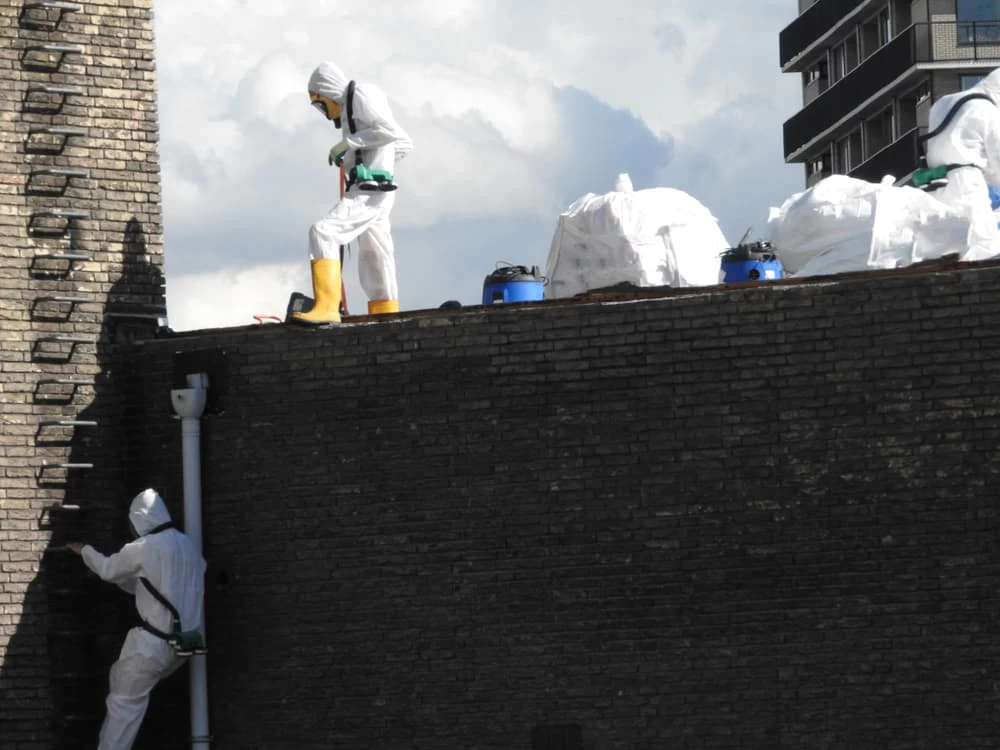
From there, we file the required pre-abatement notification with the NYS DOL Asbestos Control Bureau. In Ulster County, that means the Albany District Office and this step is non-negotiable under state law. The filing is handled for you. Once approved, the work area is sealed under negative pressure containment, which keeps the rest of your home livable while the removal happens. Workers in full PPE remove the materials, package them according to state hazardous waste requirements, and transport them to an approved disposal facility.
After removal, post-abatement air monitoring is conducted by a certified industrial hygienist. You receive written clearance results. That documentation is what allows your contractor to resume work, what satisfies a home inspector, and what gives you a straight answer when someone asks if the space is actually clean.
Asbestos abatement in Port Ben isn’t a one-size situation. The materials vary by era and construction type and the homes here reflect that range. We handle asbestos tile removal, including the 9×9 floor tiles and their adhesive mastic that are almost a given in pre-1960s frame homes throughout the Town of Wawarsing. We handle asbestos popcorn ceiling removal, pipe and duct insulation, joint compound, roofing materials, and exterior siding. If it’s in the structure, it’s within scope.
Every project includes permit filing with the NYS DOL, full negative-pressure containment, certified removal and disposal, and post-abatement air clearance testing with written results. If your abatement is connected to water damage which is a real scenario for properties along the Rondout Creek corridor we can fold water damage restoration into the same project engagement. No handoff to a second company, no gap in coverage.
For homeowners dealing with insurance claims, we bill directly. That means one less thing to manage when you’re already dealing with a disrupted renovation or an emergency repair. The process is designed around the reality that most people calling about asbestos are already stressed and our job is to reduce that, not add to it.
Do I need a permit for asbestos removal in Port Ben, NY?
Yes and it’s not optional. Under New York State Industrial Code Rule 56, any asbestos disturbance that involves 10 square feet or more of surface material, or 25 linear feet or more of pipe or duct insulation, requires a fully licensed abatement project with pre-notification to the NYS DOL Asbestos Control Bureau. For Port Ben and all of Ulster County, that notification goes to the Albany District Office.
This means that if your contractor pulls up old floor tile or cuts into a wall and finds asbestos, work legally stops until a licensed abatement contractor files the proper paperwork and completes the removal. We handle that entire filing process as part of the job you don’t have to figure out the state portal or track down the right district office. The permit is handled, the notification is filed, and the project moves forward legally and on record.
How do I know if the floor tiles in my older Port Ben home contain asbestos?
The honest answer is that you can’t tell by looking. The 9×9 inch vinyl floor tiles that were standard in homes built from the 1930s through the early 1970s the kind you’ll find throughout Port Ben’s older frame housing stock are one of the most common sources of asbestos in residential properties. The black adhesive mastic underneath them is often just as problematic as the tile itself.
The only way to know for certain is to have a sample tested by a certified laboratory. We can collect the sample, have it analyzed, and give you a straight answer before any work begins. If asbestos is confirmed, the tile removal is handled under full containment the tiles and mastic are removed together, disposed of properly, and the space is cleared and documented. Trying to pull old tile yourself without testing first is one of the more common ways people accidentally create an exposure event.
Can flood damage from Rondout Creek disturb asbestos in my walls or floors?
It can, and it’s a scenario that comes up more than people expect in properties along the Rondout Creek corridor. When water intrudes into an older home and forces emergency repairs opening walls, pulling up flooring, addressing soaked pipe insulation there’s a real chance those materials contain asbestos. Disturbing them without proper containment and removal protocol creates an exposure risk that doesn’t go away on its own.
If you’ve had water damage in a pre-1980 home in Port Ben and repairs are forcing you into the walls or floors, an asbestos assessment should happen before that work proceeds. We handle both sides of this asbestos abatement and water damage restoration which means you’re not coordinating two separate contractors or waiting on one to finish before the other can start. Our 24/7 availability matters here too, because water damage doesn’t wait for business hours and neither does the asbestos risk that comes with it.
What does asbestos abatement typically cost for a home in Ulster County?
For a typical residential project in the Port Ben and Wawarsing area a single room, one material type like floor tile or a section of pipe insulation you’re generally looking at a range of $1,500 to $5,000. Larger projects, like whole-house abatement or removal of multiple material types across several areas, can run $10,000 to $30,000 or more depending on scope.
A few things affect the number: the type and quantity of material, the accessibility of the space, whether the project is planned or emergency-driven, and whether post-abatement air monitoring is factored in which it should be, because it’s required under New York State law regardless. We provide free estimates, so you get a real number before committing to anything.
What's the difference between asbestos abatement and asbestos remediation?
The terms get used interchangeably, but there’s a practical distinction worth understanding. Asbestos abatement typically refers to the physical removal of asbestos-containing materials from a structure taking out the tile, the insulation, the ceiling texture and disposing of it properly. Asbestos remediation is a broader term that can include abatement but also covers encapsulation, where intact materials are sealed rather than removed, and the overall process of bringing a property into a safe, compliant condition.
In New York State, the regulatory framework under ICR56 governs both approaches. Whether materials are removed or encapsulated depends on their condition, location, and what’s being done with the space. For most renovation projects in Port Ben’s older homes where materials are being disturbed anyway full removal is typically the right call. Encapsulation is more common in situations where materials are intact and the space isn’t being actively renovated. We’ll walk you through which approach applies to your specific situation based on the assessment, not a default recommendation.
Is the popcorn ceiling in my Port Ben home likely to contain asbestos?
If your home was built or last renovated before 1980, there’s a meaningful chance the answer is yes. Textured ceiling finishes the spray-applied popcorn or cottage cheese style common from the 1950s through the late 1970s frequently contained asbestos as a binder and fire-retardant additive. It was cheap, effective, and widely used. In the frame homes throughout Port Ben and the surrounding Town of Wawarsing, this era of construction is the norm, not the exception.
The risk isn’t just in having it it’s in disturbing it. As long as the ceiling is intact and undisturbed, the material is generally considered non-friable and lower-risk. But the moment someone scrapes it, sands it, or damages it, asbestos fibers become airborne. That’s when exposure happens. If you’re planning to remove a popcorn ceiling, update a room, or even just patch a damaged area in an older home, have the material tested first. Asbestos popcorn ceiling removal requires the same licensed process as any other abatement containment, certified removal, proper disposal, and air clearance testing before the space is reopened.