Most Port Jefferson Station homes were built during the exact decades asbestos was used in nearly everything floors, ceilings, pipes, walls. If you’re renovating or just found out you might have a problem, we handle asbestos abatement the right way, start to finish.
I needed a professional consultation explanation of procedure for safe removal of Asbestos in my apartment complex. Without having an account yet, I was very impressed with the caring, knowledgeable and generous advice offered by Jessica, and will look forward to doing business in the future. Thank you so much! I feel much more informed about a sometimes scary endeavor. Peace. Nancy Silva Mineola, NY.
Mia Munoz
Used this company to clean up some water flood in my house. They were fast and easy to work with.very professional, Would recommend to anyone!
Nini Valle
Great company, had a flood and they responded quickly and efficiently. Billed my insurance company directly. I highly recommend this company!
joe colapietro, jr
I had pipe freeze in my basement right before a snow storm and they made to within an hour to help start the clean up process. They we by our side throughout the entire process and even helped with the insurance company. They did such a great job with the cleanup, repair, remidiation, I contracted them to perform the repairs and finishes in the basement. They came with enough manpower and material to get the job done. Leo and Jessica were nothing but a pleasure to deal with!!
Cristian Arredondo c
I had some water damage in my home and Green Island was able to take care of my issue quickly and effectively. I am very pleased with the work they did. They responded quickly and were very professional.
Michael M
Outstanding service! From the office to the field crew everyone was friendly, helpful and responsive. I highly recommend Green Island Group.
You stop guessing. That’s the first thing. When asbestos-containing materials are properly identified, contained, removed, and cleared with air quality testing to back it up you’re not just moving forward on a renovation. You’re moving forward knowing your home is genuinely safe.
Port Jefferson Station has a housing stock built almost entirely during the peak asbestos era. The postwar boom that built this community the Cape Cods off Route 112, the split-levels near Comsewogue, the older colonials throughout the hamlet produced homes that routinely used asbestos in floor tiles, pipe insulation, textured ceilings, and joint compound. That’s just the reality of when this neighborhood was built.
What you get on the other side of a proper abatement is clearance documentation that holds up with your contractor, your real estate attorney, your buyer, or your building department. No loose ends, no liability hanging over your head, no wondering if the job was done right. The work is done, the air is tested, and you have the paperwork to prove it.
Certified Asbestos Remediation in Port Jefferson Station
Certified, Accountable, and Familiar With Port Jefferson Station Homes
We are a New York State-certified asbestos abatement contractor. Every person on your project holds the individual NYSDOL certifications required by state law not just the company license, but the worker-level credentials that actually matter when the work is happening inside your home.
We work across Suffolk County, including Port Jefferson Station and the surrounding communities of Terryville, Selden, Mount Sinai, and East Setauket. Our team knows the housing stock here the materials common in Brookhaven Town homes from the 1950s through the 1970s, the specific spots where asbestos tends to show up in Port Jefferson Station properties, and the local regulatory requirements that apply to your project.
When you call, you get direct answers. When the work starts, you get a crew that’s done this before not just on paper, but in homes like yours throughout this area.
Asbestos Abatement Process Port Jefferson Station NY
Here's Exactly How This Goes From Start to Clearance
It starts with an inspection. A certified inspector visits your home, identifies materials that may contain asbestos, and collects bulk samples for lab analysis. You don’t need to guess what’s in your floors or ceiling the lab results tell you exactly what you’re dealing with and where.
If asbestos-containing materials are confirmed, we file the required pre-project notification with the New York State Department of Labor before any work begins. That’s a legal requirement in New York, and it’s not optional. The work area is then sealed off with proper containment plastic sheeting, negative air pressure using HEPA-filtered air scrubbers, and restricted access to protect the rest of your home throughout the process.
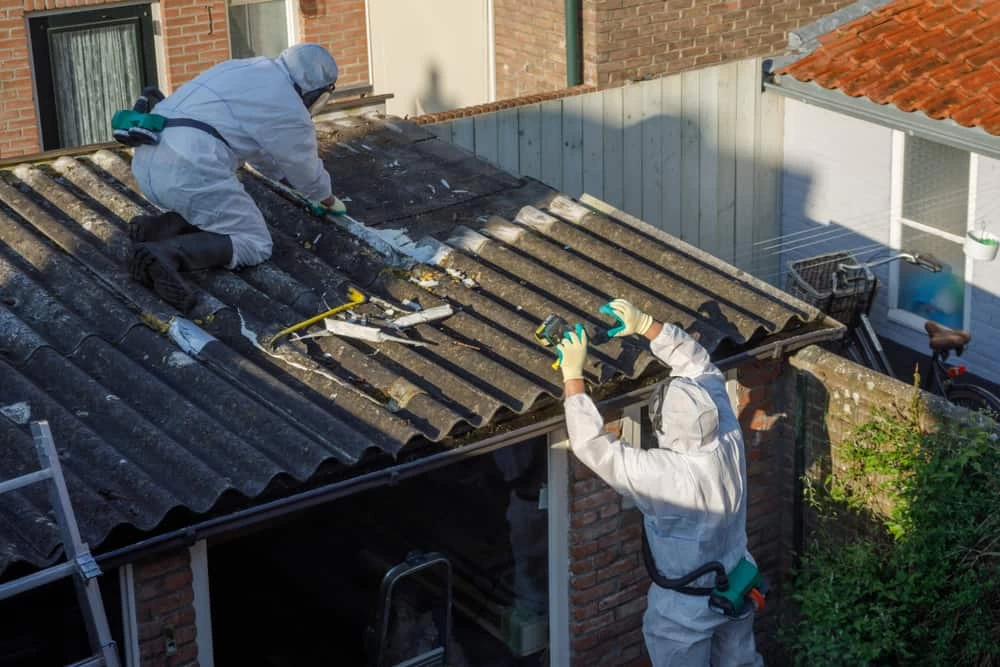
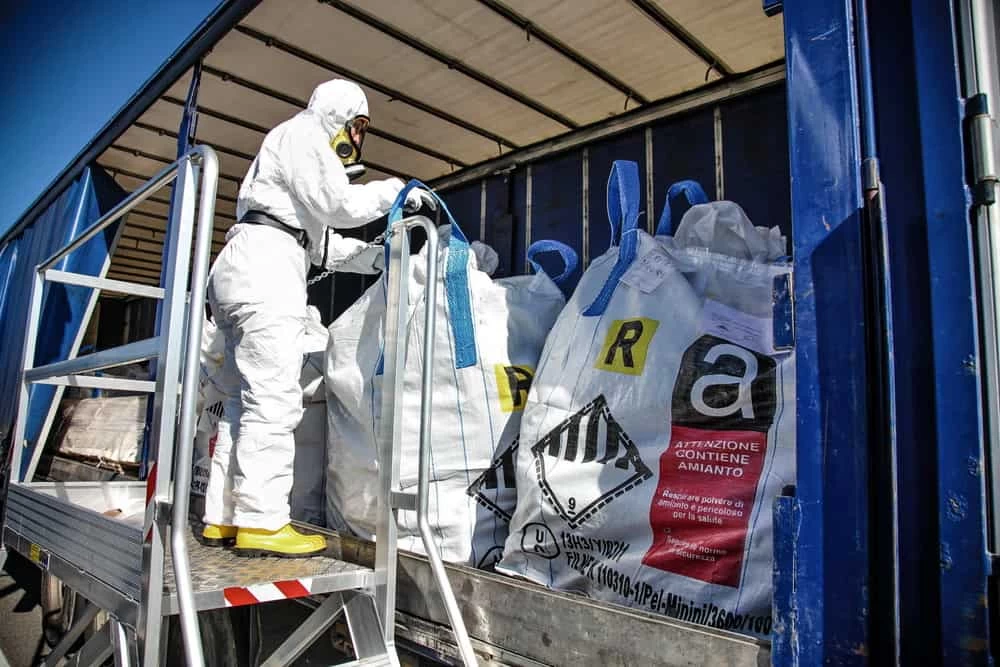
Removal is performed by certified workers using wet methods and HEPA vacuuming to keep fibers from becoming airborne. All asbestos waste is properly packaged, labeled, and transported to a licensed disposal facility nothing gets left behind or handled carelessly. Once removal is complete, post-abatement air clearance testing is conducted by an independent party to confirm the space meets New York State standards before anyone re-enters. You receive full documentation of the entire process: the lab results, the notification filings, the clearance test, all of it.
The Materials We Remove Most Often in Port Jefferson Station Homes
In Port Jefferson Station, the most common asbestos finds in residential properties follow a predictable pattern. The 9×9 inch vinyl floor tiles in kitchens, basements, and utility rooms nearly universal in homes built from the 1950s through the early 1970s are among the highest-probability asbestos sources in this area. The black mastic adhesive beneath those tiles is often just as problematic as the tiles themselves. Asbestos tile removal requires proper containment and wet methods to keep the material intact during removal, and we handle both the tiles and the adhesive.
Popcorn ceiling removal is another common request throughout Port Jefferson Station. Textured ceilings applied before 1980 frequently contain asbestos, and disturbing them without proper abatement even during a simple repaint or drywall repair can release fibers into your living space. Pipe insulation and boiler wrap in older mechanical rooms, joint compound in walls, and asbestos-cement siding or roofing on some older North Shore homes round out the most frequent finds.
Every project we take on in the Port Jefferson Station area is handled under full New York State compliance: certified crew, proper containment, licensed waste disposal, and post-clearance air testing. Whether it’s a single bathroom floor or a full basement remediation, the process doesn’t change. The documentation you receive at the end is the same regardless of project size because your clearance certificate needs to hold up, whether you’re showing it to a contractor, a buyer, or a building inspector.
Does my Port Jefferson Station home actually need asbestos testing before I renovate?
If your home was built before 1980, the honest answer is yes especially before any renovation that disturbs flooring, ceilings, walls, or mechanical systems. New York State law requires that suspect materials be tested and, if asbestos-containing materials are confirmed above regulatory thresholds, that abatement be completed by a certified contractor before work proceeds. This isn’t a technicality. It’s a real liability issue for you and a real health risk for the workers in your home.
Port Jefferson Station’s housing stock is overwhelmingly from the postwar era the same decades when asbestos was used in floor tiles, pipe wrap, ceiling texture, and joint compound as a matter of routine. A general contractor or handyman who tears into those materials without testing isn’t just cutting corners. They’re potentially exposing your family to airborne fibers and leaving you responsible for the aftermath. A pre-renovation inspection is a straightforward step that removes all of that uncertainty before the first tool hits the wall.
How much does asbestos removal typically cost for a home in this area?
Based on completed projects in the Port Jefferson Station area, asbestos removal typically runs between $20 and $65 per square foot, with most residential jobs landing somewhere between $1,200 and $3,000 depending on the material type, the scope of the affected area, and the level of containment required. Pipe insulation removal in a utility room and full-room floor tile remediation are priced differently, and the lab analysis, air monitoring, and waste disposal are all factors in the final number.
What drives the cost up isn’t the removal itself it’s the compliance. Proper containment, certified labor, licensed disposal, and post-clearance air testing are all required under New York State law. A quote that skips those line items isn’t a deal. It’s a liability. When you get an estimate from us, every cost is itemized and explained before any work begins. No surprises on the back end.
What happens if asbestos is found during a home inspection in Port Jefferson Station?
It depends on the condition of the material and where it is. Not all asbestos-containing materials require immediate removal. If the material is in good condition and undisturbed meaning it’s not crumbling, flaking, or being impacted by renovation work it may be appropriate to leave it in place and monitor it. This is called operations and management, and it’s a legitimate approach in some situations. The key is having a certified inspector assess the material, not guessing.
Where it becomes urgent is in a real estate transaction. With Port Jefferson Station home values near $600,000, buyers and their lenders are not going to overlook a flagged asbestos finding without documentation. Most buyers will require either abatement or a detailed inspection report confirming the material is stable and non-friable before closing. We can provide the inspection report, perform the abatement if needed, and issue the clearance documentation your real estate attorney needs to keep the transaction moving.
Is asbestos in popcorn ceilings actually dangerous, or is it only a problem if disturbed?
Both things are true, and that’s what makes it tricky. Asbestos in a popcorn ceiling that’s fully intact and undisturbed poses a low immediate risk. The fibers are bound in the texture material and aren’t becoming airborne on their own. The danger comes when that ceiling is scraped, sanded, drilled into, or damaged at which point the fibers can be released and inhaled. That’s when the risk becomes real and immediate.
The problem is that homeowners in Port Jefferson Station often don’t know the ceiling has asbestos until they’re already mid-renovation. A painter starts scraping, a contractor drills for a light fixture, or a water leak damages the texture and suddenly you have a potential exposure event. If you have a textured ceiling in a home built before 1980 and you’re planning any work that touches it, testing first is the right call. If asbestos is confirmed, we handle the full removal with proper containment so the rest of your home stays protected throughout the process.
How long does asbestos abatement take, and can I stay in my home during the work?
The timeline depends on the scope of the project. A single-room floor tile removal in a Port Jefferson Station home might be completed in one to two days. A larger project involving multiple rooms, pipe insulation throughout a basement, or a full popcorn ceiling remediation could take three to five days or longer. The pre-project notification required by New York State also has a mandatory waiting period before work can begin, so that’s a factor to build into your timeline if you’re working around a renovation schedule or a real estate closing date.
As for staying in the home it depends on where the work is happening and how the containment is set up. In many cases, residents can remain in unaffected parts of the house while abatement is underway in a contained area. In other situations, particularly when work is happening in a central HVAC zone or a large portion of the living space, temporary relocation may be the safer and more practical choice. We walk through this with you before the project starts so you’re not caught off guard.
Why does Green Island Group serve Port Jefferson Station specifically are you actually local?
We operate throughout Suffolk County, and Port Jefferson Station is a core part of our service area not an afterthought. Our team works regularly in Brookhaven Town communities, including the neighborhoods around Route 112, Nesconset Highway, Terryville, and the surrounding hamlets. The housing stock here is well-known to our crew: postwar construction, North Shore materials, the specific asbestos sources common to this part of Long Island.
Port Jefferson Station also has a particular environmental history that we take seriously. The Lawrence Aviation Industries Superfund site right here in this community required the removal of over 2,300 tons of asbestos-containing material as part of a decades-long, $48 million cleanup that wrapped up in 2025. Residents here understand better than most what proper environmental remediation looks like and what it means when it isn’t done right. We bring that same standard to every residential project in the area because this community has earned the right to expect it.