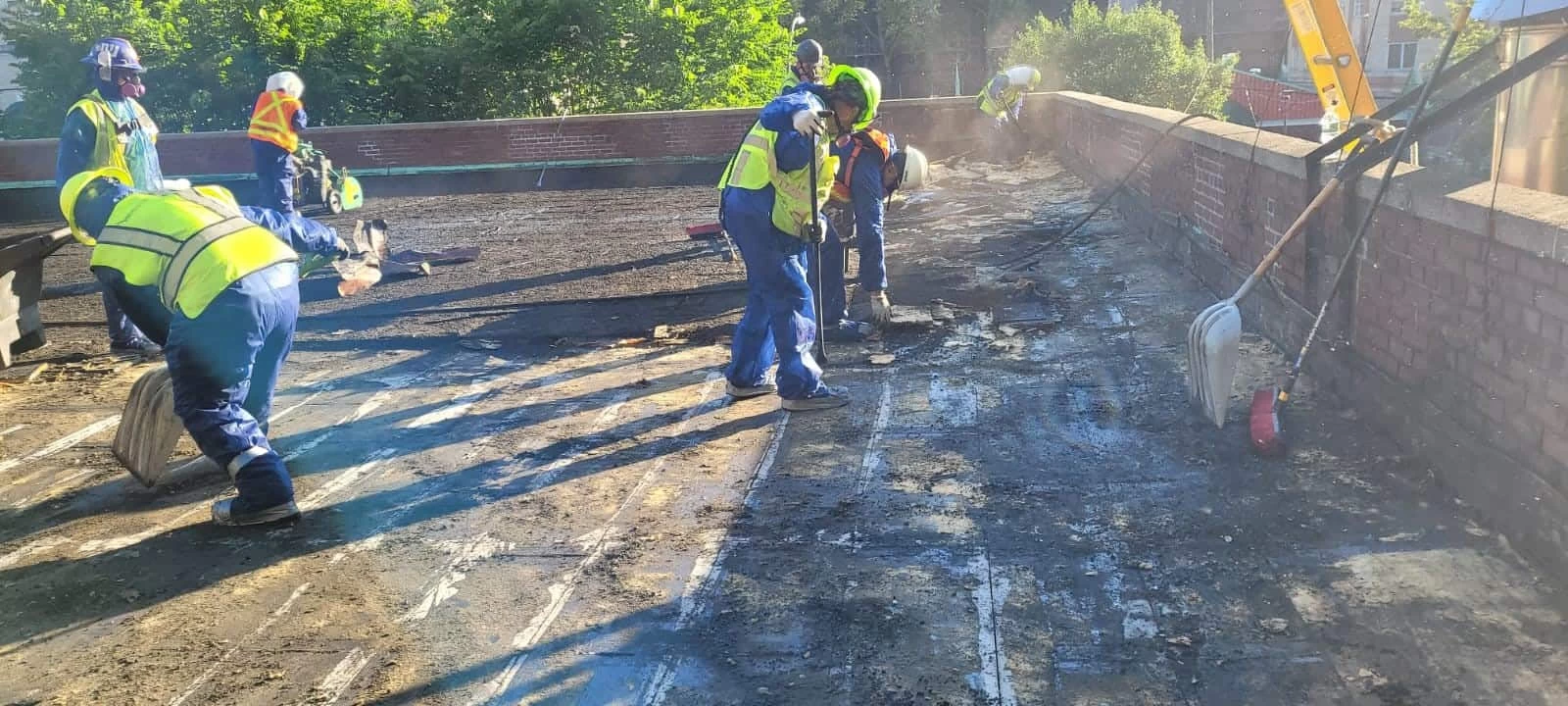
When your Prince Street renovation hits a wall literally we handle asbestos abatement from inspection through DEP clearance, so your project keeps moving.
I needed a professional consultation explanation of procedure for safe removal of Asbestos in my apartment complex. Without having an account yet, I was very impressed with the caring, knowledgeable and generous advice offered by Jessica, and will look forward to doing business in the future. Thank you so much! I feel much more informed about a sometimes scary endeavor. Peace. Nancy Silva Mineola, NY.
Mia Munoz
Used this company to clean up some water flood in my house. They were fast and easy to work with.very professional, Would recommend to anyone!
Nini Valle
Great company, had a flood and they responded quickly and efficiently. Billed my insurance company directly. I highly recommend this company!
joe colapietro, jr
I had pipe freeze in my basement right before a snow storm and they made to within an hour to help start the clean up process. They we by our side throughout the entire process and even helped with the insurance company. They did such a great job with the cleanup, repair, remidiation, I contracted them to perform the repairs and finishes in the basement. They came with enough manpower and material to get the job done. Leo and Jessica were nothing but a pleasure to deal with!!
Cristian Arredondo c
I had some water damage in my home and Green Island was able to take care of my issue quickly and effectively. I am very pleased with the work they did. They responded quickly and were very professional.
Michael M
Outstanding service! From the office to the field crew everyone was friendly, helpful and responsive. I highly recommend Green Island Group.
SoHo’s cast-iron loft buildings are architectural landmarks. They’re also layered with over a century of construction history pipe insulation, floor tile adhesives, plaster, boiler wrap all installed during the decades when asbestos was standard practice. When you’re planning a gut renovation on or near Prince Street, discovering asbestos mid-project isn’t a worst-case scenario. It’s a near-certainty. The question is whether you have a contractor who knows what to do next.
What that looks like in practice: your renovation doesn’t stop for two weeks while someone figures out the ACP-7 filing. Your co-op board gets the documentation they need without you having to chase it down. Your air clearance testing gets scheduled and completed by an independent firm, as NYC requires so reoccupancy is confirmed and documented before anyone moves back in.
These aren’t abstract outcomes. They’re the specific checkpoints that determine whether your SoHo loft renovation closes on time or bleeds money sitting idle. We’ve navigated this process in New York City’s regulatory environment, and the difference between a contractor who knows it and one who’s learning on your project is measured in weeks and thousands of dollars.
We are a full-service environmental remediation company serving all five boroughs, including the Prince Street corridor in SoHo and NoLita. Every asbestos abatement project we handle is staffed by NYS DOL-certified handlers and supervisors, operating under full NYC DEP certification and in compliance with the updated asbestos abatement rules that took effect February 14, 2025. That’s not a credential we mention once and move on from it’s the standard every project is held to.
What sets us apart in a market like SoHo isn’t just the certifications. It’s the operational fluency. We understand that a loft building on Prince Street is landmarked, that the co-op board needs specific documentation before approving an alteration agreement, and that the ACP-7 filing has to go through NYC DEP’s ARTS system before a single square foot of material is touched. We also handle asbestos abatement, water damage restoration, and mold remediation under one roof which matters in 19th-century buildings where problems rarely travel alone.
We’re available 24 hours a day, 365 days a year, and we offer free inspections and estimates with plain-English guidance through the process.
It starts with a free inspection. We come to your property whether that’s a loft on Prince Street, a mixed-use building in NoLita, or a commercial space in the surrounding SoHo blocks and assess what’s actually there. Not every suspicious material is asbestos, and not every asbestos-containing material requires immediate removal. We give you a straight read on what you’re dealing with before anything else happens.
If abatement is required, we handle the ACP-7 notification filing with NYC DEP’s Asbestos Technical Review Unit through the ARTS online system. This step is mandatory before any abatement work begins in the five boroughs, and filing errors here are one of the most common causes of project delays. We get it right the first time. Containment goes up, wet suppression methods are used during removal, and all materials are disposed of in compliance with EPA and NYC DEP standards.
After removal, an independent air monitoring firm separate from us, as NYC requires conducts post-abatement clearance testing. Once air fiber levels are confirmed safe, you receive the ACP-5 certification needed to pull your DOB work permit and resume renovation. That’s the full sequence, handled start to finish, without you having to manage it across three different contractors.
Every Material Type, Every Manhattan Compliance Requirement
The buildings on and around Prince Street weren’t built with a single type of asbestos-containing material they were built with many. Pipe and boiler insulation, floor tile and the adhesive beneath it, ceiling tile, plaster, joint compound, ductwork wrap, roofing materials. In a SoHo loft that’s been renovated two or three times since its original industrial build-out, you may be looking at ACMs embedded at multiple layers of construction. Our inspection process accounts for that history, not just the surface layer.
Our asbestos removal services cover the full range of material types common to pre-1900 Manhattan building stock: pipe insulation removal, boiler and mechanical room abatement, asbestos tile removal, popcorn ceiling removal, and plaster and joint compound abatement. For buildings within the SoHo-Cast Iron Historic District, we work within the awareness that exterior alterations are subject to Landmarks Preservation Commission oversight which affects project planning and sequencing even when the abatement itself is an interior scope.
We also handle situations where asbestos isn’t the only problem. A burst steam riser in a Prince Street building can simultaneously damage asbestos-wrapped pipe insulation and trigger mold growth within 48 to 72 hours. When that happens, you need one contractor who can manage both not two separate companies pointing at each other’s scope. We handle asbestos abatement, water damage restoration, and mold remediation as a coordinated response, and we work directly with your insurance carrier when the trigger is a covered loss.
Does my SoHo loft renovation require an asbestos assessment before work begins?
Yes and this isn’t optional. New York City requires an asbestos assessment before the Department of Buildings will issue a work permit for any pre-1987 building. Every building on and around Prince Street in SoHo predates 1987 by decades, which means every renovation project in this neighborhood triggers this requirement. The assessment must be conducted by a NYC DEP-certified Asbestos Investigator, and the results determine whether an ACP-5 form can be filed to move forward with your permit application.
If asbestos-containing materials are identified and your planned work would disturb them, abatement is required before the permit is issued. Skipping or shortcutting the assessment doesn’t save time it creates violations, stops work, and can result in significant financial penalties from the NYC DEP. The right move is to build the assessment into your renovation timeline from the start, before your general contractor mobilizes and before any demolition begins.
What is the ACP-7 form and who is responsible for filing it in New York City?
The ACP-7 is the Asbestos Project Notification Form required by the NYC Department of Environmental Protection before any asbestos abatement project begins in the five boroughs. It’s filed by the licensed abatement contractor not the building owner through NYC DEP’s online ARTS (Asbestos Reporting and Tracking System). The DEP’s Asbestos Technical Review Unit reviews the filing before approving the project to proceed.
This matters to you as a property owner because errors in the ACP-7 filing are one of the most common causes of project delays in Manhattan. A contractor who isn’t current on NYC DEP’s requirements including the rule amendments that took effect February 14, 2025 can submit an incomplete or incorrect filing that gets kicked back, adding days or weeks to your timeline. When you’re carrying costs on a Prince Street loft and your renovation crew is standing idle, that delay is expensive. Confirming that your abatement contractor files ACP-7 forms regularly and accurately is a basic due diligence step worth taking before you sign anything.
Can I stay in my apartment or loft during asbestos abatement work in Manhattan?
It depends on the scope of the work and where it’s being done in the building. For contained abatement in a specific room or mechanical space a boiler room, a section of pipe insulation, an isolated bathroom with asbestos tile it may be possible to remain in unaffected areas of the building with proper containment barriers in place. For larger-scope abatement, particularly gut renovations in SoHo loft spaces where ACMs are present throughout the unit, temporary relocation is typically the safer and more practical choice.
In Manhattan’s co-op and condo buildings, there’s also a neighbor consideration. Asbestos abatement in a shared building requires proper containment to protect adjacent units, common hallways, and shared mechanical systems. Your building management or co-op board may have requirements about notification and access that affect the timeline. We walk through all of this during the initial inspection so you know what to expect before work starts not after containment is already up and you’re figuring out logistics on the fly.
How much does asbestos abatement typically cost for a Prince Street loft or SoHo building?
Residential asbestos abatement in the NYC market generally ranges from around $1,500 for small, isolated scopes to $30,000 or more for larger projects involving multiple material types or significant square footage. Manhattan projects and SoHo specifically tend to run toward the higher end of that range. NYC/Long Island abatement costs increased 8 to 12 percent in 2025 and 2026, driven by updated licensing requirements, higher disposal fees, and the mandatory independent air clearance testing that NYC requires after every project.
For a SoHo loft gut renovation, the cost of abatement is typically a line item in a much larger project budget. What matters more than finding the lowest number is getting a clear, itemized quote upfront so you can plan accurately. Surprises after work begins additional materials discovered, regulatory delays from a filing error, or a failed air clearance test cost far more than the difference between a competitive quote and a low-ball one. We provide transparent estimates after the initial inspection so you know exactly what you’re looking at before any commitment is made.
Is asbestos common in the cast-iron loft buildings along and near Prince Street?
Extremely common. The cast-iron loft buildings that define the SoHo-Cast Iron Historic District were built between roughly the 1850s and 1890s as warehouses and light manufacturing facilities. They were then modified for manufacturing use through the mid-20th century, converted to artist lofts beginning in the 1960s and 1970s, and renovated again often multiple times as the neighborhood transitioned to luxury residential use. Asbestos was a standard construction material through all of those eras, used in pipe insulation, boiler wrap, floor tile, ceiling tile, plaster, and joint compound.
What that means for a Prince Street loft is that you may be looking at ACMs embedded at multiple layers of construction history, not just the most recent renovation. A floor tile from a 1970s artist conversion might sit on top of an adhesive from a 1940s manufacturing fit-out, which sits on a subfloor installed in the 1880s. Each layer has its own material profile. A thorough asbestos assessment accounts for that history which is why the inspection matters as much as the abatement itself.
What happens if asbestos is found during an emergency situation, like a burst pipe in a Manhattan building?
Burst pipes and steam system failures in SoHo’s aging building stock are a recurring winter event, and they create a specific problem: the pipe insulation in these buildings is frequently asbestos-wrapped, and a pipe failure can disturb that insulation, creating an immediate exposure risk. At the same time, water intrusion triggers mold growth within 24 to 72 hours, which means you’re often dealing with two hazards simultaneously before you’ve had a chance to assess either one.
In that situation, the priority is containment first stopping the spread of both water and any disturbed asbestos material followed by a rapid assessment to determine the scope of what you’re dealing with. We operate 24 hours a day, 365 days a year, and our team can respond to emergency situations in Manhattan, assess the hazard, and begin the DEP notification and abatement process without the delay of waiting for business hours. We also handle water damage restoration and mold remediation alongside asbestos abatement, so the full scope of an emergency event can be managed by one contractor rather than three. And if the event is covered by your building’s insurance policy, we work directly with your carrier to manage the billing one less thing to coordinate when you’re already dealing with a crisis.