I needed a professional consultation explanation of procedure for safe removal of Asbestos in my apartment complex. Without having an account yet, I was very impressed with the caring, knowledgeable and generous advice offered by Jessica, and will look forward to doing business in the future. Thank you so much! I feel much more informed about a sometimes scary endeavor. Peace. Nancy Silva Mineola, NY.
Mia Munoz
Used this company to clean up some water flood in my house. They were fast and easy to work with.very professional, Would recommend to anyone!
Nini Valle
Great company, had a flood and they responded quickly and efficiently. Billed my insurance company directly. I highly recommend this company!
joe colapietro, jr
I had pipe freeze in my basement right before a snow storm and they made to within an hour to help start the clean up process. They we by our side throughout the entire process and even helped with the insurance company. They did such a great job with the cleanup, repair, remidiation, I contracted them to perform the repairs and finishes in the basement. They came with enough manpower and material to get the job done. Leo and Jessica were nothing but a pleasure to deal with!!
Cristian Arredondo c
I had some water damage in my home and Green Island was able to take care of my issue quickly and effectively. I am very pleased with the work they did. They responded quickly and were very professional.
Michael M
Outstanding service! From the office to the field crew everyone was friendly, helpful and responsive. I highly recommend Green Island Group.
Your Home Gets Cleared. Your Project Keeps Moving.
When asbestos shows up mid-renovation in a Prospect Hill home, everything stops. The contractor goes quiet, the materials sit in the driveway, and suddenly you’re Googling regulations you’ve never heard of. That pause doesn’t have to turn into weeks of waiting.
Most homes in Prospect Hill were built between the 1940s and 1980s the exact window when asbestos was standard in floor tiles, pipe insulation, popcorn ceilings, and roofing materials. These aren’t hypothetical risks. They’re what our crews find regularly in bi-levels, bungalows, and ranch homes throughout this area. When you know what to look for, the process moves faster and cleaner.
The other thing worth knowing: Prospect Hill sits along the Neversink and Delaware Rivers, and water intrusion in older basements here is common. Wet, damaged pipe insulation is one of the most frequent asbestos scenarios we see in this area. Whether it’s a flooded basement, a renovation discovery, or a pre-sale inspection flag, the outcome you need is the same a written clearance certificate that proves the work was done legally and completely, so you can move forward without liability hanging over you.
Licensed Asbestos Contractor Serving Prospect Hill
Government Agencies Vetted Us. Now We Work for Your Prospect Hill Home.
Green Island Group has been handling environmental remediation across New York for over 12 years. We hold the NYS Department of Labor Asbestos Contractor License the credential required by law to perform asbestos abatement anywhere in New York State, including Orange County where Prospect Hill is located. We also carry USEPA Lead/RRP Certification and dual NYS and NYC M/WBE certification, which is a government-audited designation, not a self-reported badge.
Our client list includes the NYS Office of General Services, the Dormitory Authority of the State of New York, and NYS Office of Mental Health. These agencies verify every contractor before award. That same standard of accountability is what you get when you call us for a Prospect Hill project.
We’re independently owned not a franchise, not a national call center routing your job to whoever’s available. When you reach us, you’re reaching a team that knows the regulatory environment for Prospect Hill and western Orange County specifically, understands the housing stock in this area, and operates 24 hours a day, 7 days a week, 365 days a year.
It starts with an assessment. Before anything is removed, we identify exactly what materials are present, where they are, and what New York State Industrial Code Rule 56 requires for your specific project. For Prospect Hill homeowners, this matters more than people realize ICR 56 governs all asbestos work in Orange County, and it requires a survey before any renovation or demolition that could disturb ACMs. This is not optional, and it’s not the same as what applies in New York City. Knowing the right rules for your jurisdiction keeps the project clean from a legal standpoint.
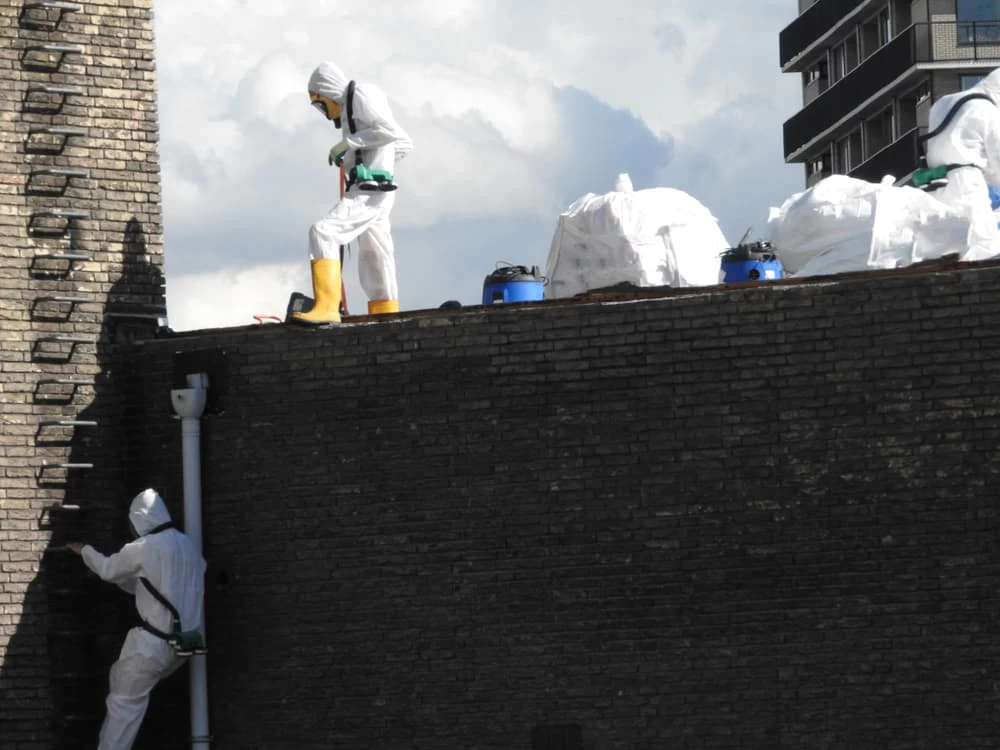
Once the assessment is complete and the scope is clear, our licensed crew sets up full containment negative air pressure, polyethylene barriers, HEPA filtration and removes the materials following every state and federal protocol. Asbestos waste is wetted, double-bagged, labeled, and transported to a licensed disposal facility. There’s no cutting corners on this part.
After removal, an independent industrial hygienist conducts post-abatement air monitoring. That’s a third-party check on our work not something we self-certify. When the air clears, you receive a written clearance certificate. That document is what your contractor, your real estate attorney, your lender, or your building department needs to see before work resumes. Most residential projects in this area are completed in one to two days, and we work to keep that timeline tight so your renovation or sale doesn’t sit in limbo longer than necessary.
Every Material Type, Every Scenario Covered Completely
Asbestos doesn’t show up in just one place in older homes, and in Prospect Hill’s mid-20th-century housing stock, it tends to show up in several at once. The most common materials we remove in this area include 9×9 and 12×12 vinyl asbestos floor tiles, asbestos popcorn ceiling texture, pipe and duct insulation on older heating systems, roofing felt and transite siding, and joint compound in walls from pre-1980 renovations. If your home was built or significantly renovated between 1940 and 1985, there’s a real chance more than one of these is present.
Beyond standard residential abatement, we also handle multi-hazard scenarios which are common in older Prospect Hill properties. If a water damage event has disturbed pipe insulation in your basement, or if a contractor opening a wall has found both asbestos and lead paint, we manage all of it under one roof. Asbestos abatement, mold remediation, lead paint removal, and water damage restoration are all in our scope. You don’t need to coordinate four separate contractors for a single older home.
For projects connected to a covered damage event, we bill your insurance company directly and work through the claims process on your behalf. And for renovation discoveries that weren’t in your budget, we offer 0% APR financing up to $200,000 for qualifying projects. No other asbestos contractor serving Prospect Hill advertises that option because most don’t offer it.
Does my older Prospect Hill home actually need an asbestos inspection before renovating?
Under New York State Industrial Code Rule 56, any renovation or demolition that could disturb building materials in a structure built before 1980 requires a prior asbestos survey. This isn’t a recommendation it’s a legal requirement. Prospect Hill falls under the jurisdiction of the NYS Department of Labor’s Albany district office, which enforces these rules.
For homes in Prospect Hill specifically, the risk is real. Most of the housing stock here consists of mid-20th-century bi-levels, bungalows, and ranch homes where asbestos-containing materials were standard. Floor tiles, pipe insulation, ceiling texture, and roofing felt were all common in construction from the 1940s through the late 1970s. If you’re planning a kitchen update, a basement finish, or any project that involves pulling up old flooring or opening walls, a survey before you start protects you legally and keeps your contractor from walking off the job when something unexpected turns up.
Can I legally remove asbestos myself in New York State, or does it have to be a licensed contractor?
New York State law requires that asbestos abatement above de minimis thresholds be performed by a contractor holding a valid NYS DOL Asbestos Contractor License. For most residential projects anything beyond a very small, contained repair that means a licensed professional. Doing it yourself, or hiring a general contractor who doesn’t hold the specific asbestos license, is illegal and creates significant liability for you as the property owner.
The practical consequences matter too. Without licensed abatement, you cannot obtain a valid post-abatement clearance certificate. That certificate is what a real estate buyer’s attorney, a mortgage lender, or a building department will ask for. If you’re planning to sell your Prospect Hill home, refinance, or pull a permit for ongoing renovation work, the absence of proper documentation can stop the process entirely. The cost of doing it right is almost always less than the cost of undoing work that wasn’t done legally.
How long does asbestos abatement take for a typical Prospect Hill home?
For most single-family residential projects in Prospect Hill, the physical removal work takes one to two days. The total timeline from first call to written clearance certificate depends on the scope of the project, but straightforward jobs a floor tile removal, a section of pipe insulation, or a popcorn ceiling in one or two rooms can often be assessed, completed, and cleared within a few days of initial contact.
Larger or more complex projects take longer. If multiple materials are involved, or if the home has had water intrusion that has spread contamination beyond the original source, the assessment phase will take more time to scope properly. The post-abatement air monitoring by an independent industrial hygienist adds a step after the physical work is done, but it’s a required step under state law and the document it produces is what makes your project legally complete. We work to keep the timeline as tight as possible because we understand that a renovation on hold is money sitting still.
What does asbestos abatement actually cost for a home in Prospect Hill, NY?
Cost depends heavily on what materials are present and how much of them need to be removed. For a Prospect Hill home, rough ranges look like this: popcorn ceiling removal typically runs $3 to $8 per square foot, vinyl asbestos floor tile removal runs $5 to $15 per square foot, and pipe insulation removal runs $25 to $75 per linear foot. A contained single-room project might come in around $1,500 to $3,000. A whole-home project with multiple material types can run $10,000 to $30,000 or more depending on scope.
What affects cost in this specific area is the age and construction style of the homes. Older Prospect Hill properties often have multiple layers of flooring, original heating systems with intact pipe insulation, and additions built at different points in the 20th century each layer potentially adding to the scope. The best way to get an accurate number is an on-site assessment, not a phone estimate. And if the cost is more than you planned for, our 0% APR financing up to $200,000 for qualifying projects means you don’t have to put the work off or compromise on who does it.
Will my homeowners insurance cover asbestos removal in Prospect Hill, NY?
Standard homeowners insurance policies in New York typically do not cover asbestos removal as a standalone maintenance or renovation expense. However, if the asbestos disturbance is connected to a covered event a burst pipe that damaged insulated ductwork, storm damage that disturbed roofing materials, or a flooding event that affected your basement there may be coverage available under the damage claim itself.
This distinction matters for Prospect Hill homeowners specifically because the town’s proximity to the Neversink and Delaware Rivers means water intrusion events are not uncommon. When a basement flood damages older pipe insulation, that’s a scenario where an insurance claim may legitimately include asbestos remediation as part of the restoration. We bill insurance companies directly and work through the claims process on your behalf, so you’re not left navigating that paperwork on top of everything else. We’ll tell you honestly what’s likely to be covered and what isn’t before any work begins.
What is the clearance certificate and why does every buyer or lender seem to require it?
A clearance certificate is a written document issued by an independent industrial hygienist after post-abatement air monitoring confirms that asbestos fiber levels in the treated area are within acceptable limits. Under New York State law, a space cannot be legally reoccupied after abatement until this testing is complete and the certificate is issued. It’s a required step not an optional add-on.
The reason buyers, lenders, and attorneys ask for it is straightforward: it’s the only document that proves the work was done legally, by a licensed contractor, and verified by a third party. A receipt from a contractor isn’t enough. A photo of empty bags isn’t enough. The clearance certificate is the paper trail that closes the loop. For Prospect Hill homeowners navigating a real estate transaction especially with buyers coming from the metro area who are more likely to have attorneys reviewing environmental disclosures having this documentation ready is often the difference between a clean closing and a deal that falls apart at the finish line. We make sure you have it before we consider the job done.