Most homes in Queensboro Hill were built during the peak era of asbestos use and if yours hasn’t been tested, there’s a real chance it’s still in there. We handle asbestos abatement the right way: licensed, documented, and fully compliant with NYC DEP requirements from start to finish.
I needed a professional consultation explanation of procedure for safe removal of Asbestos in my apartment complex. Without having an account yet, I was very impressed with the caring, knowledgeable and generous advice offered by Jessica, and will look forward to doing business in the future. Thank you so much! I feel much more informed about a sometimes scary endeavor. Peace. Nancy Silva Mineola, NY.
Mia Munoz
Used this company to clean up some water flood in my house. They were fast and easy to work with.very professional, Would recommend to anyone!
Nini Valle
Great company, had a flood and they responded quickly and efficiently. Billed my insurance company directly. I highly recommend this company!
joe colapietro, jr
I had pipe freeze in my basement right before a snow storm and they made to within an hour to help start the clean up process. They we by our side throughout the entire process and even helped with the insurance company. They did such a great job with the cleanup, repair, remidiation, I contracted them to perform the repairs and finishes in the basement. They came with enough manpower and material to get the job done. Leo and Jessica were nothing but a pleasure to deal with!!
Cristian Arredondo c
I had some water damage in my home and Green Island was able to take care of my issue quickly and effectively. I am very pleased with the work they did. They responded quickly and were very professional.
Michael M
Outstanding service! From the office to the field crew everyone was friendly, helpful and responsive. I highly recommend Green Island Group.
Your renovation moves forward. Your tenants are safe. Your paperwork is clean. That’s what asbestos removal actually delivers when it’s handled properly not just the physical removal, but the clearance documentation that lets you pull your next DOB permit and close out your insurance claim without a fight.
In Queensboro Hill, the housing stock tells the story. The neighborhood’s median build year is 1956, which means the brick Cape Cods and semi-detached homes lining these streets were constructed when asbestos was standard in floor tiles, pipe insulation, ceiling texture, and drywall compound. If you’re renovating a kitchen, replacing a boiler, or finishing a basement in a home that’s never been tested, you’re working in the dark. And in New York City, disturbing asbestos without proper abatement isn’t just a health risk it’s a regulatory violation that can stop your project cold and cost you far more than the abatement itself.
For landlords managing rental units in Queensboro Hill and nearly 70% of the neighborhood’s housing is renter-occupied the stakes are even higher. A vacant unit is lost income. An HPD violation is a fine. And a DEP violation is serious legal exposure. Getting the asbestos handled correctly the first time means getting back to business faster, with documentation that satisfies the city, your insurance carrier, and any future buyer or tenant who asks.
Every Credential NYC Actually Requires We Hold Them All
We’re a full-service environmental remediation contractor serving all five New York City boroughs, including Queens. That means we’re not a Long Island company occasionally crossing a bridge we hold NYC-specific credentials including NYC DEP compliance, NYC BIC Trade Waste registration, and NYC general contractor licensing, all of which are required to legally perform and document asbestos abatement in Queensboro Hill.
We also carry NYS DOL Asbestos licensure, USEPA Lead/RRP certification, NYS DOL Mold licensure, and IICRC Water Damage certification. That matters in a neighborhood like Queensboro Hill, where opening a wall in a 1950s home near Booth Memorial Avenue can turn up asbestos, lead paint, and mold in the same cavity. One contractor, one mobilization, one clean paper trail.
We’re available 24/7, bill insurance carriers directly, and have been specifically recognized in client reviews for patiently walking first-time callers through the process which, in a neighborhood with a large number of small landlords and first-time renovation homeowners, is not a minor thing.
Asbestos Remediation Process in Queensboro Hill, NY
From First Call to Final Clearance Here's the Full Picture
It starts with an assessment by a Certified Asbestos Investigator. Before any work begins, a CAI inspects the property, collects samples from suspected materials floor tiles, pipe wrap, ceiling texture, joint compound and determines whether an asbestos project is required under NYC DEP rules. If no regulated materials are found, you get an ACP-5 form for your DOB permit application. If abatement is needed, the process moves to the next step.
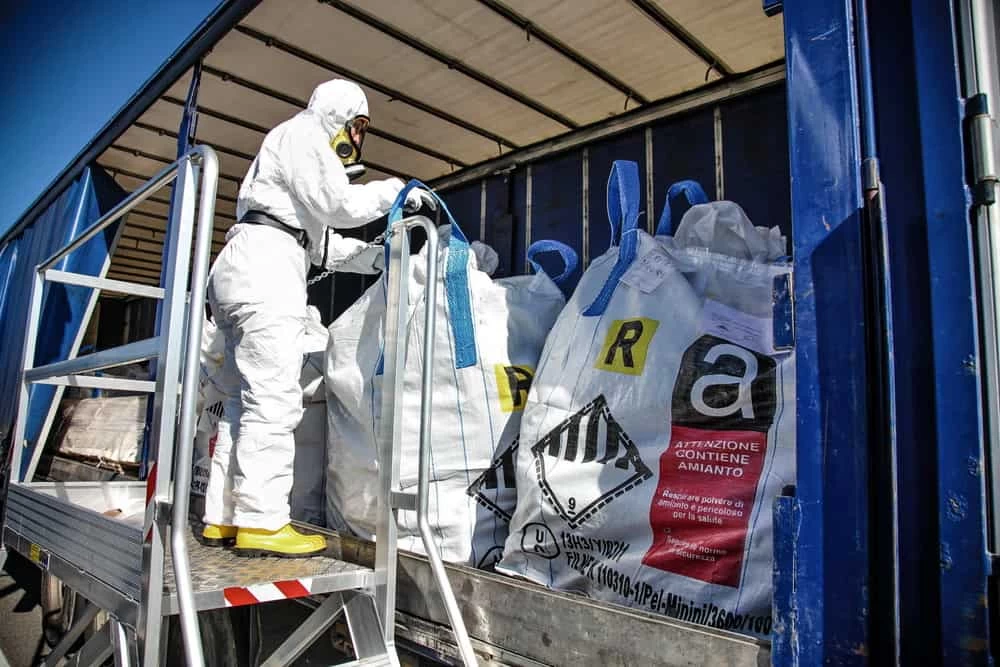
Once the scope is confirmed, we file the ACP-7 Project Notification with the NYC DEP. This is a mandatory pre-abatement filing that most unlicensed or out-of-city contractors either don’t know about or skip which creates a compliance gap that lands on the property owner. The abatement itself is performed under full containment, with negative air pressure and Microtrap air scrubbers running throughout. Workers are certified under both NYS DOL and NYC DEP requirements, which became a dual requirement under the DEP’s 2025 rule amendments.
After removal, air clearance testing is performed to confirm the space is safe. That clearance is documented in the ACP-20 or ACP-21 form submitted to the NYC Department of Buildings the exact paperwork you need to pull your next permit, satisfy your insurance adjuster, or hand to a buyer’s attorney at closing. In Queensboro Hill’s older housing stock, where a single renovation can surface multiple hazards, having a contractor who manages this entire chain from CAI inspection through DEP filing to final clearance is the difference between a clean project and a regulatory headache.
The Materials Most Common in Queensboro Hill Homes Handled Correctly
The asbestos-containing materials we most frequently encounter in Queensboro Hill’s mid-century housing stock are not random. The 9-by-9-inch vinyl floor tiles found in basements, kitchens, and hallways of 1950s Cape Cods are among the most common ACMs in Queens residential properties. Asbestos popcorn ceiling removal is a regular request in the neighborhood’s older apartment buildings and high-ranch homes, where textured ceiling coatings were applied through the 1970s. Pipe and boiler insulation in older steam heating systems the kind that powers most of these homes through a New York winter frequently contains chrysotile or amosite asbestos, and it’s one of the first things disturbed when a heating contractor starts a repair or replacement in February.
We handle all of these materials under the same fully licensed, fully documented process. Asbestos tile removal, pipe insulation abatement, ceiling texture removal, drywall joint compound each one requires proper containment, certified removal, regulated waste disposal through our NYC BIC-registered waste stream, and DEP clearance documentation before the space can be reoccupied or permitted.
If your property is in the 11355 or 11367 ZIP code and you’re planning any renovation, dealing with a water damage event, or preparing for a sale, the conversation about asbestos starts here. We serve homeowners, landlords, property managers, and institutional clients throughout Queensboro Hill and the surrounding Queens neighborhoods.
Do I need a NYC DEP permit before starting asbestos removal in Queensboro Hill?
Yes and this is one of the most important things to understand before hiring anyone for asbestos work in New York City. The NYC Department of Environmental Protection’s Asbestos Control Program requires that a Certified Asbestos Investigator assess the property before any regulated material is disturbed. If asbestos is found and an abatement project is required, an ACP-7 Project Notification must be filed with the DEP before work begins. Once the project is complete, an ACP-20 or ACP-21 form is submitted to the NYC Department of Buildings and without that final form on file, you cannot receive a DOB permit for any subsequent renovation work on the property.
This process applies to every property in Queensboro Hill, whether you’re a homeowner finishing a basement or a landlord renovating a rental unit. Skipping any step in this chain doesn’t just create a health risk it creates a documented compliance gap that can result in fines from both the DEP and the DOL, and can block future permit applications until the issue is properly resolved.
How do I know if my Queensboro Hill home actually contains asbestos?
You can’t tell by looking at it that’s the honest answer. Asbestos-containing materials don’t look different from non-asbestos materials. The only way to know for certain is to have a Certified Asbestos Investigator collect samples and have them analyzed by an accredited laboratory.
What you can do is think about when your home was built. In Queensboro Hill, where the median build year is 1956, the probability of finding asbestos-containing materials in an untested home is genuinely high. The most common locations in mid-century Queensboro Hill homes are vinyl floor tiles in basements and kitchens, pipe and boiler insulation in heating systems, textured ceiling coatings, and drywall joint compound used in walls and ceilings. If your home was built before 1980 and hasn’t been tested, and you’re planning any renovation that involves disturbing walls, floors, ceilings, or mechanical systems, a CAI assessment is the right first step not optional, not something to skip to save time.
What happens if my heating contractor finds asbestos pipe insulation during a winter repair?
Work stops immediately that’s the correct response, and any responsible contractor will tell you the same. In Queensboro Hill, this scenario is more common than most homeowners expect. The older steam and hot-water heating systems in the neighborhood’s mid-century brick homes rely on pipe insulation that, in many cases, was installed in the 1950s and 1960s and has never been tested. When a heating contractor cracks open that insulation for a repair or boiler replacement in the middle of January, and suspects it contains asbestos, they are legally required to stop and call in a licensed abatement contractor before continuing.
We operate 24/7 specifically because emergencies like this don’t wait for business hours. We can respond quickly, assess the material, file the necessary DEP notifications, perform the abatement under proper containment, and provide the clearance documentation that allows the heating work to resume. The delay is real, but it’s manageable when you have a contractor who can move fast and handle the regulatory side without putting that burden back on you.
Can my tenants stay in the building during asbestos abatement in New York City?
It depends on the scope and location of the work, but in most cases involving active abatement, the affected areas need to be vacated. NYC DEP rules require that the work area be sealed under negative air pressure containment, which means the space being abated is physically isolated from the rest of the building. If the abatement is limited to a single unit or a contained area like a basement mechanical room, tenants in other parts of the building may be able to remain but this is a determination that needs to be made based on the specific layout and scope of the project.
For landlords in Queensboro Hill managing multi-unit buildings, this is an important planning conversation to have upfront. We’ll walk you through what the containment looks like, which areas need to be vacated, and how to communicate that to tenants in a way that satisfies both your legal obligations and your relationship with the people living in your building. Getting this right from the start avoids complaints, HPD involvement, and the kind of disruption that costs more than the abatement itself.
How long does asbestos abatement typically take in a Queensboro Hill home?
It varies based on the type and quantity of material being removed, but for a typical residential project in a Queensboro Hill home say, vinyl floor tile removal in a basement or pipe insulation abatement in a mechanical room the actual abatement work can often be completed in one to two days. The part that takes longer is the regulatory process surrounding it: the CAI assessment and lab results before work begins, the ACP-7 filing with the NYC DEP, and the post-clearance air testing and documentation after the work is done.
From initial assessment to final clearance paperwork, a straightforward residential project can realistically take one to two weeks when you account for the full regulatory cycle. Larger projects full floor tile removal across multiple levels, or abatement tied to a major renovation in an older apartment building will take longer. If you’re working against a real estate closing deadline or a contractor schedule, the most important thing is to start the CAI assessment as early as possible, because the DEP process has mandatory timelines that can’t be compressed regardless of urgency.
Does Green Island Group handle asbestos abatement for landlords with HPD violations in Queens?
Yes, and this is a situation we deal with regularly in Queensboro Hill and throughout Queens. When the NYC Housing Preservation and Development office issues a violation related to a hazardous material whether that’s lead paint, asbestos, or both the landlord is on a compliance clock. The violation needs to be addressed, documented, and certified as corrected within the timeframe HPD specifies, or the fines escalate and the violation becomes a matter of public record that affects the property’s standing.
We understand the landlord’s position here. You need the work done correctly, you need the documentation that satisfies HPD’s correction requirements, and you need it done on a timeline that doesn’t drag out a vacant unit or create further tenant issues. We handle the abatement, produce the DEP clearance documentation, and can help you understand what the correction certification process requires. For landlords managing one or two rental properties in the 11355 or 11367 ZIP codes, having a single contractor who can navigate both the abatement and the paperwork side of an HPD violation is a meaningful advantage.