Old Homes, Real Risks Handled the Right Way in Red Hook Mills
Six out of ten homes in Red Hook Mills were built before 1980. If yours is one of them, asbestos abatement isn’t a maybe it’s something you need to know about before you touch a wall, pull up a floor, or replace a boiler.
I needed a professional consultation explanation of procedure for safe removal of Asbestos in my apartment complex. Without having an account yet, I was very impressed with the caring, knowledgeable and generous advice offered by Jessica, and will look forward to doing business in the future. Thank you so much! I feel much more informed about a sometimes scary endeavor. Peace. Nancy Silva Mineola, NY.
Mia Munoz
Used this company to clean up some water flood in my house. They were fast and easy to work with.very professional, Would recommend to anyone!
Nini Valle
Great company, had a flood and they responded quickly and efficiently. Billed my insurance company directly. I highly recommend this company!
joe colapietro, jr
I had pipe freeze in my basement right before a snow storm and they made to within an hour to help start the clean up process. They we by our side throughout the entire process and even helped with the insurance company. They did such a great job with the cleanup, repair, remidiation, I contracted them to perform the repairs and finishes in the basement. They came with enough manpower and material to get the job done. Leo and Jessica were nothing but a pleasure to deal with!!
Cristian Arredondo c
I had some water damage in my home and Green Island was able to take care of my issue quickly and effectively. I am very pleased with the work they did. They responded quickly and were very professional.
Michael M
Outstanding service! From the office to the field crew everyone was friendly, helpful and responsive. I highly recommend Green Island Group.
You get to move forward. That renovation you’ve been planning, the boiler replacement you’ve been putting off, the floor you want to tear out none of that can happen safely until you know what you’re dealing with. Once the asbestos is properly removed and cleared, you’re not just safer. You’re unblocked.
For homeowners in Red Hook Mills, that matters more than it might in a newer suburb. The housing stock here skews old farmhouses, mid-century ranches, cape cods built in an era when asbestos was standard in floor tiles, pipe insulation, ceiling texture, and roofing. The freeze-thaw cycles the Hudson Valley puts these homes through every winter don’t help. When temperatures swing hard enough to crack pipe insulation or deteriorate boiler wrap, materials that were stable for decades can become a real problem fast.
There’s also the property value side of this. Red Hook Mills’s median sale price has nearly doubled over the past eight years it’s sitting around $540,000 now. If you’re selling, refinancing, or renovating with an eye toward resale, documented asbestos abatement with air clearance testing isn’t just a safety measure. It’s a record that protects what your home is worth.
Licensed Asbestos Contractor Serving Red Hook Mills
12 Years In, 5,000 Jobs Done All of Them Done Right
We’ve been handling asbestos abatement, mold remediation, and environmental work across New York State for over 12 years. More than 5,000 completed projects. Licensed under NYS DOL Industrial Code Rule 56, which is the law that governs every asbestos job in Dutchess County. That license is verifiable not a marketing claim.
We serve the full northern Dutchess County corridor, including Red Hook Mills, Tivoli, Annandale-on-Hudson, and the surrounding hamlets. We know what’s inside pre-1980 Hudson Valley homes because we’ve worked in them the 9×9 vinyl tiles in the kitchen, the vermiculite in the attic, the chrysotile wrap around the boiler in the basement. We’re also a certified MWBE contractor and state-approved, which matters for institutional work near Bard College or within the Red Hook Central School District.
When you call, someone answers. When you need someone on-site, we come our customers have documented two-hour response times. That’s not a promise; it’s a track record.
No Guesswork Here's Exactly What the Job Looks Like
It starts with an assessment. Before anything is touched, a licensed technician evaluates the suspected materials in your home floor tiles, ceiling texture, pipe insulation, roofing, whatever you’re dealing with. In a pre-1980 Red Hook Mills home, that often means checking multiple areas at once, because asbestos wasn’t used in just one place. Samples are collected and sent for testing if the material’s origin is unclear.
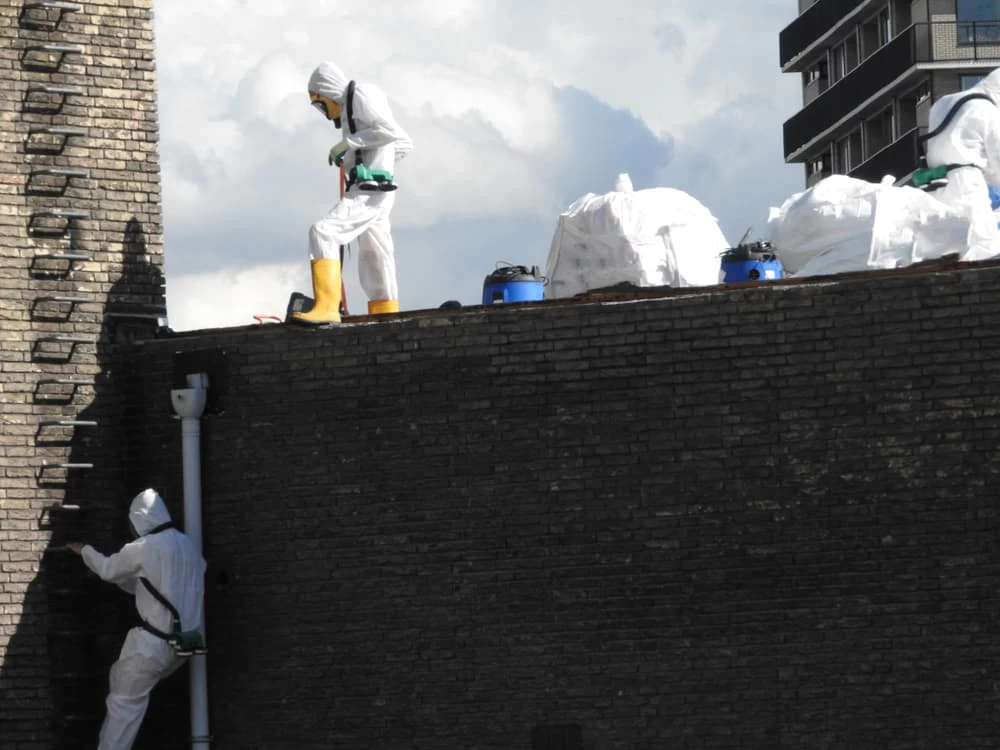
Once the scope is confirmed, the work area is contained and sealed off from the rest of your home. Negative air pressure is established to prevent fiber migration. The asbestos-containing materials are removed using methods that comply with NYS DOL Industrial Code Rule 56 the state regulation that governs every abatement job in Dutchess County, enforced out of the Albany District Office. Nothing gets improvised. Nothing gets skipped because it seems minor.
After removal, all waste is double-bagged, kept wet, and transported by a licensed hauler to an approved NYS DEC disposal facility. Then comes post-abatement air clearance testing independent confirmation that fiber levels in the treated space have returned to safe levels. You get the documentation. That written clearance record is what you hand to your contractor, your real estate agent, or your own peace of mind.
Asbestos Removal Services for Red Hook Mills Homes
Every Material, Every Room Covered Under One Roof
The asbestos-containing materials most commonly found in Red Hook Mills homes are the same ones that were standard in construction from the 1940s through the late 1970s. Vinyl floor tiles and the black mastic adhesive beneath them. Popcorn ceiling texture applied in the 1960s and 70s. Pipe insulation and boiler wrap in basements and mechanical rooms. Attic insulation, particularly vermiculite. Roofing shingles and exterior siding on older structures. We handle all of it asbestos tile removal, asbestos popcorn ceiling removal, pipe and boiler insulation, roofing materials, and full structural abatement for renovation or demolition projects.
Beyond asbestos, we also handle mold remediation, water damage restoration, lead paint abatement, and fire damage which matters in an older Hudson Valley home where one problem rarely shows up alone. If a burst pipe soaked your boiler insulation this past winter, there’s a reasonable chance you’re looking at asbestos and water damage in the same space. One contractor, one call, one project timeline.
Every job includes containment, removal, licensed waste disposal, and post-abatement air clearance testing. We also bill insurance directly when abatement is tied to a covered event so you’re not stuck managing a claim and a remediation project at the same time.
Do I need asbestos testing before renovating my older Red Hook Mills home?
If your home was built before 1980 and roughly 60% of homes in the Town of Red Hook Mills were then yes, testing before renovation is the responsible move and, in many cases, a legal one. New York State’s Industrial Code Rule 56 requires that any renovation or demolition project involving the disturbance of asbestos-containing materials be handled by a licensed contractor. That means if your contractor opens a wall, pulls up flooring, or removes ceiling texture without first confirming whether asbestos is present, they may be violating state law and you, as the property owner, can bear liability for that.
Testing is straightforward. A licensed inspector collects samples from suspected materials tiles, insulation, ceiling texture, pipe wrap and sends them to an accredited lab. Results typically come back within a few days. If asbestos is confirmed, you’ll know exactly what you’re dealing with and can plan the abatement before the renovation begins, rather than stopping mid-project when a contractor discovers something unexpected.
How much does asbestos removal typically cost for a home in Dutchess County?
For most residential jobs in the Dutchess County area, asbestos removal costs fall somewhere between $1,300 and $3,100, with a rough average around $2,200. That range moves depending on what material is being removed, how much of it there is, where it’s located in the home, and whether the material is friable meaning it crumbles easily and releases fibers or non-friable and more contained.
Popcorn ceiling removal in a single room costs less than full pipe insulation removal throughout a basement mechanical system. Asbestos floor tile removal from a kitchen is a different scope than abating vermiculite attic insulation across a 1,500-square-foot footprint. The honest answer is that pricing requires a site assessment anyone quoting you a firm number over the phone without seeing the property is guessing. What you should expect from a legitimate estimate is a clear breakdown of what’s included: containment, removal, disposal, and post-abatement air clearance testing. If any of those are missing from the quote, ask why.
What happens if asbestos is found during a home inspection in Red Hook Mills, NY?
It depends on the condition of the material. Asbestos that’s intact and undisturbed a floor tile that’s in good shape, pipe insulation that hasn’t been damaged may not require immediate removal. Encapsulation or enclosure can sometimes be a compliant option. But if the material is deteriorating, friable, or in an area that will be disturbed during renovation, removal is typically the right call.
In a real estate transaction in Red Hook Mills, a home inspection finding that flags suspected asbestos usually triggers one of two paths: the seller agrees to remediate before closing, or the parties negotiate a price adjustment and the buyer handles it after. Either way, there’s a timeline involved, and that’s where response time matters. We have documented two-hour on-site response times, which can make the difference between a deal staying on track and a closing falling apart. The Red Hook Mills market is active median prices are around $540,000 and rising and buyers are not going to let a delayed abatement contractor cost them a deal.
Is asbestos in old floor tiles or popcorn ceilings actually dangerous if I leave it alone?
Asbestos that’s in good condition and left completely undisturbed carries a much lower immediate risk than asbestos that’s been damaged or disturbed. The danger comes from fibers becoming airborne that happens when asbestos-containing materials are cut, sanded, scraped, drilled, or physically broken apart. Intact 1960s floor tiles sitting under a layer of newer flooring are a different situation than crumbling pipe insulation in a basement that gets bumped every time someone walks past the furnace.
That said, “leave it alone” only works if it stays alone. In a pre-1980 Red Hook Mills home, the freeze-thaw cycles the Hudson Valley puts buildings through every winter can gradually degrade materials that were previously stable. Pipe insulation that’s been through 40 winters of temperature swings may not be as intact as it looks. Popcorn ceiling texture that’s starting to flake or show water staining is no longer undisturbed. If you’re not sure about the condition of suspected materials in your home, a licensed inspection is the only way to know what you’re actually dealing with.
Can a regular contractor remove asbestos, or does it have to be a licensed abatement company?
In New York State, it has to be a licensed abatement contractor no exceptions for residential work that involves the removal, encapsulation, or disturbance of asbestos-containing materials. NYS DOL Industrial Code Rule 56 is the governing regulation, and it applies to every job in Dutchess County. Enforcement is handled by the Albany District Office. Hiring an unlicensed contractor to remove asbestos isn’t just a safety risk it’s a legal exposure for you as the property owner.
This comes up more often than you’d think in the Red Hook Mills area, where a lot of renovation work is done by general contractors or local tradespeople who are skilled at what they do but aren’t licensed for asbestos abatement. A good contractor will stop work and refer you to a licensed abatement company when they encounter suspected materials. If your contractor is telling you they’ll just “take care of it” without mentioning licensing or air clearance testing, that’s a problem. You can verify a contractor’s NYS DOL asbestos license through the state’s online contractor database before anyone touches anything in your home.
How long does asbestos abatement take for a typical home in Red Hook Mills?
For most residential jobs a single room, a section of pipe insulation, or a popcorn ceiling in one or two areas the abatement work itself typically takes one to three days. Larger projects involving multiple materials throughout the home, or full abatement ahead of a gut renovation, can run longer depending on scope and access.
The part homeowners in Red Hook Mills sometimes don’t account for is the air clearance testing that follows removal. After the work is done and the containment is cleared, an independent air clearance test is conducted to confirm that fiber levels in the treated space are back within safe limits. That testing takes time to process. The full project timeline from initial assessment to final clearance documentation is typically one to two weeks for a standard residential job. If you’re working against a real estate closing date or a contractor’s start date, that timeline matters which is why calling early, before the renovation is already scheduled, is almost always the better move.