Rhinebeck's Historic Homes Deserve More Than a Generic Crew
When your 19th-century Victorian or mid-century home turns up asbestos during a renovation, you need someone who actually understands what’s inside Rhinebeck’s walls not just someone with a truck and a license number.
I needed a professional consultation explanation of procedure for safe removal of Asbestos in my apartment complex. Without having an account yet, I was very impressed with the caring, knowledgeable and generous advice offered by Jessica, and will look forward to doing business in the future. Thank you so much! I feel much more informed about a sometimes scary endeavor. Peace. Nancy Silva Mineola, NY.
Mia Munoz
Used this company to clean up some water flood in my house. They were fast and easy to work with.very professional, Would recommend to anyone!
Nini Valle
Great company, had a flood and they responded quickly and efficiently. Billed my insurance company directly. I highly recommend this company!
joe colapietro, jr
I had pipe freeze in my basement right before a snow storm and they made to within an hour to help start the clean up process. They we by our side throughout the entire process and even helped with the insurance company. They did such a great job with the cleanup, repair, remidiation, I contracted them to perform the repairs and finishes in the basement. They came with enough manpower and material to get the job done. Leo and Jessica were nothing but a pleasure to deal with!!
Cristian Arredondo c
I had some water damage in my home and Green Island was able to take care of my issue quickly and effectively. I am very pleased with the work they did. They responded quickly and were very professional.
Michael M
Outstanding service! From the office to the field crew everyone was friendly, helpful and responsive. I highly recommend Green Island Group.
You get your renovation back. You get your timeline back. And most importantly, you get documented proof air clearance test results, disposal records, and a clear sign-off that the space is genuinely safe to be in again. That’s not a bonus. That’s the whole point.
Rhinebeck gets roughly 48 inches of rain a year, well above the national average, and the Hudson River proximity keeps moisture levels elevated year-round. That kind of environment accelerates the deterioration of older building materials pipe insulation, boiler wrap, floor tiles, ceiling texture especially in homes that were built before anyone was thinking about asbestos regulations. When water finds its way into a pre-1980 structure in Rhinebeck, it doesn’t always create just one problem. Disturbed asbestos and mold growth can show up together, and that’s where a full-service team makes a real difference.
Rhinebeck’s housing stock is also genuinely old. The Village Historic District alone contains 272 buildings, most of them built well before asbestos use was phased out. If your home sits anywhere near that district or if it was built between the 1940s and the 1970s asbestos isn’t a remote possibility. It’s something worth taking seriously before you swing a hammer.
12 Years In. 5,000 Projects Done. Still Getting It Right.
We’ve been handling asbestos abatement and environmental remediation across New York State for over 12 years, with more than 5,000 completed projects behind us. We’re NYS DOL licensed, MWBE certified, and approved to work for state agencies which means we’ve already been vetted at a level most contractors never reach.
We serve Dutchess County regularly, and we understand what working in Rhinebeck and the surrounding Hudson Valley actually involves. That means knowing the regulatory requirements that run through the Albany District Office of the NYS DOL Asbestos Control Bureau, understanding what ICR 56 compliance looks like for a renovation in Rhinebeck’s Historic District, and showing up prepared for the kinds of buildings you find along Route 9 and throughout the village not the kinds you find on Long Island.
We also bill insurance directly, handle mold and water damage under the same roof, and are available 24 hours a day. When something comes up mid-project, you’re not waiting until Monday.
No Surprises Here's Exactly How the Work Gets Done
It starts with a licensed asbestos inspection. Before any renovation or demolition work can legally begin in New York State, a certified inspector has to survey the affected area. That’s not optional under NYS Industrial Code Rule 56 it’s the law, and it applies whether you’re updating a kitchen in Rhinebeck or restoring a farmhouse on the outskirts of town. If you’re working within Rhinebeck’s Historic District, there’s an additional layer: the Village’s Historic Buildings Protection ordinance requires a Certificate of Removal or Demolition before a demolition permit is issued. We know how to sequence the work so both requirements get met without stalling your project.
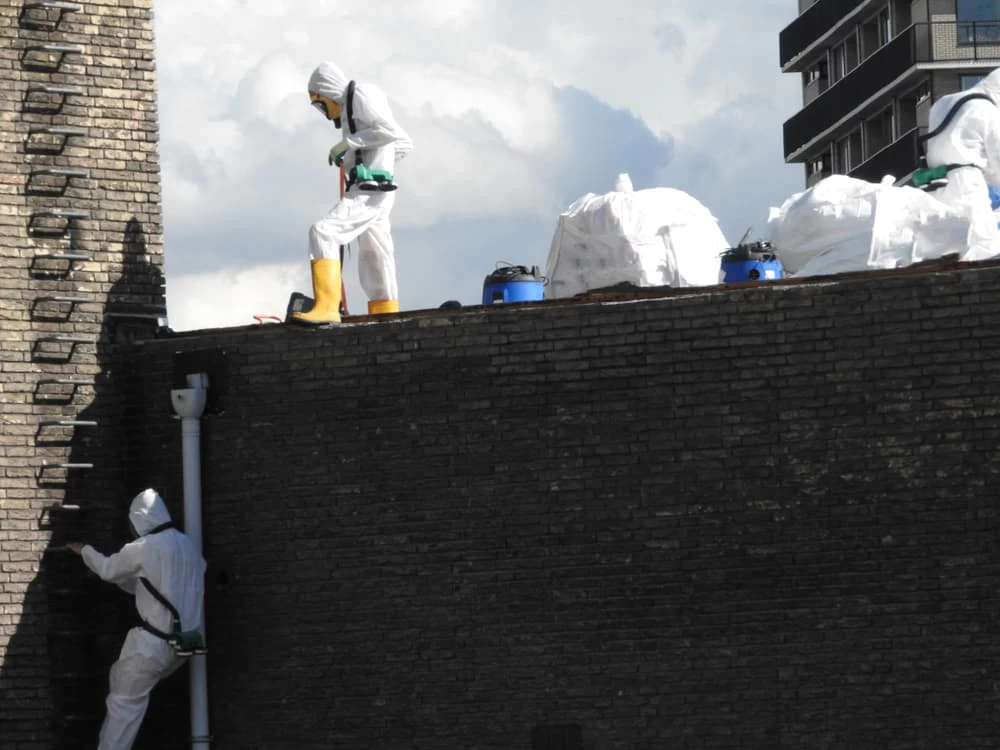
Once the survey is complete and asbestos is confirmed, we contain the work area, remove the materials following all NYS DOL protocols, and transport them to a certified disposal facility. Every step is documented. The abatement notification goes to the Albany District Office. Your contractor gets the survey copy they need for the building permit. Nothing falls through the cracks.
After the removal is finished, we conduct post-abatement air clearance testing. That’s the part that actually tells you the job is done not just that the visible material is gone, but that the air in the space meets the standards required before reoccupancy. You get those results in writing.
Asbestos doesn’t show up in just one place. In Rhinebeck’s older homes, it tends to appear in a few specific areas depending on when the structure was built. Homes from the 1940s through the 1960s which make up a significant portion of the village’s housing stock commonly have asbestos in 9×9 vinyl floor tiles, popcorn ceiling texture, pipe insulation around older boiler systems, and roofing or siding materials. Pre-20th-century structures, including some of the estate homes and historic properties near the Hudson River, may have asbestos in boiler wrap and original pipe insulation that hasn’t been touched in decades.
We handle asbestos tile removal, asbestos popcorn ceiling removal, pipe and duct insulation, roofing materials, siding, and joint compound the full range of what you’re likely to encounter in a Dutchess County property. We also handle pre-demolition surveys and abatement for commercial and hospitality properties, which matters in a town with active renovation projects like the Grasmere Farm Estate redevelopment on Mill Road and the ongoing work throughout the Historic District.
If a water damage event has disturbed asbestos-containing materials in your home something that happens more often in Rhinebeck’s high-precipitation climate than most people expect we can handle the asbestos abatement and mold remediation together, without you needing to bring in a second contractor.
Do I need an asbestos survey before renovating my Rhinebeck home?
Yes and this isn’t something that’s left to your discretion. Under New York State Industrial Code Rule 56, a licensed asbestos inspector must survey the affected area before any renovation, demolition, or remodeling work begins. One copy of that survey has to be submitted to the local building department either the Village of Rhinebeck or the Town of Rhinebeck, depending on where your property sits and another copy stays on-site for the duration of the project.
If your property is within the Village’s Historic District, there’s an additional requirement under Local Law 3-2023: you’ll need a Certificate of Removal or Demolition before a demolition permit can be issued. That means the asbestos survey and the historic preservation review need to be coordinated together, not treated as separate tracks. Getting the sequencing wrong can delay your entire project. Working with a contractor who already understands how these requirements interact in Rhinebeck specifically saves you a significant amount of time and frustration.
How much does asbestos removal typically cost in Rhinebeck, NY?
For a typical residential asbestos removal project in New York, most homeowners are looking at somewhere between $1,300 and $3,100, with the national average landing around $2,200. That said, Rhinebeck’s housing stock tends to skew toward more complex scenarios older structures, multiple material types in the same home, and access constraints that come with 19th-century construction don’t always fit neatly into a standard estimate.
The scope of what’s being removed matters a lot. Asbestos tile removal in a single room is a very different job from removing pipe insulation throughout a Victorian home’s basement and mechanical systems. The best way to get an accurate number is to have a licensed inspector assess the specific materials and areas involved before anyone gives you a price. We offer free consultations, and we’ll give you a clear picture of what you’re actually dealing with before you commit to anything.
Is asbestos common in older homes throughout Rhinebeck's Historic District?
It’s more common than most people expect. The Rhinebeck Village Historic District contains 272 buildings, with a documented period of significance running from 1700 through 1970. That period covers almost the entire era of asbestos use in American construction from the early adoption of asbestos insulation in the late 19th century through the peak usage years of the 1940s to 1970s. If your home was built or substantially renovated during that window, there’s a reasonable chance asbestos is present somewhere in the structure.
The most common locations in Rhinebeck-area homes are vinyl floor tiles, ceiling texture, pipe and boiler insulation, roofing materials, and joint compound used in drywall finishing. Many of these materials are completely stable when left undisturbed the risk comes when renovation work breaks, cuts, or sands them. That’s exactly why the survey requirement exists: not to scare you, but to make sure you know what you’re working with before the work starts.
Can I stay in my home during asbestos abatement work in Rhinebeck?
It depends on the scope and location of the work. For smaller, contained projects like asbestos tile removal in a single room or popcorn ceiling removal in one area of the house it may be possible to remain in the home if the work area is properly sealed and isolated. For larger projects involving multiple rooms, HVAC systems, or materials that require more aggressive containment, temporary relocation is usually the safer and more practical option.
Your abatement contractor is required to establish a contained work area with negative air pressure and proper barriers to prevent fiber migration into the rest of the home. After the work is complete, post-abatement air clearance testing confirms that the space meets reoccupancy standards before anyone goes back in. If you’re managing a second home in Rhinebeck which is a common situation given the Amtrak connection at Rhinecliff and the town’s appeal to New York City buyers the timing of your visits can often be planned around the abatement and clearance schedule without major disruption.
What's the difference between asbestos encapsulation and full asbestos removal?
Encapsulation means sealing the asbestos-containing material in place so it can’t release fibers painting over floor tiles, for example, or applying a sealant to pipe insulation. Full removal means the material is physically taken out of the building and disposed of at a certified facility. Both are legitimate approaches under NYS regulations, but they’re not interchangeable.
Encapsulation is generally appropriate when the material is in good condition, not being disturbed, and not in a location where future renovation work is likely. Full removal makes more sense when the material is damaged or deteriorating, when renovation work will disturb it anyway, or when you want a permanent solution rather than a managed one. For Rhinebeck homeowners planning significant renovations especially in homes where moisture infiltration has already compromised older insulation or flooring full removal is often the more practical long-term choice. It eliminates the need to disclose encapsulated materials in future real estate transactions, which matters in a market where home values routinely exceed $500,000.
How do I know the asbestos removal was actually done correctly and completely?
The short answer: post-abatement air clearance testing. Once the physical removal is complete and the work area has been cleaned, an independent air quality test measures the concentration of asbestos fibers remaining in the space. If the results meet the required threshold, the space is cleared for reoccupancy and you receive written documentation of those results. That paperwork matters for your own peace of mind, for your insurance records, and for any future buyer or lender who asks whether the property has been properly remediated.
What you want to avoid is a contractor who considers the job done when the visible material is gone. Microscopic asbestos fibers can remain airborne after removal if containment and cleanup protocols weren’t followed correctly. The clearance test is the only objective confirmation that the process worked. We provide that testing as a standard part of every abatement project not as an add-on, and not as something you have to ask for separately. For a Rhinebeck property where the work involves historic materials and older construction, having that documentation in hand is simply the right way to close the project out.