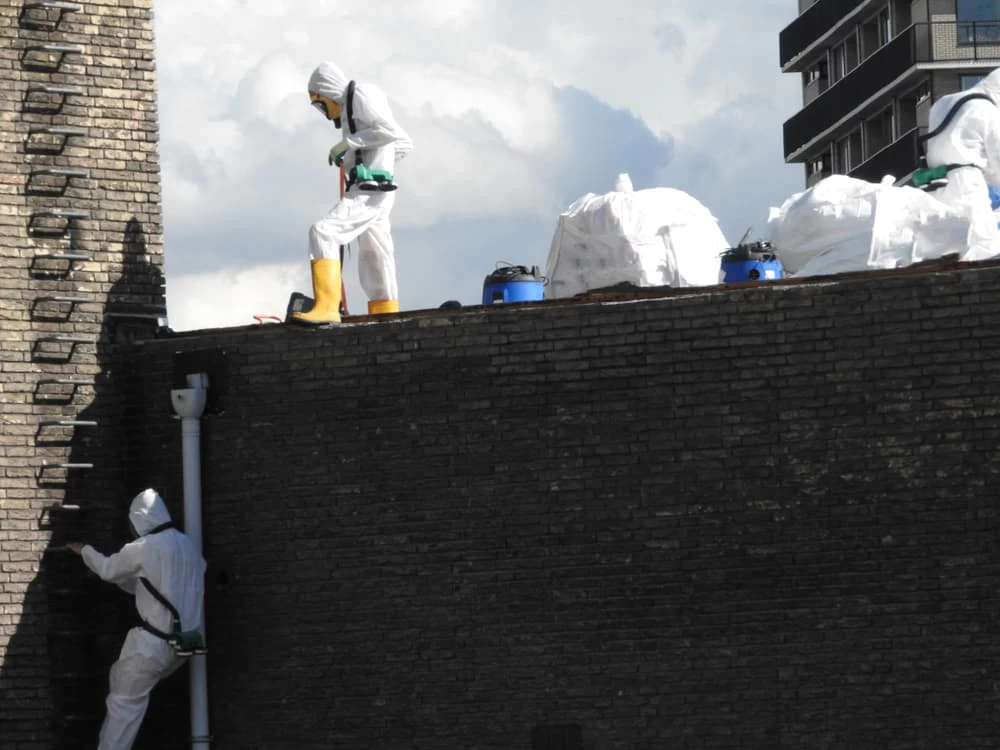
Most homes in and around Richardsville were built before asbestos was phased out and in a watershed zone, cutting corners on asbestos removal isn’t just a health risk. We handle licensed asbestos abatement from first inspection to final clearance.
I needed a professional consultation explanation of procedure for safe removal of Asbestos in my apartment complex. Without having an account yet, I was very impressed with the caring, knowledgeable and generous advice offered by Jessica, and will look forward to doing business in the future. Thank you so much! I feel much more informed about a sometimes scary endeavor. Peace. Nancy Silva Mineola, NY.
Mia Munoz
Used this company to clean up some water flood in my house. They were fast and easy to work with.very professional, Would recommend to anyone!
Nini Valle
Great company, had a flood and they responded quickly and efficiently. Billed my insurance company directly. I highly recommend this company!
joe colapietro, jr
I had pipe freeze in my basement right before a snow storm and they made to within an hour to help start the clean up process. They we by our side throughout the entire process and even helped with the insurance company. They did such a great job with the cleanup, repair, remidiation, I contracted them to perform the repairs and finishes in the basement. They came with enough manpower and material to get the job done. Leo and Jessica were nothing but a pleasure to deal with!!
Cristian Arredondo c
I had some water damage in my home and Green Island was able to take care of my issue quickly and effectively. I am very pleased with the work they did. They responded quickly and were very professional.
Michael M
Outstanding service! From the office to the field crew everyone was friendly, helpful and responsive. I highly recommend Green Island Group.
Your Renovation Moves Forward Without the Guesswork
The Town of Kent has a specific kind of housing stock. Converted summer cottages, mid-century ranches, older farmhouses sitting on large rural lots most of them built before 1980, many of them never professionally inspected. If you’re planning a renovation, an addition, or even a significant repair, New York State law requires an asbestos survey before work begins on any structure where construction started before 1974. That’s not a suggestion. It’s Industrial Code Rule 56, and it applies to virtually every older home in this area, including Richardsville properties.
What that means practically is that discovering asbestos mid-project stops everything. Contractors walk. Permits get flagged. Your timeline collapses. Getting ahead of it with a licensed inspection before demolition or renovation work starts is the move that keeps your project on schedule and keeps you legally protected.
Richardsville sits within the West Branch Croton River watershed, directly adjacent to NYC DEP-managed land. Improper asbestos disposal in this area carries environmental consequences that go well beyond a single property. When we complete an abatement job here, every material is removed, contained, and disposed of through fully licensed channels the kind of documentation that matters in a watershed zone, and the kind that protects you if questions come up later.
Licensed Asbestos Contractor Serving Richardsville NY
12 Years In. Every License Earned, Not Claimed.
We’ve been doing licensed asbestos abatement in New York for over 12 years. We hold an active NYS Department of Labor asbestos contractor license the state-issued credential required by law to perform this work along with USEPA Lead and RRP certifications. That matters because a lot of pre-1980 homes in Putnam County, including those throughout Richardsville, contain both asbestos and lead-based paint. One contractor who can address both is a real advantage when you’re managing a renovation on a property that hasn’t been touched in decades.
We’ve worked with the NYS Office of General Services, the Dormitory Authority State of New York, and county-level government clients institutions that vet contractors carefully. That same standard applies to every residential job in the Town of Kent and Richardsville. When you call, you’re getting a company that carries full liability insurance and worker’s compensation, files its own permits, and delivers compliance documentation when the job is done not just a crew that shows up and hauls material away.
From First Call to Final Clearance Here's What to Expect
It starts with an inspection. A licensed inspector surveys the property, identifies materials that are confirmed or presumed to contain asbestos, and collects samples for lab analysis. In the Richardsville area, that typically means looking at floor tiles, pipe insulation, popcorn ceilings, roofing materials, and siding the standard materials of mid-century construction that defined the vacation-cottage era that built most of Kent’s housing stock. If your property includes outbuildings, a garage, or an older barn, those get assessed too.
Once the inspection is complete and the lab results are back, we handle the permit application with the NYS DOL Asbestos Control Bureau, which oversees Putnam County through its Albany district office. You don’t have to navigate that process yourself. Our abatement crew sets up proper containment, removes the identified materials, and the work area is sealed and cleaned according to OSHA standards.
Before anything is reopened, independent post-abatement air clearance testing is conducted. This step confirms that the space meets clearance standards before the containment comes down and the area is reoccupied. You receive the full documentation inspection report, permit, air clearance results which you’ll need for your building permit, your insurance carrier, and any future real estate transaction involving the property.
Asbestos Tile and Popcorn Ceiling Removal in Richardsville
What's Covered When You Call Green Island Group
Asbestos shows up in more places than most homeowners expect. In the homes around Richardsville and the broader Town of Kent, the most common materials are vinyl floor tiles and the adhesive beneath them, pipe and duct insulation, popcorn ceilings applied before 1978, roofing felt and shingles, and transite siding panels on older outbuildings and garages. Asbestos tile removal and asbestos popcorn ceiling removal are two of the most frequent jobs in this area both require licensed abatement, and neither should be handled as a DIY project or handed off to a general contractor without the proper credentials.
We handle the full scope: inspection and testing, permit filing, containment setup, removal, post-abatement air clearance, and compliance documentation. For properties in the watershed zone and much of the Richardsville area qualifies proper disposal documentation isn’t optional. It’s part of the job.
If you’re dealing with a larger property that has multiple affected materials or accessory structures, the process scales accordingly. Rural lots in this part of Putnam County often include older barns, sheds, or detached garages with asbestos-containing roofing or siding that gets overlooked until demolition begins. Catching it early, before a crew starts swinging hammers, is what keeps your project clean and your liability manageable.
Does my Richardsville home actually need an asbestos inspection before I renovate?
If your home was built before 1974, New York State Industrial Code Rule 56 requires a professional asbestos survey before any demolition, renovation, remodeling, or repair work begins. This isn’t a gray area it’s a legal requirement enforced by the NYS Department of Labor Asbestos Control Bureau, which has jurisdiction over Putnam County through its Albany district office.
In practical terms, most homes in and around Richardsville fall into this category. The Town of Kent’s housing stock is heavily weighted toward mid-century construction the vacation cottages, ranches, and farmhouses built during and after the Taconic Parkway era. Even if your home was built between 1974 and 1980, all thermal system insulations and surfacing materials in those structures are classified as Presumed Asbestos Containing Material under state law. A survey is the only way to determine what you’re actually dealing with before work begins.
What does asbestos abatement typically cost for a home in Putnam County?
Cost depends entirely on the scope what materials are affected, how much square footage is involved, and whether you’re dealing with one material type or several. For a single-room floor tile removal or a popcorn ceiling in one area of the home, you’re typically looking at the lower end of the range, somewhere in the $500 to $1,500 range. For larger jobs involving multiple rooms, pipe insulation, or full-structure abatement prior to demolition, costs can reach $3,000 to $6,000 or more.
What drives cost up in the Richardsville area specifically is the prevalence of older properties with multiple affected materials homes that have never been inspected and may have asbestos in the flooring, the ceiling, the insulation, and the roofing simultaneously. The inspection is what tells you the actual scope, and that’s where every job starts. Getting a clear estimate upfront, before any work begins, is how you avoid surprises.
How do I know if my popcorn ceiling or floor tiles actually contain asbestos?
You can’t tell by looking. Asbestos fibers are microscopic, and the materials that contain them floor tiles, ceiling texture, pipe wrap, roofing felt look identical to non-asbestos versions. The only way to know is through laboratory testing of a collected sample. A licensed inspector collects samples under controlled conditions and sends them to an accredited lab for analysis.
In homes built before 1978, popcorn ceiling texture is particularly likely to contain asbestos it was a standard additive during that era. Vinyl floor tiles from the 1950s through the 1970s are another extremely common source, especially the 9×9-inch tiles that were ubiquitous in mid-century construction. Both materials are common in the converted vacation cottages and older homes that make up a significant portion of the housing stock in the Town of Kent. If your home was built in that era and hasn’t been tested, assume those materials need professional evaluation before any renovation work disturbs them.
Can I renovate around asbestos materials without removing them in Richardsville, NY?
Sometimes, yes but only under specific conditions and only with proper documentation. Asbestos-containing materials that are in good condition and will not be disturbed by the renovation work may be eligible for encapsulation rather than removal. Encapsulation involves sealing the material to prevent fiber release rather than physically removing it. This approach can be appropriate for intact floor tiles under new flooring, for example, if the underlying material won’t be cut, sanded, or broken.
However, this determination has to be made by a licensed inspector, not by a general contractor or the homeowner. And in New York State, any work that disturbs the material even incidentally triggers the full abatement requirement. Given that many older homes in the Richardsville area have asbestos in multiple systems, a thorough inspection upfront is the only way to know which materials can stay and which need to come out before renovation work begins.
Does asbestos abatement affect a real estate sale or closing in Putnam County?
It can in both directions. Undisclosed asbestos in a pre-1980 home can complicate or delay a closing if it surfaces during a buyer’s inspection. Buyers and their lenders are increasingly requesting documentation of asbestos status for older properties, particularly in markets like Putnam County where the median home sale price has reached $578,000 and buyers are protecting significant investments.
On the other hand, having a completed abatement with full compliance documentation inspection report, permits, air clearance results can actually strengthen a sale. It removes a known liability from the transaction and gives buyers and their agents a clear paper trail showing the issue was handled professionally and legally. If you’re preparing a Richardsville-area property for sale and you know it contains asbestos, addressing it before listing is typically cleaner and less disruptive than negotiating it mid-transaction with a buyer’s attorney at the table.
How long does asbestos removal actually take from start to finish in the Kent area?
The timeline depends on scope, but for a typical residential job a single material type in one area of the home the physical removal work often takes one to two days once the permits are in place. The full process from first inspection to final air clearance documentation typically runs one to two weeks, accounting for lab turnaround on samples, permit processing with the NYS DOL, and scheduling the post-abatement clearance test.
For larger jobs full-structure abatement before a demolition, or a property with multiple affected materials across the main house and outbuildings the timeline extends accordingly. In the Town of Kent, where rural properties often include detached garages, older barns, or accessory structures that need to be assessed alongside the main residence, it’s worth building a realistic timeline into your renovation plan from the start. Spring and early fall are the busiest seasons for abatement work in this area, so scheduling early before your contractor is ready to break ground keeps your project from sitting idle while you wait for availability.