If your Ridge home was built before 1980, there’s a real chance asbestos is somewhere inside it and a renovation, a sale, or even a repair job could disturb it. We handle asbestos abatement in Ridge, NY the right way: licensed, documented, and done.
I needed a professional consultation explanation of procedure for safe removal of Asbestos in my apartment complex. Without having an account yet, I was very impressed with the caring, knowledgeable and generous advice offered by Jessica, and will look forward to doing business in the future. Thank you so much! I feel much more informed about a sometimes scary endeavor. Peace. Nancy Silva Mineola, NY.
Mia Munoz
Used this company to clean up some water flood in my house. They were fast and easy to work with.very professional, Would recommend to anyone!
Nini Valle
Great company, had a flood and they responded quickly and efficiently. Billed my insurance company directly. I highly recommend this company!
joe colapietro, jr
I had pipe freeze in my basement right before a snow storm and they made to within an hour to help start the clean up process. They we by our side throughout the entire process and even helped with the insurance company. They did such a great job with the cleanup, repair, remidiation, I contracted them to perform the repairs and finishes in the basement. They came with enough manpower and material to get the job done. Leo and Jessica were nothing but a pleasure to deal with!!
Cristian Arredondo c
I had some water damage in my home and Green Island was able to take care of my issue quickly and effectively. I am very pleased with the work they did. They responded quickly and were very professional.
Michael M
Outstanding service! From the office to the field crew everyone was friendly, helpful and responsive. I highly recommend Green Island Group.
Safe Removal Means Your Ridge Project Can Actually Move Forward
Discovering asbestos mid-renovation doesn’t just create a health concern it legally stops your project in its tracks. In New York State, unlicensed individuals cannot remove regulated asbestos-containing materials. That means the moment it’s found, work stops until a licensed contractor comes in, tests, contains, removes, and clears the space. The faster that happens with the right team, the faster your project gets back on schedule.
For Ridge specifically, this situation comes up constantly. The three Leisure communities Leisure Village, Leisure Knoll, and Leisure Glen were built primarily in the 1970s, and those homes are full of the materials that defined that era: vinyl floor tiles, popcorn ceilings, pipe insulation, joint compound. When residents go to update a kitchen, replace flooring, or prep a unit for sale, they run straight into it.
Beyond the Leisure communities, the ranch-style and hi-ranch homes scattered throughout Ridge on wooded lots along Route 25 and 25A carry the same risk. These homes haven’t always been touched in decades. When they finally are whether for an estate sale, a renovation, or a first-time buyer moving in what’s underneath the carpet or behind the walls can change the entire scope of the job. Getting it handled properly from the start protects your health, keeps you legally covered, and keeps the project moving.
We’re a Long Island-based environmental remediation company focused specifically on asbestos abatement and hazardous material removal. We’re not a general contractor that added asbestos to a service menu this is the work we do, and we know it well.
We’ve worked throughout the Town of Brookhaven, including Ridge and communities with housing stock that looks a lot like yours: 1970s ranch homes, attached condominiums, and age-restricted communities with HOA requirements layered on top of state regulations. We understand what’s typically inside these homes, what permits the Town of Brookhaven Building Division requires, and what NYS Industrial Code Rule 56 demands at every stage of the job.
When you call 631-613-8945, you’re reaching a Long Island company that dispatches Long Island crews. No national call center, no guesswork about your neighborhood. Just a team that knows Brookhaven, knows the building types here, and knows how to get the job done cleanly and legally.
It starts with an inspection. Before anything is removed, a licensed inspector assesses the space and collects material samples for laboratory testing. If asbestos-containing materials are confirmed, we walk you through exactly what needs to happen and why no pressure, no inflated scope.
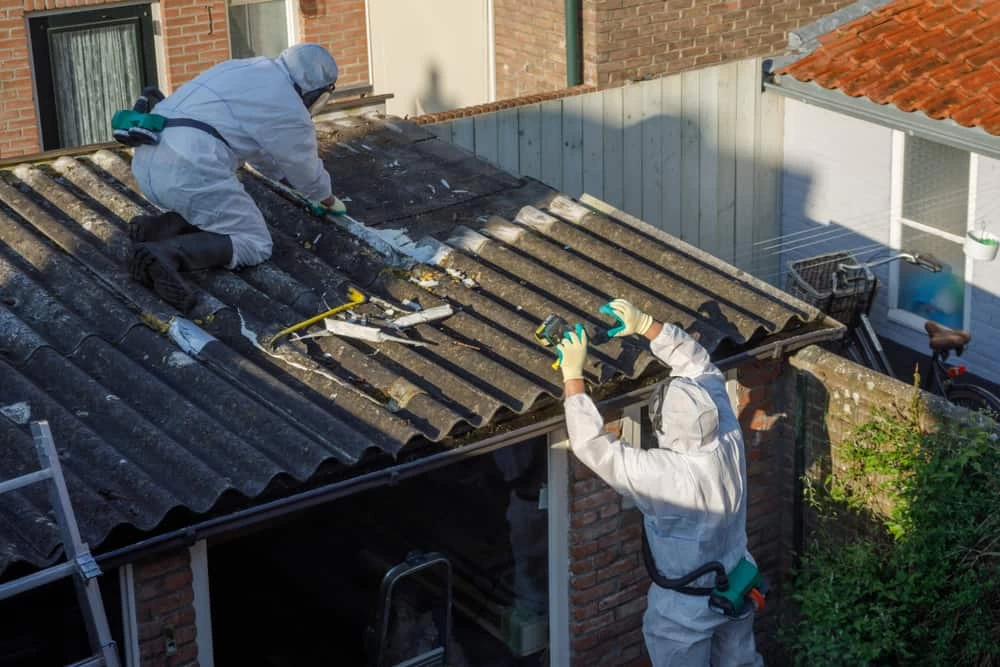
Once abatement is approved, we set up full containment around the affected area. That means negative air pressure, sealed barriers, and proper protective equipment for every technician on site. This step matters especially in Ridge’s Leisure communities, where units share walls and common areas containment isn’t optional, it’s the only way to protect neighboring residents during the process. All work is performed by NYS-certified asbestos handlers in compliance with Industrial Code Rule 56.
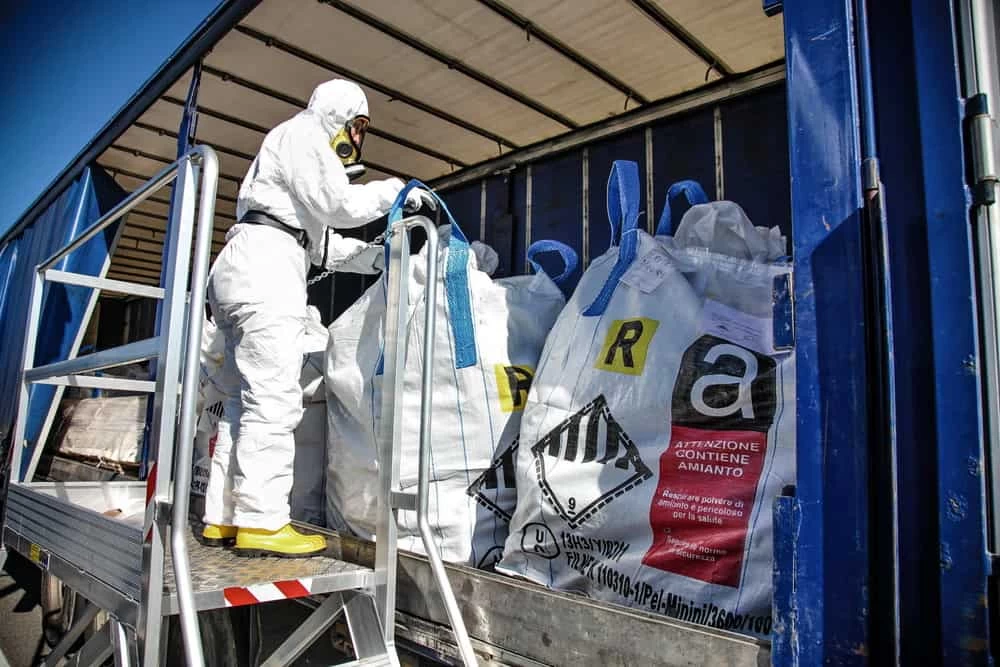
After removal, all asbestos-containing waste is bagged, labeled, and transported to an NYS-approved disposal facility. We maintain complete waste manifests throughout. The final step is post-abatement clearance air testing an independent air sample that confirms fiber levels are within safe limits before anyone re-enters the space. You receive a full documentation package at the end: inspection results, air monitoring data, disposal manifests, and clearance test results. That paperwork matters for real estate transactions, HOA records, and your own peace of mind.
Built for the Specific Materials Found in Ridge Homes
The most common asbestos-containing materials we encounter in Ridge are vinyl asbestos floor tiles the 9×9 and 12×12 inch tiles that were standard in virtually every Long Island home built in the 1960s and 70s. They’re often buried under carpet or newer flooring, undisturbed for decades. Asbestos tile removal requires careful containment and proper handling; cutting, sanding, or breaking these tiles releases fibers. We remove them intact where possible and follow all NYS protocols for disposal.
Popcorn ceiling removal is the other call we get constantly from Ridge homeowners and Leisure community residents. Spray-applied acoustic ceiling texture was used in nearly every home and condo built before 1978, and it can contain asbestos. When it’s scraped or sanded without testing first which happens more often than it should during DIY renovations it becomes a serious air quality issue. We test before we touch, contain the work area completely, and clear the air before the space is reopened.
We also handle pipe and duct insulation removal, asbestos-containing joint compound, and roof and siding materials all of which show up regularly in Ridge’s older housing stock. Every job includes inspection, removal, disposal, and clearance testing. There are no add-on fees for the documentation package; it’s part of what a compliant abatement job requires, and it’s included.
Does my Ridge home actually need asbestos testing before a renovation?
If your home was built before 1980, testing before any renovation is strongly recommended and in many cases, required. New York State law prohibits unlicensed removal of regulated quantities of asbestos-containing materials, which means if a contractor disturbs those materials without testing first, the project has to stop and a licensed abatement team has to come in. That adds cost and delay to a job that was already underway.
In Ridge, this comes up most often in the Leisure communities and in the older ranch homes throughout the hamlet. Floors, ceilings, pipe insulation, and wall systems in homes built during that era routinely contained asbestos. Testing before demolition or renovation work begins is the step that keeps your project legal, your timeline intact, and your family protected. It’s not a formality it’s the foundation of doing the job right.
How long does asbestos abatement typically take for a residential job in Ridge?
For a standard residential job say, vinyl floor tile removal in a kitchen or bathroom, or popcorn ceiling abatement in one or two rooms the active removal work typically takes one to two days. The full timeline from inspection to clearance testing is usually five to seven days when you factor in lab turnaround for sample results and the post-abatement air test.
Larger jobs, like a full gut renovation in a 1970s ranch home or a condo unit in Leisure Village or Leisure Knoll, can take longer depending on the volume of material and the complexity of the space. If you’re working with an HOA or a co-op board which is common in Ridge’s gated communities there may be additional scheduling requirements or access windows to coordinate. We factor all of that in when we give you a timeline, so you’re not caught off guard mid-project.
What happens if asbestos is found during a home sale in Ridge, NY?
Finding asbestos during a buyer’s inspection can complicate or derail a transaction if it’s not handled quickly. Buyers’ attorneys and lenders take asbestos findings seriously, and in many cases, a deal will require either abatement before closing or a price adjustment to account for it. Having documentation that the abatement was completed by a licensed contractor with proper air clearance testing is what actually satisfies those requirements.
For Ridge homeowners selling a property, especially in the Leisure communities where estate sales and turnover are common, getting ahead of this is worth the time. A pre-listing asbestos inspection lets you know what you’re dealing with before it becomes a negotiating point. If abatement is needed, we move quickly and provide the full documentation package your real estate attorney will need. That’s one less thing standing between you and a clean closing.
Is asbestos removal in Ridge regulated differently than in other parts of Long Island?
The core regulatory framework is the same across New York State all asbestos abatement is governed by NYS Industrial Code Rule 56, administered by the Department of Labor’s Asbestos Control Bureau. That applies whether you’re in Ridge, Medford, or anywhere else in Suffolk County. What does vary is the local permit layer: renovation and demolition work in Ridge falls under the Town of Brookhaven Building Division, which has its own permit requirements for structural work. Demolition permits through Brookhaven are valid for 90 days from issuance.
The practical implication is that if you’re doing a renovation that involves both asbestos abatement and structural work, you’re dealing with two separate regulatory tracks the state abatement requirements and the town building permit process. A licensed abatement contractor familiar with Brookhaven’s process can help you understand how those timelines interact so nothing gets held up.
What's the difference between asbestos encapsulation and full removal?
Encapsulation means sealing the asbestos-containing material in place with a specialized coating or barrier so fibers can’t be released into the air. Full removal means the material is physically taken out, bagged, and disposed of at an approved facility. Both are legitimate approaches, but they’re not interchangeable the right choice depends on the condition of the material, what you plan to do with the space, and whether future work will disturb it.
In Ridge homes, where a lot of the asbestos-containing material is in floor tiles or pipe insulation that’s still intact and undisturbed, encapsulation can sometimes be a reasonable short-term option. But if you’re renovating, selling the property, or dealing with material that’s already damaged or friable, full removal is usually the cleaner path. It eliminates the issue permanently and gives you documentation that the material is gone which matters for resale value and for any future work done on the home.
How much does asbestos abatement cost for a home in Ridge, NY?
Cost varies based on the type of material, the square footage involved, and the complexity of the job. For a single room of vinyl floor tile removal or popcorn ceiling abatement, you’re typically looking at somewhere in the range of $1,500 to $3,500. Larger jobs a full basement, multiple rooms, or a whole-home abatement in a ranch or split-level can run higher depending on the scope.
What’s worth understanding is what’s included in a compliant abatement job. Inspection, air monitoring during removal, proper containment, NYS-approved disposal, and post-abatement clearance testing are all required by law they’re not optional line items. Some contractors quote a low number and add those costs later. Our quotes include everything a legal, documented abatement requires. For Ridge homeowners managing a renovation budget or an estate sale, knowing the real number upfront is more useful than a low quote that grows once the job starts.