Ridgewood's Century-Old Buildings Deserve More Than a Generic Crew
Most Ridgewood properties were built before 1927. If you’re renovating, dealing with water damage, or prepping for a sale, asbestos abatement in Ridgewood isn’t optional and neither is getting the NYC DEP paperwork right.
I needed a professional consultation explanation of procedure for safe removal of Asbestos in my apartment complex. Without having an account yet, I was very impressed with the caring, knowledgeable and generous advice offered by Jessica, and will look forward to doing business in the future. Thank you so much! I feel much more informed about a sometimes scary endeavor. Peace. Nancy Silva Mineola, NY.
Mia Munoz
Used this company to clean up some water flood in my house. They were fast and easy to work with.very professional, Would recommend to anyone!
Nini Valle
Great company, had a flood and they responded quickly and efficiently. Billed my insurance company directly. I highly recommend this company!
joe colapietro, jr
I had pipe freeze in my basement right before a snow storm and they made to within an hour to help start the clean up process. They we by our side throughout the entire process and even helped with the insurance company. They did such a great job with the cleanup, repair, remidiation, I contracted them to perform the repairs and finishes in the basement. They came with enough manpower and material to get the job done. Leo and Jessica were nothing but a pleasure to deal with!!
Cristian Arredondo c
I had some water damage in my home and Green Island was able to take care of my issue quickly and effectively. I am very pleased with the work they did. They responded quickly and were very professional.
Michael M
Outstanding service! From the office to the field crew everyone was friendly, helpful and responsive. I highly recommend Green Island Group.
What Changes When the Job Is Actually Done Right in Ridgewood
When asbestos is handled properly, your renovation doesn’t stall. Your DOB permit gets issued. Your tenants aren’t displaced for weeks while paperwork gets sorted out. That’s what a clean, compliant abatement project actually looks like and in Ridgewood, where almost every building predates 1930, that outcome is more common than most property owners expect when they start a project.
Ridgewood’s housing stock is genuinely unique. The Mathews Model Flats, the Renaissance Revival row houses along Myrtle Avenue, the six-family tenements throughout the Central Ridgewood Historic District these buildings were constructed with original pipe insulation, vinyl floor tiles, and ceiling coatings that were standard in pre-war construction. They haven’t been touched in decades. When you open a wall, replace a boiler, or gut a kitchen in one of these buildings, you’re almost certainly encountering materials that require professional assessment before a single contractor can swing a hammer.
The other thing that changes when the job is done right: you have documentation. A clearance certificate. A completed ACP-5 on file. Post-abatement air quality verification that you can hand to your insurance company, your real estate attorney, or the NYC Department of Buildings without hesitation. That paperwork isn’t a formality it’s what closes your permit, protects your investment, and keeps you out of a DEP violation that costs far more than the abatement ever would have.
Licensed Asbestos Contractor Serving Ridgewood, NY
Every Certification You Need. One Call to Get It Moving.
We hold the full stack of credentials required to perform asbestos abatement legally in New York City NYS DOL Asbestos licensing, NYC BIC certification, NYC General Contractor license, and USEPA Lead/RRP certification. That last one matters more than people realize in Ridgewood, where buildings predate the 1978 federal lead paint ban by 50 years. Lead and asbestos frequently co-exist in the same building, and most contractors are only equipped to handle one.
We serve all five boroughs, and the NYC DEP process ACP-5 forms, ACP-7 notifications, ARTS filings, DOB permit coordination is standard operating procedure on every project, not something we’re figuring out as we go. Ridgewood landlords, property managers, and homeowners along the Fresh Pond Road and Seneca Avenue corridors have relied on us when a renovation uncovered something unexpected, when a pipe failure triggered an emergency, or when a pre-sale inspection came back with findings that needed to be resolved fast.
No Surprises. Here's Exactly What Happens on a Ridgewood Project.
It starts with an assessment. A certified asbestos investigator evaluates the materials in your building floor tiles, pipe insulation, ceiling coatings, joint compound, roofing and documents the findings. In Ridgewood, because virtually every residential building was constructed before 1927, this step is required before any NYC DOB renovation permit can be issued. The findings get submitted to the NYC DEP via an ACP-5 form. If asbestos is present, an ACP-7 Project Notification goes to the DEP’s Asbestos Technical Review Unit through the ARTS system, and work doesn’t begin until the DEP issues an abatement permit.
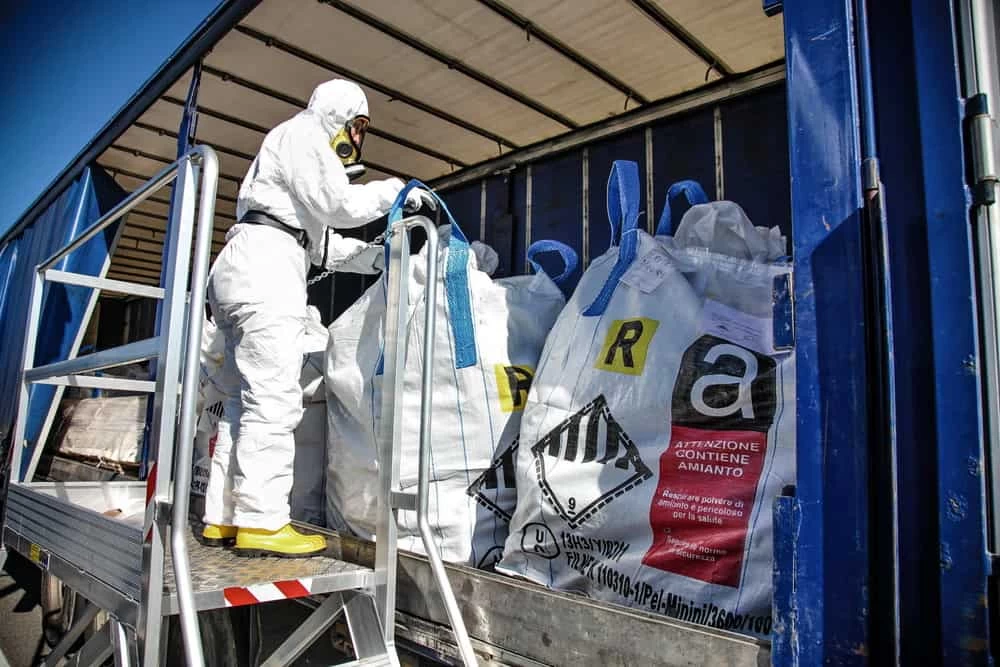
Once the permit is posted at the work site, the abatement crew sets up proper containment negative air pressure, Microtrap air scrubbers running throughout the work area so fibers don’t migrate to other parts of the building. This matters especially in Ridgewood’s multi-family buildings, where you may have occupied units directly above or adjacent to the work area. The materials are removed, packaged, and disposed of through NYC’s regulated trade waste system. Nothing gets cut short.
After removal, post-abatement air clearance testing confirms that fiber levels are back within safe limits. You get the clearance certificate, the documentation, and a project file that satisfies NYC DOB permit closure requirements. If reconstruction is needed after abatement new flooring, drywall, pipe work we handle that too, so you’re not starting over with a second contractor.
Asbestos Remediation Services in Ridgewood, Queens
Built for Ridgewood's Regulatory Reality, Not a Simplified Version of It
Asbestos abatement in Ridgewood, NY isn’t the same as asbestos abatement in a suburban Long Island town. You’re operating inside New York City’s regulatory framework NYC DEP oversight, DOB permit requirements, ACP-5 and ACP-7 filings, ARTS system submissions and every step has to be executed correctly or your renovation stops. We handle all of it, from the initial certified investigation through DEP permit approval, abatement, post-removal air clearance, and final documentation.
The most common materials found in Ridgewood’s pre-war building stock include vinyl asbestos floor tiles, pipe and boiler insulation on old steam heating systems, surface coatings on plaster ceilings, and roofing materials that haven’t been replaced since original construction. Asbestos tile removal and popcorn ceiling removal are among the most frequent requests in buildings along the Myrtle Avenue and Wyckoff Avenue corridors, particularly during kitchen and bathroom renovations in multi-family properties. Each of these materials requires a different abatement approach, and the scope is confirmed through the initial assessment not estimated over the phone.
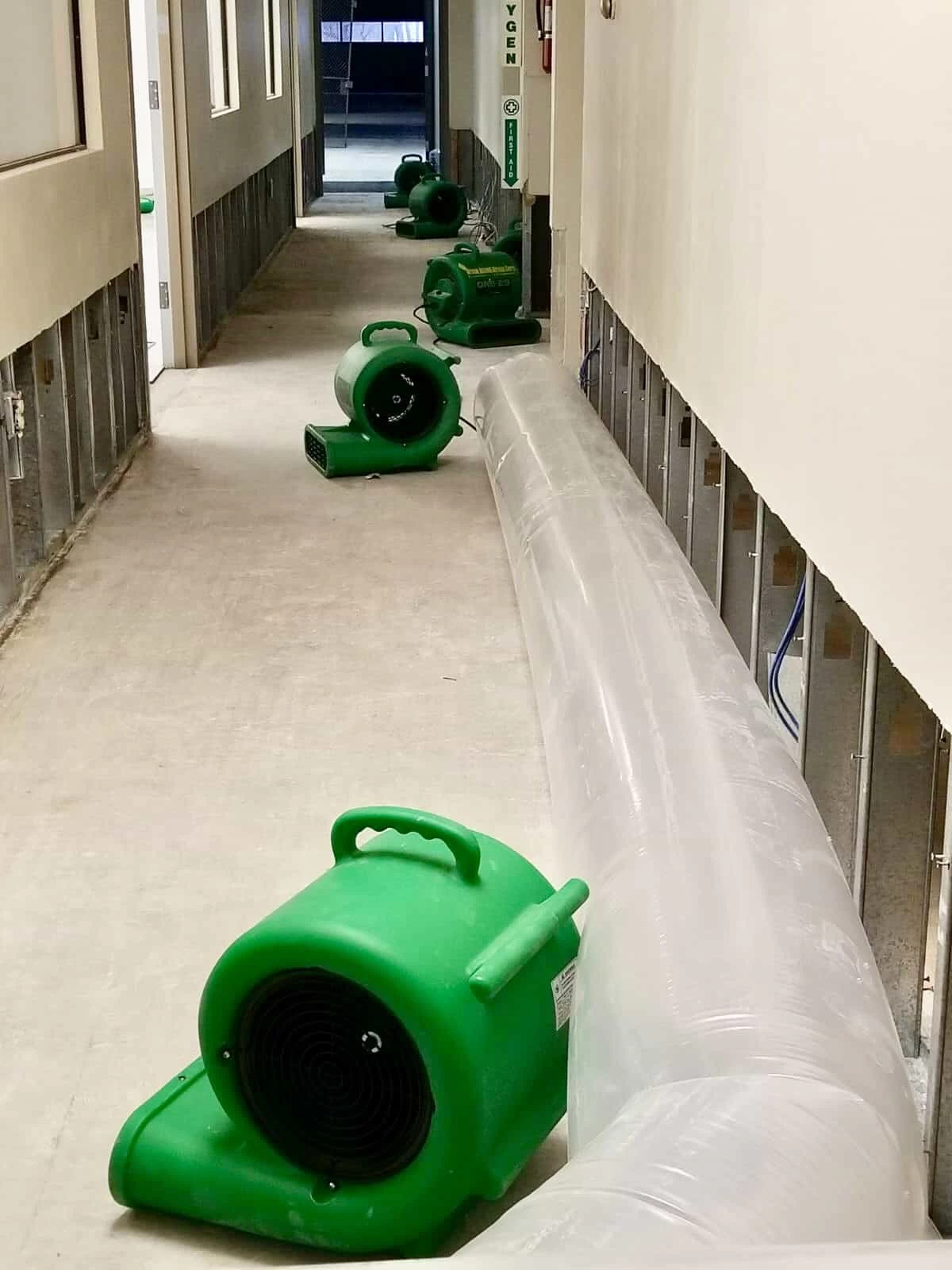
For Ridgewood property owners dealing with water damage, fire damage, or aging infrastructure failures, we also handle mold remediation and full restoration, which means one engagement covers the damage, the hazardous materials, and the rebuild. Direct insurance billing is available, so you’re not navigating the claim process alone while managing a damaged property and displaced tenants at the same time.
Does every Ridgewood renovation require an asbestos inspection before work starts?
If your renovation requires a permit from the NYC Department of Buildings and most significant renovation work does then yes, an asbestos assessment is required first. New York City mandates that an ACP-5 Asbestos Assessment Report be filed with the NYC DEP before any DOB permit can be issued for a building constructed before April 1, 1987. Since virtually every residential building in Ridgewood was built before 1927, this requirement applies across the board.
The assessment has to be conducted by a DEP-certified asbestos investigator, not a general contractor or home inspector. If the investigator finds asbestos-containing materials that will be disturbed by the planned work, an ACP-7 Project Notification must be submitted to the DEP’s Asbestos Technical Review Unit, and a DEP abatement permit must be issued and posted at the work site before abatement begins. Skipping this process doesn’t just create a health risk it exposes you to DEP violations that can halt your entire project and carry significant financial penalties.
How much does asbestos abatement typically cost for a Ridgewood multi-family building?
Cost depends on the scope specifically, what materials are present, how much square footage is affected, and how many units are involved. For a single-unit residential project, asbestos abatement generally runs in the range of $1,500 to $5,000 depending on the material type and extent of the work. Larger multi-family projects, full gut renovations, or buildings with asbestos in multiple systems (flooring, pipe insulation, and ceiling coatings together) can run significantly higher.
What’s worth understanding in Ridgewood’s context is that the cost of proper abatement is almost always less than the cost of a DEP violation or a stalled renovation. If you’re a landlord upgrading units to capture the rental increases the neighborhood has seen in recent years, a two-week renovation delay caused by a permit hold or a violation costs real money in lost rent and contractor rescheduling. Getting the abatement done correctly the first time, with full documentation, is the financially sound path.
What asbestos-containing materials are most commonly found in Ridgewood row houses?
The most frequently encountered materials in Ridgewood’s pre-war row houses and tenement buildings are vinyl asbestos floor tiles, pipe and boiler insulation on steam heating systems, surface coatings on plaster ceilings (sometimes called popcorn or textured ceilings), joint compound used in drywall and plaster repairs, and certain roofing materials. These were all standard construction materials in the era when Ridgewood’s housing stock was built roughly 1895 through the late 1920s.
The tricky part is that these materials don’t always look like what people picture when they think of asbestos. Original nine-inch floor tiles in a Ridgewood kitchen, old pipe wrap in a basement, or a textured ceiling in a pre-war apartment can all contain asbestos without any visible indication. The only way to know for certain is laboratory testing of a sample taken by a certified investigator. Visual identification alone by a homeowner, a general contractor, or anyone who isn’t a licensed asbestos professional is not reliable and is not accepted by the NYC DEP.
What happens if a contractor disturbs asbestos during a renovation in Ridgewood without a permit?
If asbestos-containing material is disturbed without proper DEP notification and an active abatement permit, the consequences are serious. The NYC DEP can issue violations, stop-work orders, and financial penalties. The renovation halts until the violation is resolved, which typically requires emergency remediation, additional inspections, and a full compliance review all of which cost more than the original permitted abatement would have. In a multi-family building, this can mean extended tenant displacement and significant lost rental income on top of the remediation costs.
Beyond the regulatory exposure, there’s a genuine health risk. Asbestos fibers released during uncontrolled disturbance can spread through a building’s HVAC system, migrate to adjacent units, and remain airborne for extended periods. In Ridgewood’s dense residential buildings where units share walls, floors, and ventilation an uncontrolled release in one unit can create a building-wide problem. The right time to address asbestos is before the renovation starts, with a certified investigator, proper containment, and a DEP permit in hand.
Can asbestos abatement be done while tenants are still living in the building?
It depends on the scope and location of the work. In some cases, abatement in a single unit or a contained area a basement, a utility room, a vacant apartment can be performed while other units remain occupied, provided proper containment procedures are in place. Negative air pressure containment and continuous air scrubbing are used to prevent fiber migration to occupied areas of the building. Post-abatement air clearance testing confirms that the work area and adjacent spaces are safe before containment is removed.
For larger projects a full gut renovation of multiple units, abatement of shared building systems like pipe insulation running through common areas, or work in occupied kitchens and bathrooms temporary relocation of affected tenants is typically required during the active abatement phase. The timeline for this varies based on the scope of work, but a properly managed abatement project in a Ridgewood multi-family building typically moves faster than property owners expect, especially when the contractor handles DEP permitting and documentation without delays on the back end.
Does Green Island Group handle the NYC DEP permit process, or is that the owner's responsibility?
We manage the full NYC DEP compliance process as part of the abatement engagement. That includes coordinating the certified asbestos investigation, preparing and submitting the ACP-5 Asbestos Assessment Report, filing the ACP-7 Project Notification through the DEP’s ARTS system when abatement is required, and ensuring the DEP abatement permit is issued and posted before work begins. After abatement is complete, post-removal air clearance testing is conducted and the clearance certificate is provided as part of the project documentation.
For Ridgewood property owners who are also navigating NYC DOB permit requirements for a renovation which is most of them, given the neighborhood’s building stock having a single contractor handle both the abatement compliance and the DEP paperwork removes a significant coordination burden. The DOB cannot issue a renovation permit until the DEP asbestos requirements are satisfied, so delays in the compliance process directly delay the renovation. Our familiarity with this process means the paperwork moves on the same timeline as the physical work, not behind it.